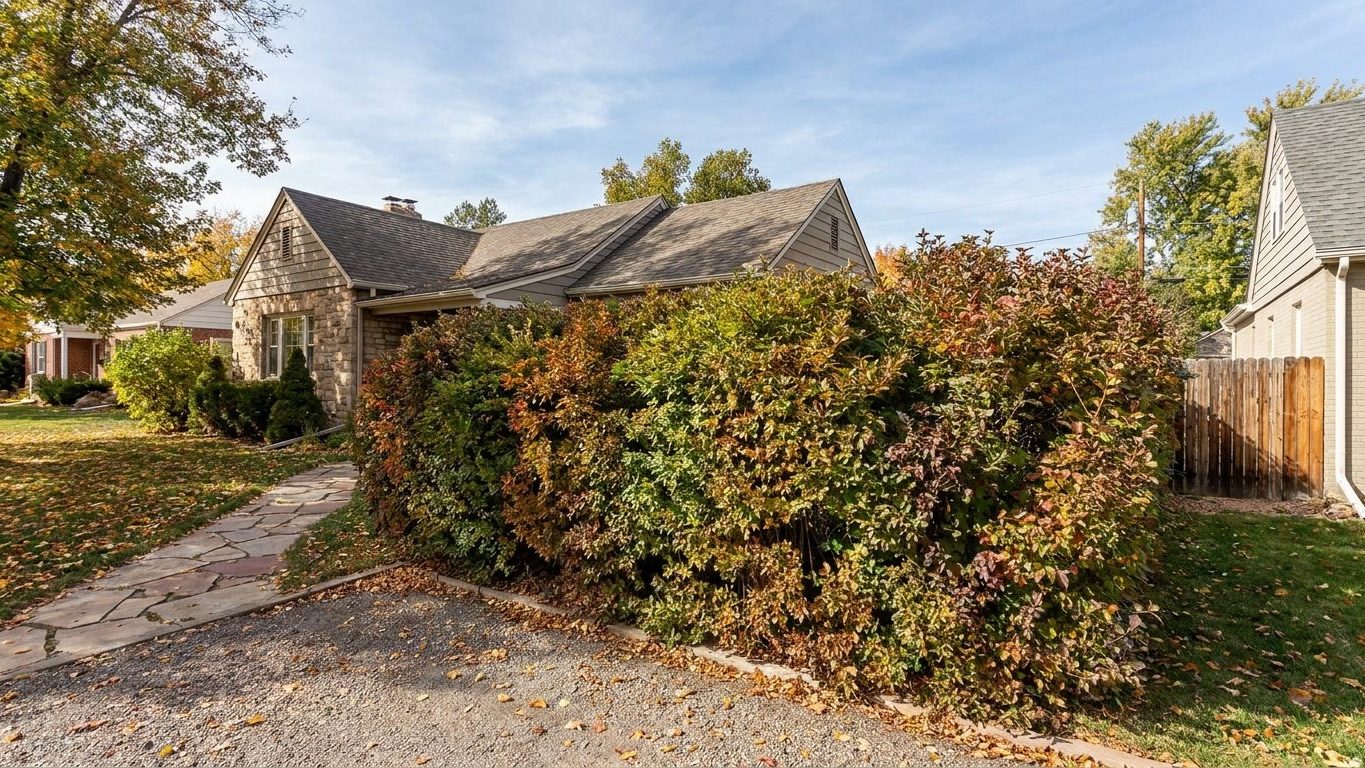

Maryland has no statewide hedge height limit. Unlike setback rules for buildings or septic systems, hedge and fence height in Maryland is decided entirely at the municipal level, city by city and sometimes neighborhood by neighborhood. That means the real answer to “how high can my hedge be” depends on which town, county, or homeowners association governs your address, not on any Maryland statute you’ll find in the Annotated Code.
There is no Maryland hedge height law
Search “Maryland fence height law” and you’ll land on aggregator sites that quote a single number, usually six feet, as if it applied from Ocean City to Cumberland. It doesn’t. Maryland’s legislature has never passed a statewide height cap for fences or hedges. What exists instead is a patchwork of local zoning codes, each written by a different planning department, each with its own definitions, exceptions, and enforcement quirks.
This isn’t unique to Maryland. Height limits for residential fences and hedges are a land-use decision, and land use in the United States is delegated to municipalities and counties, not set by state governments. A state legislature might regulate wetlands, septic setbacks, or historic districts because those touch statewide interests. Whether your boxwood hedge tops out at four feet or eight feet is considered a purely local concern, tied to sightlines on residential streets, neighborhood character, and how a given town balances privacy against visibility.
The practical effect is that two houses fifteen miles apart, one inside a small municipality and one in unincorporated county land, can operate under completely different rules. A town near the Chesapeake with strict waterfront view protections might cap hedges at four feet along certain streets. A rural stretch of the same county might have no hedge rule at all, only a general nuisance ordinance that kicks in if a plant blocks a road or a drainage easement.
That absence of a statewide figure is genuinely useful information, not a dead end. It tells you not to trust any page, including a generic one about “Maryland law,” that names a single height without pointing to a specific city or county ordinance. If a source can’t tell you which municipality’s code it’s quoting, treat the number as decorative, not enforceable.
It also reframes the question. Instead of asking “what’s legal in Maryland,” the more useful question is “which local government has jurisdiction over my lot, and what does that government’s zoning chapter say about fences, hedges, and accessory landscaping.” That’s a solvable question, and it usually takes less than twenty minutes to answer once you know where to look.
How to find the rule that actually applies to you
Nearly every incorporated city and county in the country publishes its municipal code online, and almost all of them route through one of three publishing platforms: Municode, hosted at library.municode.com, American Legal Publishing, at codelibrary.amlegal.com, or eCode360, run by General Code. Type your city’s name plus “municipal code” into a search engine and one of these three will almost certainly surface first.
Once you’re in the code, skip the general index and go straight to the zoning chapter, sometimes labeled “Zoning Ordinance,” sometimes folded into a broader “Land Use” or “Development Code” title. Inside that chapter, look for a section on “Fences and Walls” or “Accessory Structures.” Height limits, when they exist, almost always live there rather than in a separate landscaping or nuisance section.
Fence rules and hedge rules aren’t always the same rule
This is where a lot of homeowners get tripped up. Many zoning codes define a “fence” as a built structure, wood, vinyl, chain-link, and treat a hedge as a separate category, a living screen made of plants. Some codes explicitly extend fence height limits to “any fence, wall, or hedge.” Others regulate fences in detail and say nothing about hedges at all, leaving living screens to fall under a vaguer visibility or nuisance clause, or under no height rule whatsoever.
Read the actual definitions section before assuming a six-foot fence limit automatically caps your privet hedge at six feet too. The word choice in the ordinance, not your assumption, decides which rule applies to a planted screen versus a built one.
Who to call when the code is unclear
If the online code doesn’t answer your question, or reads ambiguously, the city or county planning and zoning department is the office to call, not the clerk’s office or the building permits desk. Planning and zoning staff deal with fence and hedge disputes constantly and can usually tell you, in a five-minute phone call, whether your street falls under a special overlay district, a corner-lot sight triangle requirement, or a standard residential height limit.
| Code publisher | Typical web address | Where to look inside it |
|---|---|---|
| Municode | library.municode.com | Zoning > Fences and Walls |
| American Legal Publishing | codelibrary.amlegal.com | Land Use > Accessory Structures |
| eCode360 (General Code) | ecode360.com | Zoning > Fences, Walls, and Hedges |
If your address sits inside a homeowners association, add one more stop: the HOA’s covenants, often stricter than the municipal code and enforceable through private fines rather than city citations.
The branches that cross the line
Height limits govern how tall a hedge can grow. A separate, near-universal rule governs what happens when a hedge grows sideways, over the property line and into a neighbor’s yard. Under general property law principles followed in most states, including Maryland, a landowner whose neighbor’s tree or hedge branches cross the boundary may trim that growth back, at their own expense, up to the property line and no further. They generally cannot cross onto the neighbor’s land to do the cutting, and they cannot cut in a way that kills the plant or damages its root system deliberately. This comes from case law built up over decades, not a single Maryland statute, and the exact boundaries of “reasonable” trimming can vary if a dispute ends up in court.
That principle matters more than most homeowners expect, because hedge disputes rarely start as height arguments. They start as a neighbor annoyed that a laurel hedge is dropping leaves in their gutter or shading their vegetable bed. Knowing that trimming rights stop exactly at the property line, in both directions, tends to defuse the conversation faster than either side threatening to call code enforcement.
Sight triangles: the rule that beats every other rule
If there’s one hedge rule that shows up almost everywhere, town or county, incorporated or not, it’s the sight triangle requirement at corners and driveways. Nearly every municipal code includes a clause restricting what may grow or stand within a triangular zone where a driveway meets a street, or where two streets intersect, because anything tall enough to block a driver’s sightline becomes a safety hazard. The height limit inside a sight triangle is almost always lower than the general residential fence or hedge limit elsewhere on the same lot, sometimes dramatically so.
This is the rule to check first if your hedge sits anywhere near a corner lot, a shared driveway, or an intersection, because it can override a general height allowance you might otherwise assume applies to your whole property line. A hedge that’s perfectly legal along a side yard can still draw a citation, or worse, get named in a lawsuit after a collision, if it sits inside a sight triangle.
What to check before you plant
The month before you put a hedge in the ground is the cheapest time to find out what your local code allows, far cheaper than finding out after three years of growth that a mature laurel needs to come out. Before you buy plants, work through a short list.
- Pull up your city or county’s zoning chapter through Municode, American Legal Publishing, or eCode360, and confirm whether it defines hedges separately from fences.
- Check whether your lot touches a corner, a shared driveway, or an intersection, and if so, ask the planning department for the specific sight triangle dimensions and height cap that apply there.
- Look for an HOA or deed covenant that might impose a stricter limit than the municipal code, especially in newer subdivisions.
- Confirm your property line with a survey or plat map rather than an old fence line or a neighbor’s word, since a hedge planted a foot over the line becomes a boundary dispute regardless of height.
- Call the utility locator service before digging if you’re planting a dense hedge row, since root systems from mature hedges can eventually interact with buried lines.
None of this replaces a conversation with an attorney if a dispute is already underway, whether over a hedge that’s grown too tall, branches crossing a fence line, or a disagreement about who’s responsible for trimming. Municipal planning staff can tell you what the code says. They generally can’t tell you how a judge would rule if a neighbor sues. For anything past a friendly conversation over the fence, a local real estate or property attorney is the next step, not another search engine query.
Common questions
Is there a six-foot hedge limit anywhere in Maryland?
Some individual municipalities may set a six-foot limit for fences or hedges in residential zones, but that figure comes from a specific city’s zoning code, not from any statewide Maryland law. Confirm the number in your own city’s ordinance rather than assuming it applies elsewhere.
Does Maryland treat hedges the same as fences?
Not automatically. Whether a municipal code lumps hedges in with fences, or regulates them separately, or doesn’t mention hedges at all, depends entirely on the wording of that specific city’s or county’s zoning definitions section.
Can my neighbor cut my hedge if it grows over the property line?
Under general property law principles followed in most states, a neighbor may trim branches that cross onto their land, up to the boundary line and no further, at their own expense, and generally without killing the plant. This is based on longstanding case law rather than a single Maryland statute, so specifics can vary if the matter goes to court.
What if my city’s code doesn’t mention hedges at all?
Call the planning and zoning department directly. Silence in the written code doesn’t always mean no rule exists; some jurisdictions handle hedge height through general nuisance or visibility ordinances rather than a dedicated fence-and-hedge section.