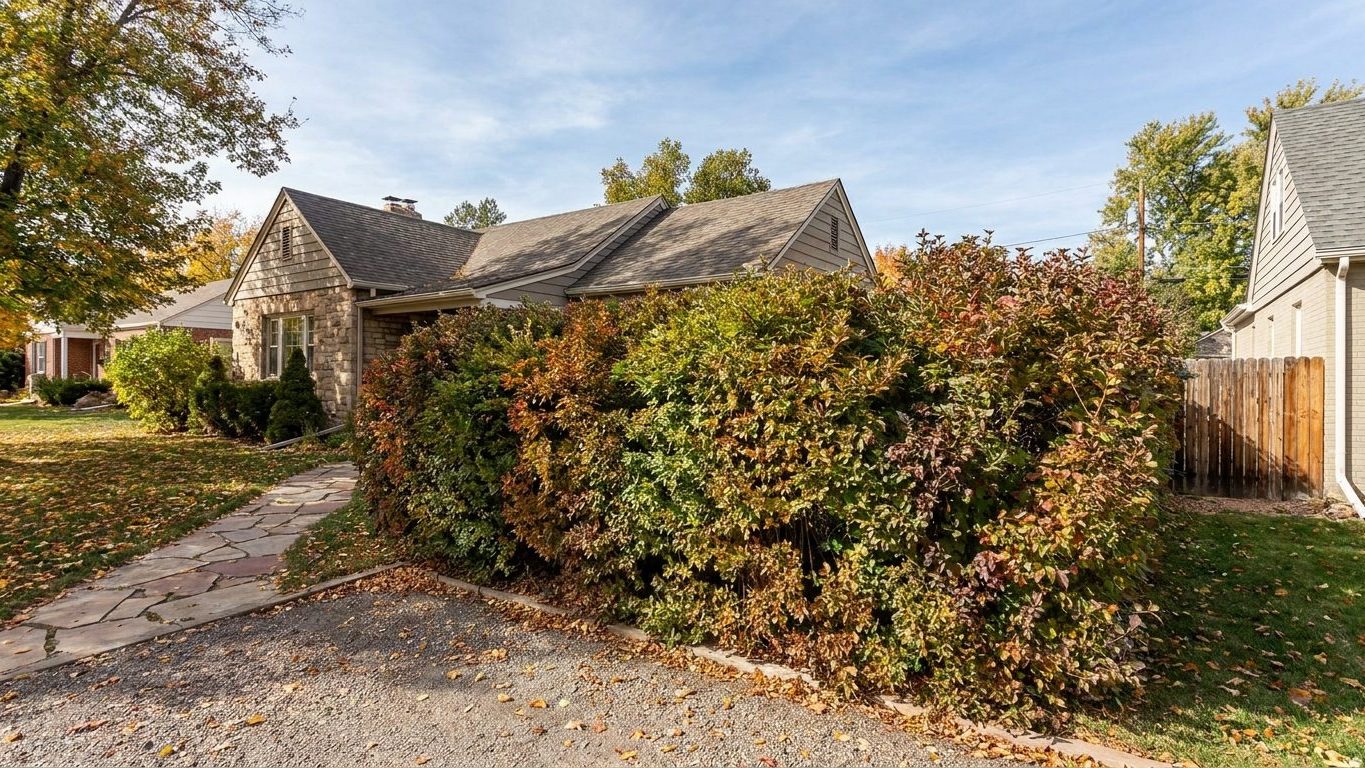

New York has no statewide hedge height limit. There’s no section of state property law or agriculture code that sets a number in feet. Every restriction on how tall your hedge can grow comes from your city or town’s own zoning ordinance, which means a hedge that’s perfectly legal in one New York community could be a code violation two towns over.
There is no New York hedge height law
This surprises a lot of homeowners: the state that regulates everything from bottle deposits to snow tire dates has never written a single line about how tall a homeowner’s hedge can be. New York’s Real Property Law and its Agriculture and Markets Law are silent on the subject. There’s no statewide inch-and-foot chart that a lawyer or landscaper could point you to.
What fills that gap is local government. New York, like every other state, treats hedge and fence height as a land-use matter, and land use is handled at the municipal level under home rule authority. Cities, towns, and villages each write their own zoning code, and within that code, somewhere in the chapter dealing with fences or accessory structures, sits the actual number that applies to your yard.
That’s not a loophole or an oversight. Height limits for hedges, fences, and other yard barriers are treated the same way as setback rules or lot coverage rules: decided locally, because a rule that makes sense on a dense city lot might make no sense on a two-acre rural parcel elsewhere.
The practical result is that two neighbors just across a town line, both still in New York, could be bound by completely different numbers. One town might cap ornamental hedges at 6 feet in a front yard; the next might allow 8 feet, or might not mention hedges at all and only regulate built fences. Neither is more “official.” They’re just different local decisions.
This also explains why so many general-interest articles about hedge height get New York wrong. A page that claims “New York hedges may be no taller than X feet” is inventing a statewide rule that doesn’t exist, usually by borrowing one city’s ordinance and presenting it as if it covered the whole state. If you’ve seen a specific number attached to “New York” without a city named next to it, treat that number as unverified until you can trace it to an actual municipal code.
None of this means you’re in a legal free-for-all. It means the rulebook you need isn’t in Albany. It’s in whatever city hall, town hall, or village office has jurisdiction over your address, and the next section walks through exactly how to find it.
How to find the rule that actually applies to you
Finding your actual hedge height limit takes maybe fifteen minutes, and it starts with figuring out which government writes your zoning code. New York has a layered structure: some homeowners are governed by a city, others by a town, and some also fall inside a village with its own separate code layered on top of the town’s. If you’re unsure which applies to you, your property tax bill or county assessor’s website will usually spell it out.
Once you know the municipality, the fastest route is usually online, because most American cities now publish their full municipal code through one of a small number of specialized platforms rather than hosting a messy PDF themselves. The three big ones are Municode (library.municode.com), American Legal Publishing (codelibrary.amlegal.com), and eCode360, run by General Code. A search for your municipality’s name plus “municipal code” will typically land you on one of these three sites, where you can search the full text instead of hunting through a table of contents.
Where the rule actually lives in the code
Don’t look under “Property Maintenance” or “Nuisances” first. Hedge and fence height rules almost always live inside the zoning chapter, under a section labeled something like “Fences,” “Walls and Hedges,” or “Accessory Structures.” Search the code for the word “fence” and skim the results. Height limits are usually written as a straightforward number, such as “shall not exceed X feet in a front yard,” often with a lower number for front yards and a taller allowance behind the front building line.
Pay attention to how the ordinance defines its terms, since this is where homeowners often get tripped up. Some codes lump “fences, walls, and hedges” into a single definition and apply one height limit to all three. Others treat a fence as a built structure and never mention living plant material at all, meaning your hedge may technically fall under general landscaping rules, or under nothing specific. Read the definitions section before assuming the fence limit automatically applies to your boxwood or privet.
Who to call if the code is unclear
If the online search doesn’t turn up a clear answer, call the municipal building department or the zoning/code enforcement office directly. These are the people who issue fence permits and field height-dispute complaints, and a five-minute phone call often gets you a plain-English answer faster than parsing legal text. Ask specifically whether hedges are treated the same as fences under local code, since that single question resolves most confusion.
The branches that cross the line
Height limits are only half the story. The other common friction point is what happens when a hedge doesn’t just grow tall, but grows over. A privet or arborvitae planted a foot from the property line will eventually push branches, and sometimes roots, onto the neighbor’s side, and this is handled by a different body of law entirely.
In most states, the general principle is that a property owner may trim back vegetation that crosses onto their land, cutting up to the boundary line but not beyond it, at their own expense. This comes from long-standing case law on encroaching vegetation rather than a specific statute, and the exact contours vary by state. The core idea holds up almost everywhere: you can cut what hangs over your fence, you generally can’t go onto the neighbor’s property to do it, and courts have generally treated deliberately killing a neighbor’s tree or hedge through excessive cutting as its own kind of liability.
This is a general principle, not a New York statute, and it’s not a substitute for the actual municipal ordinance covering height. It answers a different question: not “how tall can my hedge be,” but “what can my neighbor legally do about branches crossing into their yard.”
Where this gets complicated is when a hedge sits right on or near the boundary line and nobody’s entirely sure where that line actually is. Fence and hedge disputes are one of the most common reasons people consult a real estate attorney or order a survey, and a licensed surveyor establishing the exact property line is usually money well spent before anyone starts cutting anything back.
If a dispute escalates past friendly conversation, involve a local attorney rather than relying on general rules found online. Encroachment law varies enough state to state, and sometimes municipality to municipality, that a lawyer familiar with your town’s history of these disputes will give you a far more reliable answer than any general article, including this one.
What to check before you plant
The best time to learn your local hedge rule is before you put anything in the ground, not after a neighbor complains or a code officer leaves a notice. A hedge takes years to mature, and ripping out an established privet or yew because it violates a rule you never checked is a frustrating, expensive way to learn your town’s zoning code.
Start with the sight triangle, because it’s the one restriction that shows up almost everywhere and it’s stricter than most people expect. At a street corner or where a driveway meets the road, most municipal codes require that nothing block the sightline drivers need to see cross traffic and pedestrians. This limit is typically far lower than the general yard height allowance, sometimes capping vegetation at just a couple of feet in that triangular zone even in a town that otherwise allows a much taller hedge elsewhere. If you’re planting near a corner lot or driveway apron, this is the rule most likely to trip you up, and it applies even in municipalities whose general fence and hedge sections are otherwise vague.
Beyond the sight triangle, a short pre-planting checklist keeps things simple:
- Confirm which fence/hedge height figure applies to your specific yard zone (front yard versus side or rear yard often differ)
- Check whether your code’s definition of “fence” explicitly includes living hedges, or treats them separately
- Ask whether corner-lot or driveway sight-triangle rules apply to your specific property
- Find out if a permit or zoning sign-off is required before installing a hedge along a boundary line
- Confirm the exact property line with a survey if there’s any doubt, especially before planting directly on a boundary
One more thing worth checking: some municipalities regulate hedge placement relative to the property line separately from height, requiring a minimum setback so the mature width doesn’t eventually push growth across the boundary. That’s a different rule from height, and it’s easy to miss if you only search the code for the word “height.”
Common questions
Is there a New York state law that caps hedge height at a specific number of feet?
No. Height limits for hedges in New York come entirely from municipal zoning ordinances, not from state law. Any figure presented as a single statewide number should be treated as unverified unless it’s tied to a specific city’s code.
Where exactly in a municipal code should I look for the hedge rule?
Look in the zoning chapter, under a section covering fences, walls, or accessory structures. Most municipalities publish their code through Municode, American Legal Publishing, or eCode360, and a text search for “fence” or “hedge” within that platform will usually surface the relevant section faster than browsing the table of contents.
Can my neighbor legally cut my hedge if it grows over their property line?
In most states, yes, up to the boundary line and at their own expense, as a general principle drawn from case law rather than a specific New York statute. They generally can’t come onto your property to do the cutting, and courts have generally treated killing the plant through excessive cutting as a separate liability issue. Exact rules vary by state.
What’s the one hedge rule that applies almost everywhere in New York regardless of my town?
The sight triangle at corners and driveways. Nearly every municipal code restricts hedge and fence height in that specific zone to preserve driver visibility, and the limit there is typically much lower than the general yard height allowance elsewhere on your property.