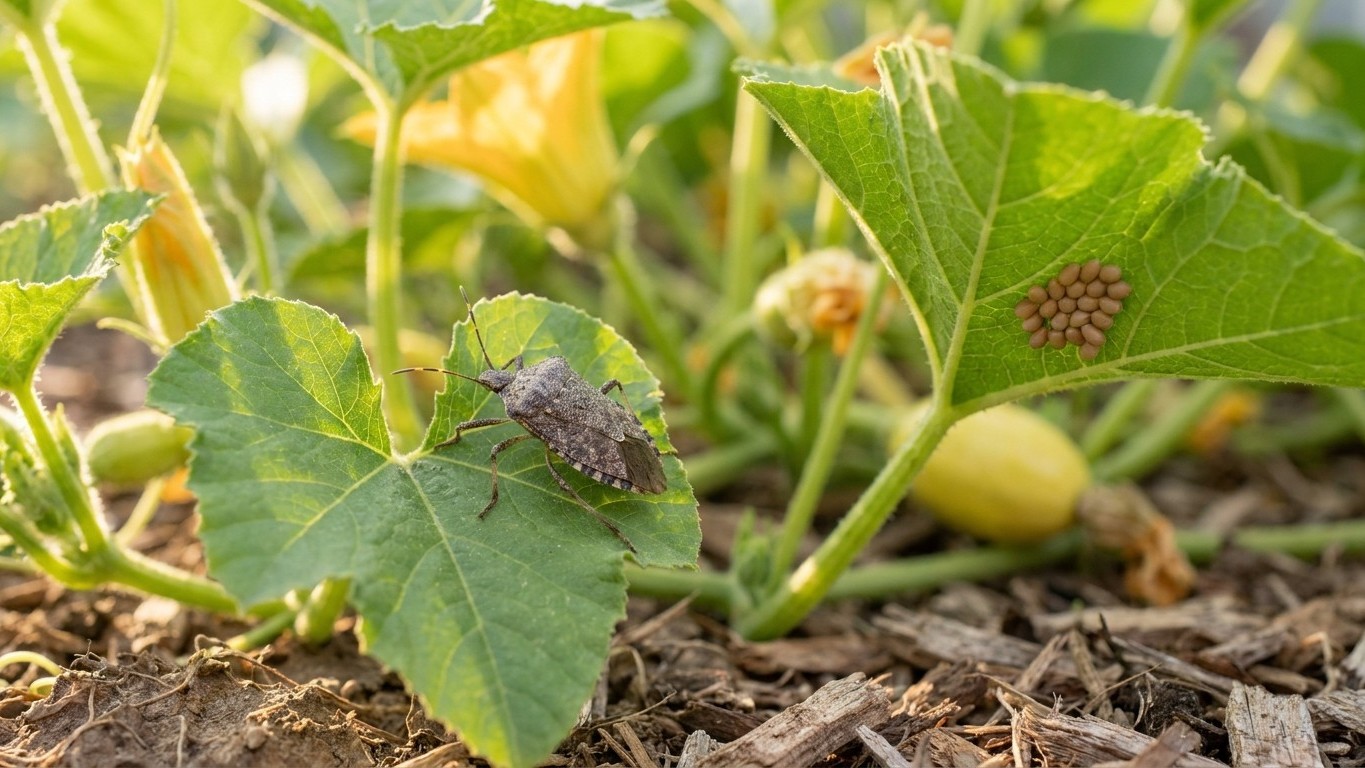

Squash bugs (Anasa tristis) become active in Oklahoma gardens once soil temperatures hold steady above 70°F, which typically lands somewhere between mid-May and early June depending on which part of the state you’re in. They peak in July and August, right when squash and pumpkin vines are setting fruit, and the most reliable way to stop them is a combination of early scouting, removing overwintering shelter, and hand-crushing egg clusters before nymphs hatch. Chemical controls work too, but timing matters more than the product you choose.
When Squash Bugs Actually Show Up in Oklahoma

Oklahoma spans two USDA hardiness zones, roughly 6b in the Panhandle and up to 8a in the far southeast near the Red River. That gap matters for squash bugs because they don’t survive winter as eggs or larvae. Adults overwinter under leaf litter, mulch, dead vines, and loose boards, then wake up once daytime temperatures stay consistently warm.
In southeastern counties like McCurtain or Choctaw, that warm-up often arrives by late April. In the Panhandle around Guymon or Boise City, gardeners usually don’t see the first adults cruising through cucurbit beds until mid to late May. Either way, the insects don’t waste time. Females start laying eggs within a week or two of emerging, and a single female can produce well over 100 eggs across a season, spread out in small clusters rather than one giant batch.
Central Oklahoma, including the Oklahoma City and Tulsa metro areas, sits in the middle of that window. Most gardeners there report their first sightings in the last two weeks of May, with a second, heavier wave of nymphs showing up in July as the first generation matures and reproduces. That second wave is usually the one that does real damage, because by then vines are loaded with fruit and there’s less time to recover from wilted or girdled stems.
Why Oklahoma’s Heat and Humidity Speed Things Up
Squash bug development runs on temperature. Warmer soil means faster egg hatch and quicker nymph development through the five instar stages before adulthood. Oklahoma summers, especially the stretch from late June through August when daytime highs routinely sit in the 95 to 105°F range, push nymphs through their life cycle faster than they’d develop in cooler states. That means a single Oklahoma growing season can support two generations, sometimes a partial third one in the warmer southeastern counties, while northern states often only see one full cycle.
Drought years compound the problem. When plants are already stressed from heat and low rainfall, they have less capacity to compensate for the sap loss squash bugs cause. A vine that might shrug off moderate feeding in a wet year can collapse in a dry one.
Spotting the Problem Before Vines Wilt
Adult squash bugs are brownish-gray, about five-eighths of an inch long, with a flattened, shield-shaped body. They’re often mistaken for stink bugs, and honestly the confusion is understandable since both belong to related insect families and both release a sharp, unpleasant odor when crushed. The giveaway is behavior: squash bugs cluster specifically on cucurbits (squash, pumpkins, cucumbers, melons) and tend to hide at the base of plants or under leaves during the hottest part of the day.
Eggs are the easiest life stage to catch. They’re bronze to reddish-brown, laid in tight clusters on the undersides of leaves, usually in the V-shaped angle where leaf veins branch. A single cluster might hold a dozen to two dozen eggs. Checking leaf undersides twice a week during May and June, before the plants get too dense to inspect easily, catches most infestations before they explode.
Nymphs go through visible changes as they grow. Early instars are gray with black legs and look almost spider-like, clustering tightly together near egg masses. Later instars turn a dusty gray-green and start dispersing across the plant. By the time nymphs are large and mobile, they’re already causing the wilting damage that gives the infestation away without close inspection.
The damage itself has a signature look. Squash bugs feed by piercing stems and leaves with needle-like mouthparts and sucking out plant fluids, which injects toxins that block water movement. Leaves near a feeding site turn yellow, then brown and crispy, starting at the point of injury and spreading outward. Left unchecked, entire vines wilt as if they’d been cut off from water, a condition sometimes called “yellow vine decline” when it’s severe. Winter squash and pumpkins tend to suffer more than summer squash, partly because their longer growing season gives squash bugs more time to build up numbers.
What Actually Stops Squash Bugs
No single method eliminates squash bugs completely in Oklahoma’s climate, but stacking a few tactics together keeps populations low enough that plants can outgrow the damage.
Remove Their Winter Hiding Spots
Fall cleanup is the highest-leverage move most gardeners skip. Squash bugs overwinter in plant debris, mulch piles, and under boards or rocks near the garden. Pulling out spent vines and squash plants at the end of the season, rather than leaving them to break down over winter, removes a huge chunk of overwintering habitat. Rotating cucurbit crops to a different part of the yard each year also helps, since adults emerging in spring instinctively search near where they overwintered.
Hand Removal Still Works
It sounds tedious, but crushing egg clusters and knocking nymphs into a bucket of soapy water is one of the most effective control methods available to home gardeners, especially early in the season when populations are still small and localized. Checking plants every few days from late May through June, right as eggs start appearing, keeps the population from ever reaching the point where insecticides become necessary.
Trap Boards and Timing Tricks
Adult squash bugs like to hide under flat objects during the day. Laying a board or shingle near the base of plants creates a trap: check underneath each morning and squash whatever’s hiding there. This won’t eliminate a heavy infestation, but it’s a useful supplemental tactic that costs nothing.
Planting timing matters too. Squash bugs are drawn to the earliest cucurbits available in the area. Some Oklahoma gardeners plant a small “sacrifice” squash a couple weeks before their main crop specifically to draw squash bugs away, then remove that trap plant once it’s covered in bugs.
Row Covers, With a Catch
Floating row covers keep adults from ever reaching young plants, and they’re genuinely effective early in the season. The catch is that squash and other cucurbits need pollinators to set fruit, so covers have to come off once flowering starts. That creates a window right when Oklahoma’s squash bug populations are ramping up, so covers work best paired with early scouting once they’re removed.
Resistant and Tolerant Varieties
Not all squash varieties are equally attractive to squash bugs. Butternut squash tends to show more resistance than acorn squash or most pumpkin varieties, and some gardeners in Oklahoma report fewer problems with straightneck summer squash compared to zucchini. Resistance isn’t immunity, but choosing a less-preferred variety can reduce pressure, especially in gardens where squash bugs have been a recurring problem year after year.
When Insecticides Make Sense
For infestations that get ahead of hand removal, insecticidal soap or products containing pyrethrins can knock down nymph populations, but timing is everything. Adult squash bugs have tough exoskeletons that make them harder to kill with contact insecticides, so treatments are far more effective when targeted at nymphs in their early instars, before they harden and disperse. Spraying in the evening, when bees and other pollinators aren’t active on open blossoms, protects beneficial insects while still hitting the target pest. Always read and follow label instructions for the specific crop and pre-harvest interval, since squash and cucumbers are often harvested frequently through the season.
Regional Notes Across Oklahoma
Gardeners in the humid, warmer southeast tend to fight squash bugs for a longer stretch of the calendar, sometimes from April through October, and are more likely to see a partial third generation squeeze in before frost. In the drier, cooler Panhandle, the season compresses into a shorter but still intense window from late May through early September, with fewer generations but often higher per-plant pest pressure once populations establish, partly because drought-stressed plants have less resilience.
Central Oklahoma sits in between, and it’s also where squash bugs seem to overlap most heavily with cucumber beetles and squash vine borers, two other cucurbit pests that show up around the same time. Distinguishing between them matters, since vine borers tunnel inside stems rather than feeding externally, and the control approach for each is different. A wilting vine in July in Oklahoma City could be any of the three, which is exactly why checking for the telltale bronze egg clusters on leaf undersides remains the fastest way to confirm squash bugs specifically before deciding on a treatment plan.
Related guides
- Squash bug in Kansas: When It Shows Up and What Stops It
- Squash bug in Missouri: When It Shows Up and What Stops It
- Squash bug in Ontario: When It Shows Up and What Stops It
- Squash bug in South Dakota: When It Shows Up and What Stops It
- Squash bug in New Mexico: When It Shows Up and What Stops It
- Squash bug in Indiana: When It Shows Up and What Stops It