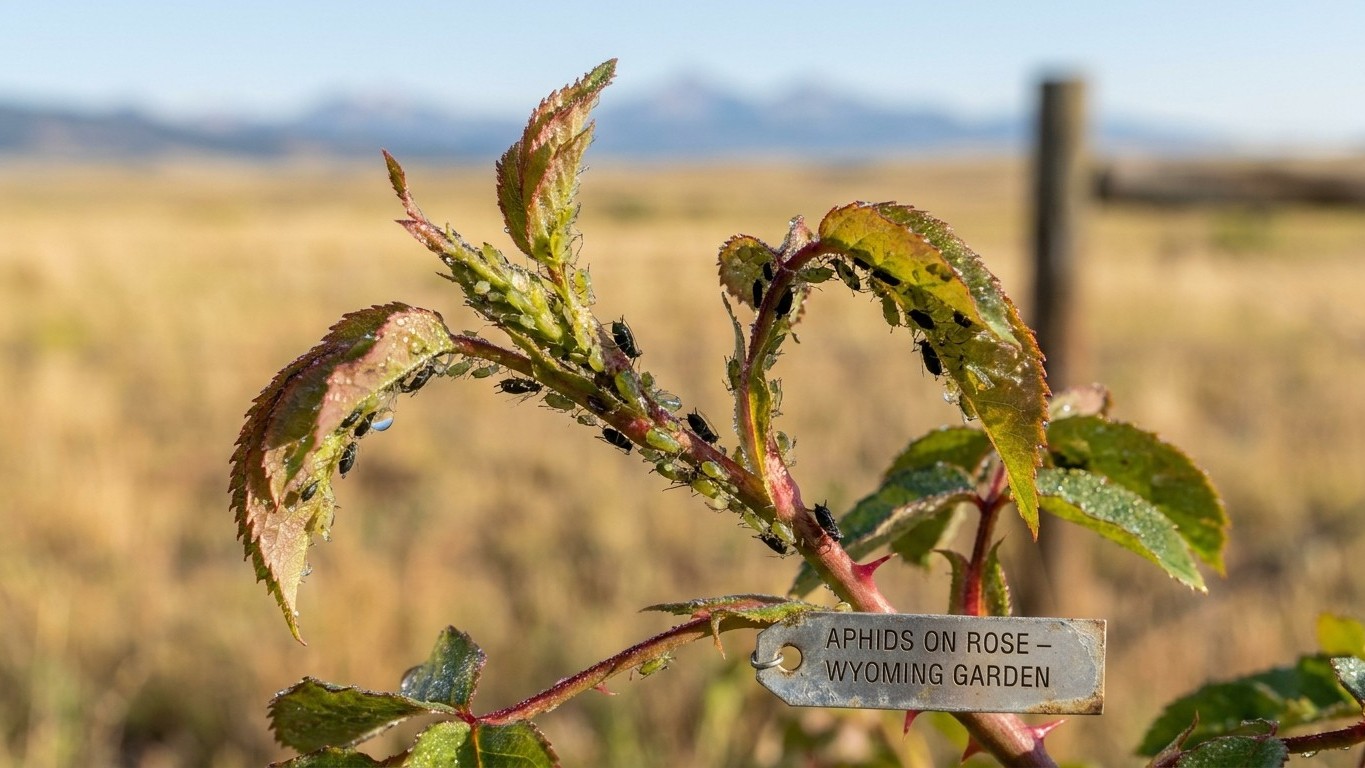

Aphids show up in Wyoming gardens and shelterbelts as soon as tender new growth appears, usually mid-to-late May in the warmer valleys around Cheyenne and Sheridan, and closer to mid-June at higher elevations near Jackson or Laramie. They stick around through the first hard frost, which for most of the state lands somewhere between late September and mid-October. That six-to-eight month window is when populations can spike fast, especially on roses, lettuce, peas, and the aspen and chokecherry that line so many Wyoming properties.
Why Wyoming’s Climate Shapes Aphid Timing

Wyoming’s high, dry, wind-scoured climate is actually a mixed bag for aphids. Low humidity slows down some fungal diseases that would otherwise wipe out colonies naturally, but it also stresses the soft-bodied insects themselves, which prefer moist, sheltered leaf surfaces. That’s why you’ll find the heaviest infestations tucked into irrigated lawns, greenhouse starts, and the leeward side of windbreaks, places where the wind can’t dry things out and temperatures stay a few degrees warmer than open range.
Elevation matters more here than in almost any other state. A garden in Cheyenne at roughly 6,000 feet warms up weeks before one in Jackson Hole at nearly 6,200 feet with a much shorter, colder growing season. The result is a staggered aphid calendar across the state rather than one uniform bloom-and-bust cycle. Gardeners in the Bighorn Basin often report aphids on cherry and plum trees by early May, while those in the mountain valleys don’t see comparable pressure until June.
Species Most Common in Wyoming
The green peach aphid and the potato aphid are the two most frequently reported species on vegetable crops statewide, according to extension bulletins from the University of Wyoming. On woody ornamentals and shade trees, especially aspen, cottonwood, and chokecherry, the woolly aphid and various leaf-curl aphids dominate. Rose aphid populations tend to explode in June on cultivated roses in town gardens, a pattern that mirrors much of the Mountain West.
Early Warning Signs Before an Infestation Takes Hold
Curling or puckering on new leaf tips is usually the first visible clue, well before you spot the insects themselves. Aphids feed by piercing plant tissue and sucking out sap, and that feeding pressure distorts growth in ways that show up days before colonies become dense enough to see at a glance.
A sticky residue on leaves, patio furniture, or car windshields parked under trees is the next tell. That’s honeydew, the sugary excretion aphids leave behind, and it often draws ants before it draws your attention to the aphids themselves. If you notice ants marching up and down a tree trunk in a steady line, check the branches above for colonies; ants actually farm aphids for the honeydew and will defend them from predators.
Black sooty mold growing on that honeydew is a secondary sign many Wyoming homeowners misread as a plant disease. It’s cosmetic and doesn’t infect the plant directly, but it blocks light from reaching leaf surfaces and is a reliable indicator that an aphid colony has been established for at least a couple of weeks.
What Actually Stops Aphids in Wyoming Conditions
Biological control does more heavy lifting in Wyoming than in wetter states, largely because natural predator populations, ladybugs, lacewing larvae, and parasitic wasps, tend to build up well in the dry summer months once they arrive. Avoiding broad-spectrum insecticide sprays early in the season gives these predators a chance to establish before aphid numbers climb. A single ladybug larva can consume dozens of aphids a day during its development, which often outpaces what a homeowner could achieve with repeated spot treatments.
Strong water sprays from a garden hose knock aphids off plants and are genuinely effective in Wyoming’s low-humidity climate, since the moisture dries fast and doesn’t invite fungal issues the way it might in a humid Southern garden. This works best on woody plants and roses where you can direct a firm stream at the undersides of leaves, the spot aphids prefer for feeding and reproducing.
Insecticidal soap and horticultural oil remain the go-to low-toxicity options recommended by university extension programs across the Mountain West. Both work on contact, breaking down the aphid’s outer coating, and neither leaves lasting residue that would harm the beneficial insects moving in behind them. Timing matters: apply in the cooler part of the day, since Wyoming’s intense high-altitude sun can cause leaf burn when oils or soaps are applied under midday heat.
Reflective mulch, aluminum foil strips laid around the base of vegetable plants, disrupts the way aphids navigate toward host plants and has shown measurable reductions in colonization rates in university trials. It’s a low-cost tactic worth trying in vegetable beds where chemical treatment isn’t ideal, particularly for anyone growing food close to the house or near a well.
Where Wind Helps and Where It Doesn’t
Wyoming’s near-constant wind is often credited with keeping aphid populations lower than in calmer climates, and there’s truth to that for open, exposed plantings. Wind disrupts the light, weak flight of winged aphid forms looking to colonize new plants, which slows the spread across a property. But wind doesn’t do much for plants tucked against a house foundation, inside a greenhouse, or along a fence line that blocks airflow, and those sheltered spots are exactly where Wyoming gardeners report their worst outbreaks.
Practical Prevention for Wyoming Properties
Overwintering eggs are the root of most spring infestations, and they’re laid on woody plant material in fall, particularly on rose canes, fruit tree bark crevices, and the base of perennial stems. A dormant oil spray applied in late fall or very early spring, before buds break, smothers these eggs and is one of the most effective single steps a Wyoming homeowner can take. University of Wyoming extension materials list this as a standard recommendation for orchard and ornamental care statewide.
Excess nitrogen fertilizer is a quieter contributor to aphid trouble than most people realize. Nitrogen pushes soft, sappy new growth, exactly the tissue aphids prefer, so heavily fertilized lawns and gardens often see denser colonies than plants grown on a leaner feeding schedule. Cutting back on high-nitrogen lawn feed in spring, especially near ornamental beds, can reduce the food-quality draw for aphids without sacrificing much in plant health.
Companion planting has a real track record here too. Alliums (garlic, chives, onions) and strongly scented herbs like dill and cilantro planted near vulnerable crops appear to disrupt aphid host-finding behavior, based on repeated observations from extension horticulture programs. It’s not a guarantee, but it’s a low-effort addition to a vegetable bed that costs little and often does double duty by attracting the same predatory insects that eat aphids.
Checking new nursery stock before planting matters more in Wyoming than people assume, since a fair share of infestations start on plants purchased from greenhouses where aphids arrived on incoming shipments. A quick look at the undersides of leaves and along stem joints before a plant goes in the ground can stop a colony before it ever touches native soil.
When Aphid Damage Crosses Into Real Plant Stress
Light aphid feeding rarely kills an established plant, but a heavy, sustained colony can stunt growth, reduce fruit and vegetable yield, and in young trees, cause enough leaf curl to slow photosynthesis for the whole season. Wyoming’s short growing window makes this more consequential than in states with a longer frost-free stretch; a plant that loses three or four weeks of healthy growth to aphid stress may not have time to fully recover before fall dieback sets in.
Aphids can also transmit plant viruses, and this is where vegetable growers should pay closer attention than ornamental gardeners. Green peach aphid, common across Wyoming, is a known vector for several mosaic viruses that affect potatoes and other nightshades, a concern given the state’s significant commercial and home potato production. Once a virus is transmitted, no spray reverses it, which makes early aphid control on seed potatoes and young transplants more about disease prevention than insect control alone.
For most home landscapes, though, the practical benchmark is simpler: if you’re seeing curled leaves on more than a quarter of a plant’s new growth, or honeydew dripping onto surfaces below, it’s worth acting with a soap spray or a strong water rinse before populations climb further. Left unchecked through a warm July stretch, aphid numbers can double in a matter of days, since most species reproduce asexually through much of the season and skip the slower egg-laying cycle until fall.