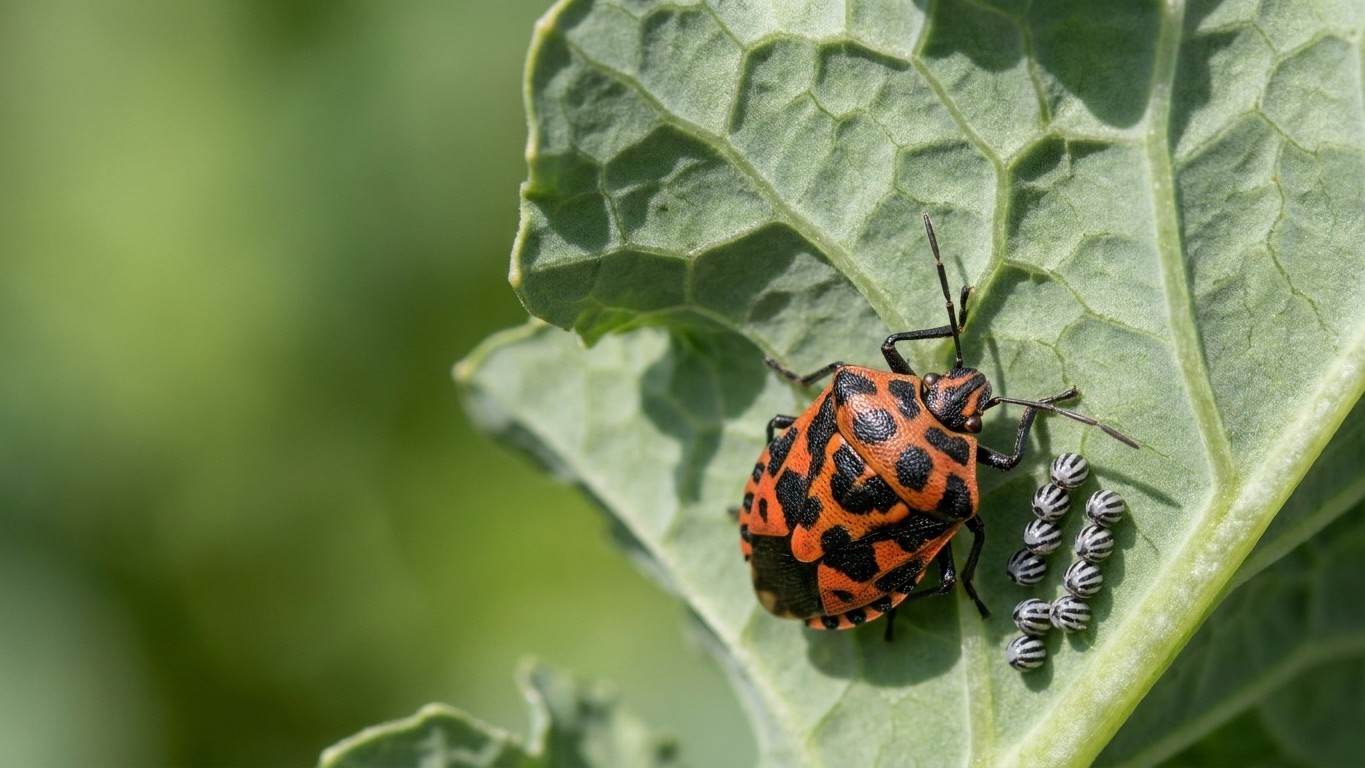

Harlequin bugs (Murgantia histrionica) show up in Oklahoma gardens as early as April in the southern counties and stick around through October, feeding almost exclusively on cabbage, kale, broccoli, mustard greens, and other brassicas. They don’t tolerate hard freezes, but Oklahoma’s long growing season and mild winters in the southern half of the state let them produce two to three generations a year, which is why a light infestation in spring can turn into a full-blown outbreak by late summer if nobody intervenes.
What a harlequin bug actually looks like

These aren’t your typical brown stink bug. Harlequin bugs are shield-shaped, about 3/8 of an inch long, and covered in bold black and orange-red (sometimes yellow) blotches. The pattern looks almost hand-painted, which is exactly where the name comes from. Adults have a flattened, angular body outline typical of stink bugs, and yes, they’ll release the same unpleasant odor if crushed or disturbed.
The eggs are the giveaway most gardeners miss until it’s too late. Females lay them in tidy double rows on the underside of leaves, and each egg looks like a tiny black-and-white striped barrel, almost like a miniature keg. A single female can lay a dozen or more eggs at a time and repeat the process every few days through the season. Nymphs hatch out looking like smaller, rounder versions of the adults, wingless at first, and go through five molts before reaching full size. At every stage, from nymph to adult, they feed the same way: by piercing plant tissue and sucking out sap, which leaves behind pale, blotchy patches that eventually turn brown and papery.
Unlike aphids or cabbage loopers, harlequin bugs rarely hide. They tend to cluster in groups on stems and leaf undersides, out in the open, which actually makes them one of the easier garden pests to spot early if you’re checking plants regularly.
When harlequin bugs show up in Oklahoma
Timing tracks closely with soil and air temperature. In Oklahoma’s transition zone climate, spanning USDA hardiness zones 6b through 8a, adults come out of winter shelter (leaf litter, plant debris, mulch) once daytime temperatures settle into the 65 to 70 degree range, usually mid-to-late April in the south and early May farther north. They head straight for whatever cole crops are already in the ground, which for most Oklahoma gardeners means spring plantings of cabbage, kale, collards, and turnips.
The real pressure builds in two waves. First-generation adults lay eggs in May, those nymphs mature by June, and by the time gardeners are pulling their spring brassicas and planting fall crops in August, a second or third generation is often already active and hungry. Fall brassica plantings, which many Oklahoma gardeners rely on because the state’s brutal summer heat makes cole crops bolt or bitter, walk straight into this later wave of harlequin bugs. That’s the window where damage tends to feel worse, simply because the pest population has had all summer to build.
Cold is really the only thing that fully stops them. Oklahoma’s first hard freeze, typically arriving between late October and mid-November depending on the region, kills off active adults and nymphs, though some adults will tuck into garden debris, weeds, or mulch to overwinter and re-emerge the following spring. This is one reason fall garden cleanup matters more for harlequin bugs than for a lot of other pests.
Which plants they target first
Harlequin bugs have a narrow diet compared to generalist pests like grasshoppers. Cruciferous vegetables are their near-exclusive food source:
- Cabbage and Brussels sprouts
- Kale, collards, and mustard greens
- Broccoli and cauliflower
- Turnips and radishes
- Wild mustard and other weedy brassica relatives growing along fence lines
That weedy mustard piece matters. Fields and yards with uncontrolled wild mustard or shepherd’s purse often act as a nursery population, feeding early-season harlequin bugs before garden crops are even in the ground.
What actually stops harlequin bugs
Insecticides work, but they’re not the first line of defense, and spraying without a plan tends to waste money and kill beneficial insects that would otherwise help. A layered approach works better in home gardens.
Hand removal and physical barriers
Because harlequin bugs cluster in plain sight and move slowly compared to something like a flea beetle, hand-picking is genuinely effective for small to mid-size gardens. Knocking adults and nymphs into a jar of soapy water each morning, when they’re sluggish from the overnight cool-down, can knock back a population fast if done consistently for a couple of weeks. Crushing the egg clusters on leaf undersides before they hatch is even more useful, since each destroyed egg mass removes a dozen future bugs in one move.
Floating row covers installed at planting time keep adults from reaching young plants in the first place. They need to go on before the bugs arrive and come off when plants flower if pollination matters, but for crops like cabbage or kale that don’t need pollinators, covers can stay on the whole season.
Trap cropping
Planting a small sacrificial patch of mustard or collards a few weeks before the main crop draws harlequin bugs away from the vegetables you actually want to harvest. Once the trap crop is loaded with bugs, it gets pulled and destroyed (bagged, not composted) or treated aggressively, while the main planting stays cleaner. This works particularly well in Oklahoma because the pest’s narrow host range makes trap crops reliably attractive.
Insecticide options when populations spike
For heavier infestations, insecticidal soap and horticultural oil kill nymphs and soft-bodied adults on contact but need direct spray coverage and repeat application every 5 to 7 days. Spinosad, a fermentation-derived insecticide, has decent activity against harlequin bugs and carries lower toxicity to bees compared to broad-spectrum options, though it still should be applied in early morning or evening to limit contact with pollinators. Pyrethrin-based sprays offer quick knockdown but break down fast in sunlight and heat, meaning Oklahoma’s summer sun cuts their window of effectiveness short.
Broad-spectrum synthetic insecticides labeled for stink bugs will kill harlequin bugs too, but they also wipe out the parasitic wasps and predatory insects that provide some natural check on populations. For a pest with two to three generations per season, killing off natural enemies early in the year often means a worse problem by August. The EPA’s guidance on integrated pest management lays out this same logic: chemical controls work best as a targeted last step, not a first response.
Sanitation and crop rotation
Since adults overwinter in garden debris, clearing out old brassica stems, fallen leaves, and nearby weedy mustard plants after fall harvest removes their shelter before the first freeze even hits. Tilling under crop residue in late fall exposes overwintering adults to cold and predators. Rotating brassica plantings to a different part of the yard each year, even just 20 or 30 feet away, also slows down how fast a local population finds next season’s crop.
Natural predators that help in Oklahoma gardens
Harlequin bugs aren’t defenseless against everything. Parasitic wasps in the genus Trissolcus lay their own eggs inside harlequin bug eggs, killing the pest before it even hatches, and these wasps are naturally present across much of the southern Great Plains. Spiders, assassin bugs, and birds like wrens will also pick off nymphs given the chance. Avoiding unnecessary broad-spectrum spraying, especially early in the season before populations peak, gives these predators room to build up and take some of the pressure off without any extra work.
One detail that trips up a lot of gardeners: harlequin bug damage looks similar to squash bug or stink bug damage on the surface (yellow stippling, wilting leaves), but the black-and-white striped eggs and the orange-and-black adult pattern are unmistakable once you’ve seen them. Misidentifying the pest usually leads to spraying the wrong product on the wrong life stage, which is half the reason harlequin bug populations get out of hand in Oklahoma gardens that otherwise seem well-managed.