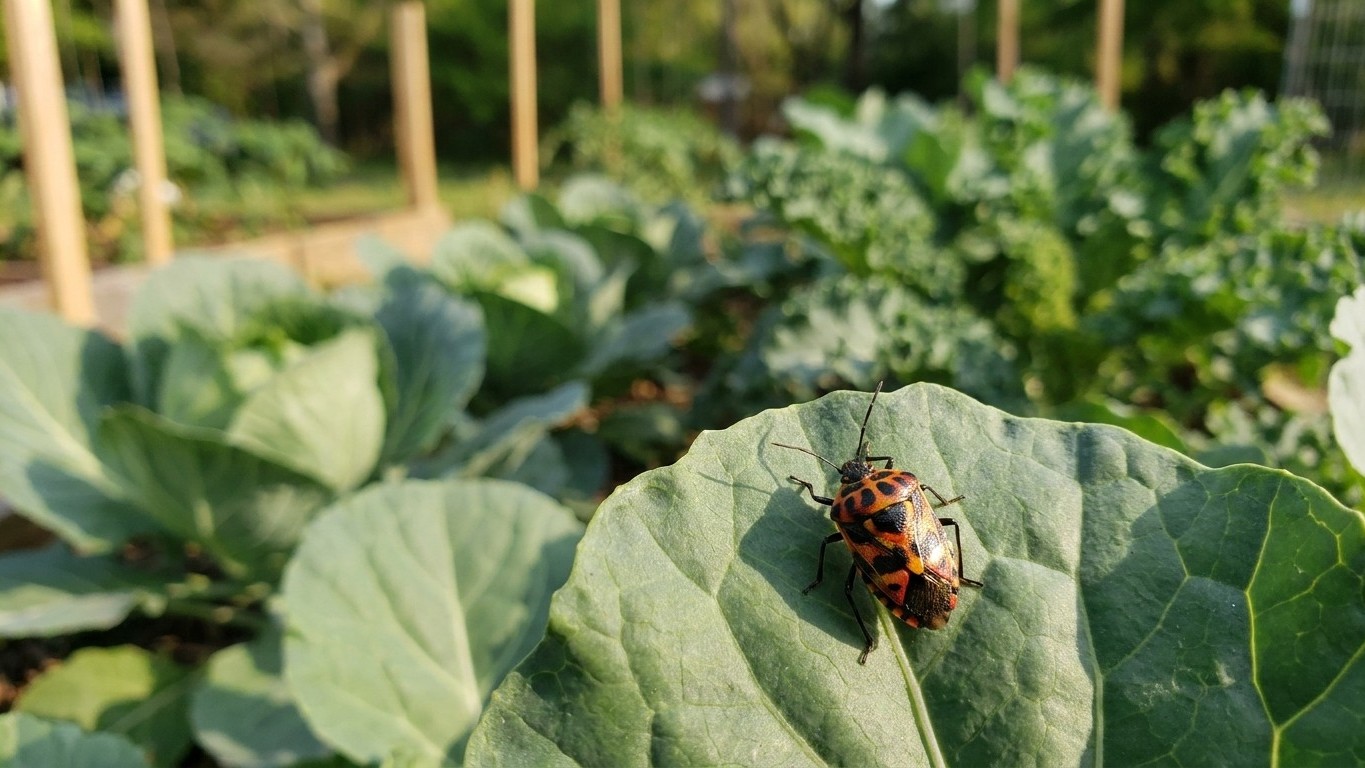

Harlequin bugs start showing up in Tennessee gardens in mid-to-late April, once soil and air temperatures hold steady above the low 60s. They stick around through October, cycling through two to three generations before cold weather knocks them back. Stopping them means combining fall cleanup, physical barriers, and targeted treatments timed to the nymph stage, not the adults.
What the Harlequin Bug Looks Like

Murgantia histrionica is hard to miss once you know what you’re looking for. Adults measure about three-eighths of an inch long, shield-shaped like other stink bugs, and marked with a bold pattern of black, orange, and red. Some gardeners describe them as looking like tiny circus performers, which is fitting given the “harlequin” name. They belong to the stink bug family, and if you squash one, you’ll know it immediately.
The eggs are just as distinctive. Females lay them in tight double rows, usually about a dozen at a time, and each egg looks like a miniature barrel striped in black and white. Flip over a cabbage or collard leaf in late spring and you’ll often spot a cluster stuck to the underside. Nymphs hatch out looking like smaller, rounder versions of the adults, minus the wings, and they molt through five stages before reaching maturity.
When Harlequin Bugs Show Up in Tennessee
Timing follows the thermometer more than the calendar. Adults overwinter tucked into leaf litter, garden debris, and the base of old crop residue, and they don’t move until conditions warm up enough to make feeding worthwhile. In West Tennessee, around Memphis, that first wave often appears by early-to-mid April. In the cooler ridges of East Tennessee, near Knoxville or up toward the Smokies, it can be two to three weeks later.
Once the first generation gets established, things move fast. A female can lay dozens of eggs over her lifespan, and in Tennessee’s climate a full generation from egg to adult takes roughly four to six weeks depending on temperature. That means gardeners typically see two overlapping generations by midsummer and sometimes a third pushing into September, especially in a warm fall. Peak pressure on brassica crops usually lands between June and August, right when broccoli, cabbage, and kale are sizing up.
Population numbers tend to spike after a mild winter. When hard freezes are scarce, more overwintering adults survive to kick off the spring cycle, and Tennessee’s winters have been trending milder over the past decade in the western and middle parts of the state. That’s one reason some home gardeners feel like the bug problem gets a little worse every few years, even without changing what they plant.
Signs You’re Dealing With Harlequin Bugs, Not Something Else
Feeding damage looks different from chewing insects like cabbage loopers. Harlequin bugs pierce plant tissue and suck out fluid, which leaves behind white or yellow stippled blotches, wilted patches, and blackened, distorted leaf edges. On young seedlings, heavy feeding can kill the plant outright before it ever gets established. If you see the colorful adults or striped eggs alongside that stippling pattern, you can rule out most other brassica pests with confidence.
Why Your Garden Attracts Them
Harlequin bugs have a strong preference for cruciferous plants: cabbage, collards, kale, broccoli, Brussels sprouts, turnips, and mustard greens top the list. But they don’t disappear when those crops are out of season. Wild mustard, pepperweed, and other weedy relatives in the same plant family act as reservoir hosts, letting populations survive and multiply along fence lines, ditches, and neglected garden corners even when your vegetable beds are empty.
This is part of why the bug has become such a persistent presence across the Southeast. Tennessee’s mix of small-scale vegetable gardens, roadside weeds, and mild winters gives the insect exactly the patchwork habitat it needs to move from wild hosts to cultivated crops and back again throughout the growing season.
What Actually Stops Harlequin Bugs
Control works best as layered pressure rather than a single fix. Waiting until adults are swarming a full-grown cabbage patch is the hardest time to get ahead of them. The earlier stages, eggs and young nymphs, are far more vulnerable.
Cultural Control: The Foundation
Fall cleanup matters more than most people realize. Because adults overwinter in crop debris and fallen leaves, pulling spent brassica plants and clearing garden litter after harvest removes a huge chunk of the population before it ever gets the chance to hibernate on site. Mowing or pulling wild mustard and other weedy hosts near the garden edge cuts off the reservoir that lets bugs rebuild numbers between plantings.
Trap cropping is another tool worth using. Planting a small patch of mustard greens a few weeks ahead of your main crop gives harlequin bugs a preferred target to colonize first. Once the trap crop is loaded with bugs, you can treat or destroy it directly, protecting the main planting with far less spray.
Physical Removal and Barriers
Row covers installed at planting time keep adults from ever reaching the crop to lay eggs, which is often the single most effective step for a home garden. They need to go on before the bugs arrive, since covering an already-infested bed just traps the problem underneath.
Hand removal still works, especially for smaller gardens. Checking the undersides of leaves every few days, crushing egg clusters, and dropping adults and nymphs into soapy water knocks numbers down without any chemical input. It’s tedious, but for a raised bed or two it’s genuinely effective, particularly early in the season before populations explode.
Targeted Treatments
When populations get ahead of manual control, insecticidal soap and horticultural oils can knock down nymphs on contact, though they need direct coverage and repeat applications since they have no residual effect. Products containing pyrethrins offer another option for heavier infestations, and spinosad-based treatments are labeled for use on many vegetable crops and tend to be effective against nymphs. Adult harlequin bugs are tougher to kill with contact sprays than the nymph stages, which is another reason timing treatments to catch young nymphs pays off.
Whatever product you choose, read the label for the specific vegetable you’re treating and respect the pre-harvest interval, since some treatments require a waiting period before the crop is safe to eat.
Preventing Next Year’s Infestation
Rotating brassica crops to a different part of the garden each year makes it harder for overwintering adults to find their preferred host the moment they wake up in spring. Combined with thorough fall debris removal and weed control around the garden perimeter, rotation breaks the cycle that lets harlequin bugs build up season after season in the same beds.
Keep an eye on Tennessee’s winter weather too. A string of hard freezes in December and January tends to translate into a lighter first wave the following April, giving you a head start if you get your row covers and trap crops in early. A mild winter means the opposite: plan on earlier scouting and be ready to act the moment those first colorful adults show up on your collards.