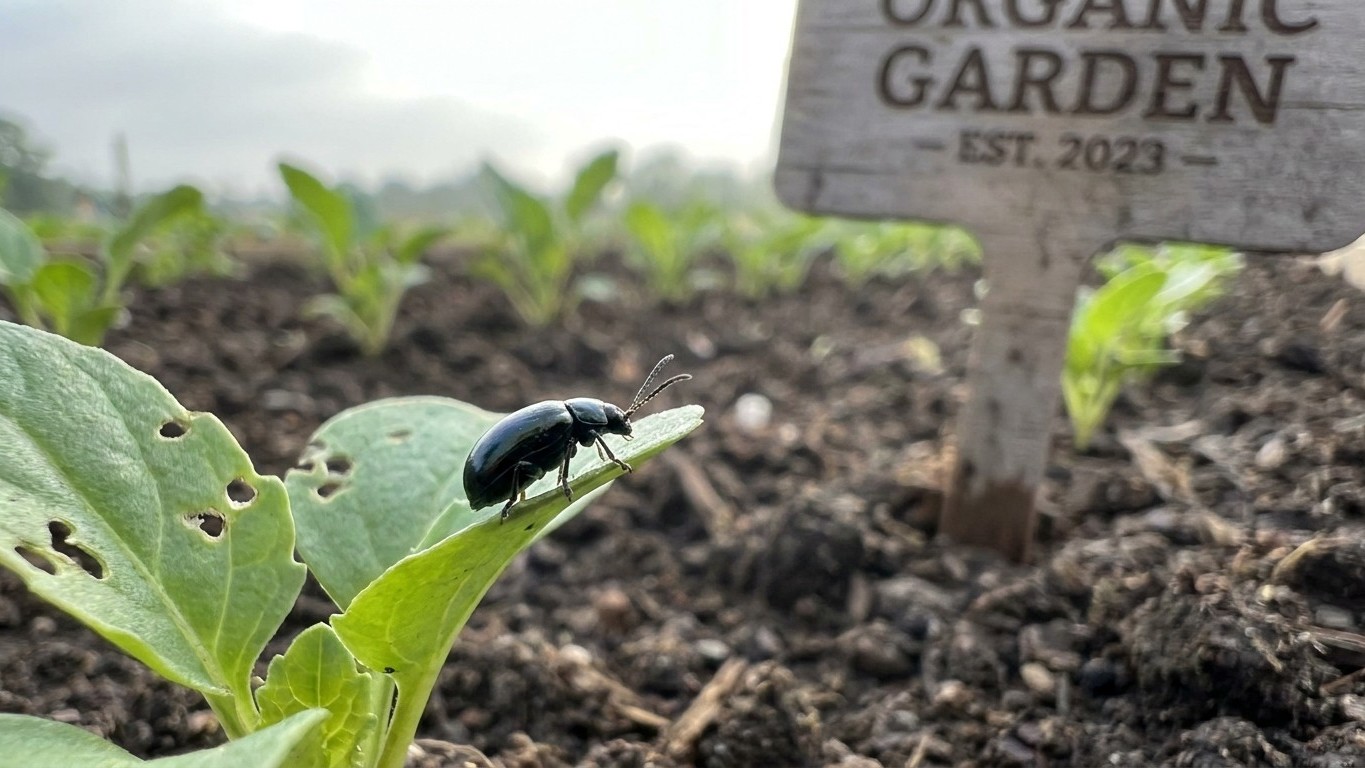

Flea beetles start chewing on Washington gardens as soon as soil temperatures climb into the low 50s, which usually means late April on the wet side of the Cascades and sometimes as early as mid-April in the warmer Yakima and Tri-Cities area. The fastest way to stop them is row cover installed before adults emerge, paired with a fall cleanup that removes the leaf litter where they overwinter. Everything else, from timing your planting to picking the right spray, builds on that basic move.
When Flea Beetles Actually Show Up in Washington

Washington’s split climate means flea beetle timing isn’t the same statewide. West of the Cascades, where Seattle, Tacoma, and Olympia sit under a marine layer that keeps spring soil cool and damp, adult beetles tend to wake up in late April through mid-May. East of the mountains, in the Columbia Basin around Yakima, Pasco, and the Tri-Cities, sandy soils warm faster under a drier sun, so beetles can be active by the second or third week of April.
Spokane and the Palouse region split the difference, usually seeing beetle activity in early May once nighttime lows stop dipping below freezing. The trigger isn’t a calendar date so much as soil temperature. Once the top few inches hit somewhere between 50 and 55 degrees Fahrenheit, overwintering adults dig out of plant debris and mulch and start looking for tender seedlings.
Washington gardeners deal with a handful of species. The western black flea beetle and potato flea beetle are the most common in home gardens statewide, while the tuber flea beetle shows up more often in eastern Washington potato and tomato patches. A separate species, the corn flea beetle, targets sweet corn and can spread Stewart’s wilt, a bacterial disease that’s more of a commercial concern but worth knowing about if you grow corn near a farm field.
A Second Wave in Late Summer
Most Washington flea beetle species complete one generation per year, but warmer eastern counties sometimes see a partial second generation in August. That means a garden that looked clean in June can get hit again right as fall brassicas like kale, arugula, and radish are germinating. Gardeners who only watch for spring damage and let their guard down in summer are the ones who lose a whole tray of fall seedlings overnight.
What They Target and How to Spot the Damage
Flea beetles favor the brassica family hardest, so anything in the cabbage, broccoli, kale, mustard, radish, and arugula lineup is fair game. Potatoes, eggplant, and tomatoes come next on the menu, especially in eastern Washington where the potato and tuber flea beetle species are more established. Spinach and beets get occasional hits too.
The signature sign is a “shot-hole” pattern: dozens of tiny, round or irregular holes peppered across a leaf, usually concentrated near the veins first. Seedlings and transplants under about four inches tall are the most vulnerable because a few dozen holes on a two-inch leaf can be fatal, while the same damage on a mature plant is mostly cosmetic. If you tap a leaf and see small, dark, shiny beetles jump or fly off, that confirms the diagnosis, they’re called flea beetles for a reason and their back legs let them spring several inches in a single hop.
Larvae are the part most gardeners never see. They live in the soil and feed on roots and tubers, which is why potato crops in the Columbia Basin sometimes show stunted growth or scarred tuber skin even when the leaves above ground look fine. That underground damage is harder to treat directly, which makes prevention at the adult stage even more important.
What Actually Stops Flea Beetles
Control works best as a layered approach rather than one silver-bullet product. Here’s what has the most consistent track record for home gardens in Washington’s climate.
Physical Barriers
Floating row cover, the lightweight spun fabric sold at most garden centers, is the single most reliable tool because it blocks adults from ever reaching the plant. The trick is timing: cover needs to go on at planting, before beetles emerge, and stay sealed at the edges with soil or pins. Once beetles are already established under the cover, it traps them with a buffet, so a mid-season cover-up can backfire.
Delaying transplant dates by even two or three weeks past the typical local emergence window lets seedlings grow past the fragile stage before beetles peak. In western Washington that might mean holding brassica transplants until early June instead of mid-May.
Trap Crops and Timing Tricks
Radishes are a classic sacrificial planting. Flea beetles prefer radish leaves over most other brassicas, so a border row of fast-germinating radishes planted a week or two before your main crop can pull beetles away from cabbage and kale. Pull and destroy the radish trap row once it’s covered in holes rather than letting it become a breeding ground.
Cultural Practices That Cut Numbers Next Year
Because adults overwinter in garden debris, soil clumps, and weedy field edges, a thorough fall cleanup, removing old brassica stalks and turning over the top few inches of soil, exposes overwintering beetles to cold and predators. Crop rotation matters too: moving brassicas to a different bed each year, ideally with at least 100 feet of separation from last year’s planting, breaks the short-distance walk beetles make from their overwintering site to a fresh host.
Direct Treatments
For active infestations, a few options have reasonable evidence behind them:
- Diatomaceous earth dusted on dry leaves damages the beetle’s exoskeleton on contact, though it needs reapplying after rain or irrigation.
- Kaolin clay sprays coat leaves in a fine white film that beetles avoid because it interferes with their ability to find and grip the plant.
- Insecticidal soap or neem oil can knock down adult populations on contact but only work while wet, so timing sprays for early morning or evening improves results.
- Spinosad, a fermentation-derived insecticide, has stronger residual activity against flea beetle adults and is commonly available in ready-to-use garden formulas.
- Beneficial nematodes applied to soil target the larval stage underground, which is useful for potato growers dealing with tuber damage rather than leaf damage.
Broad-spectrum pyrethroid sprays will kill flea beetles but also wipe out the parasitic wasps and ground beetles that naturally keep beetle numbers in check, so they tend to create bigger problems the following season. Reserve them for genuine outbreaks rather than routine use.
Regional Notes Worth Knowing
Gardeners in the Puget Sound lowlands generally deal with one clean generation and a shorter feeding window because cool marine air slows beetle development. East of the Cascades, the combination of longer hot stretches and irrigated fields near commercial potato and vegetable operations means pressure tends to run higher and longer, sometimes into a partial second brood by late summer.
Home gardens near commercial brassica or potato fields in Grant, Franklin, or Benton counties often see heavier beetle pressure simply because there’s a larger regional population cycling through nearby crop fields. If your garden borders farmland, starting row covers a week earlier than the general regional guideline is a reasonable hedge.
Soil type plays a role too. The sandy, fast-draining soils common in the Columbia Basin warm up quickly and dry out fast, both of which favor early beetle emergence. Heavier clay soils west of the mountains hold cold and moisture longer, which can push emergence back by a week or two compared to a sandy garden bed just a few miles away.
Watching for Confusion With Other Pests
Shot-hole damage sometimes gets blamed on slugs or caterpillars, but those pests leave larger, irregular chewed edges rather than the tight, round holes flea beetles produce. Slug damage also comes with a slime trail, and caterpillar damage usually shows up alongside visible frass, the small dark droppings caterpillars leave behind. If you see clean pinholes with no slime and no droppings, flea beetles are the more likely culprit, especially in April and May when slugs are less active on dry, warming soil.
A sticky yellow card trap set a few inches above the soil near vulnerable seedlings is a low-effort way to confirm activity before damage gets bad. Catching two or three beetles a day on a card is an early warning sign that it’s time to get row cover down, not a reason to panic yet.