
Squash bugs in Michigan follow a predictable calendar: overwintered adults crawl out of dead leaves and mulch once soil temperatures climb into the 60s, usually the last week of May through mid-June, then lay eggs that hatch into a new generation by early-to-mid July. That single generation per year is the good news for Michigan gardeners compared to warmer states that fight two or three waves. The bad news is that this one wave can strip a squash patch bare if it goes unmanaged, and by the time wilting shows up on the vines, the bugs have usually already done the damage that matters.
Two Emergence Windows: Late Spring Adults, Midsummer Nymphs

Adult squash bugs spend winter tucked under fallen leaves, straw mulch, stacked firewood, or the loose bark of nearby trees. They don’t fly south or die off the way some garden pests do. They just wait, sometimes just a few feet from where they fed the previous season. Once daytime highs settle into the 70s, which in most of Lower Michigan happens sometime between late May and the second week of June, those adults wake up, mate, and start hunting for young squash, pumpkin, or zucchini plants.
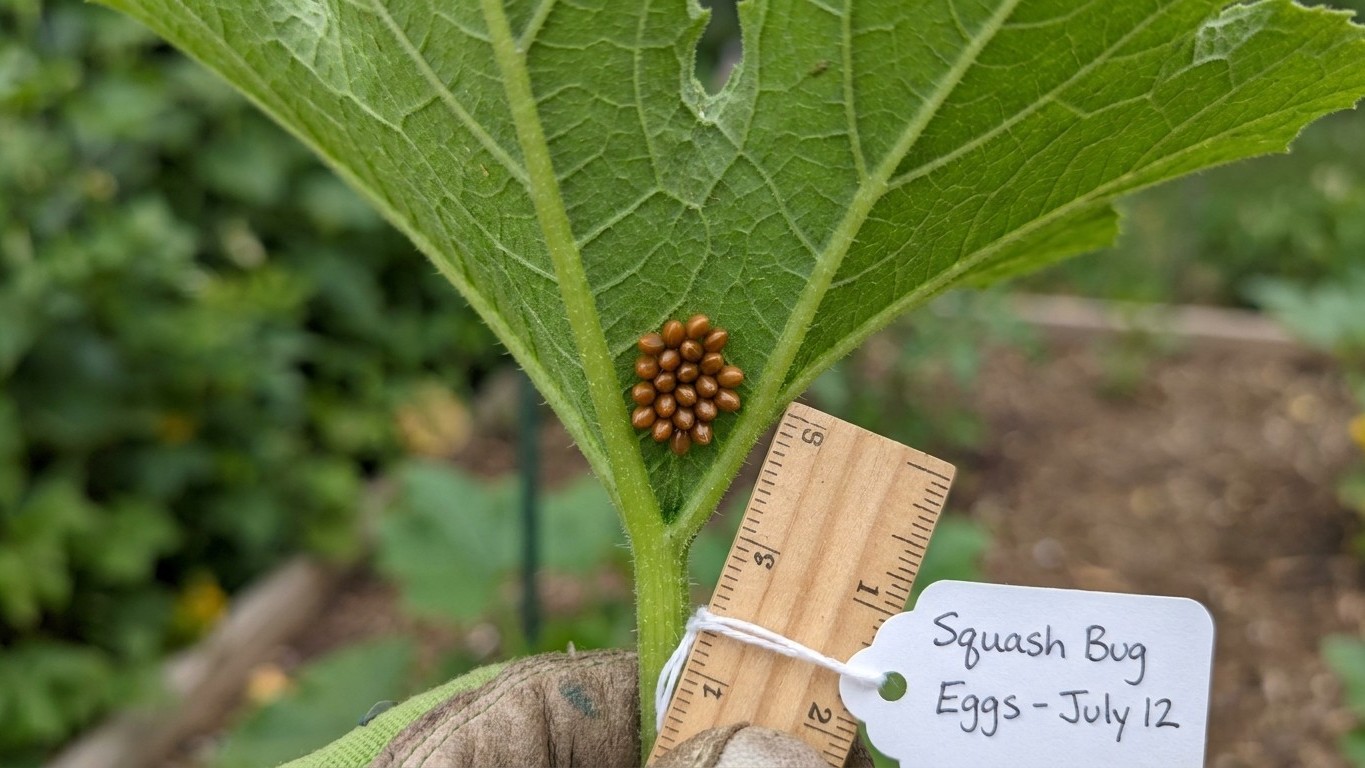
Egg-laying is the event to watch for. Females deposit clusters of bronze-orange eggs, usually 15 to 40 at a time, in the angle formed by leaf veins on the underside of foliage. In most of Michigan, that egg-laying push runs from mid-June through mid-July. The eggs hatch in roughly ten days, and the gray, spider-legged nymphs that emerge feed in groups for six to eight weeks before molting into the hard-shelled, brownish-black adults that will overwinter and start the cycle again come next spring. Northern counties near Traverse City or the Upper Peninsula run a week or two behind the southeast corner of the state, simply because the soil warms slower.
Spotting Damage Before Vines Collapse
The first sign most gardeners notice isn’t the bug itself. It’s a leaf that looks scorched, with yellow speckling that turns brown and then black within a few days. Squash bugs feed by piercing plant tissue and injecting saliva that breaks down cells, then sucking out the fluid, and that saliva is what causes the rapid collapse. A few bugs on a mature, established plant is annoying but survivable. Twenty or thirty on a young zucchini seedling can kill it inside a week.
Flip the leaves before you look anywhere else. Bronze egg clusters are easier to catch than the bugs themselves, which scatter and hide the moment a plant is disturbed. Adults are shield-shaped, about 5/8 inch long, and move slowly, which makes hand removal realistic if you catch them early. Nymphs cluster in groups and look almost like tiny gray spiders with black legs until they mature.
There’s a disease connection worth knowing about too. Squash bugs can transmit cucurbit yellow vine disease, caused by the bacterium Serratia marcescens, which produces yellowing and sudden collapse of vines that looks a lot like the wilt the bugs cause directly through feeding. Research from land-grant universities in the Midwest has documented this bug as a vector, which means controlling the insect population isn’t just about preventing chewed leaves, it’s about limiting a disease that can take out an entire row of pumpkins or squash regardless of how many bugs are actually still feeding on it.
What Actually Stops Squash Bugs in a Michigan Garden
Timing matters more than product choice here. Squash bugs get almost impossible to kill with contact sprays once they harden into adults, so the real window for control is during the nymph stage, from roughly early July through late August depending on when eggs hatched.
Row covers work well in the first three to four weeks after planting, before flowers open. Since squash needs pollinators to set fruit, covers have to come off once blossoms appear, which is exactly the window when adult bugs are most active anyway. Growers who install covers at transplant and pull them at first bloom generally see a real reduction in early infestation, simply because the bugs never get a chance to lay that first generation of eggs on the plant.
Trap boards are a low-tech trick that still works: lay a flat board or shingle on the soil near the base of the plants in the evening. Squash bugs hide underneath overnight, and flipping the board each morning to crush or collect them can meaningfully cut down a population over a few weeks. Hand-picking adults and dropping them into a bucket of soapy water is tedious but effective in home gardens under a few hundred square feet, especially if it’s done daily during peak egg-laying in June and early July.
Insecticidal soap and neem oil have a real effect, but only on the soft-bodied nymphs, sprayed directly, with good coverage on leaf undersides where the bugs cluster. Once the exoskeleton hardens, those same products barely slow adults down. Anyone reaching for a stronger insecticide should check the label for cucurbit crops specifically and spray in the evening, when bees and other pollinators aren’t active on the blossoms.
Garden sanitation closes the loop. Squash bugs overwinter in exactly the kind of debris most people leave behind after harvest, dead vines, straw mulch, cardboard weed barriers. Clearing that material out in the fall, rather than waiting until spring cleanup, removes a meaningful share of the local overwintering population before it ever gets a chance to wake up.
Varieties That Hold Up Better
Not every squash is equally attractive to this pest. Butternut squash carries a natural resistance that shows up consistently in field trials, likely tied to leaf texture and stem density that make feeding and egg-laying harder. Zucchini, yellow crookneck, and pattypan varieties, by contrast, tend to draw the heaviest infestations and show wilt damage fastest, often because their stems are hollow and more vulnerable once bugs start feeding at the base.
Some Michigan growers plant a “trap crop” of Blue Hubbard squash a few feet from their main planting. Squash bugs strongly prefer Hubbard varieties over most others, so they concentrate there instead of spreading across the whole patch, making it easier to monitor and treat one small area instead of an entire garden bed.
Natural predators help more than most home gardeners realize. The tachinid fly (Trichopoda pennipes) lays a small white egg on the back of adult squash bugs, visible as a tiny rice-grain-shaped dot near the head or thorax. A bug carrying that egg is already doomed, since the fly larva will kill its host within a couple weeks, so it’s worth leaving those individuals alone rather than squashing them on sight. Building a garden that supports these flies, by planting nectar-rich flowers like dill or fennel nearby, adds a layer of control that doesn’t require any spraying at all.
Related guides
- Squash bug in Indiana: When It Shows Up and What Stops It
- Squash bug in Wisconsin: When It Shows Up and What Stops It
- Squash bug in Minnesota: When It Shows Up and What Stops It
- Squash bug in Missouri: When It Shows Up and What Stops It
- Asiatic garden beetle in Michigan
- Squash bug in Massachusetts: When It Shows Up and What Stops It
- Squash bug in British Columbia: When It Shows Up and What Stops It