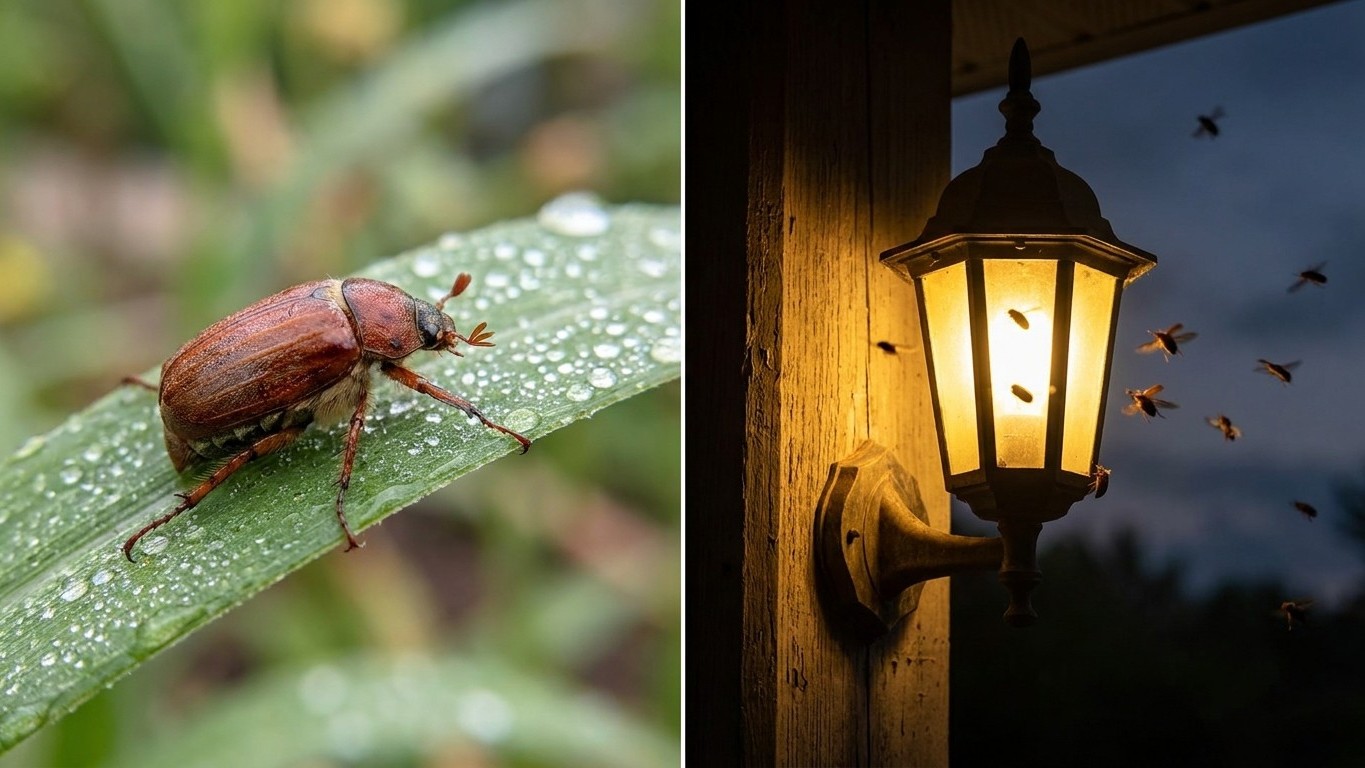

Asiatic garden beetles show up in Michigan on warm summer nights, usually from late June through September, with the heaviest activity in July and August. They’re nocturnal fliers drawn to porch lights and streetlamps, which is often the only reason homeowners notice them at all. Stopping them means targeting two very different life stages: the grubs chewing turf roots underground and the adult beetles skeletonizing leaves after dark. Grub-stage insecticides applied in early-to-mid summer, beneficial nematodes in moist soil, and simply dimming outdoor lights during peak flight weeks are what actually make a dent in a Michigan infestation.
Identifying the Asiatic Garden Beetle in Michigan Yards

This isn’t the flashy metallic green-and-copper beetle most Michiganders already recognize from their roses. The Asiatic garden beetle is smaller and plainer: about 3/8 inch long, oval, and colored anywhere from cinnamon to a dark reddish-brown, without the distinct wing markings of a Japanese beetle. It’s a native of China and Japan that established itself in the eastern United States decades ago and has since crept into the Midwest, including Michigan, where county-level reports have become more frequent over the past several years.
The beetle’s habit of hiding in soil, mulch, or thatch during daylight hours is exactly why it’s so easy to miss. Adults burrow a shallow inch or two underground when the sun comes up and only emerge after dusk to feed and mate. If you shake a shrub or perennial bed at night with a flashlight, you’ll often see them scatter or drop to the ground, a defensive reflex that also makes them tricky to hand-pick.
Their larvae look almost identical to other white grubs found in Michigan lawns, curled, cream-colored, with a brown head capsule. Telling an Asiatic garden beetle grub apart from a Japanese beetle or June beetle grub usually requires looking at the raster pattern (the arrangement of hairs on the underside of the last abdominal segment), which is a job best left to an MSU Extension diagnostic sample if you need certainty.
When It Shows Up: Michigan’s Seasonal Timeline
The life cycle runs on a single generation per year, which is slower and more predictable than some other lawn pests. Grubs that hatched the previous fall spend winter dormant several inches down in the soil profile, below the frost line, and become active again as Michigan soil temperatures climb in April and May.
Those overwintered grubs resume feeding on grass roots through spring, then pupate in the soil in late May or June. Adult beetles start emerging in late June, with populations building through July and typically peaking in August. Females mate, then burrow into soil to lay eggs, often favoring irrigated lawns and garden beds where moisture makes digging easier and gives eggs a better survival rate.
New grubs hatch from those eggs by late summer and begin feeding on roots almost immediately, right up until cold weather forces them back down to overwinter. That means Michigan homeowners are dealing with adult foliage damage on a summer schedule and grub-related turf stress on an early fall schedule, sometimes in the same season, sometimes a year apart depending on how the population is distributed across the yard.
Why Timing Trips People Up
A lot of grub treatments fail simply because they’re applied at the wrong point in this cycle. Products aimed at killing young grubs work best when eggs have just hatched, generally August into early September in most of Michigan. Apply too early and the product breaks down before grubs are even present; apply too late in fall and larger, more resilient grubs are harder to kill and have already done most of their root damage for the season.
What Asiatic Garden Beetles Actually Damage
Adults are the more visible offenders in a garden setting because their host list is long and generalist. Asters, chrysanthemums, dahlias, roses, and a wide range of vegetable and ornamental plants all show up on their menu. Feeding damage looks like irregular notches and ragged holes chewed along leaf edges, sometimes stripped down to lace-like skeletons on soft-leaved perennials by late summer. Because feeding happens after dark, gardeners frequently wake up to fresh damage with no visible culprit, which leads to a lot of misdiagnosed slug or caterpillar complaints.
Below ground, the grubs behave like other white grub species that Michigan turf managers already deal with: they clip grass roots close to the crown, which weakens the sod’s ability to hold together and pull up water and nutrients. In light infestations this shows up as patchy thinning or a slightly spongy feel underfoot. In heavier infestations, turf can be peeled back like a loose carpet, and raccoons or skunks digging up lawns at night for a grub snack are often the first visible sign something’s wrong before the grass damage itself becomes obvious.
Unlike some grub species that concentrate damage in a narrow window, Asiatic garden beetle grubs keep feeding into fall as long as soil stays workable, which in a mild Michigan autumn can mean root damage continuing into October or even November.
What Actually Stops It
No single tactic handles both life stages, so effective control in Michigan yards usually combines a soil-focused approach for grubs with a light and habitat approach for adults.
Grub Control: Timing Beats Product Choice
Preventive insecticides containing active ingredients such as imidacloprid or chlorantraniliprole work best when applied in early-to-mid summer, ahead of egg hatch, so the product is already established in the root zone when young grubs start feeding. Curative treatments aimed at grubs already present in the soil need to go down while grubs are still small, generally by early September in most of Michigan; larger, late-season grubs are harder to knock back with any product.
Beneficial nematodes, specifically species in the Heterorhabditis genus, offer a non-chemical option that Michigan State University’s own turf research has studied for white grub management generally. They need moist soil and warm temperatures to move through the ground and infect grubs, so irrigating before and after application, and applying during that same late-summer hatch window, matters more than the nematode species selected.
Keeping turf itself healthy also reduces vulnerability. Thicker, well-rooted lawns tolerate a moderate grub population without visible dieback, while thin, drought-stressed, or over-fertilized-then-neglected lawns show damage fast. Mowing at a taller height (closer to 3 to 3.5 inches) and avoiding unnecessary summer irrigation in beds and lawns that don’t need it can make soil less inviting for egg-laying females in the first place, since they favor moist, easy-to-penetrate ground.
Adult Control: Manage Light and Habitat, Not Just Chemicals
Because there’s no commercial pheromone trap for this species the way there is for Japanese beetles, monitoring relies on visual inspection and light attraction rather than trap counts. Reducing exterior lighting near vulnerable plantings during peak flight weeks, switching porch and landscape lights to warmer or yellow-toned bulbs, and turning off unnecessary outdoor lighting after dark can measurably cut the number of adults congregating near a home.
For high-value ornamentals and vegetable beds, floating row covers or fine mesh netting installed before evening and removed in daylight physically block adults from reaching foliage during their feeding window. Handpicking at night with a flashlight works on small plantings, though the beetles’ habit of dropping to the ground when disturbed means a container of soapy water underneath the plant catches far more of them than trying to grab beetles off leaves directly.
Contact insecticides labeled for adult beetle foliage feeding can help in ornamental beds during heavy outbreaks, but because feeding happens overnight, timing applications for early evening, just before beetles become active, tends to outperform daytime spraying.
- Preventive grub insecticide: apply early-to-mid summer before egg hatch
- Beneficial nematodes: apply late summer in moist, warm soil
- Lighting changes: switch to yellow bulbs or reduce evening lighting near beds
- Row covers or netting: install at dusk over high-value plants
- Turf care: mow taller, avoid over-irrigating in late summer
Michigan’s grub complex rarely involves just one species in a given lawn. It’s common to find Asiatic garden beetle grubs sharing soil with Japanese beetle or European chafer larvae, which is one more reason a soil sample check, rather than a guess based on adult beetle sightings, gives a clearer picture of what’s actually driving turf damage before choosing a treatment.