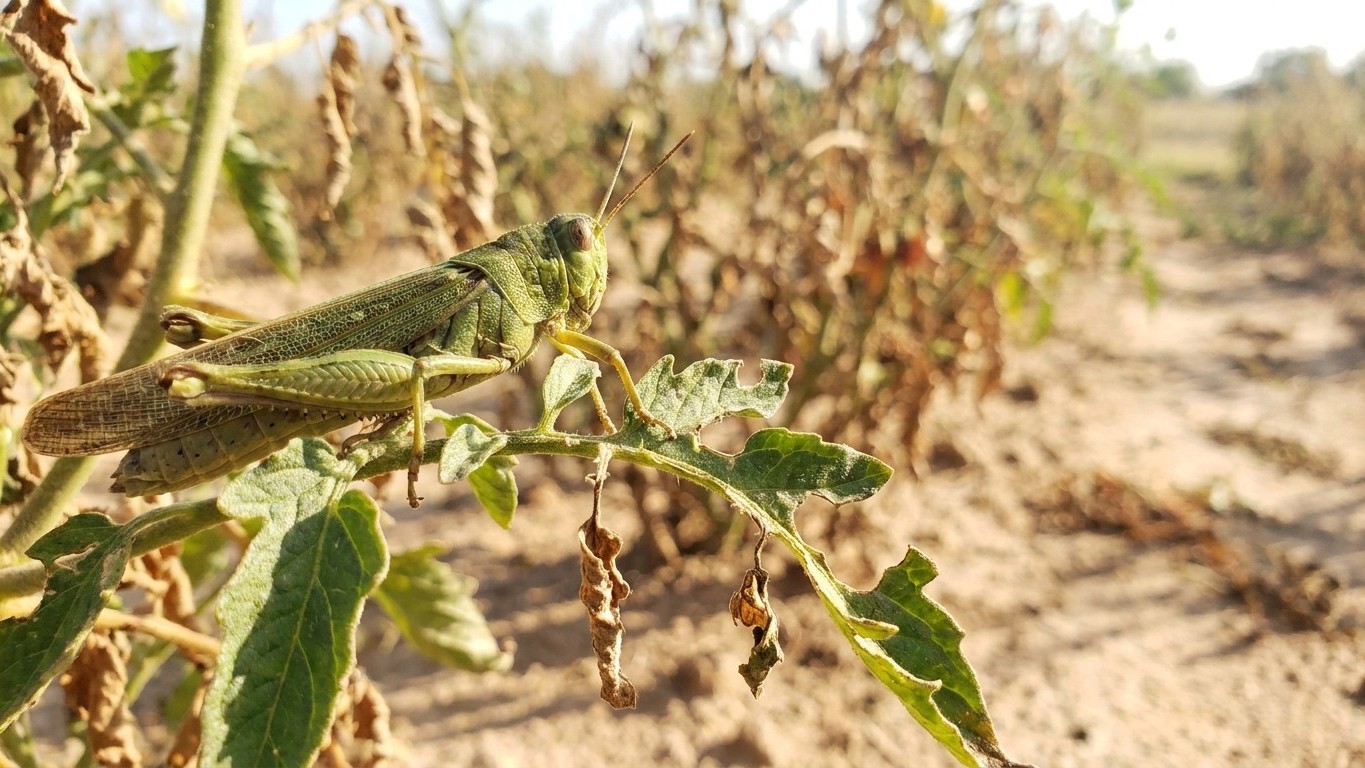

Oklahoma’s grasshopper season runs from late May through the first hard freeze, usually mid-October, with the heaviest pressure on gardens and pastures hitting between July and early September. That window matters because it’s when nymphs finish molting into voracious, fully-winged adults capable of stripping a vegetable patch in days. If you’re seeing them jump ahead of your mower right now, you’re not imagining an invasion. You’re watching a population that’s been building since spring finally peak.
Why Oklahoma Sees Such Heavy Grasshopper Pressure

Oklahoma sits in a sweet spot for grasshopper reproduction. The state’s mix of dry summers, sandy loam soils, and wide-open pasture and rangeland gives egg pods exactly what they need to survive winter and hatch strong the following spring. Female grasshoppers lay their eggs in undisturbed soil, roadside ditches, fence lines, and fallow fields, often in clusters of 20 to 30 eggs per pod. A single female can produce several pods over her lifetime.
Drought years make things worse, not better. Dry conditions reduce the fungal diseases and parasites that naturally keep grasshopper numbers in check, while also pushing hungry insects out of browning rangeland and into irrigated lawns and gardens where the food is still green. Oklahoma State University’s Cooperative Extension Service has tracked this pattern for decades across the state’s panhandle and western counties, where cattle ranchers report the heaviest outbreaks tend to follow one or two dry winters in a row.
The species doing most of the damage in Oklahoma include the differential grasshopper, the two-striped grasshopper, and the migratory grasshopper. All three feed aggressively on broadleaf plants, grasses, and grain crops, and all three thrive in the same untilled, weedy margins that border most rural and suburban properties in the state.
When Grasshoppers Actually Show Up in Oklahoma
Eggs overwinter in the soil and begin hatching once ground temperatures climb consistently above roughly 60°F, which in most of Oklahoma happens sometime in April or early May. The nymphs that emerge are wingless and small, easy to miss unless you’re looking closely at grass blades or garden borders. They feed steadily through late spring, going through five or six molts before reaching adulthood.
By late June, most nymphs have become winged adults. This is the turning point homeowners notice most, since adult grasshoppers can fly, cover more ground, and eat considerably more than their juvenile stage. July and August are consistently the worst months statewide, with populations often staying high right through September in years following a mild winter.
The first hard freeze, typically landing somewhere between mid-October in northern Oklahoma and early November in the southeast corner of the state, kills off adult grasshoppers. But it does nothing to the eggs already laid for next year. That’s the detail most people miss: whatever you do in September and October to reduce the adult population directly affects how bad next summer will be.
Regional Timing Differences Within the State
Western Oklahoma, including the panhandle counties, tends to see earlier hatches and denser outbreaks tied to its drier climate and heavy rangeland acreage. Eastern Oklahoma, with more rainfall and forested terrain, generally sees a later, more staggered emergence and smaller overall numbers, though river bottoms and pasture edges still produce hot spots. Central Oklahoma, including the Oklahoma City metro corridor, falls in between and often experiences a mid-July surge as grasshoppers move from drying rural fields into irrigated residential landscaping.
What Actually Stops Grasshoppers in Oklahoma
No single method eliminates a grasshopper problem outright, but combining a few approaches consistently reduces damage. Timing is everything. Treatments applied while grasshoppers are still small nymphs, before late June, are far more effective and require less product than trying to knock down fully-winged adults in August.
Insecticidal baits containing carbaryl mixed with wheat bran remain one of the most cost-effective options for larger properties and pastures, since grasshoppers are drawn to the bait and it can cover more ground per dollar than liquid sprays. For home gardens and smaller yards, insecticidal soap and products containing spinosad offer effective control with less impact on pollinators, provided they’re applied directly to young nymphs rather than adults.
Cultural controls matter just as much as chemical ones. Keeping grass mowed short and removing tall weeds along fence lines and property borders eliminates the egg-laying sites grasshoppers prefer. Tilling garden soil in fall exposes overwintering eggs to freezing temperatures and predators, cutting down next year’s hatch before it starts. Row covers protect vulnerable seedlings during the peak nymph-feeding period in May and June, which is often when a garden takes its worst hit even though the damage isn’t obvious until the plants are half-eaten.
Natural predators also play a bigger role than most people realize. Birds, particularly killdeer and meadowlarks common across Oklahoma pastureland, along with certain wasps and blister beetles, feed heavily on grasshopper eggs and nymphs. Maintaining some undisturbed native grass borders around cultivated land, rather than mowing every inch, can actually support these predator populations without inviting more grasshoppers to breed there, since most predators target the eggs specifically.
What Doesn’t Work as Well as People Expect
Treating only your own property when neighboring fields or vacant lots are untreated tends to produce disappointing results, since adult grasshoppers fly in from surrounding land within days. Oklahoma State University Extension entomologists have long recommended coordinated treatment across adjoining properties, particularly in rural areas bordering pasture, as a much more effective strategy than isolated backyard spraying.
Grasshoppers and Oklahoma Agriculture
For Oklahoma’s cattle and wheat producers, grasshoppers aren’t just a nuisance, they’re a measurable economic threat. Heavy infestations can reduce pasture forage available to cattle by a significant margin in outbreak years, forcing ranchers to either supplement feed earlier than planned or reduce herd size on affected acreage. Wheat, one of Oklahoma’s signature crops, is vulnerable primarily in its early growth stages in fall and again as new spring growth emerges, right when grasshopper nymphs are also most active.
The U.S. Department of Agriculture and state extension offices monitor grasshopper populations across the Great Plains, including Oklahoma, through survey programs that track nymph density per square yard in rangeland during late spring. These counts help predict outbreak severity months before adult grasshoppers reach damaging numbers, giving producers a window to plan bait applications or adjust grazing rotations before losses mount.
Protecting a Home Garden or Yard
Residential damage tends to concentrate on specific plants. Grasshoppers show a strong preference for beans, lettuce, carrots, and sweet corn, while generally leaving tomatoes, squash, and peppers with comparatively less damage, unless populations are severe enough that food sources elsewhere have run out. Ornamental plants aren’t immune either. Roses and hostas frequently show chewed leaf edges by midsummer in yards bordering untreated fields or lots.
A practical defense for homeowners starts with a fall walk-through of the property, identifying weedy borders, ditches, and unmowed corners where egg pods are likely sitting through winter. Reducing that habitat before the ground freezes cuts down on next spring’s hatch more effectively than any spray applied after nymphs are already active. Combined with early-season monitoring in April and May, and quick action with bait or spinosad once nymphs are spotted, most Oklahoma homeowners can keep damage to a manageable level without needing repeated treatments through the entire summer.
Oklahoma’s grasshopper pressure isn’t going away, and drought cycles tied to the state’s climate mean some years will always be worse than others regardless of what any individual property owner does. What changes is how much damage lands on your specific garden or pasture, and that outcome depends heavily on timing, whether treatment happens in May against nymphs or in August against fully-grown adults that have already done most of their eating.
Related guides
- Grasshoppers in Texas: When It Shows Up and What Stops It
- Grasshoppers in New Mexico: When It Shows Up and What Stops It
- Grasshoppers in Saskatchewan: When It Shows Up and What Stops It
- Grasshoppers in South Dakota: When It Shows Up and What Stops It
- Grasshoppers in Arizona: When It Shows Up and What Stops It