
Spider mites turn up in Texas the moment the mercury climbs and the rain stops, usually by late April in the south and closer to June up in the Panhandle. They peak during the hottest, driest stretches of summer, often July through September, and fade once fall rains and cooler nights return. Hot, dusty, water-stressed conditions are their favorite trigger, which is why a lawn or garden that’s been skipped on watering for two weeks is far more likely to show damage than one that’s been kept evenly moist.
These aren’t insects, technically. Spider mites are arachnids, cousins to ticks and spiders, and they’re small enough that most homeowners never see the mite itself. What they see is the damage: a fine, dusty stippling on leaves, a bronze or gray cast across a shrub, and sometimes a faint webbing tucked into leaf joints. By the time that’s visible, populations have often already exploded, since a single female can produce a new generation in a matter of days when temperatures sit in the 80s and 90s.
Why Texas Weather Is Practically an Invitation

Spider mites reproduce fastest in heat above 80°F with low humidity, which describes a huge chunk of the Texas calendar. A female can go from egg to egg-laying adult in five to seven days under those conditions, compared to three weeks or more in cooler, damper climates. That compressed life cycle means a small, unnoticed problem on a rose bush can turn into a full-blown infestation across an entire hedge row in under a month.
Drought stress makes plants more vulnerable, not less. A stressed plant produces different chemical signals that seem to attract mites and weakens its own defenses at the same time. That combination explains why spider mite outbreaks so often line up with the driest weeks of a Texas summer, and why the problem tends to show up first on plants along a south-facing wall or in a spot that gets missed by the sprinkler system.
Regional Differences Across the State
West Texas and the Panhandle, with their low humidity and long dry stretches, tend to see earlier and more intense spider mite pressure, particularly on junipers, elms, and field crops like cotton. The Hill Country sees a similar pattern on ornamentals and live oaks during dry summers. Along the Gulf Coast, higher humidity slows mite reproduction somewhat, so infestations there tend to build more slowly and cluster around the hottest, driest weeks rather than persisting all summer. Urban yards with heavy concrete and asphalt nearby often run a few degrees hotter than surrounding rural land, which can push local mite activity earlier in the season regardless of region.
What Gets Hit Hardest
Roses, tomatoes, and other vegetable garden staples are common targets, along with red-tipped photinia, junipers, arborvitae, and Bermuda or St. Augustine lawns during extended dry spells. Houseplants aren’t exempt either. Indoor spider mite problems tend to show up in late winter and early spring, when heating systems dry out indoor air and give the mites the low-humidity environment they favor even before outdoor temperatures climb.
Two mite species dominate in Texas landscapes: the twospotted spider mite, which favors vegetables, ornamentals, and many shrubs, and the southern red mite, which shows up more on evergreens like junipers and azaleas, often earlier in spring when temperatures are still moderate. Knowing which one is present matters less for the average homeowner than recognizing the shared warning signs, since both respond to similar control methods.
Spotting an Infestation Before It Spreads
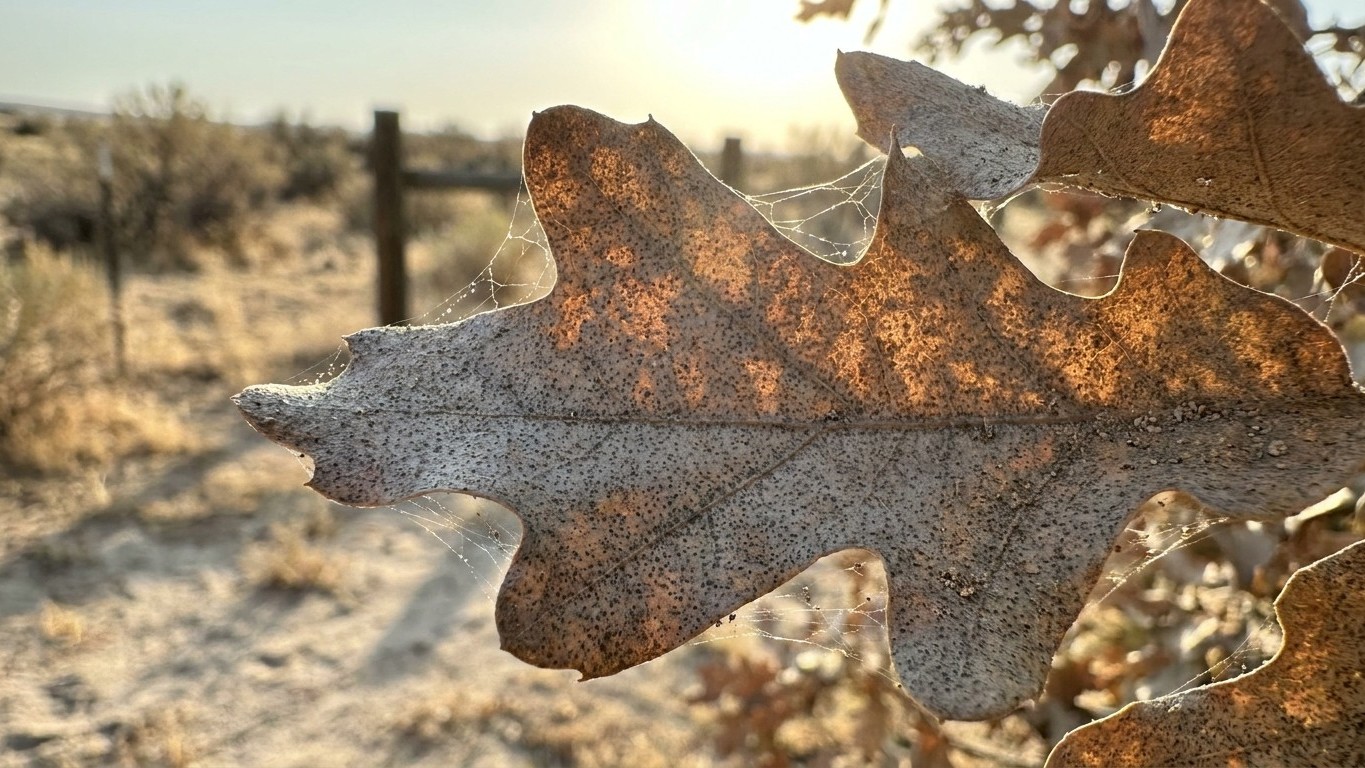
The classic sign is stippling, tiny pale or yellow specks scattered across the top of a leaf where mites have punctured plant cells to feed. Left unchecked, that stippling spreads until whole leaves take on a bronzed, dusty look, sometimes described as looking like the plant got dusted with fine sand. Fine webbing between leaf veins or at branch tips is a later-stage sign, usually meaning the population has grown large enough that individual mites are dispersing to new growth.
A simple test works well outdoors: hold a sheet of white paper under a suspect branch and tap it firmly. Spider mites that fall onto the paper look like moving specks of pepper, visible mainly because they’re crawling rather than because of any color or size. If dozens of specks appear after a single tap, the infestation has already moved past the early stage.
What Actually Stops Spider Mites
A strong blast of water from a garden hose, aimed at the undersides of leaves every few days, knocks mites and their webbing off the plant and disrupts breeding faster than most people expect. It’s low-cost, doesn’t harm beneficial insects, and works especially well on shrubs and vegetable plants where infestations are caught early. Consistent, deep watering also matters on its own, since keeping plants out of drought stress removes much of the environmental trigger that lets mite populations explode in the first place.
Insecticidal soap and horticultural oils, including neem oil, target mites directly by disrupting their outer coating, and they break down quickly in the environment, which limits harm to pollinators when applied in early morning or evening rather than in direct midday sun. These products need to make direct contact with the mites to work, so thorough coverage on leaf undersides is more important than the product itself.
Predatory mites, ladybugs, lacewings, and minute pirate bugs are natural predators that can keep populations in check without any spraying at all, and many Texas gardeners underestimate how much damage control these insects already provide. That’s exactly why broad-spectrum insecticides can backfire: killing off predator populations along with the mites often leads to a worse rebound outbreak within a couple of weeks, since spider mites reproduce far faster than the beneficial insects that would otherwise keep them in balance.
For larger infestations, particularly on food crops or high-value ornamentals, a miticide labeled specifically for spider mites is the more reliable option, since standard insecticides often have little to no effect on mites at all. Rotating between different miticide classes, rather than using the same product repeatedly, helps prevent resistance from building up in local mite populations, a problem that’s already been documented in several agricultural pest species across Texas cotton fields.
Keeping Them From Coming Back
Avoiding excess nitrogen fertilizer helps, since heavy nitrogen use pushes out soft, tender new growth that spider mites prefer to feed on. A slower, balanced feeding schedule produces sturdier foliage that’s less appealing to them. Reducing dust around plants also matters more than most homeowners realize, since dusty conditions along driveways, gravel paths, or dry garden beds create a favorable surface for mites to establish themselves before moving onto nearby leaves.
Regular inspection during the hottest stretch of summer, roughly a five-minute walk through the yard checking undersides of leaves once a week, catches most infestations before they require any chemical intervention at all. Early detection remains the single biggest factor separating a minor stippling problem from a shrub that has to be cut back hard or replaced entirely by September.
Indoor plants deserve the same attention during the drier winter months, when heating systems strip humidity from the air just as effectively as a Texas summer does outdoors. A light misting or an occasional shower for houseplants, combined with keeping them away from heating vents, does more to prevent indoor infestations than most people assume, and it costs nothing beyond a few extra minutes of plant care each week.