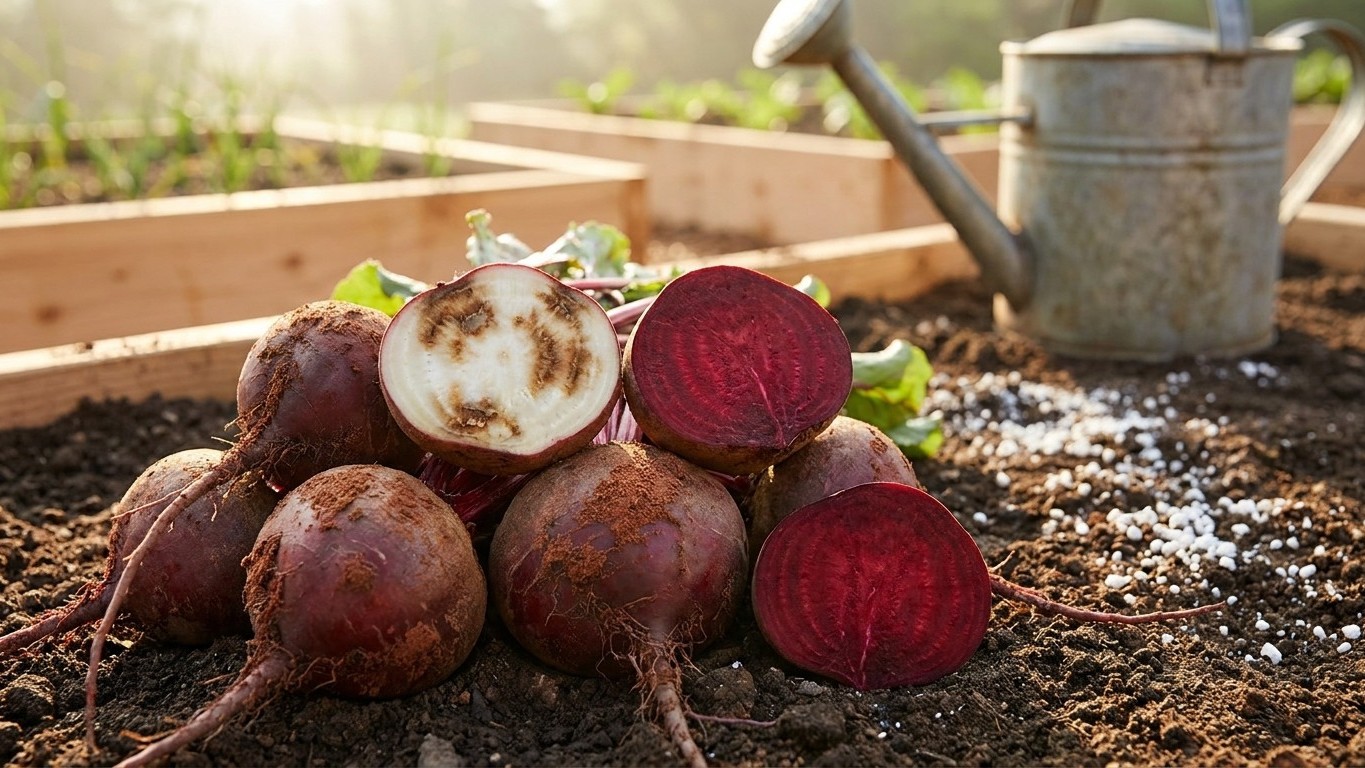

Pull beets 60 to 80 days after seeding, and aim to finish before summer heat and dry spells can turn the root woody. Once they’re out, cut the tops off right away and store the roots at 33 to 36°F. Don’t go colder: USDA’s storage handbook records more black spot and rot at 32 to 34°F than a little warmer. Most root crops like it near freezing, but beets don’t.
The short answer
What Alabama’s state soil does to a beet
Start with the ground. Alabama’s official state soil is the Bama series, an Ultisol, which is an old, heavily weathered and leached soil, naturally acid and low in nutrients. USDA’s representative surface values come to 67 percent sand, 14 percent clay and 19 percent silt, with organic matter around 0.8 percent and a surface pH of about 5.3, which counts as strongly acid. Drainage class: well drained. A state spans hundreds of soil series, so treat this as a starting point. River bottoms, hill country and any lot a builder has scraped or filled can look nothing like it, and the pH above is not your pH. A soil test gives you your own number, and our page on Beet Soil in Alabama: What the Root Will Meet goes through what the root will meet underground.
For a beet, sand and good drainage are mostly welcome. Utah State University Extension describes the ideal as deep, sandy, well-drained soil rich in organic matter, and says to add no more than 1 inch of composted organic matter per 100 square feet. The catch in Bama-type ground is that 0.8 percent organic matter holds very little water. Sand that drains well also dries well, and that is where the harvest date gets decided.
Heat is the second half of the picture. The extension source says heat above 85°F combined with water stress makes the root woody. How many days a year the reference city passes 90°F is not published here, and I won’t guess at it. What matters is the mechanism: a late-maturing row on fast-draining sand meets hot, thirsty weather in the last weeks before harvest. That produces a tough, fibrous root, and it is a different failure from bolting, which comes from thirst early in the crop’s life.
Why the fridge matters as much as the garden
After the pull, the handbook chapter on beets is blunt. Topped beets belong at 33 to 36°F and 98 percent relative humidity. Bunched beets, leaves still on, keep only about 10 to 14 days at 32°F and above 98 percent humidity. In pits and cellars, the temperature should stay between 31°F and 41°F. If you keep roots for weeks, pull them, top them, and favor the large ones: they lose water and shrivel more slowly than small ones. Eat the small beets first.
The six weeks that decide it here
Beets are sown in place, never transplanted, so the 60 to 80 days run from the day the seed goes in. Sowing two to three weeks before the last spring frost is the usual advice, and it puts the first six weeks of the crop inside a known stretch of Alabama’s spring. The reference weather station’s last spring frost falls between March 19 and April 3, per NOAA NCEI climate normals (the 30 to 70 percent band of 32°F freeze probability). Counting back two to three weeks gives a sowing window that opens around the end of February and closes around the third week of March at that station. Suburban and rural gardens commonly see the last frost one to two weeks later, and more at elevation, so check your own county rather than trusting an airport.
What that spring usually does
Alabama springs swing. Warm spells give way to cold snaps, wet weeks give way to dry ones, and a row sown in March often sees all of it before the first harvest. Rain is not the problem in itself. The problem is the gap between rains, because the Bama-type surface sheds water quickly and holds little in reserve. Water stress in the first six weeks is what causes premature flowering, and the soil makes a dry fortnight bite sooner than it would in a loamy bed.
Where the bolting risk sits
Mostly in weeks three to six. Early on, seedlings are small and spring showers usually cover them. Later, roots are sizing up, the sun is stronger, and a stretch of April without real rain can leave the top few inches bone dry. That is the window to watch. A rain gauge or a quick finger test of the soil does more than a calendar here, and mulch between rows helps slow the drying. The Growing Beets in Alabama overview covers the full season; this page is about the timing at the edges of it.
Count forward from seeding and the harvest window lands roughly from late April into early June for a row sown at the reference station’s dates, later for colder gardens. The back end of that range is where heat enters the picture. A row that dragged on to 80 days has the longest exposure to woodiness, which is why pulling on schedule beats waiting for the biggest roots. If the row is uneven, take the small ones first and let the rest size up for another week or so, as long as the weather stays mild and the soil stays moist.
What goes wrong here
The failures below come from sandy, acid, fast-draining ground and an unpredictable spring. Insect damage is a separate matter, covered in What Eats Beet in Alabama, and When.
- Bolting from early thirst. Water stress in the first six weeks after seeding pushes plants to flower prematurely. On well-drained, low-organic-matter sand, a dry spell hits fast. Remedy: check soil moisture every few days through weeks one to six, water deeply when the top inch is dry, and mulch once seedlings are established.
- Woody roots from late heat. Heat above 85°F combined with water stress makes the root tough. This is a later, separate failure from bolting. Remedy: sow early enough that the 60 to 80 days finish before hot weather, keep late-stage moisture even, and pull on time instead of letting roots grow oversized.
- Thin, acid, hungry ground. The Bama series is naturally acid and low in nutrients, and your bed may be similar or very different. Remedy: run a soil test before sowing and correct what it shows. Add composted organic matter, but no more than 1 inch per 100 square feet.
- Storing bunched beets. With leaves on, roots last about 10 to 14 days and no longer. Remedy: cut the tops off as soon as the beets are out of the ground.
- Chilling too hard. Storage at 32 to 34°F produces more black spot and rot than slightly warmer conditions. Remedy: aim for 33 to 36°F at 98 percent humidity, and put a thermometer in the fridge or cellar rather than trusting the dial.
- Keeping the wrong roots. Small roots lose water and shrivel faster than large ones. Remedy: eat the small beets first and save the big ones for storage.
Common questions
How many days from seeding until I can pull beets in Alabama?
Plan on 60 to 80 days, counted from the day the seed goes into the ground. Beets are sown in place, so there is no transplant date to count from. A row sown in the last days of February or in March, depending on your county’s frost, finishes in the spring window before the worst heat.
Is my refrigerator too cold for stored beets?
Possibly. USDA’s handbook says storage at 32 to 34°F brings more black spot and rot than slightly warmer conditions. The target for topped roots is 33 to 36°F at 98 percent relative humidity. Many home refrigerators have colder zones, so measure with a thermometer where the beets will actually sit.
Which beets should I store, and which should I eat now?
Store the big ones and eat the small ones first. Large roots lose water and shrivel more slowly than small roots. Top all of them before storing, since bunched beets with leaves keep only about 10 to 14 days.
Does the Bama soil description match my garden?
Maybe, maybe not. Bama is the state soil, but Alabama has hundreds of soil series, and river bottoms, hill country and builder-disturbed ground behave differently. The figures here are USDA’s representative surface values for the series as mapped, not a measurement of a worked garden bed. A soil test of your own bed is the only way to know.