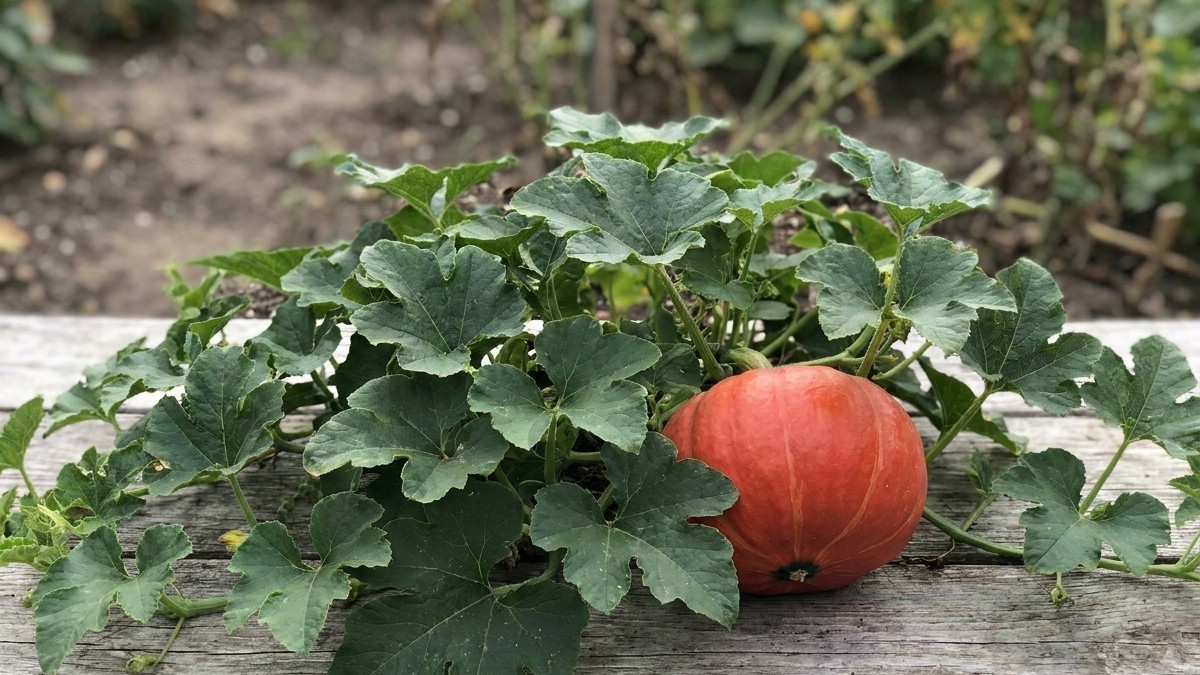

In Massachusetts, the first thing to eat a pumpkin crop is usually the calendar. A flower that opens too late never becomes a ripe fruit, and frost finishes whatever is still on the vine. Insects, squash bugs and cucumber beetles among them, weaken vines along the way, and a few well-timed weeks decide whether the fruit survives. This page covers the arithmetic. For the full growing picture, start with Growing Pumpkins in Massachusetts.
The short answer
The first fall freeze in the state’s best-documented weather record arrives between November 3 and November 14. That window comes from the NOAA NCEI Climate Normals, the 30 to 70 percent probability band for a 32 F freeze at the Logan station (NOAA NCEI data file). Everything else on this page hangs from it.
Utah State University Extension says pumpkins take 45 to 55 days to mature after flowering. Not after seeding, and not after transplanting. The count starts the day the flower opens. Work backward from the frost window and you get the latest date a flower can open and still produce a ripe pumpkin.
Start with the early end of the window. Counting back 55 days from November 3 lands on September 9, and counting back 45 days lands on September 19. From the late end, November 14 minus 55 days is September 20, and minus 45 days is September 30. So along the coast, the last flower worth waiting for opens somewhere between September 9 and September 30. The cautious gardener plans around the early part of that range and treats anything later as a bonus.
Three cautions keep that window honest. First, Logan is a waterfront urban station and the mildest spot in the state. Inland suburbs and the Berkshires frost noticeably earlier in fall, so a gardener there should shift the whole flower deadline earlier. An inland frost date is not published here, and guessing one would be worse than leaving it blank. Second, the 45 to 55 days is a range, and a cool, cloudy September pushes toward the long end. Third, the window is a probability band, not a promise. Some years the freeze comes sooner.
A flower that opens after the deadline gives a green fruit. Green pumpkins can sometimes be coaxed along, which is its own topic, covered in Will Pumpkins Ripen Before Frost in Massachusetts? For the rest, Utah State’s advice is plain: harvest with the stem attached, before frost.
When to sow here
Sowing is a separate clock from ripening, and it has its own trap. Pumpkins are sown when the soil reaches 65 F, and that moment arrives well after the last frost, not at it. Here is the sequence, with the arithmetic spelled out.
- Find the last spring frost. In the NOAA NCEI Climate Normals for Logan, the 32 F freeze probabilities put it between April 1 and April 8. That is the mildest spot in the state. Inland suburbs and the Berkshires frost later in spring, so their dates fall after these.
- Add the soil lag. Soil trails the air by weeks. A mild afternoon in April says little about the ground 2 inches down. The frost date is not the sowing date, and 65 F soil is not the last frost date. Push a soil thermometer into the planting mound in the morning and wait for 65 F. The number of weeks between the frost date and that reading is your lag. This page does not publish a statewide soil date, because none exists in the sources used here.
- Subtract two weeks if you use row covers. Covers warm the soil underneath, which buys about two weeks. So the sum in words is: last frost date, plus the weeks your soil needs to reach 65 F, minus two weeks for the covers. Whatever lag your thermometer shows, the covers cut two weeks off it.
- Check the other end. The seed must be in early enough that flowers open before the deadline from the section above, September 9 to September 30 on the coast and earlier inland. The number of days from seeding to first flower is not published in the sources behind this page, so judge it by watching your own vines.
- Sow, then protect. Cold, wet soil rots seed and stalls seedlings. Covers help most on the cool nights that still come in May, but they need to come off once flowers open so pollinators can reach them.
The detailed planting calendar lives in When to Sow Pumpkins in Massachusetts. The point here is narrower: sowing too early wastes seed, sowing too late burns days you cannot get back in September.
What goes wrong here
A New England season is long enough for pumpkins, but only just. The failures below almost all come from the same cause: not enough warm days between flower and frost.
- A late flower that never colors. A fruit set after the deadline stays green because it runs out of days, not because anything is wrong with the plant. Remedy: once you pass the deadline for your area, pinch off new flowers and tiny fruit so the vine sends its energy into pumpkins that have a chance. Track the first open flowers on a calendar so you know which fruit set early.
- A fruit caught by frost. One cold night can ruin a pumpkin that was nearly done. Remedy: watch the forecast from late October on, since the first freeze in the Logan record starts as early as November 3 and inland yards go sooner. Cut pumpkins with the stem attached before frost, as Utah State recommends. Draping a sheet or row cover over the vines on a borderline night buys a few days, but it won’t save fruit from a hard freeze.
- A vine that dies back before the skin hardens. Squash bugs and cucumber beetles are the insects gardeners blame first, and a heavily damaged vine can stop feeding the fruit early. Disease and plain exhaustion do the same. Remedy: check the undersides of leaves weekly through summer, remove what you find early, and keep covers off once flowers open so pollination isn’t blocked. Timing figures for pest activity are not published here, so scouting beats a calendar.
- A stored pumpkin that ages too fast. A whole pumpkin keeps for three to six months in a cool, dark place between 45 and 50 F, according to University of Illinois Extension, but not beside ripening fruit. Apples, potatoes and tomatoes give off a gas that ages it, which makes the porch next to the apple crate the worst spot. Remedy: store it alone, somewhere that stays above freezing. That range is for a whole pumpkin; it says nothing about a carved one.
Common questions
What eats pumpkins in Massachusetts?
Frost does the most damage, because it ends the growing season for any fruit that isn’t ready. Squash bugs and cucumber beetles weaken vines, and wildlife such as deer, squirrels and raccoons sometimes feed on fruit in the field. No timing dates for animal or insect damage are published here, so the reliable plan is to protect the crop on the frost schedule and scout for pests on a weekly rhythm.
Do the 45 to 55 days start at seeding?
No. Utah State University Extension counts them from flowering. A seed sown in late May may take weeks just to flower, and only the flower date goes into the formula. Use the day the first female flower opens, then count forward.
Is the Boston frost window right for my yard?
Treat it as the best-case date. Logan is a waterfront urban station and the mildest spot in the state. Inland suburbs and the Berkshires frost noticeably earlier in fall and later in spring, so both the sowing date and the flower deadline shift. Your own thermometer and your neighbors’ experience will tell you more than the coastal figure.
How long will a harvested pumpkin keep?
A whole pumpkin keeps three to six months in a cool, dark place at 45 to 50 F, per University of Illinois Extension, and it should stay away from apples, potatoes and tomatoes. Harvest it with the stem attached. Utah State only specifies a place where it will not freeze. The 45 to 50 F range applies to whole pumpkins and says nothing about carved ones.