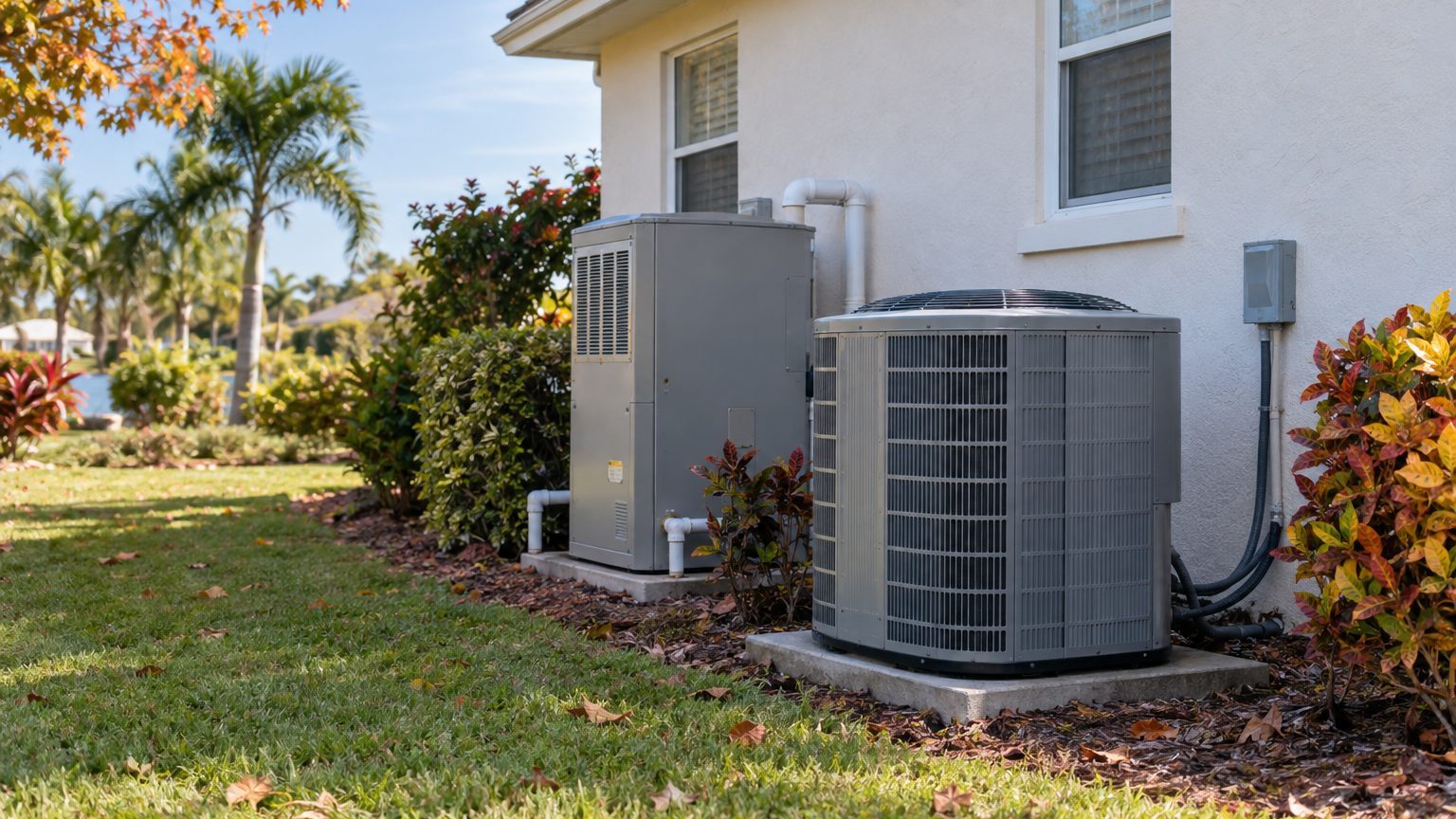

In North Carolina, a gas furnace costs less to run than a heat pump, as long as gas service already reaches the house. Without that line, the heat pump is the cheaper of the electric choices by a wide margin. Cold nights, existing equipment and a need for air conditioning can still tip the decision the other way.
The short answer for North Carolina
Take one million Btu of heat delivered into the house, at average North Carolina residential prices. A natural gas furnace at 95% AFUE delivers it for $9.64. A heat pump at 8.1 HSPF2 (a seasonal COP of about 2.4) delivers it for $18.44. Electric baseboard at 100% efficiency costs $43.79. These figures are computed from U.S. Energy Information Administration (EIA) residential prices, ENERGY STAR efficiencies and EIA unit conversions. The gas furnace comes out $8.80 less per million Btu than the heat pump.
Read that for what it is. It is the running cost of the same unit of heat from each system, not a yearly bill. A yearly bill depends on the size of the house, its insulation and how many cold hours the winter delivers. It also leaves out the price of the equipment and the installation, which can reverse the long-term math. The electricity price is a statewide average, and your utility’s rate plan may differ. Gas prices vary by utility too, so your own gas bill is the number to check against the computed figure.
The heat pump still beats electric resistance by a lot. Its cost per million Btu is well under half the baseboard figure, which is why a house that can’t get gas has little reason to heat with strips or baseboard. If a gas line already serves the house, the furnace is the cheaper system to run; if it doesn’t, a heat pump is the better electric choice by far.
What each option costs to run in North Carolina
| System | Efficiency used | Cost per million Btu delivered |
|---|---|---|
| Natural gas furnace | 95% AFUE | $9.64 |
| Heat pump | 8.1 HSPF2 (seasonal COP about 2.4) | $18.44 |
| Electric resistance (baseboard) | 100% | $43.79 |
The electricity behind these numbers is 14.94 cents per kWh, the average residential price year-to-date through July in the EIA’s Electric Power Monthly, Table 5.6.B. The gas figure comes from the EIA’s average residential natural gas price, converted at about 1,037 Btu per cubic foot, with electricity converted at 3,412 Btu per kWh. We are not quoting a standalone gas price here, so a utility bill or rate sheet is the place to confirm what you pay per therm or per hundred cubic feet.
Efficiency matters as much as the fuel price because you pay for the fuel but buy the heat. Baseboard turns each unit of electricity into one unit of heat, so its high figure comes straight from the price of electricity. A gas furnace at 95% AFUE loses about a twentieth of its fuel up the flue, and gas is cheap per Btu to begin with. A heat pump moves heat instead of making it, so each unit of electricity brings along roughly 2.4 units of heat across a season. That multiplier cuts electric cost to well under half of resistance, but it can’t fully offset a fuel that costs less per Btu.
The 8.1 figure is the ENERGY STAR minimum for ducted heat pumps. A unit that beats it does better than this table shows. ENERGY STAR asks more of ductless equipment, 8.5 HSPF2 for non-ducted split systems, because a ductless unit has no duct losses and has to be better to earn the same label (the full ENERGY STAR criteria are public). What HSPF2 Measures, and Why Ductless Asks for More covers the rating in detail. Compare HSPF2 with HSPF2, since SEER2 measures cooling only. Compare systems by cost per million Btu delivered, then check the result against your own utility rates.
How cold it gets, and what that does to a heat pump
Charlotte Douglas airport, the reference station, logs about 3,058 heating degree days a year (base 65 F). The measure adds up, for every day, how far the mean temperature sat below 65 F. More degree days means more fuel for the same house. The same station records about 1,769 cooling degree days, so summer asks for as much attention as winter.
The mean daily minimum in the coldest month is 31.8 F. That is just under freezing on an average night, and no colder than that on average. The heating season is long but mild, with many cool hours and few brutal ones. That is the range where a heat pump works at its best.
The 2.4 seasonal COP in the table is an average over a whole winter. In deep cold a heat pump’s efficiency drops, and a backup (resistance strips or a furnace) carries the coldest nights. Around Charlotte those nights are the exception. The system spends most of its hours in its efficient range, which is why the heat pump’s real-world result can land closer to the table than it would in a northern state. How Cold Is Too Cold for a Heat Pump explains what happens when the temperature falls farther.
One station doesn’t describe the whole state. A mountain county can run far colder than Charlotte, with more degree days and more nights when a heat pump leans on its backup. A house in the mountains spends more hours in the range where the heat pump’s efficiency is lower, and that narrows its advantage over resistance heat. It also makes a gas furnace, or a dual-fuel system, more attractive. In the Charlotte area a standard heat pump covers most of the heating season; farther west and higher up, plan for solid backup heat or keep gas.
What homes in North Carolina already heat with
The EIA’s 2020 Residential Energy Consumption Survey (RECS) shows what North Carolina homes heat with today. Electricity is the main heating fuel in 62% of homes and natural gas in 29%. Propane heats 4%. By equipment, 50% have a furnace and 38% a central heat pump. The survey doesn’t publish a figure for steam or hot-water boilers or for fuel oil or kerosene, because those estimates were suppressed as unreliable. That is not the same as zero, so some homes in the state do heat that way.
These shares say what was installed, and so which fuel was cheap or available when the houses were built. They are not a recommendation. They are also state shares from a national survey, not a count for your county. Still, they carry a practical point. Gas heats fewer than a third of homes, so a gas line is not something to assume. A house without one is not choosing between a furnace and a heat pump on running cost, because gas isn’t on the menu. The furnace count of 50% includes furnaces on any fuel, so it can’t be read as a gas figure.
Houses on propane run a delivered fuel, a different comparison from piped gas, and these numbers don’t cover it. A house with a boiler and radiators faces a different conversion again. There is no ductwork to reuse, so the choice becomes new ducts or a ductless system. Ductless or Central walks through that fork, and Heating a Home in North Carolina gives the wider state picture. Find out whether gas service reaches your street, and what your house heats with now, before comparing systems.
When the other choice wins
Gas is the cheaper system to run, but running cost is one factor among several. Here are the cases where the heat pump is the better call anyway.
- No gas service. If a line doesn’t reach the house, the real comparison is a heat pump against baseboard or propane, and the table settles part of that. Bringing gas to the street is its own project.
- A need for cooling. With about 1,769 cooling degree days at Charlotte, summer is no afterthought. A heat pump cools as well as heats, and ENERGY STAR sets 15.2 SEER2 as the minimum for its label. A gas furnace still needs a separate air conditioner.
- A dual-fuel setup. The heat pump handles most of the season and the furnace takes over on the coldest nights. It keeps gas for the hardest hours and uses the heat pump for the rest.
The reverse case matters too. A furnace with years of service left and no cooling need is hard to beat on running cost, since gas is $8.80 cheaper per million Btu delivered. Replacing a working system for efficiency alone rarely pays back, and Repairing a Furnace or Replacing It covers how to judge an aging unit. Keep a working furnace running, and price a heat pump when it fails or when you also need new air conditioning.
Common questions
Is a heat pump ever cheaper to run than a gas furnace here?
Not on the computed figures. At the ENERGY STAR minimum of 8.1 HSPF2, the heat pump costs $18.44 per million Btu against $9.64 for a 95% AFUE gas furnace. A heat pump rated above the minimum does better, but the $8.80 gap is the figure at the minimum.
Do these numbers give my yearly heating bill?
No. They compare fuels on the same unit of delivered heat, using statewide average prices. Your bill depends on the house, how cold the winter runs and your utility’s rates.
Why does ENERGY STAR ask more of ductless systems?
Non-ducted split systems must reach 8.5 HSPF2, while ducted ones need 8.1. A ductless unit has no duct losses, so it starts with an advantage and has to be better to earn the same label. These are minimums to earn the label, not typical values.
Does a heat pump need backup heat in North Carolina?
It depends on where you live. In deep cold a heat pump’s efficiency drops, and resistance strips or a furnace carry the coldest nights. At Charlotte the coldest month’s mean daily minimum is 31.8 F, so those nights are rare. Mountain counties run colder, and an installer can size backup heat for your house.