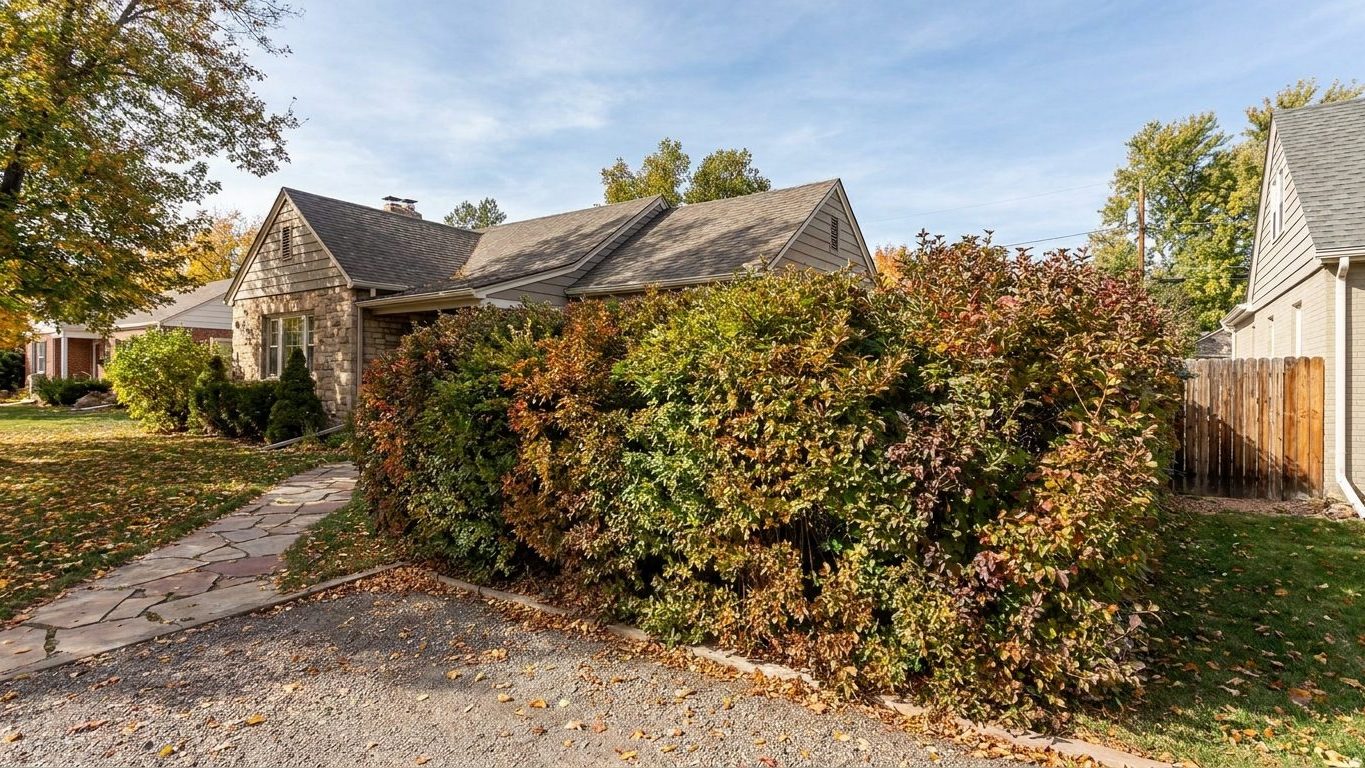

Idaho has no statewide hedge height limit. None. The number that governs your hedge is written by your city (and, outside city limits, sometimes your county), so it can change at a town line. Any page quoting a single figure for the whole state is guessing. Below: why the answer is local, how to find your own rule in about ten minutes, and what to check before a hedge crosses a property line.
There is no Idaho hedge height law
Why the answer is local
Height limits on fences, walls and hedges are a zoning matter, and zoning is handled town by town. No state statute sets a maximum for a living hedge, and that is true across the country, not just here. What exists is a patchwork of municipal ordinances, each adopted by a city council for its own streets and neighborhoods. A 400-person farm town and a growing suburb can have completely different rules, or one of them can have no rule at all.
This page does not print a city figure, because no Idaho city is documented here yet. A height pulled from one city’s code and presented as “the Idaho limit” would be wrong for every other city in the state. Commercial aggregator sites do this constantly, and it is why a search for the rule so often sends people to the wrong number.
A hedge is often not a fence in the code
Here is where homeowners get tripped up. Many ordinances regulate fences as structures, with a maximum height for the front yard and another for the back. A living hedge may be covered by that same section, covered by a separate landscaping or vegetation section, or not mentioned anywhere. Before you assume the fence limit applies to your arborvitae row, check which word your code actually uses: “fence,” “hedge,” “shrub,” “vegetation,” “landscape screening.”
The difference matters in practice. If the code only limits “structures,” a hedge may sit outside the rule entirely, while still being caught by other provisions such as the sight triangle below. If it limits “fences, walls and hedges” together, you are bound by one number. Read the definitions section too, since that is where a city says what counts as a fence.
The one rule that follows you everywhere
The sight triangle is the closest thing to a universal rule. At a street corner or where a driveway meets a road, nothing may block a driver’s view of cross traffic or pedestrians. The limit inside that triangle is usually far lower than the general fence height, and it applies even in places where no other hedge rule exists. A hedge that is perfectly legal along your side yard can be a violation if it runs to the corner of your lot.
The size of the triangle is set locally too, which is one more reason to read your own code rather than borrow someone else’s.
How to find the rule that actually applies to you
Most American cities publish their municipal code online, and nearly all of them use one of three publishers. If you know which one your city uses, you can usually find the rule in a few minutes.
| Publisher | Where to look | What to do there |
|---|---|---|
| Municode | library.municode.com | Select Idaho, then your city, then search the code |
| American Legal Publishing | codelibrary.amlegal.com | Choose your city from the list of jurisdictions |
| eCode360 | ecode360.com | Search by municipality name, then open the zoning title |
If your city does not appear on any of the three, check the city’s own website. Smaller towns sometimes post the code as a PDF, and a few publish nothing online at all.
Where in the code to look
The rule almost always lives in the zoning chapter (sometimes called the land use or development code), under a heading such as “fences,” “walls and fences,” or “accessory structures.” Use the search box with several words in turn: fence, hedge, vegetation, sight triangle, clear vision. Do not stop at the first hit. A fence section may set a height for structures while a different section, often about corner lots or traffic safety, controls plants near intersections.
Note the section number and the date the code was last updated. If you ever need to point to the rule in a conversation with a neighbor or the city, a citation carries more weight than “I read it somewhere.”
Who to call
Codes are written in legal language, and a ten-minute call can settle what an hour of reading cannot. Ask for the planning and zoning department. In a smaller town, the city clerk or the building department will usually know who handles it. Code enforcement is the office that responds to complaints, so they know how the rules are applied in real life.
Useful questions to ask:
- Does the fence height limit also apply to a living hedge?
- Is there a separate rule for hedges, shrubs or “vegetation”?
- How big is the sight triangle on my lot, and what height is allowed inside it?
- Is there a required distance between the hedge and the property line?
- Can you send me the code section in writing?
If you live outside city limits
Rural addresses outside any incorporated city fall under county rules, if the county has adopted any covering hedges. Many do not regulate them at all. In that case the practical limits come from somewhere else: a homeowners association, recorded covenants on your subdivision, or simply the neighbor relationship. Covenants are private rules that sit on top of the city or county code, and they can be stricter. Your closing documents or the county recorder’s office can show whether any apply.
The branches that cross the line
Height is only half the story. Plenty of hedge disputes start with growth, not altitude: a neighbor’s laurel pushing through your fence, or your privet leaning over their driveway.
The general principle in most states is this: a property owner may trim growth that crosses onto their land, up to the boundary and no further, at their own expense. They may not go onto your side to cut, and they may not kill the plant. Trimming a branch back to the line is one thing. Cutting so hard that the shrub dies is another, and can expose the cutter to a claim for the plant’s value.
That principle comes from case law, not from a single statute, and it varies from state to state. It is named here as a general rule, not as Idaho’s. If the specifics matter to you, because the cutting would be extensive or the plant is valuable, ask a local attorney how courts in your area have treated it.
Doing it without starting a feud
Talk first. A neighbor who learns that their hedge is damaging your fence is far more likely to trim it themselves than one who finds their shrub butchered on a Saturday morning. A short conversation, or a friendly note, usually beats any legal argument.
If you do cut, a few habits protect you:
- Photograph the growth before you trim, with the property line visible if you can.
- Stay on your side. Reaching over is fine, stepping across is not.
- Cut modestly, so the hedge stays healthy and cannot be called killed or ruined.
- Keep the clippings from becoming a new argument. Offering them back, or bagging them yourself, is simply easier.
Large limbs are different. Cutting a heavy branch near a house, power line or fence is a job for a certified arborist, partly for safety and partly because a bad cut near the trunk can harm the plant in a way that looks like deliberate damage.
When a neighbor will not cooperate
Neighbors in other states run into the same wall. If you want to see how the local-versus-state split plays out elsewhere, our pages on How High Can a Hedge Be in Washington? What the Law Actually Says, How High Can a Hedge Be in Oregon? What the Law Actually Says and How High Can a Hedge Be in South Dakota? What the Law Actually Says cover the same ground state by state. The pattern repeats: no statewide number, local codes doing the work.
For a real dispute (a hedge that blocks a sight line, damages a structure, or a neighbor who has already cut or poisoned a plant), the municipality and, if it escalates, a lawyer are the right next calls. This article is general information, not legal advice.
What to check before you plant
A hedge is cheap to plant and expensive to move. Ten minutes of checking before the shovel goes in is worth more than any pruning schedule afterward.
Start with the code word. Find out whether your city treats a living hedge as a fence, as landscaping, or not at all, using the steps above. Then check the sight triangle if your lot is on a corner or your driveway meets a road. Even a hedge that is legal everywhere else on the lot should stay well clear of that area.
A short list covers the rest:
- Distance from the line. Some codes require shrubs to sit a set distance inside the property line. Ask, and measure from the true boundary, not from the fence.
- Covenants and HOA rules. These can cap height or dictate species, regardless of what the city allows.
- Easements. Utility easements along lot lines may bar planting or allow the utility to cut whatever grows there.
- Buried lines. Call 811 before digging. It is free, and hitting a gas or fiber line is not a gardening mistake you want to make.
Then plant for mature size, not nursery size. A shrub that arrives at knee height may end up far taller than your code allows, and the label on the pot is a better guide than the plant in your hand. Pick a variety whose full height already fits under the limit you found, and you will rarely need to prune hard.
For plant choices, spacing and upkeep once you know your limit, the Hedges section has the practical side.
Common questions
Is there a maximum hedge height in Idaho?
Not at the state level. Idaho sets no hedge height limit in state law. Any limit comes from your city’s ordinance, and some cities and counties have none for living hedges.
Does a fence height limit apply to my hedge?
Sometimes. Many codes regulate fences as structures and treat hedges separately, or leave them out. Check which words your code uses (fence, hedge, vegetation) and confirm with the planning and zoning department.
Can I cut my neighbor’s hedge if it grows over my side?
In most states you may trim what crosses onto your property, up to the boundary and at your own cost, but you may not kill the plant or go onto their land to do it. This comes from case law and varies, so it is not a statement of Idaho law. For anything beyond routine trimming, ask a local attorney.
Do I need a permit to plant a hedge?
Rarely for the planting itself, but it depends on your city. Some codes require setbacks, and a hedge combined with a fence or wall may trigger a permit for the structure. A call to your city’s planning department answers it, and corner lots are the cases most likely to draw a rule, since the sight triangle applies even where nothing else does.