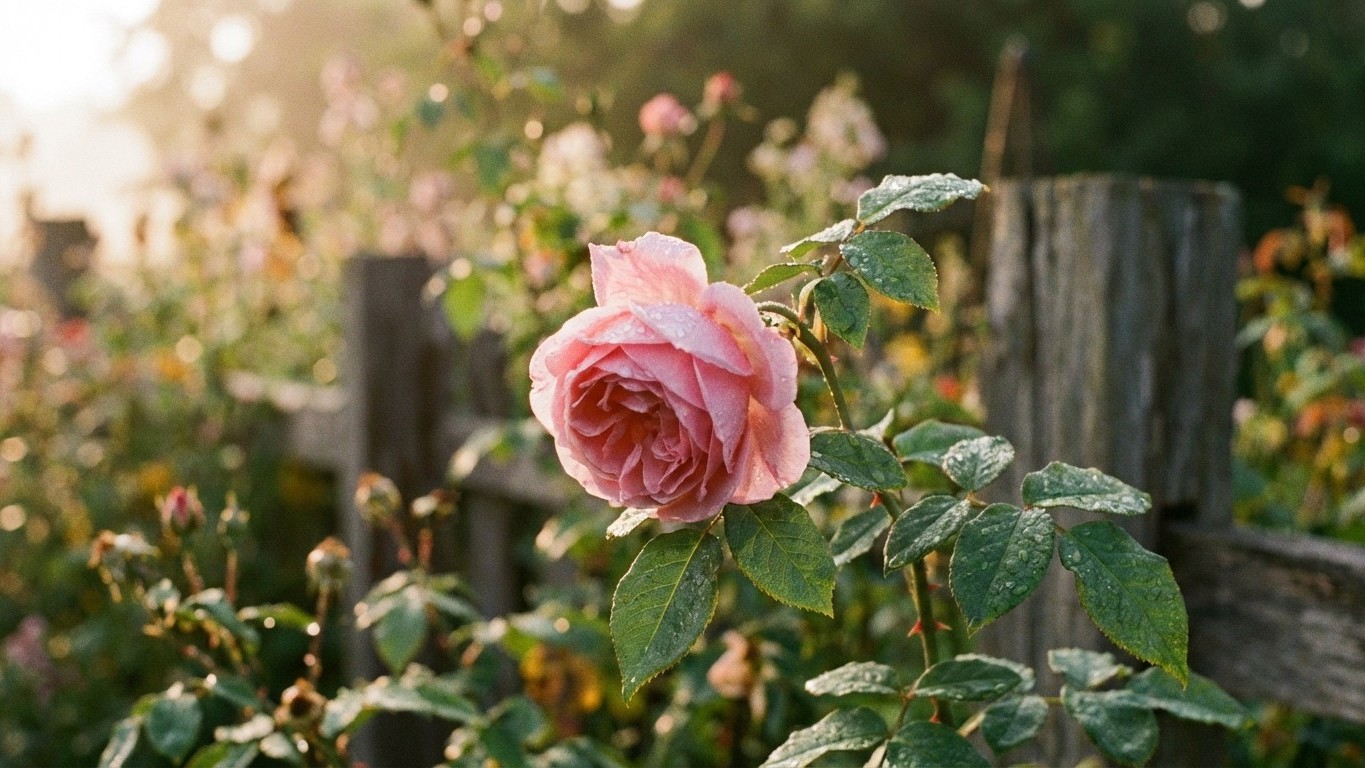

On the south coast, prune repeat-blooming roses from mid-March to early April, once the buds swell and the worst frosts have passed. Roses that flower only once a year, including ramblers and many old garden roses, are cut after they bloom in early summer, never in spring. Inland and upland gardens run later, sometimes by weeks. A good cut on the wrong date still costs you flowers or fresh growth.
When to prune roses in British Columbia
Environment and Climate Change Canada’s climate normals for the Vancouver International Airport station put the average last spring frost at March 18. That is the midpoint, not a safe date. In one year out of two, the last frost comes later. So the pruning window is a stretch of weeks, not a single day: for most repeat-blooming roses around Vancouver it runs mid-March to early April, with the first week of March possible in an early, mild spring.
What the rose is doing matters more than the calendar. Through winter the canes are dormant. As days lengthen and soil warms, sap starts moving and the buds along the canes swell, then turn red or green at the tip. That swelling is the signal. Cut before it and the plant has no way to show you which wood survived. Cut a few weeks after and you remove growth the plant has already paid for, which sets it back slightly but rarely kills it.
Forsythia is a handy local clock. When it flowers in your neighborhood, roses are usually ready. If the buds are still tight and brown, wait another week. If tiny leaflets have started to unfurl, go ahead anyway, because a slightly late prune is far better than none.
The hardiness zone is a different measure. Natural Resources Canada places Vancouver in Canadian hardiness zone 9a. That system is built on seven climate variables and does not convert to a USDA zone, so don’t borrow US pruning calendars by zone number. The Canadian zone tells you which plants survive the winter. It says nothing about when the last frost arrives, and that date is what sets your window.
The March 18 figure comes from one station near sea level. Gardens in the Okanagan, the Kootenays, the Cariboo, the north and upland districts on the Island or Fraser Valley run weeks behind it. A garden at 2,000 feet may not be ready until late April. Treat the Vancouver window as a starting point and shift it for your own ground. If you are still working out which roses suit your site, start with the guide to growing roses in British Columbia.
The date is not the same for every type of rose
Everything above applies to roses that flower on new wood, meaning shoots that grow this spring and carry this summer’s blooms. Not every rose works that way. Some set their flower buds the previous summer and carry them through winter on last year’s canes. Prune those in March and you will cut off that year’s flowers.
| Type of rose | Flowers on | When to prune |
|---|---|---|
| Hybrid teas | New wood | Mid-March to early April, when buds swell |
| Floribundas | New wood | Mid-March to early April |
| Knock Out and similar repeat-blooming shrub roses | New wood | Mid-March to early April |
| Repeat-blooming climbers | New shoots off older canes | Late winter, shortening side shoots only |
| Ramblers | Old wood | Right after flowering, in summer |
| Once-blooming old garden roses | Old wood | Right after flowering, in summer |
Ramblers and once-blooming old garden roses (gallicas, albas, damasks and most moss roses) are the ones to leave alone in spring. They put on one big show in early summer, and the buds for it are already sitting on last year’s canes. The right time to cut them is right after they finish flowering, which gives the plant the rest of the season to grow the canes that will bloom next year. In spring, remove only wood that is plainly dead or broken.
Hybrid teas, floribundas and repeat-blooming shrub roses are the easy group. They flower on wood that grows this season, so a hard spring cut simply sets the stage for new shoots. Repeat-blooming climbers sit between the two. Their main framework canes stay, and the flowers come on side shoots that grow from those canes. In late winter, shorten those side shoots and leave the main structure. A once-blooming climber follows the rambler rule instead: cut it after the flush of bloom.
If you inherited a rose and have no label, watch it for a full season. A plant that flowers once in June and then only grows leaves belongs with the old-wood group. One that keeps producing flowers into September is a new-wood bloomer. Until you know, hold off on anything beyond removing dead stems.
How far back to cut here
Height is a function of what the winter did. Before you decide how far to cut, find out how much of each cane is alive. Look for dieback first: canes that are brown, shriveled or black. Cut each one back until the center of the cane, the pith, is white or pale cream. Brown pith means dead wood, so keep cutting lower. Make the cut about a quarter inch above an outward-facing bud, angled so rain runs off the bud.
That is why the final height varies so much between gardens. Where winters are colder, in interior and upland British Columbia, dieback is more common and runs farther down the cane, so the cut is made below it and the plant ends up shorter. On the mild south coast, where Canadian hardiness zone 9a conditions leave most canes intact, you often have living wood higher up and can prune to the shape you want rather than to the damage.
As rough targets, most hybrid teas and floribundas end up between 12 and 18 inches tall after pruning, with three to five strong canes arranged in an open vase shape. Knock Out roses are cut to about 12 inches, which looks severe but encourages dense new growth. Climbers are not cut to a height at all: shorten the side shoots to two or three buds, roughly 3 to 6 inches, and tie in the main canes.
Open the center of the plant while you are in there. Remove canes that cross or rub, and any thin stem thinner than a pencil. Damp coastal springs invite fungal trouble, and airflow through the middle of the bush is the cheapest defense. For what to expect from black spot and mildew in this climate, see Rose Diseases in British Columbia: What the Climate Here Actually Brings.
If every cane is dead to the base, check below the soil line. A grafted rose with live growth only below the graft union may send up shoots of the rootstock, which are not the variety you bought. Those shoots look different (often more leaflets, small flowers) and are worth replacing the plant over.
What pruning too early costs in British Columbia
A pruning cut tells the plant to wake up. The buds just below the cut push out soft, pale shoots within a couple of weeks if the weather is mild. A hard freeze after that kills them. Roses pruned in mid-February and caught by a cold snap in March are the usual example, and the coast does get cold snaps well into March.
The damage is easy to recognize. New shoots go limp, then turn dark brown or black, and the tips shrivel. Leaflets that had just opened curl and blacken. The canes below them often look fine, which fools people into thinking the plant is unharmed. In most cases it is not dead. The rose still has buds lower on the canes and, if the freeze was short, will push again.
Don’t rush to cut. Wait until the weather settles and the plant shows you where the living growth begins, usually one to two weeks. Then cut back to firm green tissue just above a healthy, plump bud, using the same white-pith test. Hold off on fertilizer until fresh growth appears, because feeding a rose that has just been frozen only pushes more tender shoots into the next cold night.
The same logic applies in fall. The average first fall frost at the Vancouver station is November 10, which is again a midpoint, not a promise. Heavy pruning in September or October triggers late growth that will not harden before cold arrives. In fall, limit yourself to trimming tall canes that wind could whip. The real work waits for spring. Protection through the cold months is covered in Protecting Roses Through a British Columbia Winter.
Checking this against your own county
Elevation and distance from salt water both move the date inside the province. A garden on the Gulf Islands, warmed by the Strait of Georgia, can start weeks ahead of one in the Fraser Valley benchmark, and an upland or northern garden may start in April. The best check is local: ask your regional agricultural office for the typical last-frost range in your area, using the Government of British Columbia’s agriculture and seafood resources as a starting point. A local rose society or a long-established nursery near you will often know the date down to the week.
Common questions
Is it too late to prune once the leaves have opened?
No. Roses tolerate late pruning well. You lose a little of the growth already made, and the first flush of bloom may come a week or two later, but the plant recovers. It is better to prune late than to skip pruning.
Can I prune roses in fall instead?
Only lightly. Trim long canes that would whip in winter wind, and remove diseased leaves. A real pruning in fall can trigger soft new growth that the first frost, on average November 10 near Vancouver, will damage. Save structural cuts for spring.
What if I don’t know whether my rose blooms on old or new wood?
Watch it for one full season before cutting. If it flowers once in early summer and then stops, prune it after those flowers fade. If it keeps blooming into late summer, it is a new-wood type and belongs in the spring group. Until then, remove only dead or broken stems.
Do I need to seal pruning cuts?
Not on roses grown in a home garden. A clean cut with sharp bypass pruners, made about a quarter inch above an outward-facing bud and angled to shed water, heals on its own. Wipe the blades between plants if any canes showed disease.