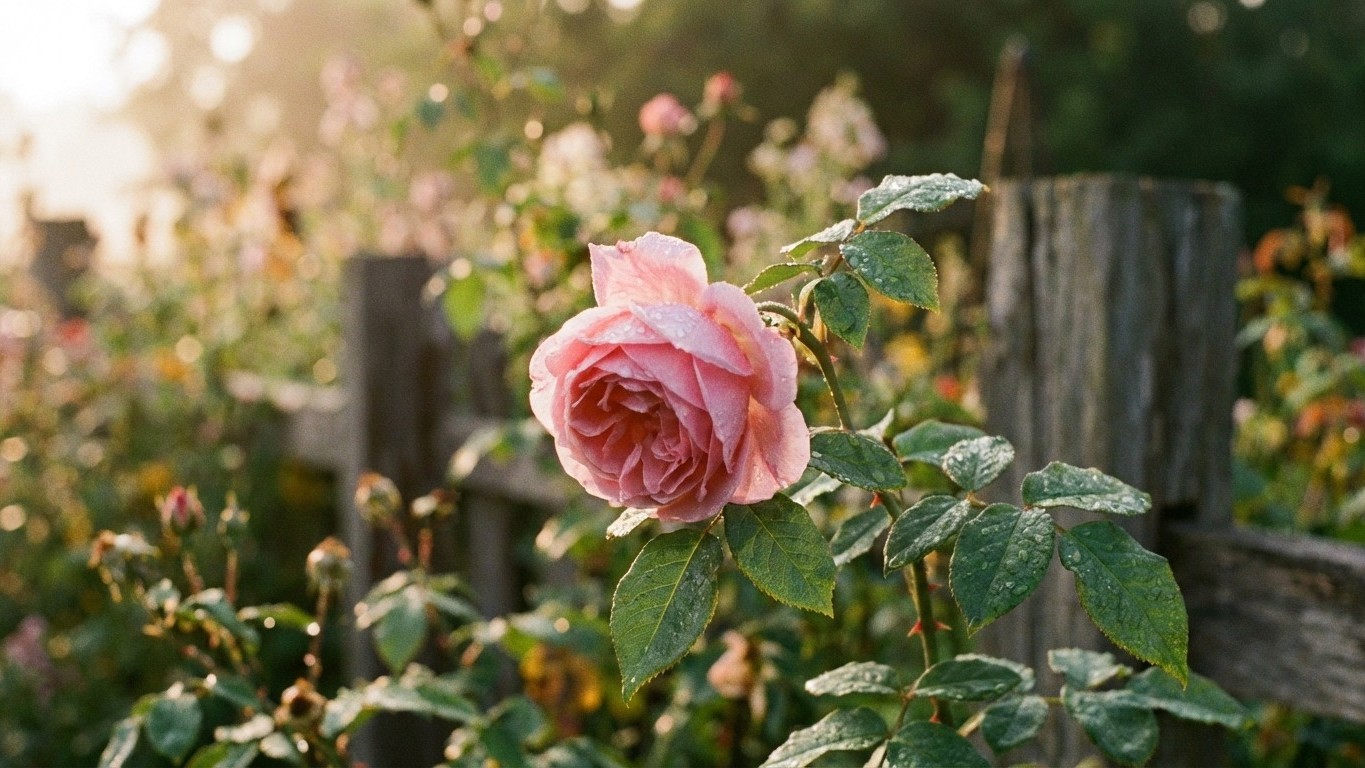

The roses that hold up across British Columbia are tough shrub types on their own roots: rugosas such as Hansa and Therese Bugnet, the Canadian-bred Explorer series, Knock Out, and vigorous climbers like New Dawn. On the mild coast almost anything survives, so the real dividing line is the cold of the interior and uplands. Garden centers here stock the same national lineup as everywhere else, and part of it needs work. For the basics of care, see growing roses in British Columbia.
Which roses survive a British Columbia winter
Vancouver sits in Canadian hardiness zone 9a, according to Natural Resources Canada’s plant hardiness site. Note the system. This is the Canadian zone, built from seven climate variables, and it is not a USDA zone. Natural Resources Canada says there is no simple conversion between the two, and that Canadian zone 4a alone overlaps nine USDA zones, from 3a to 7a. A reader coming from Washington, Idaho or Montana should not carry a USDA number across the border and assume it matches.
At that coastal zone, winter cold is rarely what kills a rose. Hybrid teas, floribundas and most garden-center stock get through an ordinary winter. The picture changes as soon as you leave the reference city. Interior valleys, higher elevations and northern districts run colder, and some of them far colder. The zone for Vancouver is not the zone for the province.
The types sort themselves by how much cold they take. At the hardy end are the rugosas and the Explorer series. Rugosas come from a species native to the cold coasts of northeast Asia, and the Explorers were bred in Canada to survive prairie and eastern winters. Both groups can lose some cane tips in a bad year and still regrow from healthy wood. Modern shrub roses like Knock Out sit in the middle. They are forgiving, though a hard winter can set them back.
At the cold end of the range, hybrid teas and other grafted bush roses need help. Where winters turn severe, they need a deep mound of soil or mulch over the base, and sometimes more. In the harshest districts they are a gamble even with protection, which is why many inland gardeners skip them and grow shrub roses instead. The practical steps for that protection are covered in Protecting Roses Through a British Columbia Winter.
What the zone number leaves out
A hardiness zone describes how cold the winters get, not how long the season runs. For that, the Vancouver International Airport station gives a last spring frost on average around March 18 and a first fall frost on average around November 10. These are mean dates from Environment and Climate Change Canada’s climate normals, so in about half of all years the frost comes later in spring and earlier in fall than those dates. Treat them as the middle of a window, never as a safe date. Northern and upland districts sit weeks behind the airport. The Canadian normals also cover an earlier period than the US figures many gardeners are used to, so the two sets don’t line up neatly.
On the coast, wet is the second winter problem. Mild, soggy months favor canker and rot, and a rose that shrugs off cold can still struggle in a drainage-poor bed.
Named roses that hold up here
Naming cultivars is more useful than naming categories, because tolerance varies even within one type. The roses below are widely sold in Canada and the northern US, and each has a track record of surviving where fussier roses fail.
| Rose | Type | What it survives |
|---|---|---|
| Knock Out | Modern shrub rose | Cold winters across much of the continent; bred for black spot resistance; blooms repeatedly |
| Therese Bugnet | Rugosa hybrid | Prairie-grade winter cold; bred in Alberta; double pink flowers on and off through the season |
| Hansa | Rugosa | Hard cold, coastal salt spray and poor soil; double magenta flowers with a strong clove scent |
| William Baffin | Explorer climber | Severe cold; vigorous, with sprays of deep pink flowers |
| New Dawn | Climber | Mild coastal winters easily; in colder districts expect cane dieback |
Putting them to work
Knock Out is the easy answer for a gardener who wants color without spraying. It was developed for disease resistance, and it blooms from early summer until frost. It does best in full sun with air moving through it. In a wet climate, resistance is not immunity, and the fungal problems that arrive with coastal rain are laid out in Rose Diseases in British Columbia: What the Climate Here Actually Brings.
The rugosas, Hansa and Therese Bugnet, are the choice for cold, windy or salty sites. Hansa tolerates seaside conditions that burn other roses, and it sets large orange-red hips in fall. Both have wrinkled, dense foliage that resists many leaf diseases. Hansa spreads by suckers when grown on its own roots, so give Hansa room to sucker or plant it where a mower can keep the edges in check. Therese Bugnet is more restrained and has a looser, upright habit.
William Baffin comes from the Explorer series, bred by Agriculture and Agri-Food Canada for climates much harsher than the coast. It trains up a fence or trellis and handles winters that would flatten a hybrid tea. On the coast it simply grows large and fast, and its reliability is the reason to choose it, not any need for protection.
New Dawn is the classic pale pink climber. It grows vigorously, tolerates less-than-perfect soil, and handles mild winters with no fuss. Its limit is cold. In the interior or at elevation it can lose canes in a hard freeze, so treat it as borderline there and put it against a sheltered south or west wall.
Sold here, but not for this zone
Garden centers in British Columbia buy from national suppliers, and the shelf reflects the whole country, not one climate. A good share of what is stocked comes through an average winter on the coast but not a hard one, and almost none of it is meant for the colder interior without effort.
The biggest group is the grafted hybrid teas, grandifloras and floribundas, the roses on the cover of every catalog. They survive in Vancouver’s zone 9a in most years. A sharp cold snap, though, can kill the top growth, and inland the same plants can die to the ground or lose the graft entirely. Mounding soil over the base before hard freezes is the minimum.
Tree roses, also called standards, are the most exposed. The bud union sits at the top of a bare trunk, fully in the wind, and one hard freeze can kill the whole head. Wrap the trunk and the crown before real cold arrives, or lay the plant down in colder districts. Many gardeners decide the effort isn’t worth it and buy a shrub rose instead.
Two lookalikes on the shelf
Patio miniatures sold as gift pots are often greenhouse-grown for indoor display, and they may not have been selected for outdoor winters. They can live outside on the coast, but they are the most likely to fail in a freeze. Many English-style roses, with their full, old-fashioned flowers, are also bred for mild, damp climates; in the wet months they can be prone to leaf disease, and some are less cold-tolerant than their looks suggest.
Roses already in bloom on the shelf in early spring have been pushed along under cover. Frost can still arrive after the average last date of around March 18, so hold tender stock somewhere sheltered and let it harden off before it goes into the ground.
What to check on the label before buying
Grade matters first. A rose sold as grade No. 1 is the top grade in the nursery trade, with several sturdy canes and a well-developed root system. Grade 1½ and grade 2 are lower and take longer to establish. A grade 2 rose can be fine on a mild coast. In a marginal climate, a weak plant is the first to be knocked out by a hard winter, so the extra cost of a No. 1 pays off.
Next, check whether the rose is own-root or grafted. A grafted rose is a named variety joined to a vigorous rootstock, and you can often spot the join as a swollen knuckle at the base where the canes meet the roots. An own-root rose has no such knuckle, because the whole plant is the same variety from root to tip. Labels often say “own root,” “grafted” or “budded,” and if they say nothing, ask or look at the base.
The colder the climate, the more own-root matters. If a hard freeze kills the top of a grafted rose, any regrowth comes from the rootstock below the union, and it will be a different, usually plainer rose than the one you paid for. An own-root plant that freezes to the ground regrows as the same variety. For the interior, the uplands and anywhere that sees real cold, buy own-root whenever the cultivar is offered that way. Most rugosas and Explorer roses are sold on their own roots, which is part of why they behave so well.
Checking this against your own county
British Columbia has no county extension offices of the kind US states run, so local questions go to the province. The British Columbia Ministry of Agriculture and Food is the provincial starting point for horticulture and regional growing information. Local nurseries, rose societies and master gardener groups can fill in the rest, since they know which cultivars have come through recent winters in your valley.
Before buying, find out what hardiness zone your own town falls in. Zone 9a is the figure for Vancouver, and your town may sit several zones colder. Look up your town’s Canadian zone and choose roses rated for that, not for the coast.
Common questions
Can hybrid teas survive winter on the British Columbia coast?
In most years, yes, since the coast sits in Canadian hardiness zone 9a. A cold snap can still kill top growth, and wet weather brings leaf disease. Inland, hybrid teas need mounding and often more protection, and in the coldest districts they are a poor bet.
Is Knock Out really that tough?
It handles cold well across much of the continent and was bred for black spot resistance, so it is one of the lower-maintenance roses sold. Resistance does not mean immunity, though, and heavy coastal rain can still bring problems, especially with poor air circulation.
Do Canadian-bred Explorer roses make sense in mild areas?
They grow well on the coast, and their vigor and tolerance carry over. Their main selling point is cold hardiness, so they matter most inland, where winters kill tender roses. On the coast you simply gain a reliable rose that rarely needs protection.
How can I tell whether a rose died over winter?
Wait until the weather warms and other shrubs have leafed out, then scratch a thin strip of bark from a cane with a thumbnail. Green underneath means the cane is alive. Brown and dry means cut it back to the first green wood. Canes that stay brown all the way to the base mean the top is dead, and you should check whether new shoots come from above or below the graft.