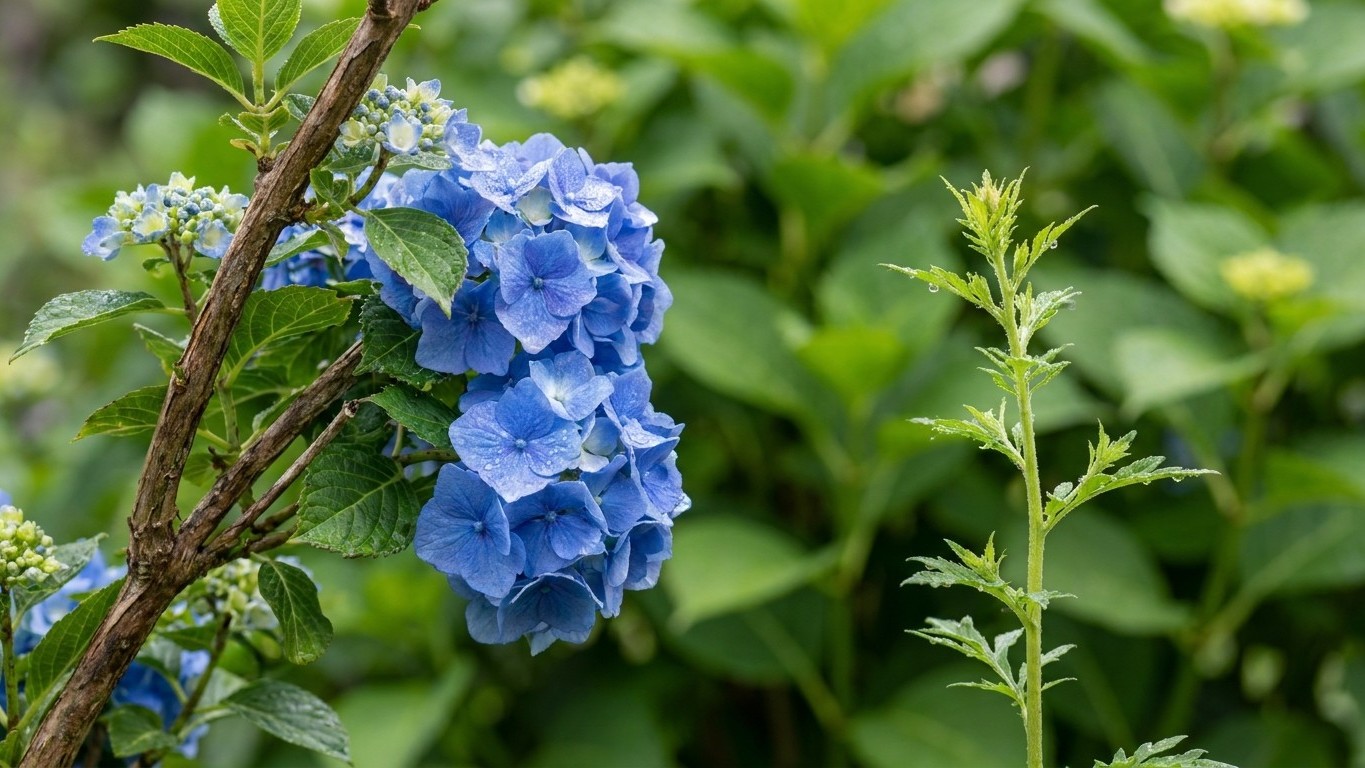

Prune bigleaf hydrangeas in Hawaii as soon as the flower heads fade and turn papery, which in many upcountry gardens falls in summer. Cutting later risks removing next season’s buds, because these plants set them on stems that grew the year before. Types that flower on fresh growth are more forgiving. Hawaii has no frost date to wait for, so the bloom itself is your signal. Here is how to read it.
What this comes down to in Hawaii

No freeze occurs in the inhabited parts of Hawaii. At the Honolulu station, the NOAA NCEI climate normals record zero days a year at or below 32°F, and frost appears only on the high summits of Mauna Kea, Mauna Loa and Haleakala, far above any garden.
The mainland habit of pruning in late winter, once the worst cold has passed, has nothing to attach to here. Anyone growing hydrangeas in Hawaii works from other signals: when the plant flowers, how much rain the site gets, how high it sits, and whether it faces the wet windward side or the drier leeward side of its island. Most hydrangeas grown at Hawaii’s cooler elevations hold leaves for much of the year, so no bare-stem season announces that it is time to cut.
Why does bloom timing set the pruning date?
Bigleaf (mophead and lacecap), mountain and oakleaf hydrangeas form their flower buds on old wood, meaning stems made during the previous growing season. Cut those stems back in spring and you remove the flower heads before they open. Panicle and smooth hydrangeas bloom on new wood, so a cut made before a fresh flush of growth costs them nothing. Reblooming bigleaf types flower on both old and new stems, which makes a badly timed cut less expensive, though still not free.
Which of these types holds up at a given elevation is a separate question, covered in Which Hydrangeas Survive a Hawaii Winter. Once you know what you are growing, the table below gives the pruning rule for each.
Which hydrangea types can be pruned when?
| Type | Flowers on | Best time to prune | How much |
|---|---|---|---|
| Bigleaf (mophead, lacecap) | Old wood (rebloomers also on new) | Right after the bloom fades | Spent heads, dead stems, and up to a third of the oldest canes |
| Mountain (serrata) | Old wood | Right after the bloom fades | Light shaping |
| Oakleaf | Old wood | Right after the bloom fades | Mostly dead stems and crossing branches |
| Panicle | New wood | After bloom, or just before a new flush of growth | Up to a third of the height |
| Smooth | New wood | After bloom, or just before a new flush of growth | Can be cut low |
The rule underneath the table is simple. If the plant flowers on last year’s stems, the deadline falls shortly after the bloom. If it flowers on this year’s stems, the timing is loose.
Working it out for your own garden
Since no frost date anchors the calendar, build yours from the plant and the weather. Four checks get you there, and they still work after a move to another island or a strange weather year.
- Identify the type. Check the plant tag, or think back to how it bloomed last year. Flowers on stems that were already there in the previous season mean old wood.
- Watch the flower heads. When most of the colored bracts have turned papery, tan or green-brown, the window is open.
- Look at the weather ahead. Cut when regular rain is likely, or when you can keep up a watering schedule through the weeks of regrowth.
- Find the buds. Locate the first pair of plump buds below each faded head and cut just above that pair.
Take a bigleaf mophead in a cool upcountry garden as a full example. The flowers fade, so you cut each flowering stem back to the first plump pair of buds. Dead stems come out at the base. Then you remove roughly one in three of the oldest, thickest canes at ground level, which keeps the shrub producing fresh stems. Those new shoots grow through the following months and carry next season’s flowers. If shears come out again before they bloom, the shoot tips with buds go too, and the flowers go with them.
Now run the same garden with a panicle hydrangea. Flowers form on shoots that grow after the cut, so you can shape it right after bloom or just before a new flush, and a late cut costs no flowers. That contrast shows where the line falls. For old-wood types, the deadline arrives soon after bloom. For new-wood types, it barely exists.
A plant fresh from the nursery needs less. Remove only dead or broken stems in its first year and let it settle before any shaping.
What changes across the state
Hawaii is not one climate. The Honolulu reference point is low, warm and relatively dry, and it says little about a garden at several thousand feet on Maui or Hawaii Island. The USDA hardiness zone system, which is built on a single variable, the average annual extreme minimum temperature, spans 9a to 13a across the islands. Other parts of the state differ from Honolulu in both directions.
Elevation moves the bloom calendar more than anything else. Cooler upcountry and volcano-slope gardens, the places where hydrangeas are most at home, tend to bloom later and regrow more slowly after a cut. The pruning window opens later there, and shoots take longer to harden. At low, warm elevations, regrowth comes quickly and bloom can be sparse or short-lived. A cut made there is less risky for the buds but depends more on what you do with water afterward.
Windward versus leeward exposure comes next. Windward slopes stay damp, so pruning to open the center of the shrub helps air move through the leaves. On windward sites, clearing spent heads promptly also keeps wet, decaying blooms off the stems. Leeward gardens get more sun and less rain, so a heavy cut exposes tender stems and new leaves to scorch. Prune lightly there, and shade fresh growth if the dry months are close.
Wind matters too. Exposed ridges and open lots can shred big leaves, so a shrub that has lost foliage may need cutting back to sound wood sooner than the bloom schedule suggests. Pruning does not shift flower color, which depends on soil chemistry, a topic covered in Why Hydrangeas Are Pink in Hawaii, and How to Turn Them Blue.
The mistakes this state punishes

Most pruning mistakes in Hawaii come from importing a mainland calendar into a place with no winter.
- Cutting bigleaf hydrangeas to knee height on a “late winter” schedule removes the buds they formed the season before. Wait for the bloom to finish and cut then.
- Waiting for frost to pass before pruning only delays a task that has no frost to wait for. Let the faded flower heads set the date.
- Making a hard cut on a leeward, sunny site just ahead of a dry stretch leaves new growth scorched. Do the heavy work when rain is dependable or when you can water.
- Leaving spent blooms on all season on a wet windward slope invites rot on the stems below them. Clear them as soon as they fade.
- Treating every hydrangea alike is the costliest habit. A panicle type tolerates a hard cut, and a bigleaf type pays for the same cut with a season of flowers.
What to do instead is to read the plant first, then the weather, and use the calendar last. Cut after the bloom, keep cuts modest on old-wood types, and wait on heavy pruning until the plant has steady moisture ahead of it.
Checking this against your county
The reference point here is Honolulu, and a figure from one station is a starting point for the rest of the state. Your elevation, your side of the island and your own rainfall pattern shift the timing. The CTAHR extension offices can tell you how bloom seasons run in your area and which hydrangeas do well at your elevation. For site, watering and general care, go back to the overview on growing hydrangeas in Hawaii.
Common questions
Can I prune hydrangeas in Hawaii at any time of year?
You can remove dead, broken or diseased stems whenever you see them. Shaping and thinning are different. For bigleaf, mountain and oakleaf types, do that right after the bloom fades, since a cut at other times removes flower buds. Panicle and smooth types are flexible.
Should I cut hydrangeas back after they bloom?
Yes, for most types, and sooner is better for the old-wood ones. Remove the spent heads down to the first plump pair of buds, take out dead stems, and thin the oldest canes by about a third. Then leave the shrub alone while new shoots grow.
How far down do I cut a bigleaf hydrangea?
Cut each faded flower stem just above the first healthy pair of buds below the flower head. Old, woody canes can be cut at the base as part of the yearly renewal. Take only a modest share of the plant in one year.
Will pruning change the color of my hydrangea flowers?
No. Pruning changes how many flowers form and where, and color follows how much aluminum the plant can take up from the soil. If your blooms are pink and you want blue, adjust the soil instead of the pruning schedule.