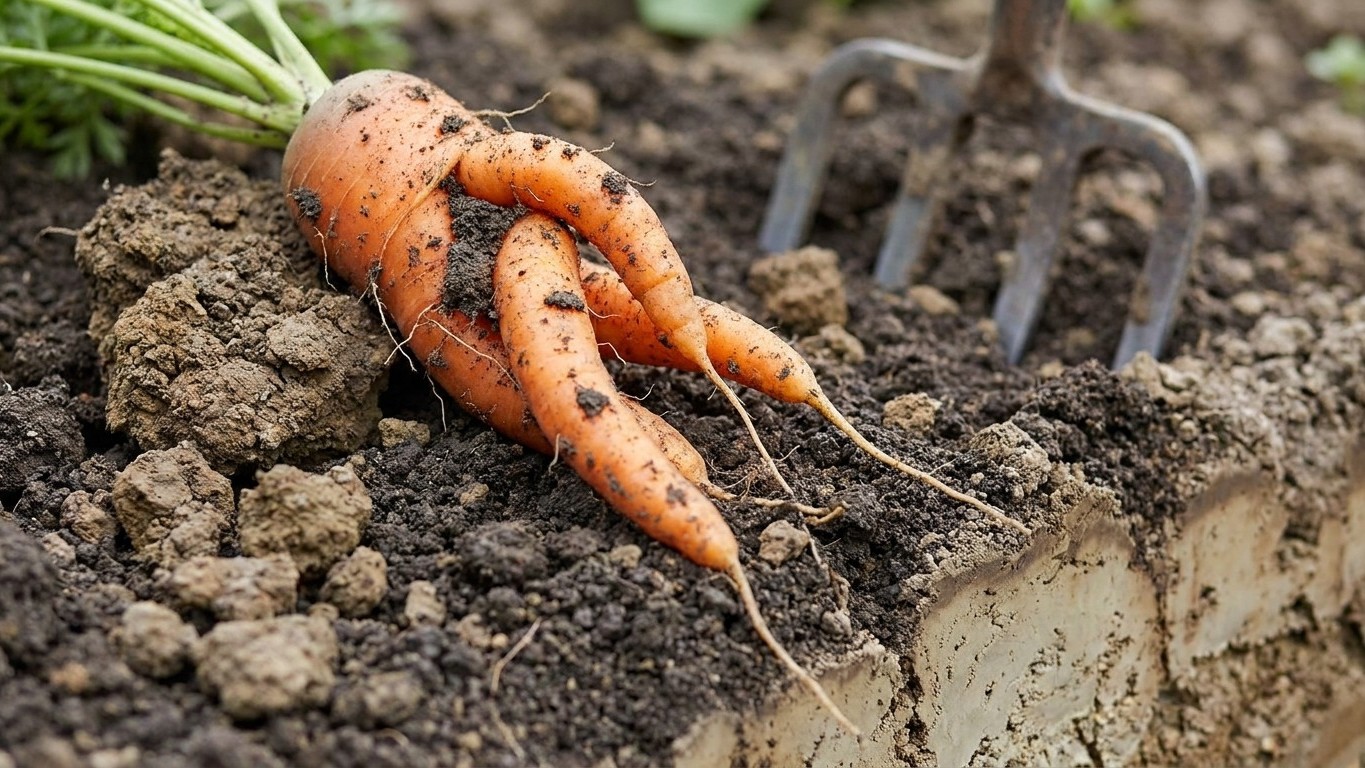

Carrots are ready to pull about 65 to 75 days after planting, according to Clemson Cooperative Extension. Slower types take 70 to 100 days from seeding. Both counts start at seeding, because carrots are sown in place and never transplanted. Pull them before the soil freezes hard, cut off the tops the same day, and store the roots at 33 °F in high humidity. Bunched carrots with the tops left on keep only 10 to 14 days.
How do you know carrots are ready to pull in Washington?
Start with the calendar, then confirm with the root. A spring sowing reaches harvest in summer. A midsummer sowing, which many gardeners use for a fall and winter supply, reaches it in autumn. In either case, count the days from seeding and mark the date on the row label. Cool autumn nights tend to sweeten the roots, so a carrot that sits a few extra weeks in cool weather often tastes better than one pulled on the first day it is big enough.
Check one root before you commit the whole row. Brush the soil from the top of a carrot and look at the shoulder. When it has filled out to the width the packet describes and the color is deep and even, the row is ready. Carrots left far past that point can turn woody or split after heavy rain. Pull the whole row before that happens.
Washington’s ground varies a lot. West of the Cascades, winters are mild and wet, and carrots can sometimes stay in the bed under a thick mulch of straw or leaves. East of the mountains, winters are colder and drier, and the top few inches of soil can freeze solid. Wherever your garden sits, lift the crop before the soil freezes hard. A frozen row is miserable to dig, and roots that have frozen and thawed turn soft in storage.
The state soil, the Tokul series, shows what the region’s ground tends to do. It is a volcanic-ash soil (an Andisol), light and porous, with a surface pH of about 4.5, which is strongly acid. The mapped surface is 45 percent sand, 10 percent clay and 45 percent silt, with about 75.0 percent organic matter and moderately good drainage. That organic figure describes a natural forest-litter layer, and a cultivated bed will hold far less. Utah State University Extension says carrots want deep, sandy, well-drained soil rich in organic matter, and that heavy or rocky soil makes the root fork. Light ground like this lifts easily, but your own bed may be nothing like it, especially on river bottoms, hillsides or lots a builder has scraped. A county extension soil test gives you the real pH and texture. For a quick home check, fill a straight-sided jar one-third with soil, top it with water, shake it, and let it settle for a day. Sand drops first, silt next and clay last, and the layers show you the proportions.
A fork in the root is a growing problem, so see Will Carrots Fork in Washington Soil? if your roots come up twisted. Chewed or tunneled roots belong in the kitchen first, and What Eats Carrot in Washington, and When explains who did the damage. For the full season from seed to harvest, start with Growing Carrots in Washington.
Keeping them, and for how long
Clemson Cooperative Extension puts it plainly: “Harvest carrots about 65 to 75 days after planting… Store them at 33 °F and high humidity to prevent wilting. Bunched carrots (plants with tops on) can be stored for about 10 to 14 days.” The number to write on a sticky note is 33 °F. That sits just above freezing. It is a refrigerator-cold target, far cooler than a typical cellar or a garage in October.
Why do carrots with the tops on keep only 10 to 14 days?
The leaves keep working after the harvest. They draw moisture out of the root and lose it to the air, and the root goes limp as a result. That is why Clemson’s 10 to 14 days applies to bunched carrots, and why you cut the tops before the roots go anywhere cold. Trimmed carrots, held at the same cold temperature and humidity, can keep for months. Treat that as the best case. A duration like this is a maximum under optimal conditions, and a warm spot, dry air or a bruised root shortens it.
Warmth does the most damage. A carrot held at 50 °F will sprout and soften in a fraction of the time it would last at 33 °F. The root wakes up, spends its sugar on new growth, and turns rubbery. High humidity matters as much as the cold. Dry air pulls water from the surface, and a carrot that has lost water bends instead of snapping.
How do you prepare carrots for storage?
Work in this order:
- Loosen the row with a garden fork and lift the roots instead of yanking them by the tops.
- Twist or cut off the tops close to the crown right away.
- Brush off loose soil. Leave the skin intact, since scrapes are where rot starts.
- Set aside any root that is cut, split or chewed, and eat those first.
- Pack the sound roots into a container that holds humidity, such as a lidded tub or a ventilated plastic bag.
Forked or oddly shaped roots store as well as straight ones, as long as the skin is whole. Check the container every week or two and pull out any carrot that has gone soft before it spoils its neighbors.
Where in the house that actually is
Very few homes have a room that sits at 33 °F. A household refrigerator comes closest, and the crisper drawer is the best spot in it, since the drawer holds humidity better than the open shelves. Fridges vary, though. Some run too warm at the door, and some freeze whatever touches the back wall. A heated kitchen or pantry is far too warm and dry for carrots. Treat any spot that feels comfortable to you as too warm for them.
A garage is the riskiest choice. An attached garage swings with the weather, running cool on a clear October morning and mild on a sunny afternoon, and in a hard freeze it can drop low enough to freeze the roots. Carrots that freeze and thaw come out mushy. An unheated basement or a root cellar can work if it stays cold and damp, with the best spot against a north or an exterior wall.
| Spot | Closeness to 33 °F | Main risk |
|---|---|---|
| Refrigerator crisper drawer | Closest of any room | Limited space; cold spots near the back wall |
| Cool basement or root cellar | Depends on the house | Warmer than the target; dampness can invite mold |
| Attached garage | Swings with the weather | Warm days spoil roots; hard freezes damage them |
| Heated kitchen or pantry | Far too warm | Wilting, sprouting and softening within days |
A good thermometer settles the question. Put a thermometer in the exact spot before you load it with the harvest, and read it morning and evening. Skipping that check can cost the whole crop, because a spot that feels cold to your hand may sit well above 33 °F. If the readings run high, store a small batch in the crisper drawer and eat through the rest quickly.
Common questions
Can carrots stay in the ground over winter in Washington?
In milder spots west of the Cascades, a thick layer of mulch lets many gardeners dig carrots through the cold months. Where the soil freezes hard, lift the roots first. Pests also feed on roots left in the bed, so check them regularly.
Should I wash carrots before storing them?
Brush off the loose soil and leave the rest. Washing wets the skin and can speed rot in storage. Rinse them right before you cook or eat them.
Why did my stored carrots go limp?
The usual causes are leaving the tops on, dry air or a spot that is too warm. Clemson Cooperative Extension recommends 33 °F with high humidity to prevent wilting. A limp carrot that is otherwise sound can still be cooked.
How many days until carrots are ready after seeding?
Clemson Cooperative Extension says about 65 to 75 days after planting. Packets vary, and many list 70 to 100 days. Count from the day the seed went in the ground, and check one root before you pull the row.