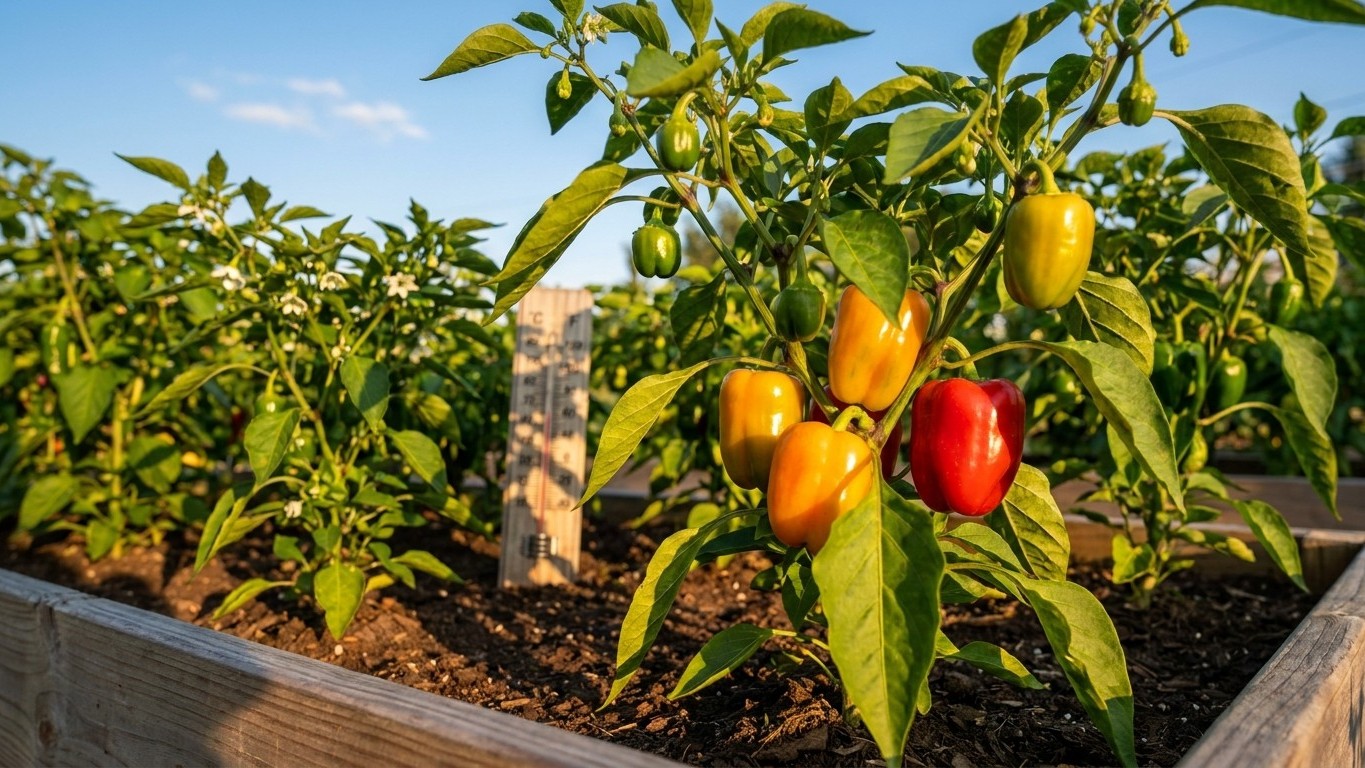

Pick peppers once they reach full size with firm, glossy skin, which runs about 70 to 85 days after transplanting. Then keep them out of the refrigerator. A household fridge runs colder than peppers tolerate, and below about 45 °F the skin pits and the flesh goes soft. A cool, humid spot a few degrees warmer holds them far longer than the crisper drawer most people reach for.
How do you know when a pepper is ready to pick?
Start the count on transplant day. Clemson Cooperative Extension’s Home & Garden Information Center says peppers should be ready for harvest in about 70 to 85 days after transplanting. Sowing day is the wrong starting line, and so is the day the plant first flowers. Once a flower sets fruit, the pod needs time to size up, and that clock runs from flowering.
The calendar for that first transplant day sits later than most gardeners expect. Pepper transplants go out when the soil reaches 60 F, and only after frost is behind you. NOAA’s NCEI climate normals put the last spring frost for the Nashville reference station between March 31 and April 12. East Tennessee and the Cumberland Plateau run cooler and later. Soil takes longer to warm than the air does, so the planting date is usually well past the frost date. Transplants also need 8 to 10 weeks indoors before they are ready to move, which pushes back the start of the whole count if you grow your own.
Weather decides whether the plant keeps setting fruit along the way. Fruit set fails at both ends: nights below 55 F, or days above 90 F. The Nashville reference station averages 40 days a year at 90 F or more, so a Tennessee July can shut down flowering for stretches. Peppers then ripen in waves, with a heavy first flush, a thin patch, and a second round when the weather eases. The cool end is just as real in late spring and early fall. Keep a min-max thermometer in the garden and watch your own nights, because the plants respond to what happens in your bed. For the full picture, see Why Peppers Fail to Set Fruit in Tennessee.
On the plant, the signs are simple. The fruit has reached the size the plant tag describes, the wall feels firm when you squeeze gently, and the skin is glossy and taut. A dull, wrinkled skin means the pepper has sat too long. Green peppers are edible and can be picked at full size. Letting them color on the plant gives a sweeter pepper but keeps the fruit exposed longer to rot and insects, which is one reason to scan the plants often. What Eats Pepper in Tennessee, and When covers the usual culprits.
Cut peppers off with pruners or scissors, leaving a short piece of stem on the fruit. Pulling by hand can snap a whole branch, and pepper branches are brittle, especially when loaded. Regular picking also tells the plant to keep producing. A plant carrying a pile of mature fruit slows down its flowering.
Keeping them, and for how long
Clemson Cooperative Extension’s Home & Garden Information Center (hgic.clemson.edu) states the storage conditions directly: “The optimal conditions for storage are temperatures of 45 to 50 °F and 80- to 90-percent relative humidity for two to three weeks.” Two things in that sentence matter. One is the temperature. The other is the humidity, which most home storage ignores.
How long do picked peppers really keep?
Two to three weeks is the ceiling, reached only when both numbers are met. A pepper that sits on a counter in a warm kitchen, or in a dry corner, will not come close. Plan on using the harvest well inside that window, and treat the two to three weeks as the best case for fruit that was firm and undamaged when picked. A pepper with a soft spot, a bruise or a nick in the skin breaks down faster than its neighbors and can hasten the decline of the ones touching it. Sort the harvest as you bring it in and eat the blemished ones first.
The humidity target matters because peppers are mostly water, and a dry room pulls it out through the skin. Fruit left in dry air wrinkles within days. A loosely closed, perforated bag or a container with a damp (not wet) paper towel in the bottom helps hold moisture around the fruit without sealing in condensation. Standing water on the skin invites rot, so wipe off any damp fruit before it goes in.
Why does the fridge ruin peppers?
Because it is colder than the range above. The bottom of the range is 45 °F, and a household refrigerator is set below that. Peppers come from the tropics, and below about 45 °F they suffer chilling injury. The skin develops small sunken pits, the flesh softens, and the fruit breaks down quickly once it comes back to room temperature. The damage often shows up a day or two after the pepper leaves the cold, which is why people blame the pepper instead of the fridge.
Nearly everyone makes this mistake, and it is easy to see why. Most vegetables want the cold, so the crisper drawer feels like the obvious place. Peppers are an exception, much as tomatoes and cucumbers are. Cut or cooked pepper is a different matter, since it has no skin left to pit and should go in the fridge like any leftover. Whole, fresh fruit is what needs the warmer spot. The same goes for any pepper you plan to ripen further, since cold stalls the color change and does not undo it.
Where in the house that actually is
The target is 45 to 50 °F, and almost no room in a house is built to hold it. Three common spots each miss in their own way.
Fridge, heated room or garage: which one fails?
The refrigerator runs below the range, as covered above. A heated room, kitchen included, sits well above it, so peppers there ripen, soften and shrivel in days. A garage is the trickiest, because it follows the weather. On a mild October afternoon it might land in the range, then drop on a clear night or heat up when the sun hits the door. Tennessee’s fall and spring swings are wide enough that a garage can fall on either side within a single day. Peppers that go back and forth between chill and warmth get the worst of both.
Which room comes closest, and what should you check?
The best candidates are the cool, stable corners of the house: a basement, a root cellar, a pantry on an exterior north wall, or an unheated interior closet. Basements tend to hold steady temperatures through the seasons, which is exactly the trait peppers need, and they often carry more humidity than upstairs rooms. Where a basement is damp enough to feel clammy, that helps the humidity target, but check that nothing is growing on the walls near the produce.
Do not guess at the spot. Leave an inexpensive thermometer with a humidity readout in the place you are considering for a couple of days before you load it with peppers, and read the low and high, not just the number at the moment you check. A spot that reads 48 °F at noon may hit 42 °F before dawn. If the reading falls under 45 °F at any point, the spot is too cold for whole fruit. If it sits above 50 °F, plan on eating the peppers sooner. Peppers kept in a room that misses the range on either side give you days, not weeks.
If no room qualifies, shorten the plan. Pick as you need, eat the freshest first, and freeze or dry the surplus rather than gambling on storage. For the broader growing season that leads up to the harvest, Growing Peppers in Tennessee is the place to start.
Common questions
Can I put peppers in the fridge if I have nowhere else?
Whole fresh peppers will pit and soften in the cold, so it is a poor choice for anything beyond a day or two. If the fridge is the only option, use the warmest, least cold part you can find and eat the peppers quickly. Sliced, diced or cooked peppers are fine in the fridge, since the chilling injury is a problem of the whole fruit’s skin.
Should I pick peppers green or wait for color?
Either works. Green peppers are mature enough to eat once they reach full size and feel firm. Waiting for red, yellow or orange gives a sweeter fruit but leaves it on the plant longer, where weather, insects and rot can reach it. If frost is in the forecast, pick everything that is full size and bring it in.
How long after transplanting until the first harvest?
Clemson Extension puts it at about 70 to 85 days after transplanting. That count starts when the plant goes into the ground, after frost, when the soil has reached 60 F. Plants that stall because of hot days or cool nights can run past the range, since fruit set stops at both ends of the temperature scale.
Do hot summers change when I should pick?
They change how much you get, and when. The Nashville reference station averages 40 days a year at 90 F or more, and flowering falters in those stretches. The fruit already on the plant keeps sizing up, so keep picking on the same schedule. Nights below 55 F cause the same trouble from the other side, so watch your own nighttime lows in spring and fall.