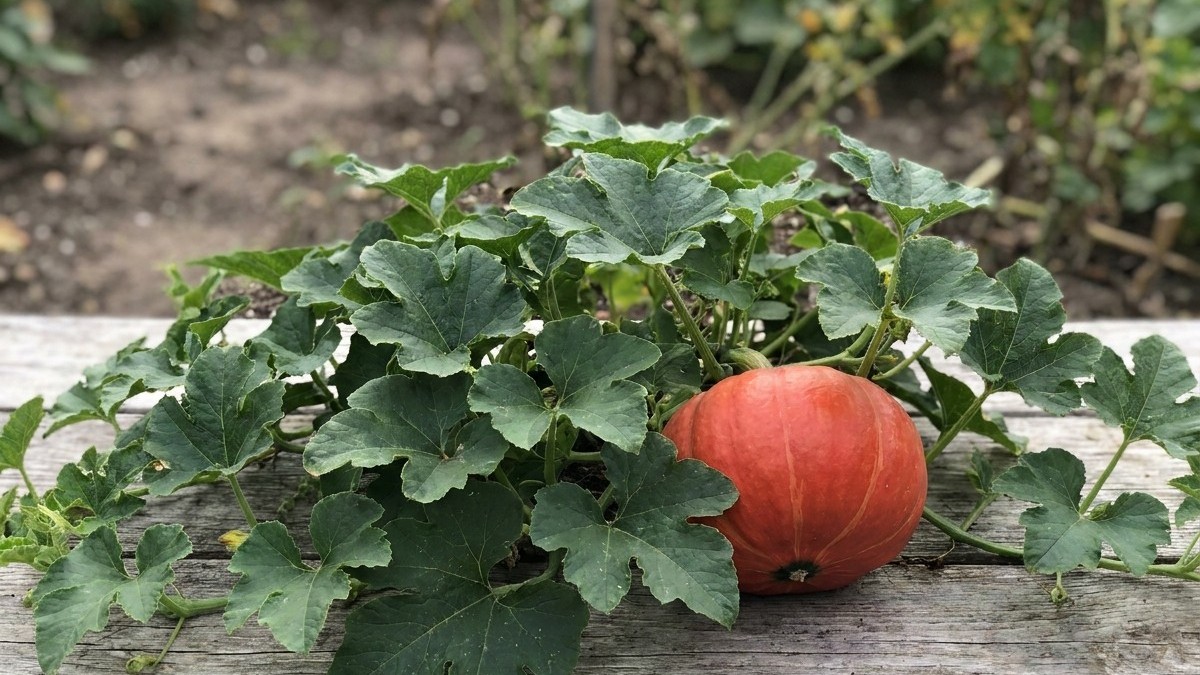

Cut a pumpkin when the rind is too hard to dent with a thumbnail, the color has gone deep and even, and the stem has dried to a woody brown. In the Northwest Territories, where the season is short, that usually lands between late August and mid-September, earlier if a frost warning appears. The vine tells you more than the calendar does. A pumpkin cut with its stem attached and stored cool and dry can last for months, but only if it avoids a few common mistakes.
When pumpkins are ready in Northwest Territories
A pumpkin is ready when the rind turns hard and the stem dries and corks, which takes about 45 to 55 days after flowering. In the Northwest Territories that points to a cutting window from late August to mid-September. The first fall frost at Yellowknife arrives on average on September 18.
That date comes from Environment and Climate Change Canada’s 30-year climate averages for the Yellowknife A station, which also put the last spring frost on average on May 25. The reference station has about 116 frost-free days between those two dates. Both are midpoints. In one year out of two the first frost comes earlier than September 18, so treat it as the middle of a window and never as a safe date. Communities farther north, and higher or colder ground, usually run shorter seasons than Yellowknife, so a local gardener’s own frost record beats any average.
How do you know a pumpkin is ready to cut?
Press a thumbnail into the rind. If it resists and leaves no dent, the fruit is mature. The color should be deep and uniform, the underside where it rested on the ground should have lost its pale, greenish cast, and the stem should be hard and corky. Cut with pruning shears and leave the stem attached, since Utah State University Extension advises harvesting with the stem on and before frost. A pumpkin carried by its stem can snap it off, and a pumpkin without a stem is more likely to rot from the scar. Lift it from underneath instead.
Will the flowers open early enough?
Count backward from the frost window. Fifty-five days before September 18 is about July 25, and forty-five days before is about August 4. A female flower that opens by late July has a fair chance of becoming a mature pumpkin in an average year. One that opens in mid-August will most likely give a green fruit, and since frost comes early in half of all years, the margin is thinner than the average suggests. Many growers pinch off late flowers and tiny fruit so the plant puts its energy into the pumpkins already sizing up.
The clock starts at flowering, not at seeding. Pumpkins are sown when the soil reaches 65 F, and that is a different matter from the last spring frost on May 25. Soil lags the air by weeks, so a frost-free morning does not mean the ground is ready. Check with a soil thermometer a few inches down. For a fuller look at whether a planting will finish in time, see Will Pumpkins Ripen Before Frost in Northwest Territories? For the whole growing season, start with Growing Pumpkins in Northwest Territories.
Keeping them, and for how long
The University of Illinois Extension says a whole pumpkin keeps three to six months in a cool, dark location between 45-50 F. That is the best case, reached only when the pumpkin is mature, unblemished and held in those conditions the whole time. It is a ceiling, and plenty of pumpkins give out before it. Keep the storage spot dry, too, because damp air encourages mold and rot on the rind.
How long will a whole pumpkin really last?
Plan on the short end of the range, then be pleasantly surprised. A pumpkin cut a little early, one with a bruise or a soft spot, one that sat through a warm spell, or one with a snapped stem will go first. Check the stored pumpkins every week or two. Press the rind near the stem and on the bottom, and use any that feel soft or show a wet patch right away. One bad pumpkin can spoil what it touches, so give each one a little space rather than stacking them.
Field damage matters as well. A pumpkin chewed by pests or scarred in the garden starts storage with a wound, and wounds are where rot begins. If beetles or bugs were feeding on the vines all summer, What Eats Pumpkin in Northwest Territories, and When explains what to look for and when. Sort the clean, hard-rinded fruit for storing and eat or cook the rest first.
Why should pumpkins stay away from apples and potatoes?
The Illinois Extension advice has a second half that most people never hear: store pumpkins away from ripening fruit and vegetables such as apples, potatoes and tomatoes. Ripening produce gives off a gas that ages the pumpkin faster. A shelf beside the apple crate or the potato bin is a poor spot even when the temperature is right. Put pumpkins in a different room, or at least at the far end of the space.
Freezing is the other hard limit. Utah State University Extension says to keep pumpkins where they will not freeze, and that is the one condition it states plainly. A frozen pumpkin turns to mush as it thaws, and in the Northwest Territories a cold night can arrive well before the pumpkins are ready to come in from the porch. The three-to-six-month figure belongs to whole pumpkins. A carved or cut pumpkin breaks down far sooner, and no storage range for whole fruit applies to it.
Where in the house that actually is
The target is 45 to 50 F, dark, dry and above freezing. Most of a house misses it in one direction or the other. A refrigerator runs colder than 45 F and has no room for a pumpkin anyway. Heated living space, kitchens and rooms near the furnace run well above 50 F, which shortens storage life. A garage or porch follows the weather, and in the Northwest Territories that means warm afternoons in early fall and below-freezing nights soon after. The pumpkin has no way to cope with the second.
Which room comes closest?
The best bet is usually a cool basement room, a cold storage room, or a spare bedroom with the heat turned down and the door shut. An insulated closet on an interior wall can also work if it stays dark and away from heating ducts. Keep the pumpkins off a bare concrete floor if it feels damp or very cold, and put a board, a shelf or a layer of cardboard under them. Choose the coolest corner, away from the furnace, the water heater and any vent. Keep them well apart from the apples, the potatoes and the tomatoes sitting on the counter.
Do not trust your hand to judge the temperature. Leave a min-max thermometer beside the pumpkins for a week before you move the whole harvest in, and read it morning and evening. If the low edges toward freezing, move them to a warmer spot. If the high stays above 50 F, look for a lower shelf, a cooler wall or a different room. A thermometer costs a few dollars, and a lost crop costs a season of growing.
What if the pumpkin is already carved?
Treat it as a short-term decoration. Once the rind is cut, the flesh is exposed and spoilage speeds up, so a carved pumpkin is best kept in the coolest place that is still above freezing and used or composted quickly. The months of keeping time apply only to the uncut ones.
Common questions
Do the 45 to 55 days start from seeding?
No. The count starts when the flower opens. A vine sown early but slow to bloom has not started the clock, so mark the date the first female flowers open and count from there. Add 45 to 55 days to get a rough harvest window, then check it against the frost dates for your area.
Is the last spring frost the date to sow pumpkins?
No. Pumpkins are sown when the soil reaches 65 F. The mean last spring frost at Yellowknife is May 25, but soil warms more slowly than the air, sometimes by weeks. Measure the soil with a thermometer instead of trusting the date, and remember that half of all years see frost after the average date.
What should I do if frost is forecast and the pumpkins are not ready?
Cut every pumpkin with a hard rind, leaving the stem on, and bring them in before the cold arrives. Fruit that is still green with a soft rind will not keep like a mature one, so use those first. For a closer look at late-season fruit, see the guide to ripening before frost.
Can pumpkins wait on the porch for a few weeks?
Only while nights stay above freezing. A porch swings between warm days and cold nights, and one hard freeze can ruin a pumpkin. Keep the porch for early fall, check the forecast, and keep pumpkins away from any apple crate sitting there. For longer storage, bring them into a cool room.