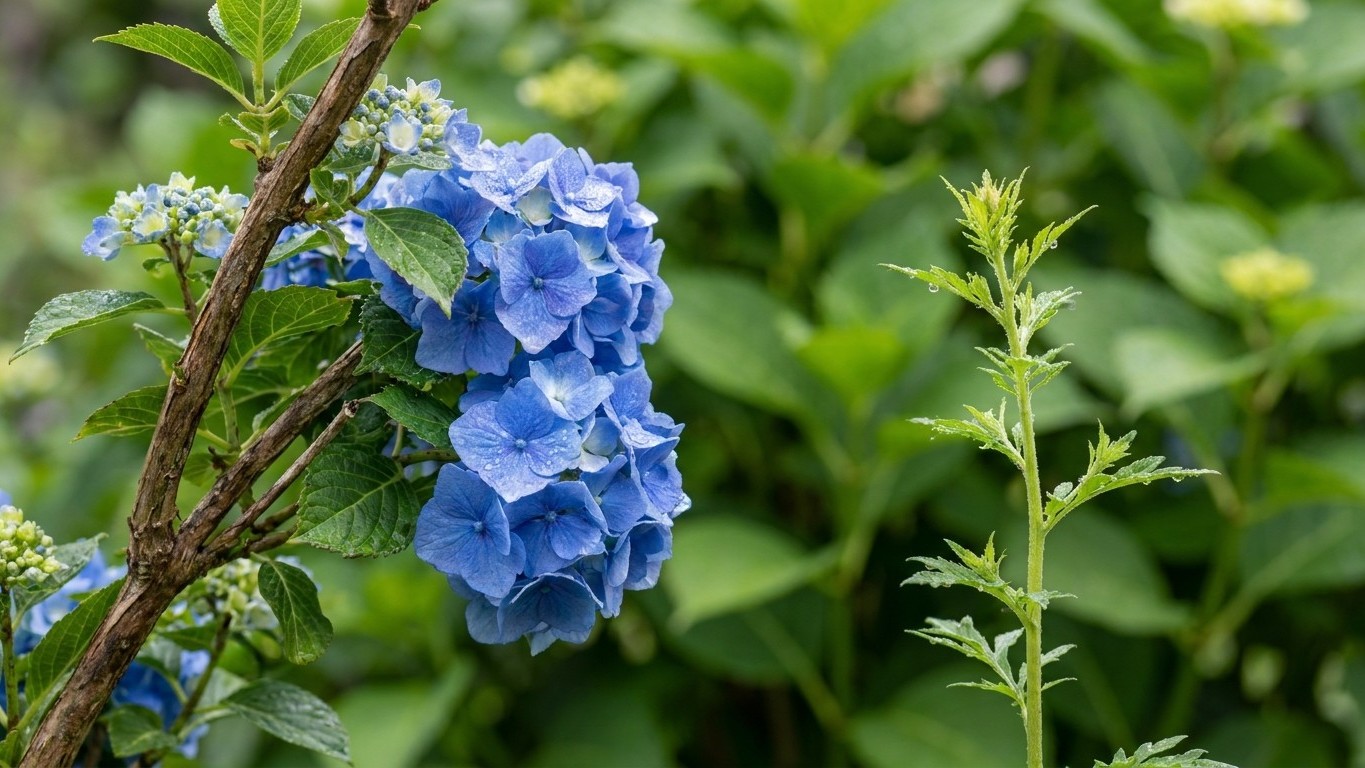

Plant hydrangeas in Wisconsin from mid-May on, once the last spring freeze has passed, and choose panicle or smooth types if you want blooms every year. Both flower on the current season’s growth, so a hard winter cannot wipe out the show. Bigleaf hydrangeas, the blue and pink mopheads sold every spring, bloom on old wood in many cases and often lose their buds to cold. Give any hydrangea deep watering, mulch, and a spot with afternoon relief from sun.
When to plant Hydrangeas in Wisconsin

The reference station for the dates below is Milwaukee. There, the last spring freeze (32°F) typically falls between April 16 and April 29, and the first fall freeze between October 17 and October 29. Those dates describe the lakeshore, where Lake Michigan holds warmth into autumn. Inland southern Wisconsin usually freezes in early October, and the north freezes far earlier. Northern and higher-elevation parts of the state also warm up later in spring, so gardeners there should shift every date in this section later, often by a few weeks.
What is the best time to plant hydrangeas in Wisconsin?
Spring is the main window. A hydrangea in a nursery pot can go in the ground as soon as the soil is workable, but the tender new leaves are the problem. A late freeze in early May will blacken them. Waiting until the soil has warmed after the later frost date costs you very little and avoids that damage. In the north, late May or early June is a safer target.
Fall planting works too, with a firm deadline. Roots need time to settle before the ground freezes. Plant early enough that roots can establish before the ground freezes, and earlier is better farther north. A shrub planted in late October has little time to anchor, and frost heave can push it out of the ground over winter.
Can you start hydrangeas from seed or cuttings?
Seed is not worth the trouble. Seedlings take years to bloom, and they rarely match the parent plant. Softwood cuttings are the practical way to make more plants. Snip healthy stem tips, strip the lower leaves, and set them in a pot of moist, loose potting mix covered with a clear bag. Roots form in time. Keep the rooted cuttings in pots through the first winter in an unheated garage or other cold, protected spot. Plant them out the following spring, after the last freeze.
How do you harden off and transplant hydrangeas?
Plants from a greenhouse or from a window sill need gradual exposure before they go in the ground. Put them outside in shade for a few hours, then lengthen the time and add morning sun each day. Bring them in on any night when the forecast is near freezing.
Transplant on a cloudy, calm day if you can. Water the root ball well beforehand, set the shrub at the same depth it grew in the pot, and soak the planting hole after backfilling.
Soil and site preparation
Hydrangeas want soil that stays evenly moist but never soggy. Heavy clay holds water through the spring thaw and can rot roots. Sandy soil dries out so fast that leaves wilt by midafternoon. Most yards fall somewhere between the two, and compost fixes both problems.
How much sun do hydrangeas need in Wisconsin?
Morning sun and afternoon shade suit most of them. An east-facing bed is close to ideal. Panicle hydrangeas handle full sun well if the soil stays moist. Smooth hydrangeas tolerate more shade, though they flop more in low light. Bigleaf types burn and wilt in hot afternoon sun, and they also need shelter from cold winter wind, such as the lee side of a house or fence. Avoid planting directly under a roof edge, where sliding snow can snap stems.
How do you prepare the bed in the weeks before planting?
Start ahead of time. Check drainage first by digging a hole and filling it with water. If water still stands in it the next day, pick another spot or build a raised bed. Then spread compost over a wide area, far wider than the hole, and work it into the topsoil. Wide beds matter because hydrangea roots spread sideways well beyond the drip line.
Dig the planting hole wider than the root ball and no deeper. Spacing depends on the variety, so check the tag for mature width. Large panicle types need generous spacing, while compact ones fit closer together. Crowding invites mildew and leaf spots.
How do you get blue or pink hydrangea flowers?
Only bigleaf hydrangeas change colour with the soil. Blue flowers need acidic soil and available aluminum. Pink shows up as the soil becomes less acidic. Soils across Wisconsin run from acidic to alkaline, so a soil test through your county extension office tells you where you start. Moving alkaline soil toward blue takes months of sulfur applications, and it slips back. For most gardeners the easy route to blue is a large container filled with acidic mix. White panicle and smooth hydrangeas ignore soil chemistry, though their flowers often blush pink as they age.
Varieties that suit Wisconsin
Cold hardiness and bloom habit decide everything here. The key question is whether a variety forms flower buds on old wood, which formed last summer and must survive winter, or on new wood, which grows this spring. New-wood bloomers are the safe bet where winters are long and cold. Stem strength, sun tolerance, and mature size come next.
| Type | Blooms on | Winter reliability | Best for |
|---|---|---|---|
| Panicle (Hydrangea paniculata) | New wood | Very good | Sunny beds, long bloom, hedges |
| Smooth (Hydrangea arborescens) | New wood | Very good | Part shade, woodland edges, cutting |
| Bigleaf (Hydrangea macrophylla) | Old wood, some rebloomers add new wood | Variable, buds often killed | Sheltered spots, containers |
| Oakleaf (Hydrangea quercifolia) | Old wood | Marginal in colder areas | Southern, sheltered gardens |
Among panicles, Limelight is a widely sold large form with lime-green blooms that age to pink. Quick Fire opens early and turns rosy sooner. Compact selections such as Bobo and Little Lime suit foundation plantings and small yards.
Among smooth hydrangeas, Annabelle is the old standard with big white globes, but its stems often flop under the weight of the flowers, especially after rain. Incrediball was bred from Annabelle for sturdier stems. Invincibelle Spirit II adds pink flowers and is also widely sold. All of these die back to the ground in cold winters and regrow, flowering on that new growth.
Reblooming bigleaf varieties, the Endless Summer family being the best known, are worth a try near Lake Michigan or in a protected courtyard. Because some of them also flower on new wood, they can still bloom after a bad winter, but later and lighter. Gardeners in colder, mountainous climates face a tougher version of the same decision, as covered in the Growing Hydrangeas in Montana: Types, Colour and Winter guide, while the Growing Hydrangeas in New Hampshire: Types, Colour and Winter guide covers a similar northern-tier situation with different winters.
What to plant alongside
Good neighbors for hydrangeas share their need for moist soil and filtered light. Hostas, ferns, astilbe, and heuchera all handle the same conditions, and their foliage covers the bare lower stems of the shrubs. Spring bulbs such as daffodils fill the bed before the hydrangea leafs out, and the hydrangea’s foliage hides the fading bulb leaves in June. A groundcover like barren strawberry or sedge keeps the soil shaded and cooler, which reduces evaporation around shallow roots.
Pollinator value is real but uneven. Mophead and bigleaf flowers are mostly showy sterile florets with little nectar. Lacecap forms, wild-type smooth hydrangeas, and some panicles have small fertile flowers that bees visit. Pairing a sunny panicle with coneflower, bee balm, or native asters adds nectar through late summer.
Avoid planting under maples, birches, and other shallow-rooted trees, which take most of the water in the top foot of soil. Plants that want dry, lean soil, such as lavender and sedum, also struggle at the watering level a hydrangea needs.
Watering, feeding and support
How often should you water hydrangeas?
Water deeply and let the soil dry slightly between soakings. Deep watering sends roots downward, where soil stays cooler. Frequent shallow sprinkling keeps roots near the surface, where they dry out first. New plants need more attention for the whole first season, often checking the soil every few days in hot weather. Push a finger into the soil to check moisture. If it is dry there, water.
Mulch holds moisture and moderates soil temperature. Spread shredded bark or leaf mulch over the root zone, and keep it away from the stems so they do not stay damp and rot.
When and how should you feed hydrangeas?
Less is more. A balanced slow-release fertilizer applied once in spring, as buds begin to swell, is enough for most plants in reasonably good soil. A second light application in early summer is fine for heavy bloomers. Too much nitrogen produces lush leaves and few flowers, and it keeps stems soft going into winter. Stop feeding by midsummer so growth can harden before cold arrives. A yearly top-dressing of compost often does the same job.
Do hydrangeas need staking, pruning or sucker removal?
Heavy-headed smooth hydrangeas often need support. A grow-through hoop or ring set early in spring, while shoots are small, lets stems climb through it and hides the hardware by June. Choosing a sturdier variety is the simpler fix.
Pruning depends on bloom habit. Panicle and smooth hydrangeas bloom on new wood, so cut them back in late winter or early spring before growth starts. Panicles can be cut back to shape them, and smooth types can be cut low to the ground if you want strong, upright stems. Bigleaf hydrangeas need only dead wood removed, and you can see which stems are dead once buds break in May. Cutting them back hard in fall or early spring removes the flower buds. Smooth hydrangeas also spread by suckers. Dig the extra shoots out in spring or divide them to share with friends.
Common problems

Why won’t my hydrangea bloom?
This is the complaint gardeners raise most often. In bigleaf hydrangeas, the cause is nearly always winter bud kill, since the flower buds formed last summer and froze. Heavy shade, nitrogen-rich fertilizer, and pruning at the wrong time are the other usual causes. Panicle and smooth types that fail to bloom are generally too shaded or were pruned too late in spring.
What causes brown spots, white powder, and yellow leaves?
Round brown or purple-edged spots on lower leaves point to a fungal leaf spot. It spreads in wet weather and when plants are crowded. Water at the base, thin crowded stems, and rake up fallen leaves in autumn. Spraying is rarely needed on a healthy shrub. A white, dusty coating on leaves is powdery mildew, which tends to appear in humid summers and in shade with poor airflow. Better spacing is the lasting remedy.
Yellow leaves with dark green veins on a bigleaf hydrangea usually signal iron chlorosis, which comes from high soil pH locking up iron. A soil test confirms it. Chelated iron gives temporary relief, and lowering the pH is a slow process. Uniformly yellow leaves with soggy soil point to overwatering.
What do scorched leaves and flopping stems mean?
Crispy brown leaf edges in July or August come from sun and drought stress, especially on bigleaf hydrangeas in afternoon sun. More mulch and deeper watering help, and in the long run so does moving the plant to a spot with afternoon shade. Stems that bend to the ground after a storm point to too much shade, too much nitrogen, or a variety with weak stems. Support them with a ring, or swap them for a sturdier variety next spring.
Why are the stems brown after winter?
Dieback on bigleaf and oakleaf hydrangeas is common after a cold winter. Wait until leaves emerge in late May, then cut stems back to the first healthy buds. A plant that looks dead in April has often just not woken up. Scratch a stem with a fingernail. Green tissue underneath means it is alive.
Pests that actually show up in Wisconsin
The University of Wisconsin-Madison Division of Extension publishes a home-garden insect guide, Managing Insects in the Home Vegetable Garden, that is written mostly for vegetables. Several of the pests it names also feed on hydrangeas: aphids, thrips, tarnished plant bug, and slugs. Insect pressure runs from April through September. Pressure varies from one part of the state to another, and these are not the only insects a gardener may meet.
Aphids. The first sign is a cluster of small, soft insects on new shoot tips and the undersides of young leaves, with leaves curling and a sticky shine on the foliage below. They build up in late spring when growth is soft. A strong blast from the hose knocks them off, and repeating it every couple of days works better than spraying. Insecticidal soap is the next step if they come back.
Thrips. These tiny insects leave silvery, stippled flecks on petals and leaves, and flowers may look streaked or papery. Damage appears from early summer into late summer. Thrips hide inside buds, so spraying is hit-or-miss. The control that helps most is removing spent blooms and weedy debris, which cuts their numbers.
Tarnished plant bug. What you see first is not the bug but its work: distorted buds, dimpled or blackened spots on tender growth, and flowers that open lopsided. The bugs are fast, small, brownish, and drop when disturbed. They overwinter in weeds and plant litter, so clearing the beds in fall and keeping weeds down in summer is the control that works.
Slugs. Ragged holes in leaves, with silvery slime trails in the morning, show up during damp spells in spring and early summer, mostly on young plants and low leaves. Iron phosphate bait scattered around the base, or a shallow trap, controls them. Pulling mulch back an inch or two from the stems reduces their hiding places.
For anything you cannot identify, take a sample to your county extension office rather than guessing.
Harvest and end of season
Hydrangeas are cut flowers rather than a harvest crop, but timing still matters. For fresh arrangements, cut stems early in the morning once the blooms are fully open, and plunge them straight into water. For drying, wait until the flower heads feel papery and the colour shifts to a muted antique tone, usually late summer into early fall. Strip the leaves, hang the stems upside down in a dry, shaded spot, and let them dry. Panicle and smooth hydrangeas dry the most reliably. Cut bigleaf blooms for drying only after they have aged on the shrub.
Frost is the signal to prepare for winter. Ease off watering in early fall so growth slows, then water deeply once more before the ground freezes, since dry roots handle cold badly.
Leave the dried flower heads on panicle and smooth hydrangeas through winter. They add structure to a snowy yard and catch some insulating snow. After the leaves have dropped and the ground has cooled, add a few inches of fresh mulch over the roots. Bigleaf hydrangeas in exposed spots benefit from a cylinder of chicken wire or burlap staked around the plant and filled loosely with dry leaves. Do not prune them in fall. Remove the cage in spring once the worst cold has passed and buds begin to break.
Local help
County-level frost dates, soil tests, and insect identification are available through the University of Wisconsin-Madison Division of Extension, which has an office in every county. Bring a soil sample or a bagged pest specimen for advice that fits your yard. More statewide gardening advice is collected in the Wisconsin guides, and the full species-by-species background is in How to Grow Hydrangeas: The Complete Guide.
Common questions
What hydrangeas are hardy in Wisconsin?
Panicle and smooth hydrangeas are the dependable ones. Both bloom on new wood, so they flower even after severe winters. Bigleaf and oakleaf types survive in sheltered spots, mostly in the warmer southern and lakeshore areas, but their flower buds are often lost.
When is the last frost for planting hydrangeas in Wisconsin?
At the Milwaukee reference station, the last spring freeze typically falls between April 16 and April 29. Northern and higher-elevation areas run later, so check with your county extension office for local timing.
Can I grow blue hydrangeas in Wisconsin?
Yes, but it takes work. Blue colour needs acidic soil and available aluminum, and many yards sit above the right pH. Large containers of acidic potting mix are the easiest way to get reliable blue. Choose a bigleaf variety that reblooms, since some of them also flower on new wood.
Do I need to cover hydrangeas for winter in Wisconsin?
Panicle and smooth hydrangeas do not need covering, only a layer of mulch. Bigleaf hydrangeas in exposed spots benefit from a wire cage filled with dry leaves, set up after leaves drop.
Why are my hydrangea leaves wilting in summer?
Large leaves lose water quickly on hot afternoons, so midday wilting alone is not always a problem. If the plant recovers by evening, leave it alone. If it stays limp into the next morning, the soil is too dry, and the plant needs a deep soak and a fresh layer of mulch. Roots that sit in waterlogged soil can also cause wilting, so check drainage if watering does not help.