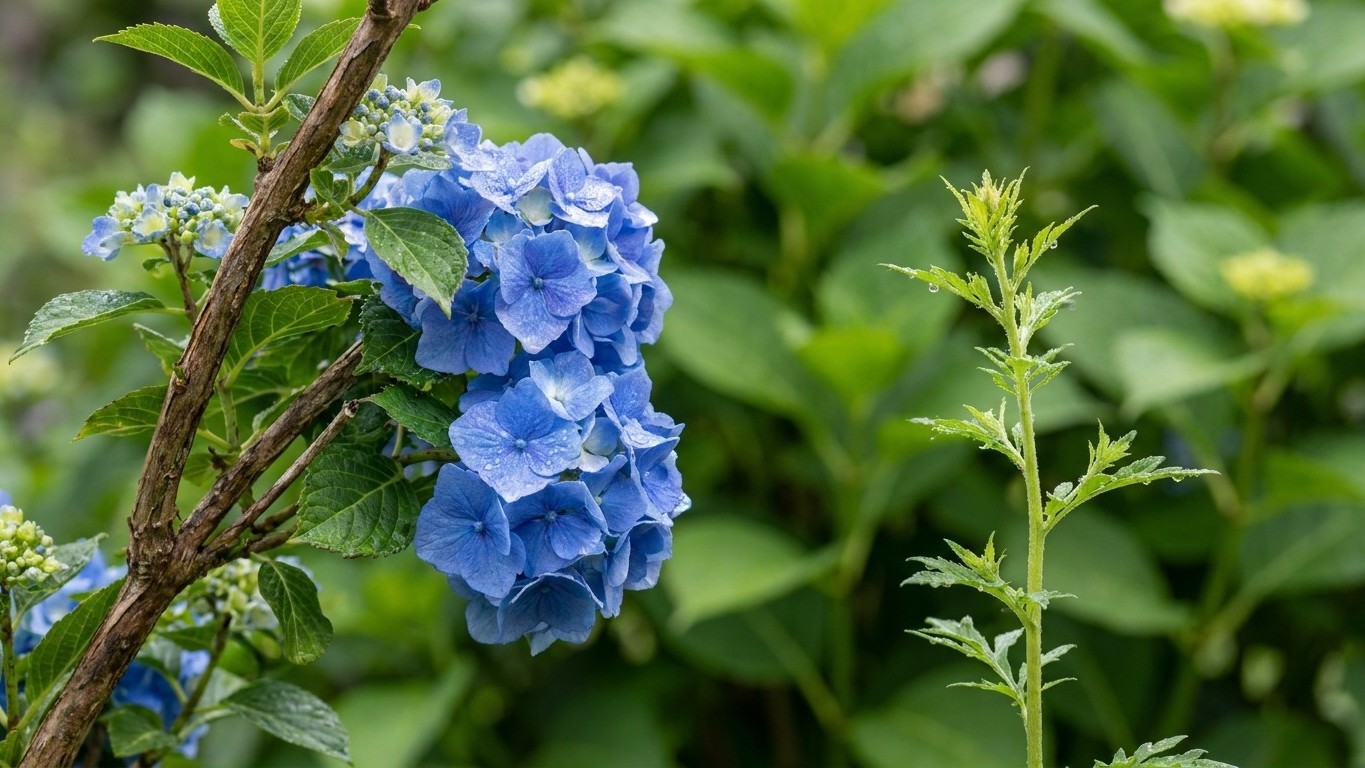

Panicle and smooth hydrangeas grow well in Wyoming, and they are the two types to build around. Plant them in late May, after the last freeze, in a spot with morning sun, afternoon shade and shelter from wind. Bigleaf hydrangeas, the blue and pink mopheads at every garden center, are a gamble. Their flower buds often die over winter, and alkaline soil turns the blooms pink. More state-level advice lives in our Wyoming guides.
When to plant Hydrangeas in Wyoming

Set container-grown hydrangeas in the ground in the second half of May. NOAA’s 1991-2020 Climate Normals for Cheyenne (station USW00024018) put the last 32°F freeze between May 7 and May 18, using the 30-70% probability band. The first fall freeze falls between September 24 and October 5. The reference station has about 130 frost-free days between the mean last spring frost and the mean first fall frost.
Cheyenne sits at roughly 6,000 feet, and it is one reference point, not the whole state. Northern parts of Wyoming and every town higher than Cheyenne run later in spring and earlier in fall, and frost is possible in any month at higher elevations. If your yard is in a cold basin or a mountain valley, treat May 18 as the earliest date you would consider and add a week or two. Season extension is not optional here. Keep frost cloth or a few old bedsheets within reach until June.
Can you grow hydrangeas from seed in Wyoming?
Not usefully. Seed collected from a named variety will not match the parent plant, and seedlings take years to flower. Nurseries sell hydrangeas as potted shrubs for good reason. If you want more plants, take softwood cuttings in early summer, root them in pots, and keep them in a bright window or cool garage through winter. They go outdoors the following spring on the same late-May schedule as a store-bought plant. Many named varieties are patented, so check the tag before propagating.
How do you harden off and plant out a hydrangea?
Garden centers stock hydrangeas in April and early May, after weeks in a greenhouse. Those leaves are soft and burn easily in Wyoming’s thin, bright, windy air. Count back about 7 to 10 days from your planting date. For a May 18 planting, start around May 8. Give the plant an hour or two in open shade the first day, then lengthen the time and move it into morning sun. Leave wind exposure for the last few days, and bring the pot in on any night when frost is forecast.
Plant on a calm, overcast day if you can. A late freeze after planting blackens new leaves but rarely kills an established crown, and a sheet draped over stakes usually prevents even that. Fall planting is a poor bet, since the first freeze can arrive as early as September 24 and leaves roots almost no time to settle. Gardeners in Nebraska, with a longer and warmer season, have more room to plant in fall.
Soil and site preparation
Pick the site first, because it matters more than any amendment. Morning sun with afternoon shade suits nearly every hydrangea. The east side of a house or a fence works well. Panicle types tolerate more sun if you keep them watered. High-elevation sun is intense and the air is dry, so leaves facing a west wall in July often scorch. Wind is the other hazard. It dries foliage and snaps stems, so tuck shrubs into the lee of a building, fence or windbreak.
Hydrangeas want soil that stays moist but never soggy. Test drainage by digging a hole about a foot deep and filling it with water. If water is still standing the next morning, choose another spot or build a raised bed. Sandy soil drains too fast and needs organic matter to hold moisture. Heavy clay holds water and needs organic matter to open it up. The fix for both is the same: spread 2 to 3 inches of compost over the entire bed and work it into the top 8 to 12 inches.
Do this in the weeks before planting, ideally the previous fall. Many soils in dry western climates are alkaline, which affects both flower color and iron uptake, so send a sample to a soil lab for a pH reading before you add anything. Sulfur lowers pH slowly, over months, so applying it the fall before planting beats applying it on planting day. Follow the lab’s rates, because too much does damage of its own.
On planting day, dig the hole as deep as the root ball and two to three times as wide. Keep the top of the root ball level with the surrounding soil. Backfill with the native soil you loosened, firm it, water slowly and thoroughly, then add mulch. Spacing follows the mature size on the tag. Compact varieties need about 3 to 4 feet between plants. Large panicles want 6 feet or more.
Varieties that suit Wyoming
The trait that matters most is when the flower buds form. Panicle and smooth hydrangeas set blooms on the current season’s growth, so a hard winter that kills stems to the ground still leaves time to flower by late summer. Bigleaf and oakleaf types form buds the previous year, and those buds are exposed to winter cold and spring freezes. In a season with about 130 frost-free days at the reference station, plants that flower on new wood are the safe choice. Sturdy stems and sun tolerance are the next traits worth screening for. The complete guide to growing hydrangeas covers the botany of each type in more depth.
| Type | Blooms on | Widely available examples | Good for |
|---|---|---|---|
| Panicle | New wood | Limelight, Little Lime, Quick Fire, Bobo, Vanilla Strawberry | Reliable bloom, sun tolerance, white blooms that age to pink. Quick Fire opens earlier than most, which helps in a short season. Bobo and Little Lime stay compact. |
| Smooth | New wood | Annabelle, Incrediball, Invincibelle Spirit | Big rounded heads in part shade. Incrediball has stiffer stems than Annabelle. Invincibelle Spirit gives pink blooms. |
| Bigleaf | Old wood, and new wood on reblooming types | Endless Summer and other rebloomers | Pots and sheltered corners. Rebloomers can bloom even if winter kills the old stems, but expect less than the label promises. |
Can you grow blue hydrangeas in Wyoming?
Only with effort. Bigleaf hydrangeas turn blue when the soil is acidic and aluminum is available, and pink to mauve when it is alkaline. That is why blue mopheads are easy where soils are naturally acidic, as in Connecticut, and a constant project on alkaline ground. If you want blue, grow a rebloomer in a large pot with acidic potting mix and keep it in a sheltered place. Panicle and smooth hydrangeas do not change color with soil pH, so a pink Invincibelle Spirit stays pink whatever you do.
What to plant alongside
The best neighbors share hydrangeas’ appetite for moisture and tolerance of shade. Hostas, ferns, astilbe and coral bells (heuchera) all do well in the same cool, mulched bed. Their foliage shades the soil around the hydrangea’s shallow roots and keeps weeds down. Spring bulbs such as daffodils and crocus fill the bed early and finish before the shrubs leaf out. Sweet woodruff makes a living ground cover under larger shrubs, though it spreads, so give it a boundary.
For pollinators, panicle hydrangeas carry small fertile flowers among the showy ones, and bees visit them. Mophead types are mostly sterile showy florets and offer little. Low flowers such as sweet alyssum and yarrow nearby feed hoverflies and lacewings. Plant marigolds or strongly scented herbs because you like them.
Keep hydrangeas away from plants with very different water needs. Lavender, sagebrush, penstemon and other drought-adapted plants want dry feet, and a bed watered for hydrangeas will rot them. Shallow-rooted trees like maples and cottonwoods compete hard for the same water, and a hydrangea planted in their root zone will wilt every afternoon. Give shrubs at least a few feet of clearance from the drip line of a large tree.
Watering, feeding and support
How much water do hydrangeas need in Wyoming?
Plan on about an inch a week in summer, more during hot, windy stretches. Water deeply once or twice a week rather than a little every day. Deep watering pulls roots down where the soil stays cooler, and shallow watering leaves the shrub stressed by the next dry spell. New plants need steady moisture through their first two summers. A drip line or soaker hose at the base works best, run in the morning. Check by pushing a finger a few inches into the soil near the plant.
Spread 2 to 3 inches of wood chips or shredded bark over the root zone and keep it a couple of inches off the stems. Mulch slows evaporation and softens the temperature swings that heave shallow roots in spring.
When and how should you feed and support hydrangeas?
Feed lightly. A slow-release balanced shrub fertilizer as growth starts in spring is enough, with a second small dose in early summer if growth looks pale. Stop feeding by midsummer, because late nitrogen pushes soft growth that early frost will kill. Heavy feeding also trades flowers for leaves.
Large smooth hydrangea heads can flop after rain or a hailstorm. Place a peony ring or three stakes with twine around the clump in spring, before stems stretch, rather than after they have fallen. Choosing a stiff-stemmed variety like Incrediball avoids much of the problem.
When do you prune hydrangeas?
Panicle and smooth types get pruned in late winter or early spring. Wait until buds swell and green shows, because Wyoming winters often kill the tips and you can then see what is alive. Cut panicles back by about a third. Smooth hydrangeas can be cut down to 6 to 12 inches if they get leggy. Bigleaf types only need dead wood removed after they leaf out, since cutting living old stems removes the flower buds. Smooth hydrangeas also spread by suckers, so dig out the extras to keep the clump where you want it.
Common problems

No flowers is the complaint heard most. On bigleaf types, winter kills the buds on old wood, and on any type too much shade or too much nitrogen can leave the shrub leafy and bloomless. Pruning a bigleaf in spring has the same effect. Panicle and smooth types that fail to bloom usually need more sun or less fertilizer.
Midday wilting on a hot afternoon is normal if the leaves perk up by evening. If they stay limp the next morning, the shrub is short of water, so water deeply. Crispy brown leaf edges point to scorch from sun, wind and dry soil together. Move the plant or add shade and mulch.
Yellow leaves with green veins mean iron chlorosis, common on alkaline soil, where iron is present but locked up. A soil test confirms the pH. Chelated iron gives a quick fix for the season, and sulfur applied in fall works on the cause. Blackened new leaves after a late freeze look alarming but usually regrow. Leave them until you can see where fresh buds start, then prune the dead tips.
White powdery film on leaves is powdery mildew, which shows up in crowded plantings with poor airflow. Space plants properly, water at the base and thin crowded stems. It rarely threatens the shrub’s life.
On pests, the University of Wyoming Extension’s MP-24 Pests of the Home Vegetable Garden highlights aphids, grasshoppers and the garden slug among others for home gardens, and all three will bother hydrangeas. Aphids cluster on new growth and leave sticky honeydew, and a hard spray of water or insecticidal soap clears small outbreaks. Slugs chew ragged holes and leave slime trails in irrigated, mulched beds. Grasshoppers strip leaf edges in dry summers. That list is not exhaustive, and pressure varies across the state. Take a sample to your county extension office if you cannot identify the culprit.
Harvest and end of season
Cut flowers for the vase when the florets on a panicle have opened, and put stems in water right away. For drying, leave the heads on the plant until the color shifts to a papery antique tone in late summer, then cut, strip the leaves and hang them upside down in a dry, shaded room. Wyoming’s dry air finishes the job. Leave some heads on the shrub for winter interest and to protect the buds just below them.
Start preparing for fall in late summer. Stop fertilizing by midsummer and keep watering until the ground freezes, because dry winter air and wind pull moisture from stems, and a shrub that enters winter thirsty suffers more dieback. The first fall freeze at Cheyenne arrives between September 24 and October 5, and earlier at higher elevations, so keep frost cloth handy for the occasional early cold snap.
Once the leaves have dropped and the ground has cooled, add 4 to 6 inches of mulch over the crown. For bigleaf hydrangeas, build a wire cage around the plant and fill it with shredded leaves. Potted hydrangeas go into an unheated garage or shed and get a light watering now and then. Resist fall pruning. Old stems protect the buds and crown through the cold months.
Local help
Frost dates, soil pH and pest pressure shift from county to county. University of Wyoming Extension can give you planting dates for your elevation, run soil tests and identify problems from a leaf or insect sample. Call your county office before you buy shrubs, especially if you live in a high valley or the north of the state.
Common questions
Do hydrangeas survive Wyoming winters?
Panicle and smooth hydrangeas generally do, because they flower on new wood and regrow from the base after dieback. Bigleaf types often lose their flower buds, so protect them with a mulch cage or grow them in pots that overwinter in a garage.
What is the best hydrangea for a cold, windy site?
A panicle hydrangea such as Limelight or Little Lime is a sound first choice. It tolerates sun and cold, and its blooms form on new growth. Put it in the lee of a fence or building to cut wind damage.
Why are my hydrangea leaves yellow with green veins?
That pattern points to iron chlorosis, which is common in alkaline soil. Test the pH, apply chelated iron for fast relief, and work in sulfur the following fall if the test calls for it.
When should I plant hydrangeas in Wyoming?
Plant in late May, after the last freeze window passes. At Cheyenne that window runs from May 7 to May 18, and colder, higher or more northern locations run later. Spring planting gives the roots a full season before winter.
Can I grow hydrangeas in containers?
Yes, and containers are the easiest way to grow bigleaf types and control soil acidity. Use a large pot with drainage, water often because pots dry fast in wind, and move the pot into an unheated garage for winter.