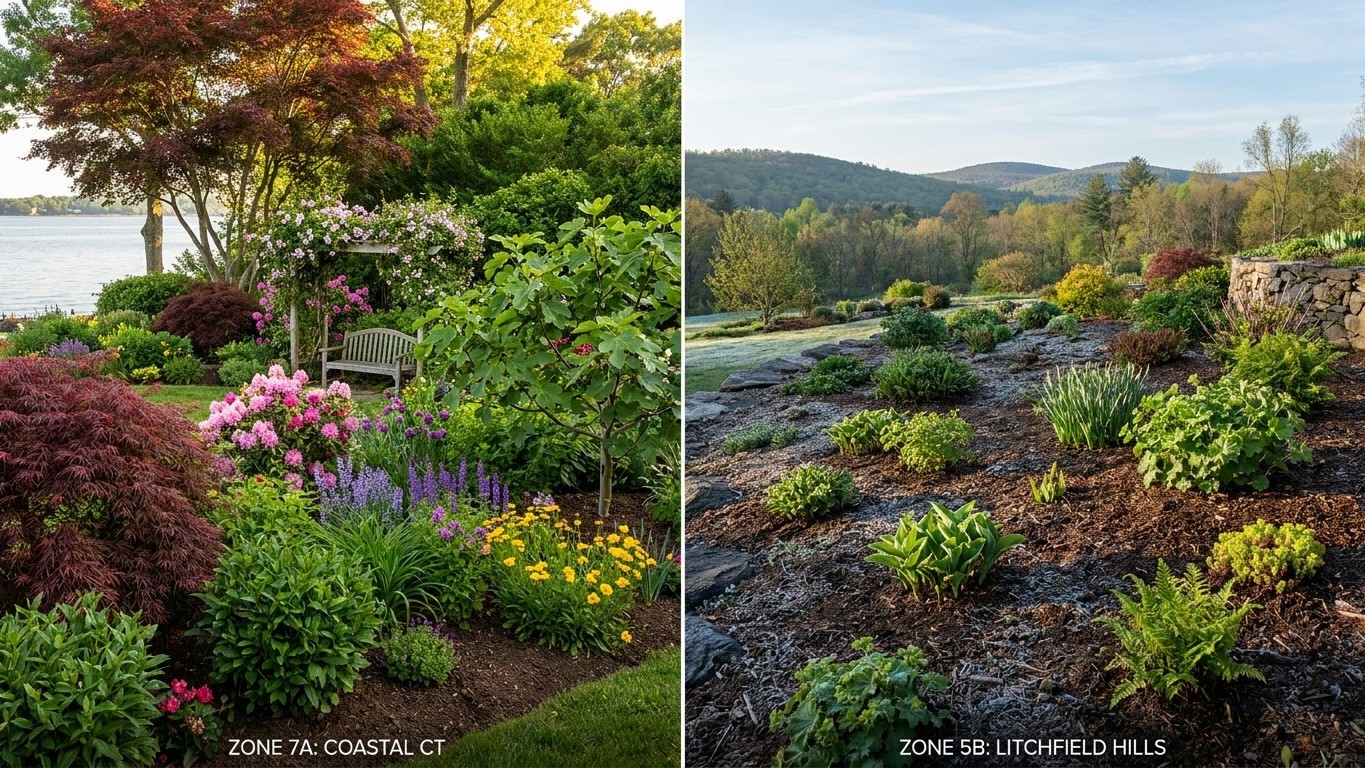

Connecticut gardeners work with a growing season that runs roughly from mid-May to mid-October, depending on where in the state you live, and that window is shaped by USDA hardiness zones ranging from 6a in the northwest hills to 7a along the shoreline. That gap of nearly a full zone matters more than most people realize: it can mean three extra weeks of frost-free growing between Greenwich and Norfolk, and it changes which perennials survive winter without protection, a distinction worth understanding before Growing Asparagus in Connecticut or other long-lived crops that need to establish over several seasons, though quicker cool-season options like Growing Spinach in Connecticut or Growing Carrots in Connecticut can fit into either climate zone with far less planning, while warm-season staples like Growing Sweet Corn in Connecticut or Growing Pumpkins in Connecticut depend heavily on which side of that zone line you’re on.
The short version: if you garden near Long Island Sound, you’re working with warmer winters, earlier springs, and a longer season overall. If you’re in Litchfield County or the northeastern hills, you’re gardening on borrowed time compared to your coastal neighbors, and your plant choices should reflect that.
Connecticut’s Growing Zones and What They Actually Mean

The USDA Plant Hardiness Zone Map places most of Connecticut in zones 6a through 7a, based on average annual minimum winter temperatures. Coastal towns from Greenwich through New London sit mostly in zone 7a, where winter lows average around 0 to 5 degrees Fahrenheit. Move inland and north, into the Litchfield Hills or the Quiet Corner near the Massachusetts border, and you’re looking at zone 6a, where lows can dip to minus 10.
That’s not a minor technicality. A fig tree or a Japanese maple cultivar rated for zone 7 might sail through winter in Stamford and die back to the ground, or die outright, in Winsted. The USDA Plant Hardiness Zone Map lets you check your specific ZIP code rather than relying on “Connecticut” as a single answer, and that step alone prevents a lot of expensive plant losses.
Microclimates complicate things further. A south-facing slope in a 6a town can behave like 6b. A low spot where cold air pools, sometimes called a frost pocket, can run colder than the official zone suggests even in a warmer region. Urban heat from pavement and buildings pushes cities like Hartford and Bridgeport slightly warmer than surrounding rural areas too.
Frost Dates and the Real Length of Your Season
Average last spring frost dates in Connecticut typically fall between late April and mid-May, with coastal areas clearing frost risk first and inland hill towns lagging two to three weeks behind. First fall frost tends to arrive between late September in the highlands and late October along the shoreline, which gives gardeners a wide window for cold-hardy root crops—Growing Parsnips in Connecticut is a good example, since the vegetable actually improves in flavor after exposure to frost and can stay in the ground well into the shoreline, a timeline that also shapes seasonal traditions like When to Carve a Pumpkin in Connecticut, since frost timing affects how long pumpkins hold up once cut. The shoreline. That gives shoreline gardeners a season that can stretch past 200 days, while northwestern Connecticut often works with closer to 150.
Those numbers are averages, not guarantees. Connecticut’s spring weather is famously unstable, and a warm April can lull gardeners into planting tomatoes or Growing Peppers in Connecticut too early, only to lose tender seedlings to a late frost that arrives without much warning.s early, only for a mid-May cold snap to wipe out a whole flat of seedlings. Local extension offices and the UConn Home & Garden Education Center track frost data by county and are worth checking before committing tender transplants to the ground.
A practical habit: wait until at least two weeks after your area’s average last frost date before setting out heat-loving crops like peppers, basil, and eggplant. Cold-tolerant crops (peas, lettuce, spinach, and most brassicas) can go in three to four weeks earlier, since a light frost won’t kill them and soil temperatures in the 40s are enough for germination.
Soil Across the State Isn’t One Thing
Connecticut soil varies dramatically depending on geology, and that history shows up in the garden. The eastern and western uplands sit on rocky, glacially scoured terrain, which means thin topsoil over ledge and a lot of stone to dig around. The Connecticut River Valley, by contrast, has some of the richest farmland in New England, deep alluvial soil built up over thousands of years of flooding, which is why the valley became tobacco and vegetable country generations ago.
Most native Connecticut soil runs acidic, typically in the pH 5.0 to 6.0 range, largely thanks to the region’s granite and gneiss bedrock and heavy leaf litter from oak and maple forests. That acidity suits blueberries, azaleas, and rhododendrons without much intervention, but it works against vegetables and most lawn grasses, which prefer something closer to neutral. A soil test through UConn’s soil lab, rather than a guess, is the only reliable way to know whether your yard needs lime and how much.
Drainage is the other recurring headache. Heavy clay pockets show up throughout central Connecticut, and combined with the state’s roughly 45 to 50 inches of annual precipitation, spring gardens can sit waterlogged for weeks. Raised beds solve a lot of this problem without requiring a full soil overhaul, since they let excess water drain away from root zones that would otherwise stay soggy into June.
Regional Differences Worth Planning Around
The Shoreline
Coastal towns from Greenwich to Stonington benefit from the moderating effect of Long Island Sound, which keeps winters milder and extends the growing season on both ends. Salt spray and sandy soil are the tradeoffs, particularly within a mile or two of the water, where plant choices often lean toward salt-tolerant natives like beach plum, bayberry, and switchgrass.
Humidity runs higher here too, which raises the risk of fungal issues on crops like tomatoes and squash. Good airflow between plants, achieved through wider spacing than a seed packet might suggest, cuts down on powdery mildew and blight in these damper coastal gardens.
The Central Valley
The Connecticut River Valley, running through towns like Windsor, South Windsor, and Glastonbury, has the state’s best vegetable-growing soil and a slightly longer season than the hill towns to either side. This is historically where Connecticut’s shade tobacco and sweet corn industries took root, and home gardeners here often get away with a wider range of crops than their neighbors thirty miles east or west.
The Litchfield Hills and Northeastern Quiet Corner
These are Connecticut’s coldest regions, with shorter seasons, rockier ground, and winter lows that regularly test zone 6a plant hardiness. Gardeners here lean on cold-hardy fruit varieties, earlier-maturing vegetable cultivars (look for “days to maturity” under 70 for tomatoes, for instance), and season-extension tools like row covers or cold frames to make up for the lost weeks on either end.
What the Season Realistically Allows to Grow
Connecticut’s climate supports a wide range of vegetables, but timing them to the actual local frost window matters more than the seed packet’s generic instructions. Cool-season crops like peas, spinach, kale, and lettuce thrive in the shoulder seasons of spring and fall, often producing a second crop if replanted in August for a September harvest. Warm-season staples, tomatoes, peppers, squash, and corn, need the full stretch of frost-free days and generally can’t be rushed no matter how tempting a warm April feels.
Fruit growing has its own logic here. Apples, pears, and cold-hardy grape varieties do well across most of the state, while peaches are a gamble outside the warmest coastal and valley locations, since late spring frosts can wipe out blossoms in a single cold night. Blueberries, suited to the state’s naturally acidic soil, are one of the few fruits that need almost no soil amendment to thrive.
Perennial flower gardens benefit from Connecticut’s four distinct seasons rather than fighting them. Peonies, daylilies, hostas, and native asters are all bred for exactly this kind of climate, with real winter dormancy and a defined bloom window, unlike gardeners in warmer states who have to trick these same plants into flowering.
Deer, Humidity, and Other Persistent Obstacles
Connecticut’s deer population is dense enough that “deer-resistant” has become a standard filter on plant tags at nurseries statewide. Hostas, daylilies, and most vegetable seedlings are effectively deer candy, and fencing at least eight feet high, or reliable repellent routines, tends to be the difference between a garden and a browsing buffet in suburban and rural towns alike.
Humid summers bring their own recurring battle: fungal disease. Tomato blight, powdery mildew on squash and cucumbers, and black spot on roses all thrive in Connecticut’s warm, damp July and August stretches. Watering at the base of plants instead of overhead, spacing plants for airflow, and choosing disease-resistant cultivars when available cut down on losses more reliably than fungicide alone.
Ticks deserve a mention too, since Connecticut has some of the highest Lyme disease rates in the country and gardeners spend a lot of time exactly where ticks live, in leaf litter and tall grass at the yard’s edge. Tucking pants into socks and doing a tick check after weeding isn’t paranoia here; it’s routine.
None of these constraints make Connecticut a difficult place to garden. They just mean the season rewards gardeners who plant to their specific zone, their specific soil, and their specific corner of the state rather than a generic New England average.
Where to check before you plant
Connecticut runs from the milder coastline near Long Island Sound up through the colder hills of Litchfield County, and that spread covers more than one hardiness zone. A frost date or planting window built around a single reference city can miss your actual last frost by two or three weeks in either direction, which is enough to lose a flat of seedlings or waste a head start on tomatoes.
UConn Extension extension.uconn.edu is the state’s land-grant extension service, and it publishes soil testing, pest identification, and planting guidance calibrated to Connecticut’s actual growing conditions rather than a regional average. Their soil test results in particular are worth getting before amending anything, since the state’s soils vary widely between the sandy coast and the rockier interior.
Beyond the statewide service, your county or regional extension office tracks frost dates, pest outbreaks, and disease pressure specific to your area. A tomato blight warning issued for the shoreline in early summer may not apply yet to a garden forty miles inland, and knowing which is which saves both plants and effort. Check both before committing a season’s work to a planting date that was never written with your yard in mind.
What to Plant Next in Your Connecticut Garden
Once you’ve got a handle on how the state’s cold and calendar shape a season, the same logic plays out crop by crop. Take garlic: the plant needs a real winter to work with, and planting garlic for a proper harvest means understanding that six to eight weeks below 40°F is what splits a clove into a full bulb instead of leaving you with one round, undivided lump. Lawns run on a different clock entirely — anyone confused about why some grass seed bags say May and others say September should look at Connecticut lawn care and feeding schedules, since cool-season grass here plays by its own rules from the start. And for the vegetable garden’s biggest gamble, setting out tomato transplants at the right time lays out the actual frost-free window — April 2 to April, per NOAA’s climate normals near Bridgeport — so you’re not guessing when it’s safe to move seedlings outside. Each of these pages digs into the same question this one does: what the season actually allows, and how to work with it instead of against it.