
Stink bugs show up in Alabama gardens from spring through late summer, arriving as soil warms after the last frost and staying active until tomatoes, peppers, and beans finish fruiting. Here’s when to expect them, what the damage looks like, how this state fits into what’s documented on this site, and which low-cost, non-chemical steps actually cut down their numbers.
When Stink bugs turns up in Alabama

The Alabama Cooperative Extension System, in its Vegetable Garden Insects guide (IPM-1305), tracks garden pest activity across the season but doesn’t publish a species-specific arrival window for stink bugs by name. It does name windows for several close relatives and co-occurring pests: aphids build from early spring onward, leaffooted bugs dominate on high-value vegetables late in the season, grasshoppers do their worst damage in late summer, and flea beetles peak in spring. Stink bugs aren’t listed with their own separate date range in that guide, so the honest answer is that the local extension service doesn’t publish one for this insect specifically.
What that means in practice: the general pattern for this whole insect group, spring through late summer, is the best working framework for stink bugs too. They behave a lot like leaffooted bugs in the same guide, piercing and feeding on fruit as it develops, and their populations tend to build the same way, slow in early spring, then climbing as vegetable plants move into flowering and fruit set. Gardeners in Alabama who watch for leaffooted bug pressure late in the season are usually watching for the same conditions that bring stink bugs out in force. Treat the season as a long window rather than a single date, since that’s what the available data actually supports.
Reading the calendar from your last frost
The one date most Alabama gardeners actually plan around is the last spring frost, and NOAA’s 30-year climate normals for the reference weather station (station USW00003856) put that window at March 19 to April 3. That’s a range, not a single day, and it comes from an airport station. Suburban and rural gardens typically see their last frost later than this, often by one to two weeks, and more at higher elevation, so check your own county’s extension office before setting a planting date.
Stink bugs don’t answer to a calendar. They answer to soil and air warmth, so an early spring can bring them out ahead of schedule while a cool, wet spring pushes activity back. Because they feed on developing fruit rather than young seedlings, damage typically doesn’t appear right after transplanting. It shows up several weeks later, once plants begin flowering and setting fruit, which is a different clock than the frost date itself. That timing matters for row covers: they need to come off once flowers open so pollinators can reach the blossoms, and that’s roughly the same point at which stink bugs start finding the crop worth attacking. A cover left on too long protects against the pest but blocks pollination, and one removed too early misses the plant’s most vulnerable stretch.
What it attacks, and what the damage looks like
A gardener usually notices the fruit before they ever spot the insect. Tomatoes develop hard, discolored, dimpled patches under the skin, sometimes called cat-facing, where the flesh has gone corky and distorted. Peppers show similar sunken, blotchy spots near where the insect fed. Beans and southern peas end up with shriveled, discolored seeds inside otherwise normal-looking pods. Sweet corn can show pale, collapsed kernels scattered across an ear. Okra pods sometimes develop dark, water-soaked lesions that spread once the fruit is picked.
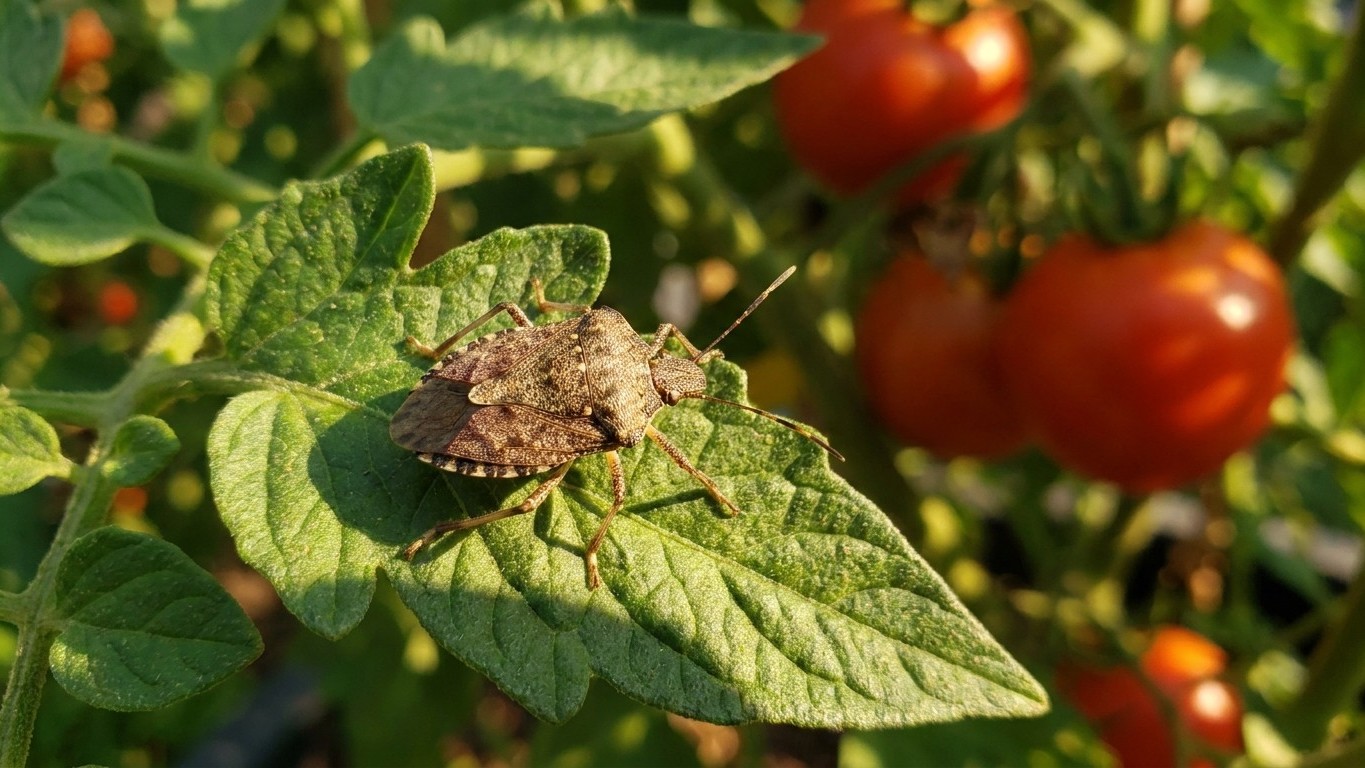
The insect itself is a shield-shaped bug with a needle-like mouthpart, and both the nymphs and the adults cause this kind of damage. Nymphs are smaller, often greenish or mottled, and tend to stay closer to where eggs were laid, doing steady, localized feeding. Adults are the ones that migrate in from surrounding weeds, hedgerows, and wild hosts once a crop starts fruiting, and they’re usually responsible for the bulk of damage on ripening vegetables late in the season. Because both stages feed the same way, piercing the fruit’s skin and withdrawing juice, treatment timing matters less for life stage and more for how early the damage is caught: once the fruit shows the corky, sunken marks, that cosmetic and structural damage is already permanent, even if the insect responsible is removed the same day.
How Alabama sits in this pest’s range

Stink bugs are documented in 2 territories on this site. That’s a narrow footprint, not a wide one, which puts Alabama near an edge of what’s currently covered here rather than in the middle of a broad, well-mapped range. No neighboring territory’s data has been published alongside Alabama’s for this pest, so there’s nothing borrowed from across a border to point to, and no rank or severity comparison can honestly be drawn from just two data points.
What can be said is that the pest itself is common across the warm, humid Southeast generally, and Alabama’s long growing season and mild winters give it plenty of time to build populations across spring and summer. The narrow count of documented territories here reflects how this particular site’s coverage has grown so far, not a claim about how rare or common the insect actually is on the ground. As more territories get added to this cocon, that picture will fill in, but for now Alabama stands as one of only two states with a page dedicated to this pest, and any comparison beyond that should wait for more published data.
What actually works against it
Timing the planting date is the cheapest lever available, and several other measures follow it once a crop is in the ground.
- Timing the planting date: adult stink bugs move in from surrounding weeds and wild hosts once a crop starts flowering, so getting vegetables transplanted and through their early growth before that pressure peaks reduces the window when fruit is vulnerable. This only works as a head start, though; it doesn’t stop the insect once it arrives, it just buys the plant more time to set an early crop before populations build.
- Row covers: they physically block adults from reaching flowers and young fruit, but the mechanism has a hard limit, since covers have to come off once blossoms open so pollinators can do their job, and that’s exactly when stink bug pressure tends to increase.
- Hand-picking: it works because stink bugs are slow-moving and easy to knock into a container of soapy water, especially in early morning when they’re sluggish from the cool overnight air.
- Clearing garden debris, fallen fruit, and old plant material at the end of the season: this removes overwintering sites where adults shelter, which cuts down on how many survive to start the cycle again next spring.
- Crop rotation: moving susceptible crops away from where heavy stink bug damage occurred the year before means fewer overwintering adults emerge right next to a fresh host plant.
None of these measures reach an insect once it’s already fed and moved on, since stink bugs feed externally with piercing mouthparts rather than tunneling inside stems or roots the way some other pests do. That’s actually a small advantage: there’s no hidden stage burrowed out of reach, which means physical removal and habitat cleanup stay useful all season, not just early on. What none of these steps can do is undo damage already visible on the fruit; prevention and early removal are the only points where effort still pays off.
Common questions
Do stink bugs and leaffooted bugs cause the same kind of damage in Alabama gardens?
They’re close in behavior. Both pierce fruit with needle-like mouthparts and leave discolored, corky spots on tomatoes, peppers, and beans, which is why extension guidance for one often applies loosely to the other even when a specific window isn’t published for stink bugs by name.
Should row covers stay on all season to keep stink bugs off fruiting vegetables?
No. Covers need to come off once flowers open so bees and other pollinators can reach the blossoms, which is usually the same point at which stink bug pressure starts to build, so hand-picking and debris cleanup become the more useful tools from that point forward.
Why doesn’t the local extension service list an exact arrival date for stink bugs in Alabama?
The Alabama Cooperative Extension System’s vegetable insect guide names specific windows for aphids, leaffooted bugs, grasshoppers, and flea beetles, but not for stink bugs as a separate entry, so the general spring-through-late-summer pattern for the group is the most accurate guidance currently available.