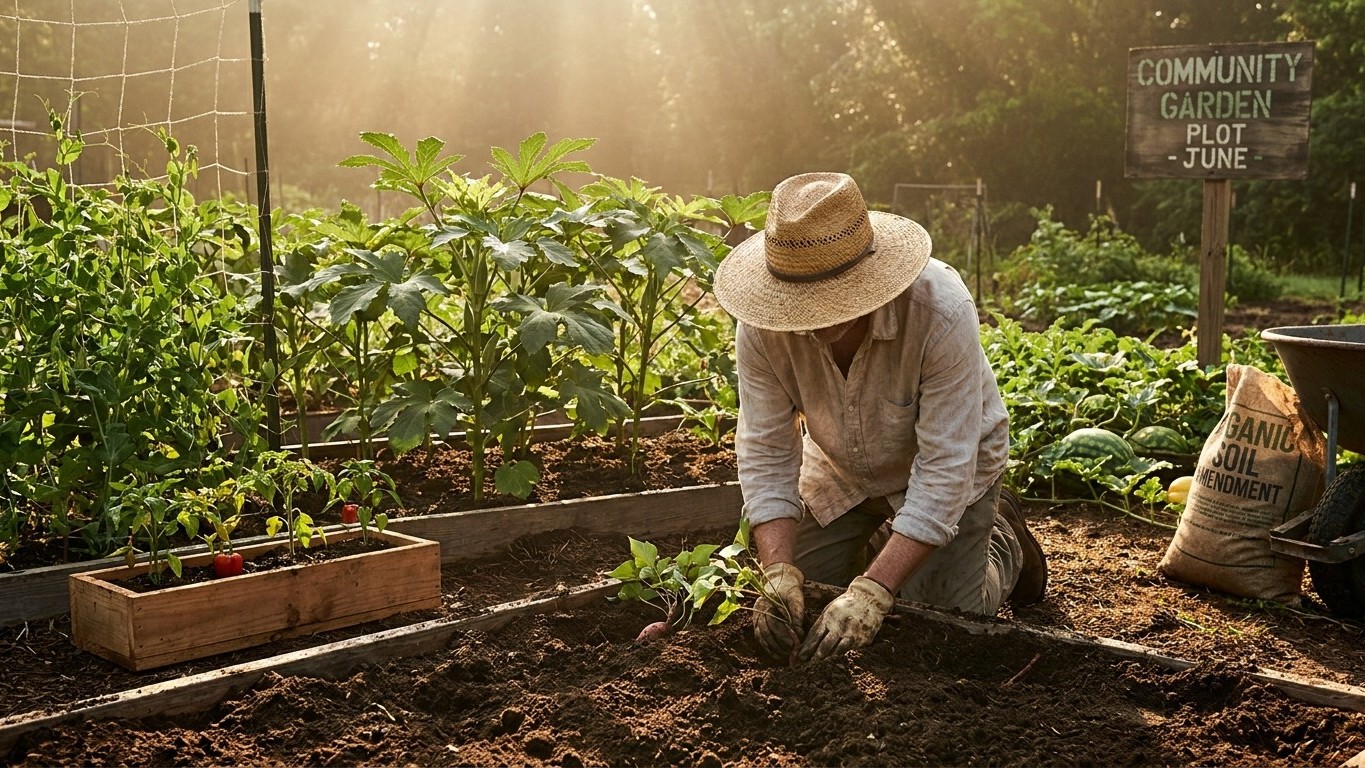

June in Alabama means the frost question is long settled. With the last spring frost falling between March 19 and April 3 across the reference climate data, gardeners are now eight to twelve weeks into the warm season. This is prime time for heat-loving crops, succession planting, and the first real harvests of the year.
What goes in the ground in June

By June, soil temperature is no longer the limiting factor anywhere in Alabama. It’s warm, often too warm before 8 a.m. shade disappears, and that changes the calculation from “will this survive frost” to “will this survive heat and drought stress.” Okra thrives in June heat better than almost anything else in the garden, and it’s a forgiving direct-sow crop for gardeners in USDA zones 7a through 9a. Southern peas (field peas, black-eyed peas, crowder peas) and lima beans go in now too, tolerating conditions that would stall snap beans.
Sweet potato slips are a June staple, especially in the lower half of the state where the growing season stretches toward the November 2 to November 16 first fall frost window. Vining crops (watermelon, cantaloupe, cucumbers, summer squash, winter squash for a fall harvest, and pumpkins timed for October) all go direct into warm soil now. Sweet corn can still be sown in succession through early June for a staggered harvest.
Pepper and tomato transplants can still go in during the first half of the month, particularly in north Alabama’s zone 7a where the season runs a bit cooler and plants set fruit longer before heat shuts down pollination. In the deep south of the state, closer to zone 9a, gardeners are often better off waiting for a second tomato planting in midsummer rather than pushing a June transplant through the hottest stretch. Basil, and heat-tolerant greens like Malabar spinach and New Zealand spinach, round out what’s safe to plant now.
What’s risky: standard lettuce, spinach, and other cool-season greens. They’ll bolt fast once daytime highs climb, so hold off until late summer for a fall crop instead.
What to start under cover
June under-cover sowing in Alabama is mostly about the fall garden, and the arithmetic runs backward from the first fall frost rather than forward from today. Broccoli, cabbage, and brussels sprouts typically need 10 to 12 weeks from seed to a harvestable head, plus a couple of extra weeks of buffer since fall transplants mature into shortening days. Counting back from the earlier end of the frost window, November 2, puts the ideal indoor start for those brassicas in mid-to-late June for most of the state, with a bit more room to spare in the south where frost holds off until closer to November 16.
Starting too early under cover is the more common mistake in June. Seedlings started now for a September or October transplant can get rootbound and leggy sitting in trays through the worst heat of midsummer if the transplant date creeps later than planned. Keep them in bright, airy conditions and pot up as needed rather than letting roots circle in a small cell.
The opposite failure, starting too late, shows up in gardeners who wait until July or August to think about fall brassicas and then run out of days before frost. If the goal is a fall harvest of cabbage or broccoli, June is the window to get seed into trays, not July.
A second wave of tomatoes and peppers for a fall crop can also go under cover now in trays kept in filtered light, timed for transplanting once the worst August heat breaks.
What is ready to pick
June is one of the more generous harvest months in Alabama gardens. Summer squash and cucumbers planted in April or early May start producing heavily now, and the rule with both is to pick young and often. Squash left too long on the vine turns tough and seedy fast; cucumbers left past their prime turn bitter and yellow.
Green beans planted in spring are coming in, along with the first tomatoes for gardeners who got transplants in early. Garlic and bulb onions planted the previous fall are usually ready when the tops yellow and flop over, a clear visual signal rather than a calendar one. New potatoes, the small, thin-skinned tubers harvested before full maturity, can be dug now from spring plantings by gently working a hand into the hill.
Alabama’s fruit calendar lines up well with June too. Blueberries and blackberries hit peak ripeness across much of the state this month, and early peach varieties come off the tree, judged ready by a slight give near the stem and full color rather than by size alone.
Cabbage and any remaining spring lettuce should come out now if they haven’t already, since both bolt once heat sets in, turning bitter and sending up a flower stalk that ends the harvest window.
The jobs that matter this month
Mulching is the single job that pays back the most in June. A two-to-three-inch layer of straw, shredded leaves, or pine bark around vegetables holds soil moisture through the hottest, driest stretch of the year and keeps root zones several degrees cooler than bare soil. Skipping it now means more watering later and a higher risk of blossom end rot on tomatoes and peppers, which is driven by inconsistent moisture more than by any single mineral deficiency.
Staking and trellising need to happen before plants sprawl, not after. Tomatoes, pole beans, and vining cucumbers all put on rapid growth in June heat, and a cage or trellis installed after the fact damages roots and stems that have already committed to a direction.
Watering rhythm matters more in June than in any other month. Deep, infrequent watering (aiming for the equivalent of about an inch a week, delivered in one or two sessions rather than a daily sprinkle) trains roots to grow deep and makes plants more resilient during dry spells. Morning watering is preferable to evening, since foliage that stays wet overnight is more prone to fungal disease.
Succession sowing keeps beans, squash, and corn coming rather than producing one glut and then nothing. And pest scouting should start now, before infestations take hold: check squash stems for the sawdust-like frass that signals squash vine borer, and look under leaves for the early clusters of Japanese beetles and squash bugs. Catching these in the first week or two of an infestation is far easier than fighting an established one.
What not to do in June
The classic June mistake in Alabama is treating a tomato or pepper transplant like it’s still spring. Once daytime highs climb into the range where pollen becomes less viable, blossoms drop without setting fruit, and no amount of fertilizer fixes that. The fix isn’t more feeding, it’s patience: many gardeners see fruit set resume once temperatures moderate later in summer, and a second planting timed for that window often outproduces a June-planted crop pushed through peak heat.
Heavy nitrogen fertilizer is another common overcorrection. Applied to tomatoes and peppers once they’ve started flowering, nitrogen pushes leafy growth at the expense of fruit. Save the nitrogen boost for leafy crops like okra in its early growth stage, and switch fruiting plants to a lower-nitrogen, higher-phosphorus and potassium feed once blooms appear.
Overwatering is a quieter mistake that shows up as root rot and fungal disease rather than obvious wilting. Raised beds and containers drain faster and need more frequent watering than in-ground rows, but “frequent” doesn’t mean daily for established plants with mulch in place; check soil moisture a few inches down before watering rather than watering on a fixed schedule.
Finally, don’t let squash vine borer or squash bug populations build unchecked in the name of avoiding pesticides. Hand-picking egg clusters and removing affected vines early is often enough to save a squash patch that would otherwise collapse by midsummer.
Checking this against your own county
A statewide June guide is a starting point, not a set of instructions for a specific yard. Alabama spans USDA hardiness zones 7a to 9a, and that range alone shifts planting and harvest windows by several weeks between the north and the Gulf Coast. Elevation, local frost pockets, and even how close a garden sits to a lake or river can move real-world frost dates a week or two later in spring and earlier in fall than the reference climate data suggests.
The Alabama Cooperative Extension System publishes county-level guidance and a state planting calendar that accounts for these regional differences far than any single statewide date range can.
Common questions
Is it too late to plant tomatoes in Alabama in June?
Not entirely, but it’s a narrowing window. Early June transplants can still set fruit before peak heat shuts down pollination, especially in north Alabama’s cooler zone 7a. In the hotter southern part of the state, many gardeners plan a second tomato planting for midsummer instead, timed to fruit as temperatures ease later in the season.
What vegetables tolerate Alabama’s June heat best?
Okra, southern peas, lima beans, and sweet potatoes handle June heat with little trouble and are among the most reliable direct-sow choices for the month across all of the state’s hardiness zones.
When should fall brassicas be started for an Alabama garden?
Mid-to-late June is typical for starting broccoli, cabbage, and brussels sprouts under cover, counting back roughly 10 to 12 weeks plus a buffer from the first fall frost window of November 2 to November 16.
Why are my June-planted tomatoes not setting fruit?
High summer heat reduces pollen viability and causes blossom drop, a temperature effect rather than a nutrient problem. Extra fertilizer won’t fix it; many gardeners see fruit set return once temperatures ease later in the season.