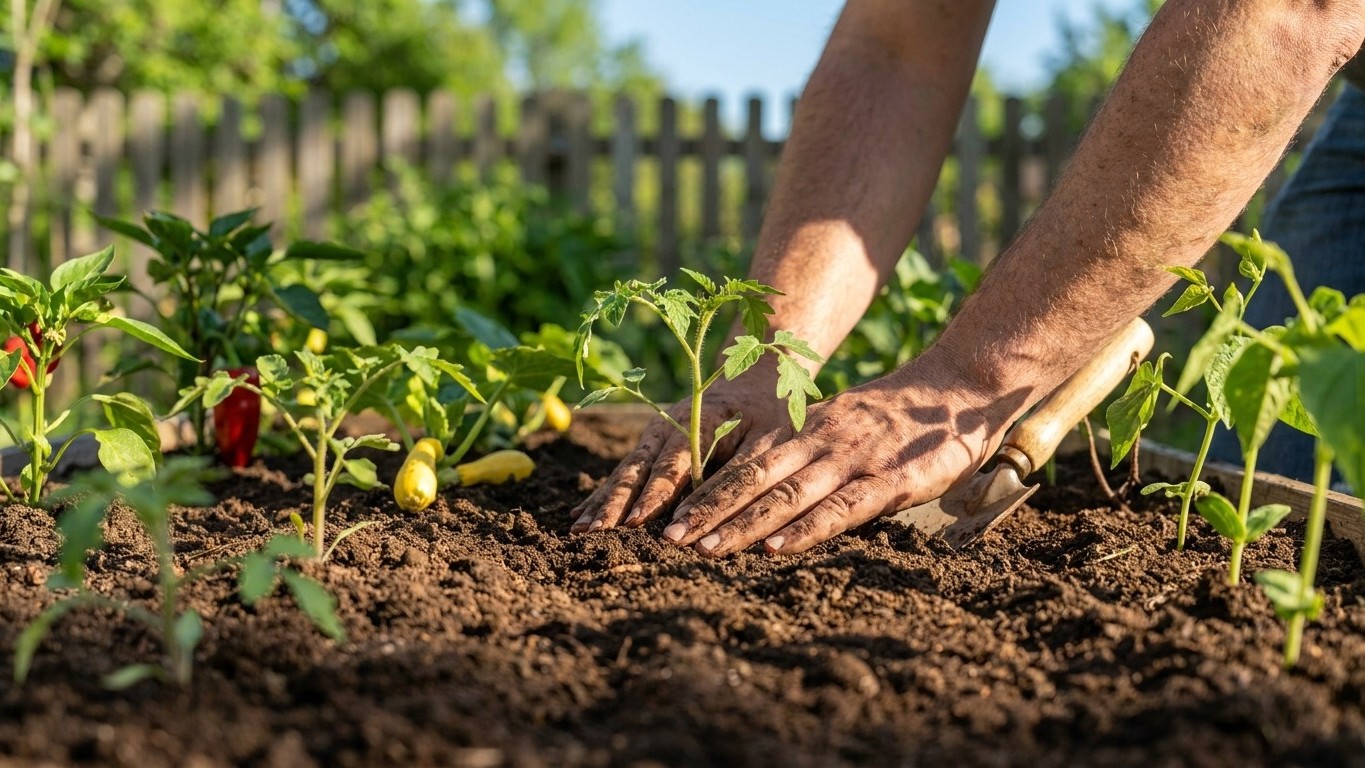

Late frost is a memory by May across Alabama. The state’s reference climate data puts the last spring freeze between March 19 and April 3, so soil has had weeks to warm. This is the month full warm-season planting opens up: tomatoes, peppers, squash, beans, sweet potato slips, okra and melons all go into the ground now, with the window staying open until the heat itself becomes the limiting factor.
What goes in the ground in May

Soil temperature, not the date on the calendar, is what decides whether a warm-season crop lives or sulks. By May most Alabama gardens have soil well above the 60°F mark that tomatoes, peppers and squash need to root without shock, and the frost risk that defined April is gone. That combination is what makes this the busiest planting month of the spring calendar in the state.
Direct-sow candidates this month include bush and pole beans, southern peas, sweet corn, okra, cucumbers, summer squash and winter squash. Sweet potato slips go into the ground once the soil has had a real stretch of warm weather, and melons (cantaloupe, watermelon) do best sown directly rather than transplanted, since their roots resent disturbance. Transplants of tomatoes, peppers and eggplant that were started indoors in March can move outside now if they’ve been hardened off properly over a week or so of gradually longer outdoor exposure.
Because Alabama spans USDA hardiness zones 7a to 9a, the same calendar month plays out differently depending on where a garden sits. North Alabama gardens near the cooler end of that range are just catching up to what the Gulf Coast counties could already do weeks earlier.
| Region | Typical zone | May planting reality |
|---|---|---|
| North Alabama (Tennessee Valley) | Around 7a-7b | Prime month to start warm-season crops; still time for a second bean or squash sowing |
| Central Alabama | Around 8a | Warm-season crops already established; okra and sweet potatoes thriving |
| South Alabama / Gulf Coast | Around 8b-9a | Spring crops finishing up; heat-tolerant crops taking over as days get hotter |
What’s a gamble rather than a safe bet this month is anything that prefers cool soil and mild air, like lettuce, spinach or peas started fresh. Those crops are winding down, not starting, once daytime highs settle into the 80s.
What to start under cover
Most of the spring seed-starting work under cover is already done by May, but the month has its own version of that job: starting a second round of tomatoes, peppers or eggplant indoors for a fall harvest. The arithmetic runs backward from the first fall frost window of November 2 to November 16. A tomato variety needs roughly 8 weeks from seed to a transplant-ready size, then another 8 to 10 weeks in the ground to fruit. Counting back from early November puts the seed-starting date for a fall tomato crop squarely in May for much of the state, which is why nurseries sometimes carry a second batch of transplants later in the summer that traces back to seed started now.
The two failure modes are worth naming plainly. Starting too early under cover in the heat of a Southern May means seedlings often become rootbound and leggy before it’s cool enough to plant them out, since summer heat isn’t the limiting factor for transplanting, timing to avoid the worst of it is. Starting too late means the plant runs out of growing season before the November frost window arrives, leaving green fruit on the vine when the cold finally shows up.
Cover in this context also means shade cloth rather than cold protection. Seedlings started indoors or under a shade structure in May need protection from scorching afternoon sun, not from cold, which is the opposite problem gardeners were solving back in March.
What is ready to pick
May is a genuine harvest month in Alabama, not just a planting one. Strawberries planted the previous fall are typically finishing their run, with the last berries fully red and soft rather than pink-shouldered. Spring-planted lettuce and spinach are bolting as the heat builds, so harvesting the whole head or plant before it turns bitter is the move rather than waiting for a few more leaves.
Snap peas and snow peas sown earlier in spring reach their peak here, with pods that snap cleanly and feel full but not lumpy with overgrown seeds inside. Broccoli and cabbage planted in late winter are often making their final cut of the season before bolting in the heat, and any onions started from sets earlier are approaching harvest once their tops begin to yellow and flop over.
Garlic planted the previous fall isn’t ready for full harvest yet, but garlic scapes, the curling flower stalks, can be cut now, which also redirects the plant’s energy into bulb growth rather than seed production. Radishes sown in early spring should be pulled promptly once they size up; left in warming soil, they turn woody and hot within days.
The jobs that matter this month
Staking and caging tomatoes now, before they sprawl, saves hours of untangling later and keeps fruit off the ground where slugs and rot take hold. The same logic applies to pole beans and cucumbers on a trellis: setting the structure up at planting time is far easier than threading it through an already-established vine.
Mulching newly planted beds does double duty in May, holding soil moisture as temperatures climb and suppressing the weed flush that warm, damp soil produces. A 2 to 3 inch layer of straw or shredded leaves around tomatoes, peppers and squash cuts down on watering frequency right as the plants’ water needs are increasing.
Watering rhythm matters more this month than almost any other, since a young transplant’s root system hasn’t yet reached deep enough to ride out a dry week. Deep, infrequent watering that encourages roots downward beats a daily light sprinkle that keeps roots shallow and vulnerable.
Succession sowing keeps the harvest coming rather than arriving all at once. Bush beans, summer squash and sweet corn all do well sown every two to three weeks through the month, so a June planting is following a May one rather than starting cold.
Pest scouting starts in earnest now. Squash bugs lay clusters of bronze eggs on the undersides of leaves, tomato hornworms show up as chewed foliage and dark droppings, and aphid colonies can build fast on new pepper growth. Checking the undersides of leaves once a week catches these problems while a simple squash or a strong hose spray still solves them, before a full infestation calls for anything stronger.
What not to do in May
The most common mistake this month is treating a few warm days as permission to skip hardening off transplants. A tomato or pepper seedling moved straight from a sheltered indoor setup into full Alabama sun and wind can scald or wilt within a day, even though the air temperature itself is no longer the threat it was in April. A week of graduated outdoor exposure, starting in shade and working up to full sun, prevents that setback.
Overcrowding is another May habit that costs a season later. Squash, melons and sweet potato vines all spread further than their spacing on the seed packet suggests once the heat kicks their growth into gear, and plants set too close compete for water and airflow, which raises the risk of fungal disease in Alabama’s humid summers.
Heavy nitrogen fertilizer applied to tomatoes and peppers at this stage is a classic misstep. It produces lush green foliage at the expense of flowering and fruit set, so a balanced or lower-nitrogen feed suits this point in the season better than the all-purpose blend that worked for leafy greens earlier in spring.
Letting bolting spring crops like lettuce and spinach linger in the bed also invites trouble. Once they’ve gone to seed, they’re doing little but hosting aphids and taking up space that a warm-season crop could use instead. Pulling them promptly and composting the debris clears the way and removes a pest refuge at the same time.
Checking this against your own county
A state-wide May guide is a starting point, not a set of instructions for a specific yard. Alabama’s frost data comes from a single reference station, and gardens at higher elevation, in low-lying frost pockets, or simply further north or south than that station can run a week or two ahead of or behind these figures. A hillside garden in the Appalachian foothills of northeast Alabama and a coastal garden near Mobile are not on the same clock even though they share a state line.
The Alabama Cooperative Extension System tracks these local variations by county and is the most reliable place to confirm planting windows against actual conditions on the ground rather than a single airport’s climate record.
Common questions
Is it too late to plant tomatoes in Alabama in May?
No. May is prime tomato transplanting season across the state, well after the last frost window of March 19 to April 3. Transplants set out now have a full summer to establish and fruit before fall.
Can I still direct-sow beans and squash this late in spring?
Yes, and repeating the sowing every two to three weeks through the month keeps a steady harvest coming rather than one big flush followed by a gap.
Why are my lettuce and spinach turning bitter and flowering?
That’s bolting, triggered by rising temperatures and longer daylight. It’s a normal end-of-season response for cool-season greens once Alabama’s spring heat sets in, not a sign of disease or poor care.
Should I fertilize my tomato and pepper transplants right after planting?
A light, balanced feed at planting is fine, but heavy nitrogen this early tends to push leafy growth over flowering. Save the stronger feeding for once fruit has started to set.