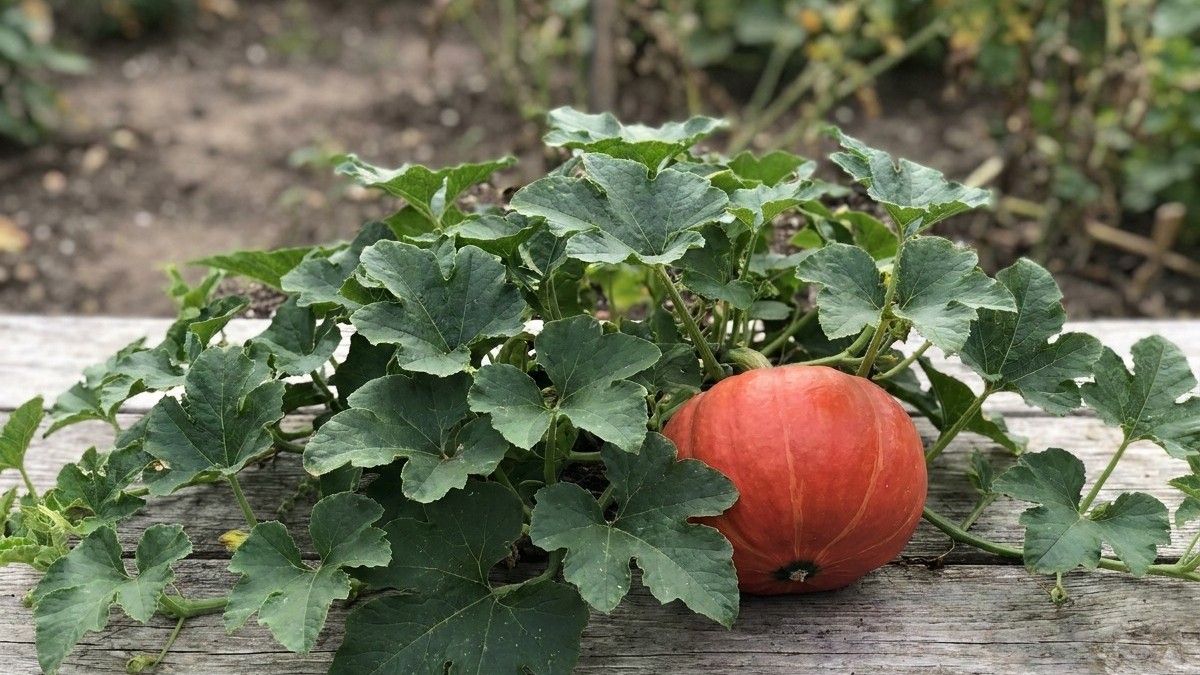

Six insects on Alabama’s documented pest list actually feed on pumpkin, not all ten sometimes lumped together under “garden pests.” The Alabama Cooperative Extension System tracks each one, and they don’t show up together: some target the seedling, others wait for the flower, and a couple don’t take interest until the fruit itself is sizing up. The order follows the vine’s growth stage, which in Alabama runs from a spring soil warm-up in late March through a fall frost that can arrive as early as November.
Which pests attack pumpkin in Alabama

The Alabama Cooperative Extension System documents ten insects that turn up across the state’s vegetable garden pages: Aphids, Corn earworm (tomato fruitworm), Cowpea curculio, Imported cabbageworm, Leaffooted bug, Mexican bean beetle, Spider mites, Spotted cucumber beetle, Squash vine borer, and Stink bugs. Not all ten touch a pumpkin vine, and naming the wrong one on a real problem just wastes time.
Four that don’t belong on a pumpkin problem
- Corn earworm (tomato fruitworm): feeds on corn ears and tomato fruit; it has no particular reason to bore into pumpkin rind or foliage.
- Cowpea curculio: targets cowpeas and southern peas specifically, punching into the pod, not a cucurbit vine.
- Imported cabbageworm: a brassica specialist that chews cabbage, broccoli, and kale leaves, tissue that shares little with a pumpkin leaf.
- Mexican bean beetle: stays on bean foliage, skeletonizing snap beans and limas rather than cucurbit leaves.
Six that actually feed on pumpkin
Aphids and spider mites both work the leaves and growing tips throughout the season. Spotted cucumber beetle and squash vine borer (this site covers each in its own dedicated page for this state) attack the seedling and the stem respectively. Leaffooted bug and stink bug wait for fruit to set before they get involved, piercing the rind rather than chewing leaf tissue. If a symptom doesn’t match one of these six, the Alabama Cooperative Extension System simply hasn’t documented it as a pumpkin feeder here, and that’s worth saying plainly rather than stretching the list to cover it.
When each one shows up, and what it does first
Alabama’s frost-free stretch, per NOAA NCEI 1991-2020 Climate Normals for station USW00003856, runs from a last spring frost window of March 19 to April 3 out to a first fall frost window of November 2 to November 16. Pumpkin seed goes in once soil reaches 65°F, a threshold that lags the last frost by weeks rather than days, according to Utah State University Extension. None of the six insects read a calendar. They respond to what stage the vine is in, so the order below tracks growth, not months on a wall calendar.
Seedling and early vine
Aphids are usually first, clustering on the undersides of the earliest true leaves within days of emergence. Curled, puckered new growth and a faint sticky film on the leaf surface show up before the insect itself is easy to spot. Spotted cucumber beetle hits the same seedlings, chewing small round or ragged holes straight through the cotyledons and first leaves; a heavy hit can stunt a seedling before it ever runs a vine.
Running vine through fruit set
Once the vine starts running, squash vine borer moths lay eggs at the base of the main stem. The first visible sign is not the borer itself but a small pile of moist, sawdust-like frass pushed out of a pinhole near the crown, followed days later by one runner wilting in full sun while the rest of the plant looks fine. Spider mites tend to build during the hottest, driest stretch of the run, showing up as fine bronze stippling on leaf undersides near the crown well before any webbing is visible. Leaffooted bugs and stink bugs wait until fruit is actually set, piercing the rind and leaving a cloudy, corky scar while the pumpkin is still green. Because a pumpkin needs 45 to 55 days after the flower opens to finish maturing, a bloom that opens too late in the season risks a green fruit still on the vine when the November 2 to November 16 frost window arrives.
Telling the damage apart from Everything else
Several of these symptoms look like something other than an insect at first glance, and mixing them up leads to the wrong response. Drought stress, nutrient shortfalls, sunscald, and plain mechanical damage from wind or hail can all mimic what one of the six pests above leaves behind.
Symptom-by-symptom comparison
| Symptom | Looks like | Could also be | What tells them apart |
|---|---|---|---|
| One vine wilts suddenly, others stay green | Squash vine borer at the crown | Drought stress or root rot | Frass at the stem base versus even wilting that perks back up after evening watering |
| Fine bronze stippling, leaves look dusty | Spider mites | Magnesium or potassium shortfall | Webbing on leaf undersides and mites visible with a hand lens versus a yellowing pattern between the veins |
| Cloudy or corky scar on the fruit skin | Leaffooted bug or stink bug feeding | Sunscald | A pinprick mark at the center of the scar versus a flat, pale patch confined to the sun-facing side |
| Small round holes chewed clean through young leaves | Spotted cucumber beetle | Hail or wind-whipped debris | Beetle presence and clean-edged holes versus ragged, torn tissue from mechanical injury |
| Curled, sticky new growth | Aphids | Herbicide drift | Clusters of small soft-bodied insects on the leaf underside versus uniform curling with no insects present |
None of these signs confirm a diagnosis on their own. A photo or a physical sample sent to the county extension office settles a case that a symptom list alone can’t.
What actually works here, and what is a waste of time
What holds up over an Alabama season
Timing beats most everything else on a growing season this short. A lightweight cover set over seedlings right after sowing, once soil has warmed past 65°F, keeps early cucumber beetles and aphids off the plant during the two or three weeks when a seedling is most vulnerable. That cover only works if it comes off once the vine starts flowering, because pumpkin needs open pollination to set fruit, and a cover left on through bloom blocks the very insects the plant needs. Checking the base of each main stem once a week during the running stage catches squash vine borer while the frass pile is still small, and clearing spent vines out of the garden once the season ends removes a spot where several of these insects would otherwise overwinter close to next year’s bed.
What wastes time
A calendar-based treatment applied on a fixed schedule regardless of what’s actually on the vine does nothing for a borer already inside the stem or a beetle that only shows up for a week during bloom. Guessing at a product without confirming the pest first is money spent on a problem that may not even be present. The Alabama Cooperative Extension System can confirm what is currently labeled for use on pumpkin in the state and when applying it still makes sense, which is a question this page does not attempt to answer.
Where to check this for your own county
Everything above comes from insects the Alabama Cooperative Extension System documents at the state level, and state-level documentation is a starting point, not a guarantee of what is actually feeding in one particular yard. A county in the Tennessee Valley and a county along the Gulf Coast don’t carry the same pest pressure, soil warm-up curve, or frost dates, even though both sit inside Alabama’s borders.
Bring something to look at
The fastest way to confirm what is present on a given pumpkin patch is a call or visit to the county extension office tied to that address. Agents there see samples from that specific area all season and can usually tell, from a sample or a clear photo, whether a scarred fruit or a wilted runner matches one of the six insects above or something else. That local check matters more than anything published at the state level, since a pest documented for Alabama as a whole may be rare or absent in a specific county, and one not on the state’s list can still turn up locally. Bring a section of the wilted vine, a stippled leaf, or the scarred fruit itself rather than describing it from memory, and ask what, if anything, is currently labeled for pumpkin in the state before applying anything at all.
Common questions
How many days does a pumpkin need after the flower opens to mature in Alabama?
45 to 55 days, per Utah State University Extension, counted from when the flower opens, not from the day the seed went into the ground. Counting backward from Alabama’s first fall frost window of November 2 to November 16 shows the latest date a flower can open and still leave time to finish.
Which insects on Alabama’s pest list do NOT attack pumpkin?
Corn earworm (tomato fruitworm), cowpea curculio, imported cabbageworm, and Mexican bean beetle are documented by the Alabama Cooperative Extension System but target corn or tomato, cowpeas, brassicas, and beans respectively, not pumpkin vines.
When should pumpkin seed go into the ground in Alabama?
Once soil reaches 65°F, per Utah State University Extension, which typically happens some weeks after Alabama’s last spring frost window of March 19 to April 3 closes. Soil temperature lags air temperature, so checking the soil directly is more reliable than counting from the frost date alone.
Does a pest documented for Alabama mean it’s in every county?
No. The Alabama Cooperative Extension System’s list applies at the state level. Pressure from any one insect varies by county, soil, and local conditions, so confirming with the county extension office is the only way to know what’s actually present in a specific garden.