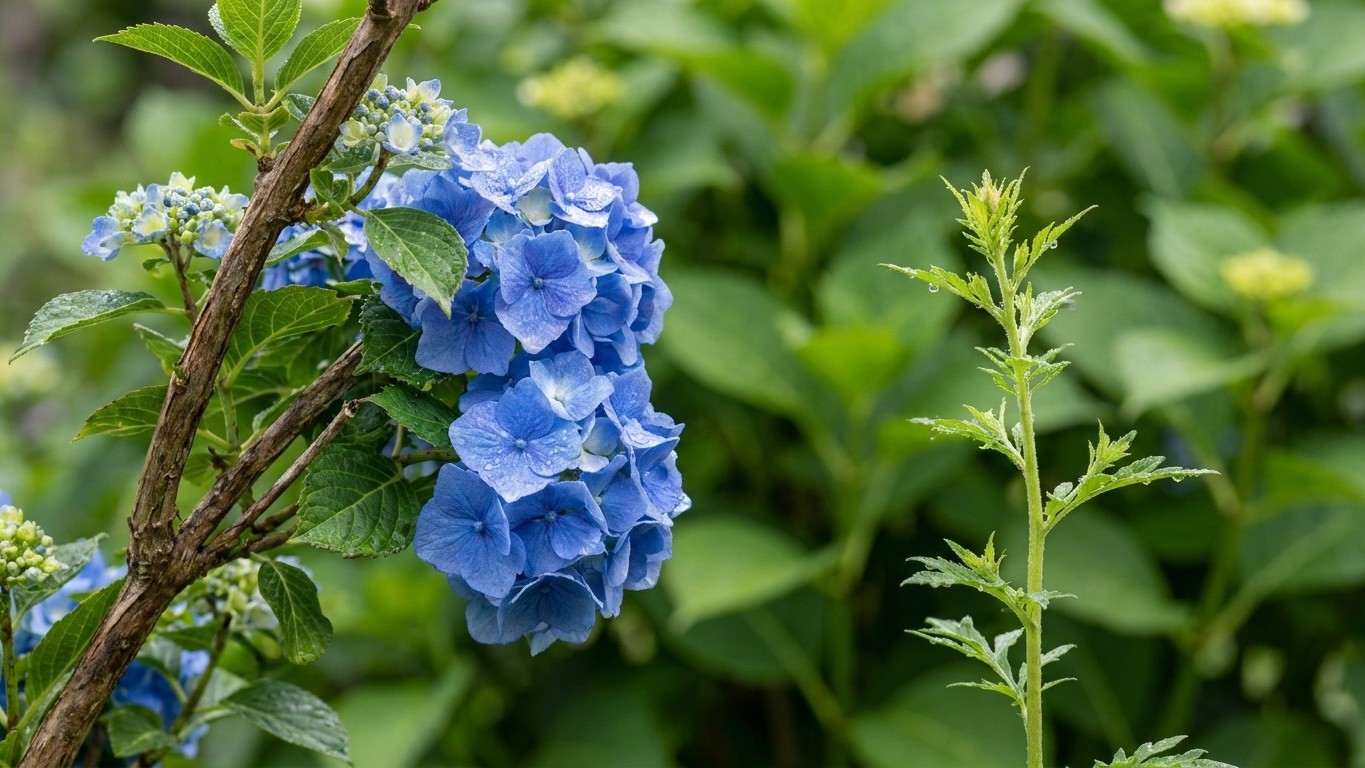

The safest pruning window for most Alberta Hydrangeas falls in early-to-mid spring, while the plant is still dormant and before new leaf buds swell, timed against the average last spring frost of May 21 recorded at Calgary Int’l A. That date is a mean, not a guarantee, so the real signal to watch is the plant itself, not the calendar square.
What this comes down to in Alberta

Prune while the wood is still dormant, generally in the weeks leading into that May 21 average last-frost mark from Calgary Int’l A, and stop once you see buds swelling along the stems. That single rule covers most of what gardeners in this province need, because Alberta’s growing season is short and its winters hard enough that pruning timing matters more here than in milder climates where a missed week barely registers.
Why dormant pruning works with Alberta’s frost pattern
Cutting back a hydrangea while it’s still asleep for the winter avoids two problems at once. It sidesteps the risk of a late cold snap damaging fresh, tender growth that a too-early cut might have triggered, and it lets you see the full structure of the plant, dead wood included, before leaves hide it. The average last frost at Calgary Int’l A lands May 21, but Environment and Climate Change Canada’s own normals mean that in one year out of two, frost arrives later than that. Treat the date as a midpoint, not a finish line, and lean toward pruning a little earlier in the dormant window rather than waiting right up against it.
Hardiness zone 4a and what it means for pruning
Calgary sits in Canadian hardiness zone 4a, based on Natural Resources Canada’s plant hardiness mapping. That’s the Canadian system, built on seven climate variables rather than the single minimum-temperature reading the USDA scale uses, and NRCan is explicit that Canadian zone 4a spans nine different USDA zones depending on where you are. What that means practically: winter dieback on hydrangea stems is common here, and part of spring pruning in Alberta is diagnostic work. You’re not just shaping the plant, you’re finding where the live wood starts after a winter that may have killed back more of the stem than expected.
Working it out for your own garden
Start from the average last frost, May 21 at Calgary Int’l A, and work backward rather than picking a fixed date off a calendar. The dormant pruning window generally opens once the ground has thawed and snow cover is gone, which in a typical year runs roughly four to six weeks ahead of that late-May average, putting the earliest safe pruning somewhere in early-to-mid April. That’s a range shifted from a range, not a single day, because the underlying frost date itself is only a mean.
The arithmetic
Take the May 21 average and subtract a rough four-to-six-week buffer for thaw and dormancy. That lands you in a window opening sometime in early April and closing as buds begin to swell, which for most Alberta gardens happens before the frost date itself since Hydrangeas break dormancy gradually. If a warm stretch pushes bud swell earlier than usual, your personal window narrows on the back end even though the calendar dates haven’t moved. If a cold spring drags on, the window simply stays open longer, since dormant wood isn’t harmed by a late frost the way new growth would be.
Reading your plant instead of the calendar
Walk the plant before you cut. Scratch a small patch of bark low on a stem with a fingernail: green tissue underneath means live wood, brown and dry means dead wood that should come out regardless of the date. Work from the base upward until you find live tissue, and make your cuts there. This matters more in a province sitting in zone 4a than in milder regions, because a hard winter here routinely kills back a portion of top growth even on hydrangea types generally considered hardy, and pruning purely by the calendar without checking wood condition means you either cut into live growth unnecessarily or leave dead stems that won’t leaf out anyway.
What changes across the state
Alberta is not one climate, and the Calgary Int’l A figures are a single reference point, not a provincial average. Elevation is the biggest factor: foothills and higher-elevation districts west of Calgary tend to hold snow and cold longer into spring, which pushes the safe pruning window later than the Calgary-based dates suggest. Northern Alberta, well beyond Calgary’s latitude, runs on a shorter frost-free season overall, so both the opening and closing of the dormant pruning window shift, generally later in spring and earlier in fall, compared with the south.
Proximity to the Rocky Mountains adds its own variability through chinook winds, the warm gusts that can spike winter temperatures for a few days and fool both plants and gardeners into premature activity. A chinook-driven thaw in late winter can make it look like spring pruning time has arrived weeks before it actually has, only for a hard freeze to follow once the wind dies down.
| Region relative to Calgary | General pattern | Effect on pruning window |
|---|---|---|
| Foothills / higher elevation | Snow cover lingers, cooler spring soil | Window opens later than Calgary reference |
| Northern Alberta | Shorter frost-free season overall | Window compresses, both ends shift |
| Chinook-influenced areas near the Rockies | Sudden mid-winter warm spells | Risk of premature bud break, then frost damage |
The mistakes this state punishes

The most common misstep is pruning right after a warm spell, especially a chinook, and mistaking a few mild days for the start of spring. Buds that swell in response to that false warmth are exposed if a hard freeze follows, and Alberta’s chinook pattern makes this a real risk rather than a rare fluke. Wait for a sustained thaw, not a three-day warm-up, before you make cuts near live buds.
Fall pruning is the second trap. Cutting back a hydrangea in late summer or fall, when it feels tidy to clean up the garden before winter, removes buds that some hydrangea types have already set for next year’s blooms, and it also exposes fresh cuts to a winter that, at Canadian zone 4a, is not gentle. Leave structural pruning for spring dormancy and limit fall work to removing spent flower heads if you want the plant to look neater over winter.
The third mistake is treating the May 21 average as a hard deadline, either rushing to prune before it out of habit or assuming it’s always safe to plant or prune tender new growth by that date. Since frost falls later than average in half of all years at the reference station, a gardener who prunes to expose new growth right at that date is gambling on the better half of a coin flip.
Checking this against your county
Every figure above comes from a single weather station, Calgary Int’l A, and a single hardiness zone reading tied to that same reference city. Your county’s actual frost pattern, elevation, and microclimate can move those numbers meaningfully in either direction. Before you commit to a pruning date, check with your local county agricultural office and the province’s own resource through Alberta Agriculture and Irrigation for guidance specific to your district.
Common questions
Can I prune hydrangeas in Alberta in late fall instead of spring?
It’s generally discouraged. Fall pruning can remove next year’s buds on some hydrangea types and leaves fresh cuts exposed heading into a Canadian zone 4a winter, which is harsh enough to stress unhealed wood.
What if I miss the spring dormant window and buds have already opened?
Limit yourself to removing clearly dead wood at that point, identified by the scratch test, rather than cutting into live green growth. Save any reshaping for the following dormant season.
Does a chinook mean it’s safe to prune early?
No. A chinook is a short warm spell, not the arrival of spring, and pruning or exposing buds during one risks frost damage once temperatures drop back down, which they typically do once the wind pattern shifts.
Why does Calgary’s hardiness zone matter for a pruning decision?
Zone 4a on the Canadian scale reflects real winter dieback risk, meaning part of your spring pruning job in Alberta is usually cutting back to live wood after winter losses, not just shaping a plant that came through the season untouched.