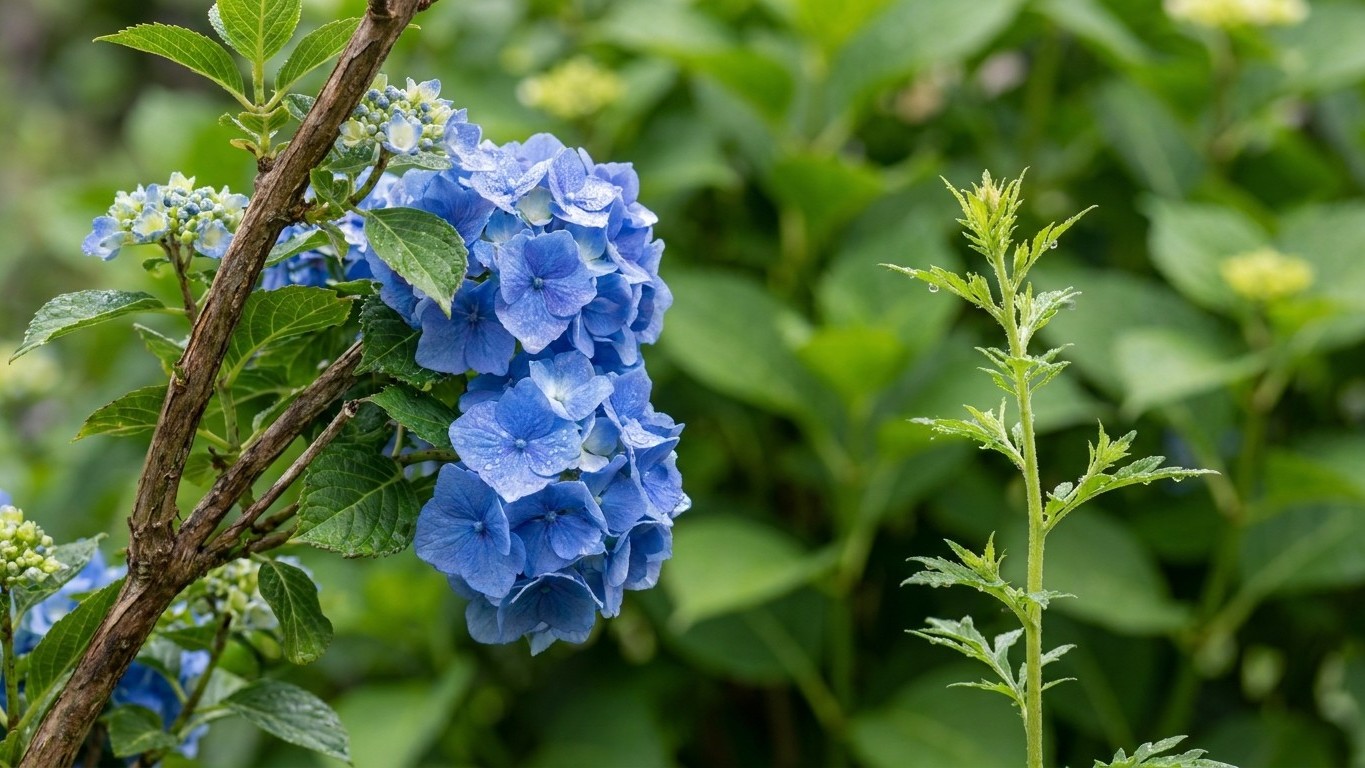

Alberta’s Canadian hardiness zone 4a, measured at Calgary, means most Hydrangeas need real winter protection to survive here, not just a light mulch. The frost-free window runs roughly from May 21 to September 16, about 118 days, so the plant has to establish, bloom, and harden off fast before the cold returns and settles in for months.
What this comes down to in Alberta
The frost window at Calgary Int’l A averages May 21 for the last spring frost and September 16 for the first fall frost, a season of roughly 118 days. That’s the reference point for the whole province, and it’s short enough that a hydrangea here doesn’t get the long, gentle cooldown that lets a plant in a milder zone shut down gradually before winter. In Alberta, the drop from active growth to hard frost can happen over a couple of weeks, and the plant’s wood, roots, and crown all need to be ready for that before the ground locks up.
Canadian zone 4a is not a single number you can compare to a USDA rating. Natural Resources Canada builds its zones from seven climate variables, not one, and the agency itself says there’s no clean conversion between the two systems. A Canadian 4a rating spans a wide range of USDA equivalents, so treat the 4a figure as its own scale, tied to Calgary, and don’t assume it lines up with a hardiness map you might have seen for a garden south of the border.
What that means in practice is that winter protection in Alberta isn’t optional maintenance, it’s the difference between a hydrangea coming back next spring or not. The main risks are twofold: the crown and roots freezing solid without insulation, and the exposed stems drying out and splitting under wind and sun even when the soil beneath them is fine. Mophead types that set their buds on old wood are the most exposed, because a hard winter that kills the stems back to the ground also kills that year’s flowers. Panicle types and other varieties that bloom on new wood are more forgiving here, since even a stem die-back still leaves the plant able to flower once it regrows in spring.
The practical response most Alberta gardeners settle on is a combination: mound several inches of mulch or soil over the base of the plant before the ground freezes hard, wrap or cage the exposed stems to break the wind, and hold off removing any of that protection until the last frost date has clearly passed, not just when a warm week shows up in March.
Working it out for your own garden
Start from the fall side of the window, since that’s the date that decides when protection needs to be in place. September 16 is the average first fall frost at Calgary, and because it’s an average, frost arrives earlier than that in roughly half of all years. Working backward, that means the mulch, wrap, or cage should be ready to go by early September in a typical year, and ideally you have the materials on hand by late August so a sudden cold snap doesn’t catch the plant bare.
The arithmetic is simple but worth doing on paper. If you want two full weeks of buffer before the average frost date, count back from September 16 to roughly the first days of September. If you want a month of buffer, because your yard sits low and collects cold air, count back to mid-August instead. Neither of those is a guaranteed safe date, since the September 16 figure is a midpoint, not a promise, but it gives you a target to build a routine around rather than reacting after the fact.
On the spring side, the same logic applies in reverse. May 21 is the average last frost, so removing winter protection in early May, before that date, risks exposing new growth to a frost that statistically still has better than even odds of showing up. Waiting until the very end of May or even early June, especially in a cooler spring, costs you a little growing time but protects the new shoots that are the most vulnerable part of the plant.
For telling which protection method actually fits your hydrangea, look at how it blooms. If you know the plant flowers on new wood, meaning the stems that grow fresh each spring carry that year’s buds, a straightforward mulch mound over the root zone is often enough, because even if the top growth is damaged, the plant can still flower. If the plant blooms on old wood, meaning last year’s stems carry this year’s buds, that’s the case where wrapping or caging the whole above-ground structure matters, because losing the stems means losing the flowers, not just delaying them. If you’re not sure which kind you have, protecting the whole plant, crown and stems both, is the safer default in a zone 4a climate.
What changes across the state
Calgary’s frost dates and zone rating are a starting point, not a province-wide fact. Alberta’s geography moves the real numbers around by a meaningful margin, even though the FACTS behind this page only support one reference station.
Elevation is the biggest factor. Foothill and mountain-adjacent communities sit higher and colder than Calgary, and gardeners there should expect the growing season to close earlier in fall and open later in spring than the Calgary figures suggest. The Peace River region, in the province’s north, runs on a shorter and colder cycle overall, which pushes protection timing earlier in the year and makes old-wood bloomers an even tougher bet.
Southern Alberta, around Lethbridge and Medicine Hat, tends to run warmer on average, but it’s also chinook country, where sudden winter warm spells followed by a fast return to deep cold are common. That pattern is harder on a hydrangea than a steady, unbroken cold winter, because the plant’s tissues can start to lose their hardiness during the warm spell and then get caught by the cold snap that follows. A gardener in that part of the province may need to keep protection in place longer through the winter, not shorter, even with a milder average.
None of this changes the basic method, mulch or wrap before the ground freezes, remove after the last frost risk has passed, but it shifts the calendar meaningfully depending on where in Alberta you’re gardening, and it’s worth adjusting from the Calgary dates rather than applying them everywhere.
The mistakes this state punishes
The most common misstep is trusting a warm stretch in early fall and delaying protection past it. Alberta’s first frost, averaging September 16 at Calgary, arrives earlier than that in about half of all years, and a plant caught with no mulch or wrap during an early cold snap can lose stems it didn’t need to lose.
A second mistake is choosing an old-wood blooming hydrangea without accounting for how exposed that makes the flower buds through a zone 4a winter. Even with good protection, a hard freeze that reaches the stems can wipe out a season’s blooms on that type, while a new-wood bloomer recovers and still flowers.
Relying on snow cover as the main form of insulation is a third trap, especially in chinook-prone southern Alberta, where a warm wind can strip snow away in a day and leave the crown suddenly exposed to the cold that follows. Mulch or another physical barrier held in place mechanically, not snow alone, is the more dependable choice.
Finally, pulling protection off too early because of one warm week in April is a well-worn error. The average last frost is May 21, and new growth exposed weeks before that date runs a real risk of damage. Waiting for the date to clearly pass, rather than reacting to a warm forecast, protects the season’s growth.
Checking this against your county
The Calgary-based figures on this page are a province-wide starting point, not an exact forecast for every yard. Local frost pockets, elevation, and wind exposure all shift the real dates for a given property. Before finalizing a winter protection schedule, check with your county extension office and Alberta’s own agriculture service at alberta.ca/agriculture-and-irrigation for guidance tuned to your specific district.
Common questions
Do all hydrangeas need winter protection in Alberta?
Any hydrangea grown in Canadian zone 4a benefits from some form of winter protection, but the degree varies by type. New-wood bloomers generally need only a mulch mound over the roots, while old-wood bloomers need the stems protected too, since losing them costs a season of flowers.
When should I put winter protection on my hydrangea?
Aim to have mulch or wraps in place before the first fall frost, which averages September 16 at Calgary. Because that’s a midpoint date, having the materials ready by late August gives a buffer against an earlier-than-average frost.
When is it safe to remove the mulch or wrap in spring?
Wait until after the average last frost date of May 21 has clearly passed, rather than removing protection during an early warm spell. Since frost falls later than that average in roughly half of all years, some gardeners wait into early June for extra security.
Does the protection method change in different parts of Alberta?
Yes. Higher elevations and the northern Peace River region generally need protection in place earlier and left on longer than the Calgary reference dates suggest, while southern chinook areas may need protection that holds up against sudden mid-winter warm spells, not just steady cold.