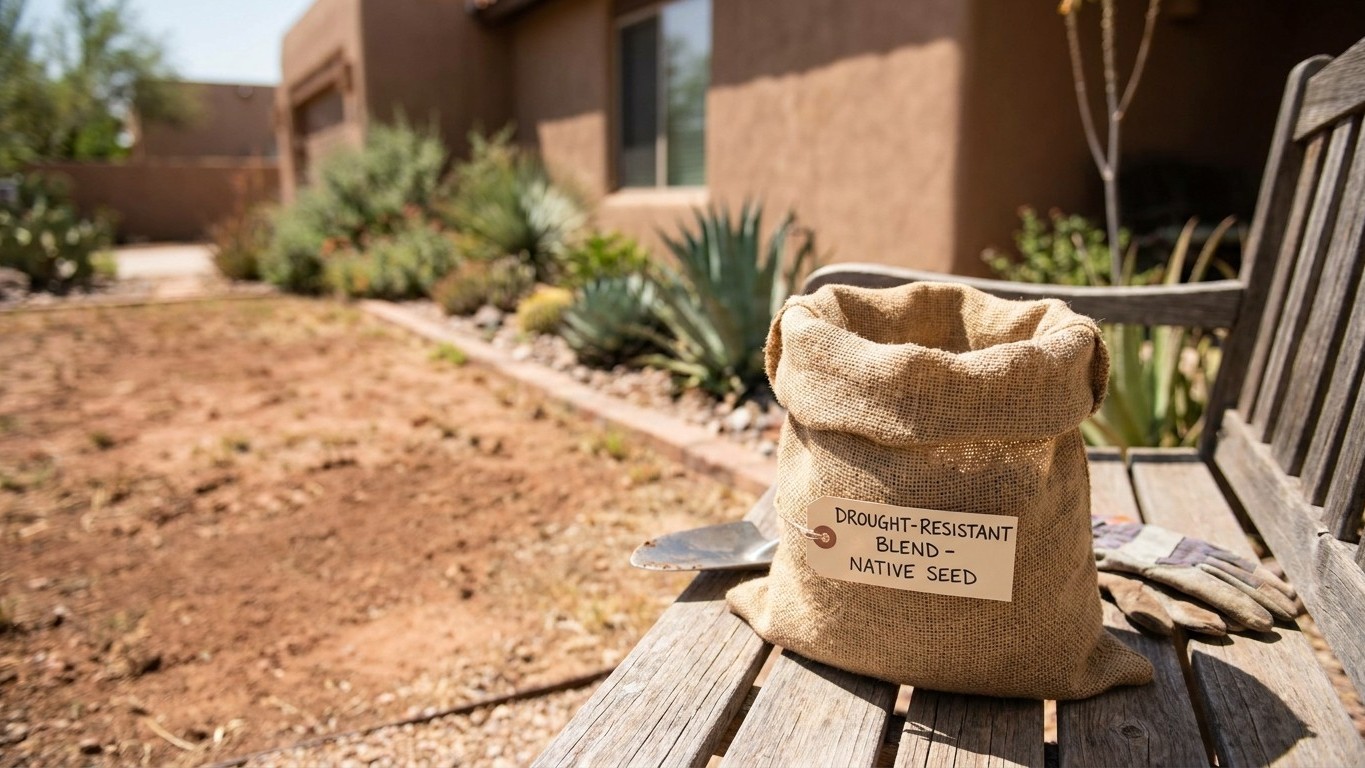

Arizona’s lawns fall into warm-season turf territory, and at Phoenix that means Bermudagrass, Zoysiagrass, St. Augustinegrass and the other warm-season species Clemson Cooperative Extension lists in HGIC 1214, not the fescue or bluegrass sold for northern lawns. Check your yard’s sun exposure and irrigation water quality first, then match one of those seven species to it before you buy a single bag of seed.
The short answer for Arizona
Bermudagrass is the answer, and almost nothing else on the shelf comes close for most Arizona yards. Everywhere else, that recommendation gets hedged with talk of shade tolerance or cool-season blends, because other climates can afford the wait. Here, alkaline soil, low humidity, and summers that hit 115 strip away those options before they get established. The six grasses seed catalogs mention alongside Bermudagrass aren’t wrong elsewhere — they’re just answering a question your yard isn’t asking.
The other six aren’t necessarily wrong, but each depends on a condition Arizona often doesn’t supply. Centipedegrass and Carpetgrass were bred for the humid, acidic soils of the Southeast; Arizona’s alkaline desert soil and low humidity work against both of them from the start. St. Augustinegrass and Zoysiagrass tolerate more shade than Bermudagrass and are worth considering under trees, but they establish slowly from seed, and most Arizona sod farms sell them as plugs or sod rather than seed. Seashore Paspalum earns its place only where irrigation water runs salty, a real situation in parts of the state on reclaimed or well water, but it costs more per pound than Bermudagrass seed.
What the answer depends on is sun exposure, water quality, and how much establishment time you can give the lawn before the next heat wave. A seed page can rank species. It can’t tell you which one your yard needs without you checking those three things first, ideally against the basics covered in Arizona Lawn Care before you buy a bag.
Working through the year

Ranking the seven species side by side comes down to trade-offs, not one best pick. Bermudagrass costs the least and tolerates the most heat and drought of the group, but it goes dormant and turns brown once nights cool, and it spreads into flower beds and driveway cracks if left unedged. Zoysiagrass holds a denser, finer texture and takes more foot traffic once established, but common seed blends establish slowly, so most Arizona installs use sod or plugs instead, which raises the upfront cost. St. Augustinegrass tolerates partial shade better than Bermudagrass, which matters under mature trees, but it’s usually sold as sod for the same reason and needs more water to stay full. Seashore Paspalum tolerates salty irrigation water that would burn the others, an advantage on a well or reclaimed-water system, at a seed price well above Bermudagrass. Centipedegrass, Carpetgrass and Bahiagrass round out Clemson Cooperative Extension’s warm-season list in HGIC 1214, but all three were selected for humid, acidic Southeastern soils and give up thickness and color fast once the soil turns alkaline and the air turns dry, which describes most of Arizona.
| Species | Heat tolerance | Shade tolerance | Typical form sold |
|---|---|---|---|
| Bermudagrass | Excellent | Poor, needs full sun | Seed or sod |
| Zoysiagrass | Good | Fair to good | Mostly sod or plugs |
| St. Augustinegrass | Good | Good | Mostly sod or plugs |
| Seashore Paspalum | Excellent, salt-tolerant | Poor | Seed, at a premium |
Why cool-season grasses aren’t on this list
Cool-season species such as tall fescue and Kentucky bluegrass, the group Penn State Extension covers for northern lawns, aren’t part of Clemson’s warm-season list for a reason: they need a real winter chill to persist, and Phoenix’s frost-free season runs to 365 days most years under NOAA’s 1991-2020 climate normals, with the low reaching 32 degrees Fahrenheit in only six of the last thirty springs. A cool-season lawn seeded here doesn’t die from cold. It dies from the summer heat that follows, months before the next chance to reseed. That’s why the common low-desert practice runs the other direction: overseed dormant Bermudagrass with annual ryegrass once fall nights cool, to hold color through winter, then let the ryegrass fade out as the Bermuda wakes up in spring.
For the month-by-month mowing height, nitrogen rate in pounds per 1,000 square feet, and irrigation schedule once you’ve picked a species, Clemson Cooperative Extension publishes a separate calendar for each one: HGIC 1216 for Bermudagrass, HGIC 1217 for Zoysiagrass, HGIC 1215 for Centipedegrass, and HGIC 1218 for St. Augustinegrass. Those calendars run on South Carolina’s clock, so use them for the order of tasks, dethatch before green-up, mow before feeding, rather than the month names printed on them. For how that sequence lands on the Arizona year, see The Arizona Lawn Care Calendar, Month by Month.
What changes across Arizona
Everything above is built on the Phoenix station NOAA and Clemson’s tolerance thresholds are read against, and Phoenix sits in the low desert with a long, brutally hot summer. Move outside that basin and the picture changes fast.
Flagstaff and the high country of northern Arizona sit at far higher elevation and freeze hard every winter, a genuinely different climate from the Phoenix figures used above. Warm-season turf that shrugs off a Phoenix winter can be killed outright by a hard freeze at that elevation, and a cool-season lawn of fescue or bluegrass, unusable in the low desert, can be the more sensible seed choice up there instead.
Tucson and the rest of the low desert basins share Phoenix’s warm-season classification, though monsoon humidity runs a little higher there in July and August, which changes disease pressure on a thick, over-watered lawn more than it changes which species will survive. Yuma and the lower Colorado River valley run hotter and drier across more of the year, which favors Bermudagrass over anything with a shade or moisture preference and shortens the window a newly seeded lawn has to establish before peak summer arrives. The transition elevations around Prescott and Sedona sit between the low desert and the high country, and a lawn there can go either warm-season or cool-season depending on the specific site’s exposure and elevation, which is exactly the kind of call worth confirming locally rather than guessing from a single state-level label.
The mistakes this climate punishes
Arizona’s heat and its almost frost-free winter don’t just change the calendar. They change which mistakes actually cost you a lawn.
Seeding a cool-season lawn in spring
Tall fescue or Kentucky bluegrass seed sown in the low desert in spring germinates fine in the mild weeks that follow, then collapses once summer heat sets in. The failure looks like a watering problem, but the real cause is a species mismatch: there’s no reliable frost to keep the grass dormant, and no cool season long enough afterward to let it recover before the next heat wave arrives.
Feeding a warm-season lawn late in the year
Nitrogen applied to Bermudagrass or Zoysiagrass late in autumn pushes soft new growth right before the grass would otherwise slow down and go dormant. That new growth doesn’t harden off, and it’s the tissue most likely to show winter damage and disease the following spring, well after the fertilizer bag is forgotten.
Mowing too short in peak summer heat
Warm-season turf tolerates a low mowing height better than cool-season grass does, but scalping it during the hottest weeks removes the leaf area the plant needs to shade its own roots and cool the soil. The damage doesn’t show the day you mow. It shows up a week or two later as thin, stressed patches that weeds move into first.
Assuming one calendar fits the whole state
A planting or feeding date built around Phoenix’s 365-day frost-free season, per NOAA’s 1991-2020 climate normals, does not transfer to the high country, where a hard freeze is normal and reliable. Treat any planting or feeding date as a Phoenix-area figure, not a statewide one.
Checking this against your county
Every figure above comes from the Phoenix station in NOAA’s climate normals and from Clemson Cooperative Extension’s national turf tolerances, not from an Arizona-specific study. Elevation, monsoon humidity and local water quality all shift the real answer for a given yard. The University of Arizona Cooperative Extension maintains county offices that can confirm which species and timing actually work on your soil and at your elevation: start at extension.arizona.edu and look up the office for your county before you commit to a species or a bag of seed. That call is cheaper than a lawn that gets ripped out and reseeded twice.
Common questions
Do I need to worry about frost dates when seeding in Phoenix?
Not really. NOAA’s 1991-2020 climate normals put Phoenix’s frost-free season at 365 days most years, with a 32-degree low recorded in only six of the last thirty springs, so summer heat is the real deadline, not frost. Plan around when the seed can establish before peak heat arrives, not around a freeze that may not come.
Is Bermudagrass seed as good as sod?
Common Bermudagrass seed fills in a full-sun lawn well and costs far less than sod. Hybrid Bermudagrass cultivars bred for finer texture and higher density are typically sterile and sold only as sod or plugs, so if you want one of those by name, seed isn’t an option.
My warm-season lawn turned brown over the winter. Is it dead?
Almost certainly not. Bermudagrass, Zoysiagrass and the other warm-season species go dormant and brown once nights cool, the same way a cool-season lawn browns off during a summer drought further north. It should green back up once the soil warms in spring.
Can I grow a fescue lawn in Phoenix if I water it enough?
Water alone doesn’t solve it. Tall fescue and other cool-season grasses need a real cool season to recover in, and the low desert’s summer heat outlasts what irrigation can offset. A cool-season lawn is a realistic option at higher elevation, in places like Flagstaff, but not in the Phoenix basin.