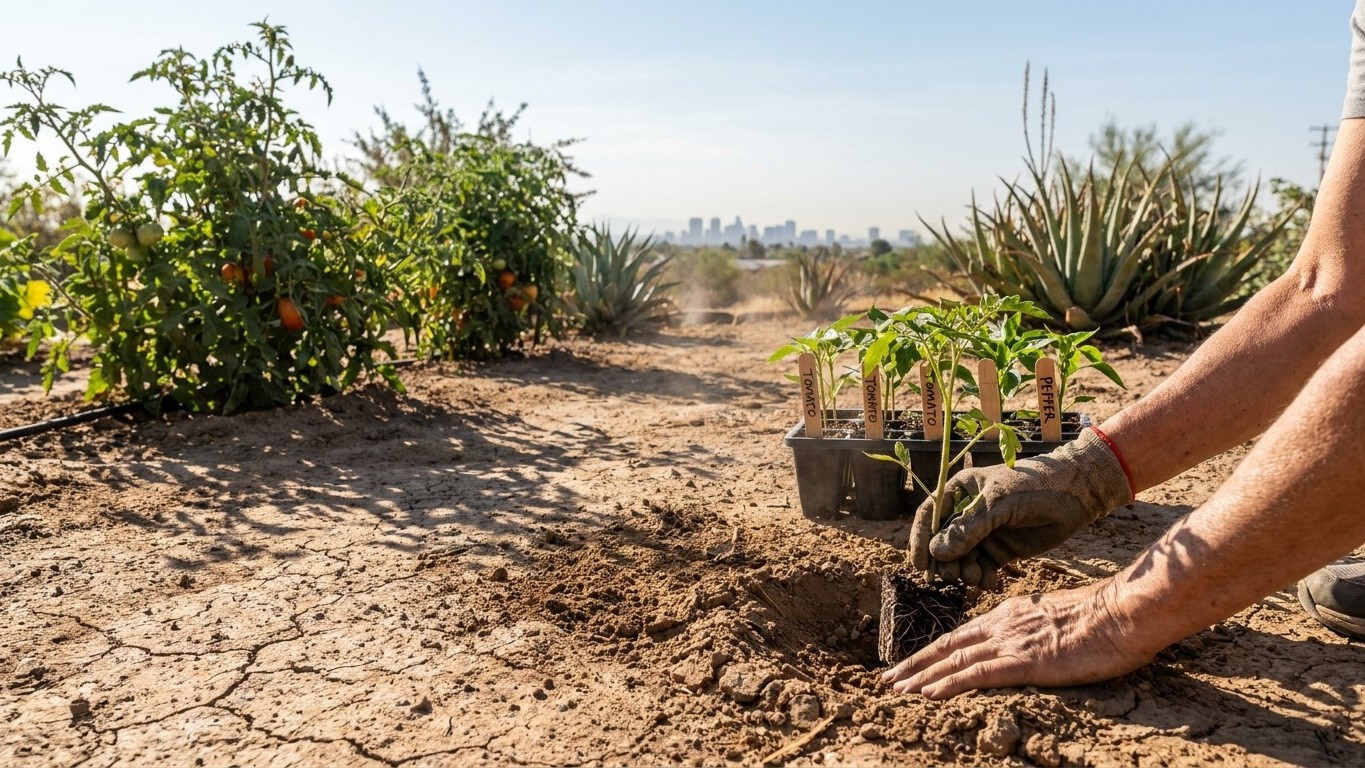

May is a closing month in Arizona’s low desert, not an opening one. Warm-season crops that went in during March and April are already producing, while new tomato and pepper transplants started now are racing a heat clock they will likely lose. In the state’s high country, the picture reverses: May can still be prime time for cool-season planting and early warm-season starts, because the growing season there simply begins later than it does around Phoenix.
What goes in the ground in May

Frost is not the variable that decides an Arizona planting calendar, at least not in the low desert. NOAA climate normals for the Phoenix station (USW00023183) list a frost-free season of 365 days, and over three decades of daily records, the temperature only dropped to 32°F in 6 of those 30 spring seasons, always between late December and mid-January, never anywhere near May. What actually governs the calendar here is heat: once summer temperatures settle in, many fruiting vegetables stop setting fruit even though the plants themselves stay alive and green.
Why frost isn’t the deciding factor
That single fact reshapes the whole question of What to Plant in May. In the low desert, the risk isn’t a late freeze killing seedlings, it’s the opposite problem: a transplant that goes in too late spends its energy just surviving the heat instead of flowering and fruiting. USDA Plant Hardiness Zone Map data puts Phoenix around zone 9b to 10b, which tells you about winter minimums, not about the summer ceiling that actually limits the May garden.
What actually goes in this month
Direct-sow or transplant heat-adapted crops early in the month while there’s still a window before the hottest weeks arrive: okra, black-eyed peas and other southern peas, sweet potato slips, Armenian cucumber, melons, heat-tolerant amaranth greens, and roselle. New tomato and pepper transplants are a gamble this late; they may grow well but often stop setting fruit once the season’s peak heat locks in. Arizona’s range runs from 4b to 10b, and that spread matters more than any single date.
| Region | Example city | Approx. USDA zone | What May means there |
|---|---|---|---|
| Low desert | Phoenix | 9b–10b | Frost essentially absent; heat is already the limiting factor |
| Mid-elevation | Tucson, Prescott | 8a–9a | Spring planting still active, warm-season crops filling in |
| High country | Flagstaff | 5b–6b | Cool-season planting still primary; season starts later |
What to start under cover
Because frost isn’t the constraint that shapes the low desert calendar, the backward count for seed-starting works differently here than it does almost anywhere else in the country. Instead of counting back from a spring frost date, low desert gardeners count back from the return of cooler weather in fall.
Low desert: counting toward fall
May is when many desert gardeners start fall tomato and pepper seed indoors, under air conditioning or heavy shade, using the same six to eight weeks it typically takes to grow a stocky, transplant-ready seedling. The goal is to have that seedling ready right as the worst of the heat starts to break, rather than trying to germinate seed directly in blistering summer soil. Start too early and the seedling sits leggy and rootbound for weeks waiting for conditions to improve. Start too late and it hits transplant size exactly when the ground is still cooking, and the young roots never get a chance to establish before stress sets in.
High country: counting back from last frost
In Flagstaff and other high-elevation parts of the state, May can still fall inside or close to the local frost window, which runs on a very different schedule than the desert floor. There is no single statewide date for this, since elevation swings the timing by weeks across short distances. Warm-season seedlings started indoors there should be counted back from the local last-frost range rather than any date used further south, and that range is best confirmed through a local source rather than guessed at.
What is ready to pick
Spring greens are on borrowed time by May in the low desert. Lettuce and spinach that tolerated cooler weeks now bolt fast as temperatures climb, so harvest anything still holding decent flavor before the plant sends up a flower stalk and turns bitter. Snap peas are usually finishing up for the same reason.
Signs it’s time to pull
Garlic and onions planted the previous fall or winter give a visible signal in May: the tops yellow and flop over, which means it’s time to pull the bulbs and let them cure in a dry, shaded spot rather than leaving them in the ground. Tomatoes, squash, and cucumbers planted back in March are often bearing steadily by now, and picking regularly keeps plants producing longer before heat eventually slows them down. Most Arizona citrus wraps up its harvest by late winter or early spring, but Valencia oranges are a known exception, often hanging on the tree well into late spring, so it’s worth checking those trees before assuming the citrus season is over.
The jobs that matter this month
Mulch does more work in May than in almost any other month in the low desert, because soil surface temperatures climb fast once the sun angle steepens toward summer. A thick layer around the base of plants buffers root zones and slows moisture loss that would otherwise force constant watering.
Water, shade, and mulch
Shift watering to early morning and go deep and less frequent rather than shallow and daily; shallow watering trains roots to stay near the surface, exactly where they’ll cook first as temperatures rise. Shade cloth over tender transplants and heat-sensitive crops earns its keep now, and it should stay up through any mild stretch rather than coming off at the first cooler week, since one hot spike can undo weeks of protection. Stake tomatoes and trellis melons and cucumbers before vines sprawl across beds, both for airflow and to make the coming pest scouting easier.
Scouting and prep for what’s next
Check plants regularly for squash bugs, aphids, and spider mites, all of which reproduce faster as the weather warms. Ease off nitrogen on fruiting crops as heat builds; a plant pushed toward leafy growth right when it should be setting fruit ends up with less to show for the season. This is also the month to order or save seed for the fall garden, since desert-adapted fall varieties can sell out well before the actual planting window arrives, and to check drip lines and emitters for clogs before the heaviest water-demand weeks hit.
What not to do in May
Planting new tomato or pepper transplants late in May with the expectation of a normal harvest is one of the most common missteps in the low desert. The plants often survive, but fruit set can stall out once the season’s heat locks in, so a late planting is better treated as an experiment or as groundwork for a fall crop than as a guaranteed spring harvest.
Water and feeding missteps
Skipping mulch because “there’s no frost risk anyway” ignores the real seasonal danger, which is soil surface heat, not cold. Watering more often but shallowly to compensate for rising temperatures backfires, since it keeps roots near the hot surface instead of encouraging them downward into cooler soil. Feeding fruiting crops a high-nitrogen fertilizer at this point pushes foliage at exactly the moment the plant should be directing energy into blooms and fruit, right before the heat window to do so starts closing.
Checking this against your own county
A statewide answer for May is a starting point, not an instruction. Arizona’s hardiness zones span from 4b to 10b, and the gap between the low desert around Phoenix and the high country around Flagstaff is closer to a difference in climate than a difference in season. Elevation alone can shift planting windows by weeks over a short drive. For dates and crop lists tuned to a specific county, the University of Arizona Cooperative Extension is the source to check before finalizing a May planting plan.
Common questions
Can I still plant tomatoes in Arizona in May?
You can, but new transplants started this late in the low desert often stop setting fruit once summer heat settles in. Established plants from earlier spring plantings will keep producing longer than fresh transplants started now.
What vegetables tolerate Arizona heat in May?
Okra, black-eyed peas and other southern peas, sweet potato slips, Armenian cucumber, melons, and heat-tolerant amaranth greens handle the transition into summer heat better than most spring crops.
Does Phoenix get frost in May?
No. NOAA climate data for the Phoenix station shows a 365-day frost-free season, and the rare 32°F readings recorded over 30 years all fell between late December and mid-January, never in May.
Is gardening in Flagstaff the same as gardening in Phoenix in May?
No. Flagstaff sits in a much cooler hardiness zone than Phoenix, and its growing season starts later, so May there can still be closer to a spring planting month than the closing month it represents in the low desert.