
Onion maggot flies become active in British Columbia as soon as soil temperatures climb into the low 50s Fahrenheit, usually in April along the coast and a bit later through May in the Interior. The first generation is the one that does the most damage, attacking seedlings and freshly set transplants before the plants have a fighting chance. Two more generations typically follow through summer and into early fall, though the second and third flights tend to cause less visible harm because bulbs are larger and more resistant by then.
Stopping this pest comes down to timing and sanitation more than spraying. Rotating away from onion family crops, covering beds with floating row cover during the spring flight, cleaning up cull piles and thinnings, and choosing transplants over direct seeding all cut damage dramatically. None of these tactics require special equipment, which makes onion maggot one of the more manageable garden pests once you understand its calendar.
When Onion Maggot Flies Are Active in British Columbia

The onion maggot fly (Delia antiqua) overwinters as a pupa buried a few inches deep in soil, often right where last year’s onion bed stood. It’s a close relative of the seedcorn maggot and cabbage maggot, and it looks the part: a gray fly about a quarter-inch long, easy to mistake for a small housefly if you’re not looking closely.
Adults emerge once soil warms consistently, and coastal growers in the Fraser Valley and on Vancouver Island generally see the first flies show up several weeks before growers in the Okanagan or the Peace region, where cooler spring soils delay activity. After mating, females lay eggs at the base of onion plants, right at the soil line where the stem meets the roots. Eggs hatch in a few days, and the white, legless larvae tunnel straight into the bulb or the young stem tissue.
Three generations per growing season is typical for most of southern BC, with the pattern repeating roughly every four to six weeks depending on temperature. The first generation targets seedlings and transplants and causes the highest percentage of plant loss, simply because young onions have so little tissue to spare. By the time the second and third generations arrive in summer, established bulbs have thicker walls and more room to tolerate some tunneling, though storage onions can still develop rot that shows up weeks after harvest.
Why Spring Planting Timing Matters
Growers who delay direct seeding by even a week or two, until the first heavy spring flight has passed, often see noticeably less damage. This isn’t guesswork, it’s basic pest avoidance: fewer egg-laying females around when your seedlings are at their most vulnerable stage means fewer larvae getting established. Transplants started indoors and set out with slightly thicker stems have a similar advantage over direct-seeded onions, since the maggots have a harder time getting a foothold on tougher tissue.
How to Spot the Damage Before It Spreads
The first sign is usually a wilting seedling that looks fine one day and collapsed the next. Pull it gently and you’ll often find the roots chewed away or the base of the stem hollowed out, sometimes with a small white maggot still feeding inside. In a bad patch, entire rows of seedlings can go down within a week, which is why spring is the season to check plants daily rather than weekly.
On older plants, the damage looks different. Instead of outright collapse, you’ll notice yellowing or stunted growth, and when you dig up the bulb, tunnels run through the outer layers. Damaged bulbs are also an open door for soft rot bacteria, so a plant that survives the maggot feeding can still turn to mush in storage a month or two later. That secondary rot is often what growers notice first, long after the maggots themselves are gone.
Garlic, leeks, shallots, and chives share the same vulnerability since they’re all in the allium family, though onions tend to take the heaviest hits because they’re usually planted in denser stands and closer to the soil surface where eggs get laid.
Look-Alike Problems Worth Ruling Out
Not every wilting onion is a maggot problem. Onion thrips cause silvery streaking on leaves rather than root damage, and wireworms leave narrow, clean-edged tunnels rather than the ragged feeding damage typical of maggots. A quick way to tell the difference: if you dig up a struggling plant and find soft, chewed tissue near the base along with a small cream-colored larva, onion maggot is the likely culprit. Dry, papery leaf damage without root injury points elsewhere.
What Actually Stops Onion Maggot
Crop rotation is the single most effective tool, and it works because those overwintering pupae are sitting in the soil right where last year’s onions grew. Moving alliums to a different part of the garden or field, ideally a spot that hasn’t hosted onions, garlic, or leeks for at least two years, forces newly emerged flies to travel farther to find host plants, which cuts down on successful egg-laying considerably.
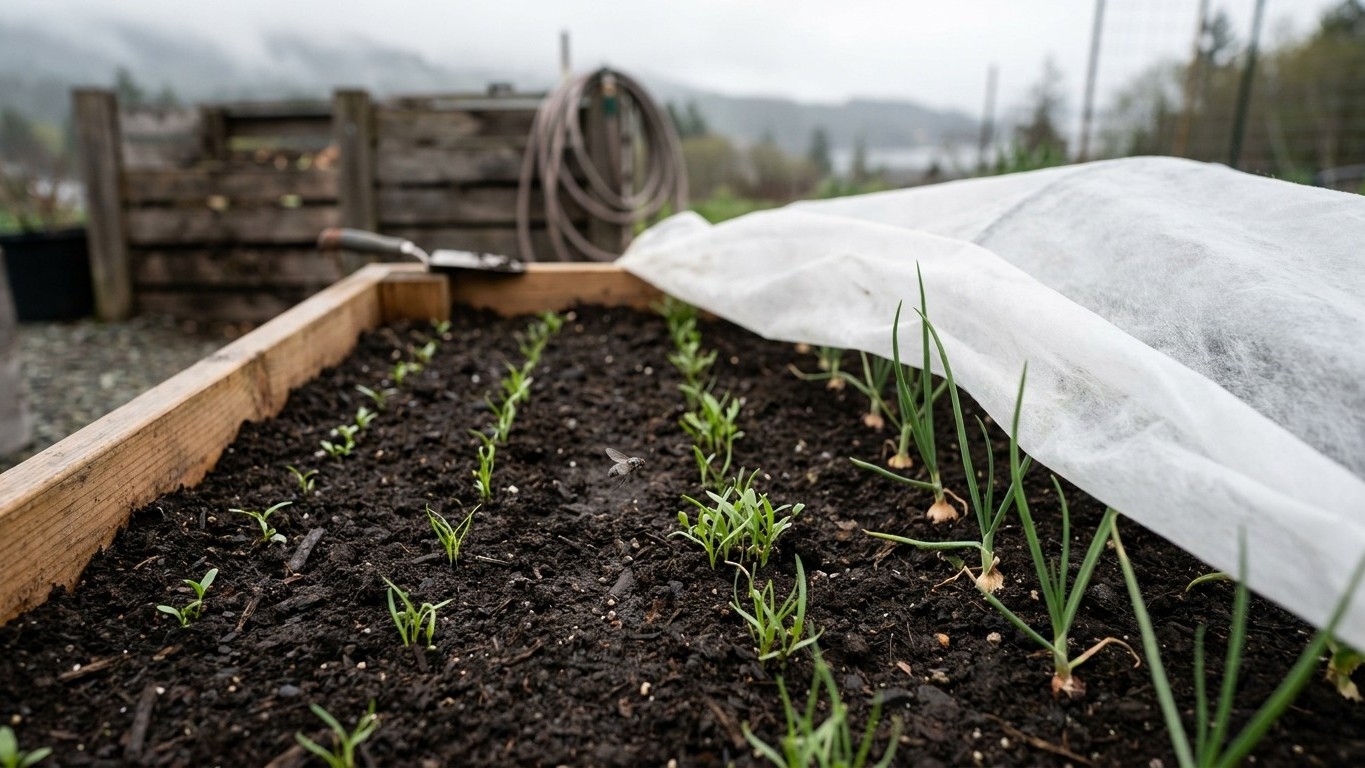
Floating row covers placed over beds at planting time and left on through the peak of the spring flight physically block females from reaching the soil to lay eggs. This works especially well for home gardens and smaller plots where covering the whole bed is practical. The cover needs to go on before flies show up and stay sealed at the edges, since even a small gap gives adults an entry point.
Sanitation matters more than most gardeners expect. Thinned seedlings, cull onions, and rotted bulbs left on the soil surface release odors that attract egg-laying females from surprisingly far away. Bagging or burying that waste instead of leaving it in the row removes one of the biggest attractants in a home garden or small farm setting.
- Rotate alliums away from last year’s planting site for at least two seasons
- Cover spring beds with row cover through the first generation’s flight period
- Remove and dispose of thinnings, culls, and rotted bulbs rather than leaving them in place
- Favor transplants over direct seeding when the spring flight is heavy
- Delay planting by a week or two if the previous season showed heavy maggot pressure
Natural Enemies at Work
Ground beetles and rove beetles both prey on onion maggot eggs and larvae in the soil, and gardens with less tillage and more mulch tend to support higher populations of these predators. Parasitic wasps also attack maggot pupae in some regions, though their impact varies enough that they shouldn’t be counted on as a sole control strategy. Keeping some undisturbed soil habitat nearby, like a border of perennial plantings or a strip of unmown grass, gives these predators a place to overwinter close to your onion beds.
Chemical control options exist for larger operations dealing with heavy infestations, but for home gardens and small-scale growers, the combination of rotation, timing, covers, and sanitation handles the vast majority of cases without needing to reach for a pesticide. If damage is severe and recurring year after year in the same plot, that’s usually a sign the rotation isn’t going far enough, either in distance or in time, rather than a sign that stronger chemistry is the missing piece.
One detail that surprises a lot of gardeners: onion sets and transplants purchased from a garden center can sometimes already carry eggs or very young larvae if they sat too long in a nursery bed before sale. Inspecting the base of purchased sets for small white eggs clustered at the soil line, before planting them in your own garden, catches a problem that no amount of rotation or row cover can prevent after the fact.