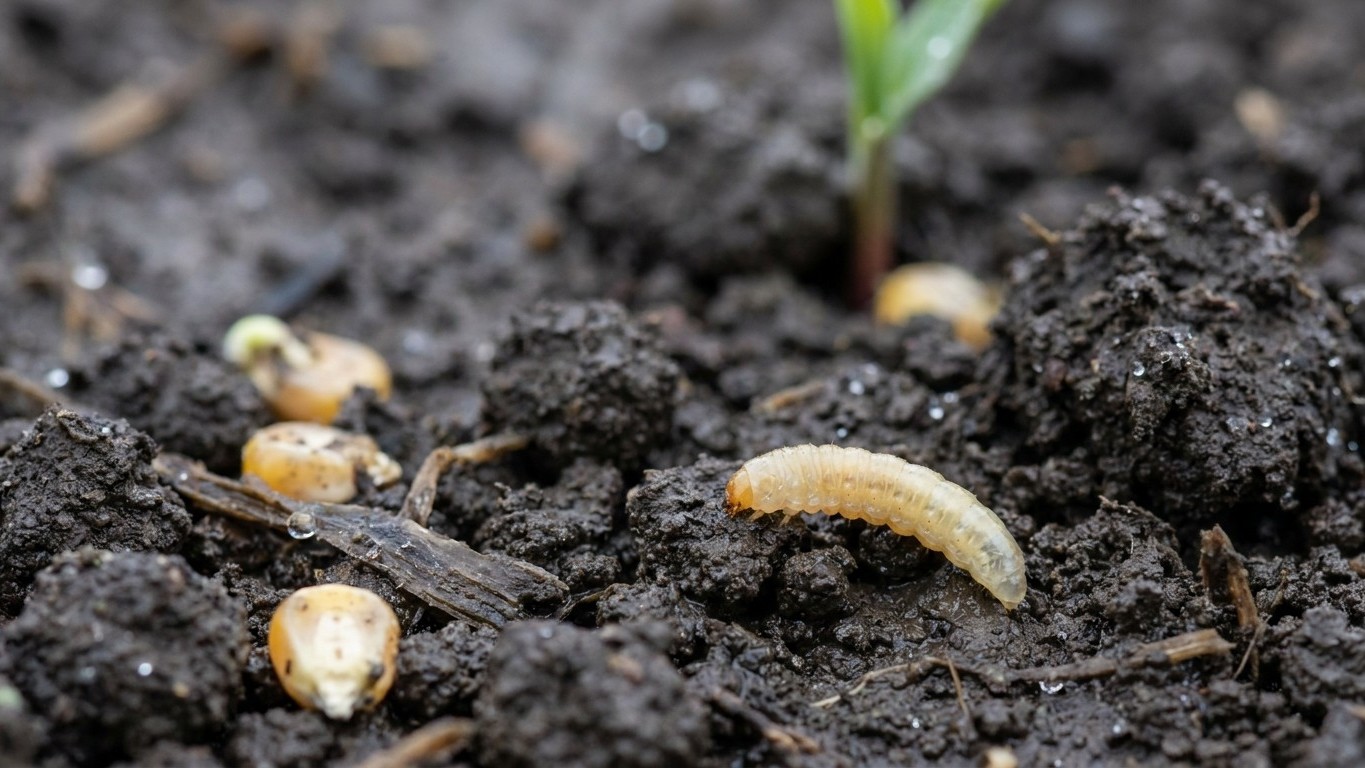

Seedcorn maggot shows up in Colorado gardens in early spring, right when cool, wet soil slows germination and gives the larvae time to attack seeds before they sprout. It fades once soil warms into June. Row covers and delayed planting stop it; nothing works once the maggot is already inside the seed.
The weeks to watch

Colorado State University Extension’s PlantTalk Colorado guide, the state’s main public reference for garden insects, doesn’t publish a specific flight window for seedcorn maggot the way it does for cabbage flea beetles (worst in June), squash bugs (egg-laying mid-June, a second wave late summer), or corn earworm moths (arriving as re-invaders through summer). For seedcorn maggot, the general pattern from entomology research elsewhere has to fill that gap: this is a cool-season pest, active whenever soil temperatures sit in the range that slows seed germination, typically early spring.
First flight: the one that matters
The first generation, emerging as soon as soil thaws and warms slightly, does almost all the damage home gardeners see. Adult flies lay eggs in soil that’s been recently disturbed or enriched with decaying organic matter, and their larvae tunnel into whatever seed happens to be germinating nearby. Cold, slow-sprouting seeds are sitting targets.
Later flights: present but less destructive
Seedcorn maggot produces more than one generation across the growing season, but as soil warms, seeds germinate faster and slip past the vulnerable window before larvae can do much harm. By the time later generations emerge, most garden seedlings have already outgrown the risk, which is likely part of why Colorado’s extension materials don’t flag this pest with the same urgency as flea beetles or squash bugs.
Reading the calendar from your last frost

Colorado’s last spring frost, based on NOAA’s 1991-2020 climate normals for the Denver-area station, falls between May 1 and May 11. That’s a range, not a single date, and it’s a normal, not a guarantee: mountain towns can frost in July, and the western slope runs on its own schedule. Seedcorn maggot doesn’t consult a calendar either. It responds to soil warmth, and a cold, wet spring stretches the seed’s vulnerable window regardless of what the frost date says.
- Start with your local last-frost normal (May 1 to May 11 for the Denver area, adjusted for elevation and microclimate where you garden).
- Expect the highest maggot risk in the two to three weeks right around and after that date, while soil is still cool and seeds are germinating slowly; that risk drops off once seedlings push past the cotyledon stage and soil has warmed further.
That short window is why timing matters more than any spray: a cover that goes on at seeding and comes off once true leaves appear covers almost the entire period when damage can happen.
What it attacks, and what the damage looks like

Most gardeners notice the gap before they notice the insect: a row of beans or squash with several missing plants, seeds that never came up at all, or a seedling that emerged, then wilted and collapsed within days. Bean sprouts sometimes show a deformed, blunted growing tip known informally as “snake head,” a sign the maggot tunneled through the seed before the plant could establish. Squash and cucumber seedlings may show small tunnels in the cotyledons or a stem that’s been hollowed out just below the soil line.
The damage is done entirely by the larval stage, the maggot itself, feeding underground inside the seed or the germinating stem. That single fact decides what can still be done: once larvae are inside the seed, there’s no treatment that reaches them, and the affected plant either dies or never emerges. Crops most at risk when direct-seeded into cool soil include:
- Beans (snap and dry)
- Peas
- Corn
- Squash and other cucurbits (cucumbers, melons)
- Onions, when seeded rather than transplanted
Transplants started indoors and set out as established seedlings largely sidestep the risk, since the vulnerable germination stage happens somewhere the flies never reach.
How Colorado sits in this pest’s range

Seedcorn maggot is a widespread species found across the continental United States, which means the real difference between Colorado and a garden in Ohio or Oregon isn’t presence, it’s timing. Cooler, higher-elevation soil in Colorado warms more slowly in spring than soil at lower, milder elevations, which can stretch the maggot’s damaging window a bit later into May in some gardens compared to warmer regions.
Colorado’s own extension publications don’t single out seedcorn maggot the way they do flea beetles, squash bugs, spider mites, and corn earworm, the four pests CSU’s PlantTalk resource highlights by name with seasonal detail. That’s worth noting plainly: seedcorn maggot is present and can cause real stand losses in cool, wet springs, particularly in gardens with fresh manure or heavy organic matter worked into the soil, but it doesn’t rank among the headline pests the state’s public guidance tracks closely. Gardeners dealing with poor bean or squash emergence in a cold spring shouldn’t rule it out just because it’s not prominently featured.
What actually works against it

- Delay planting until soil has warmed. Faster germination means less time exposed to egg-laying adults and hatching larvae; this is the single cheapest and most effective step, and it costs nothing but patience.
- Avoid working fresh manure or green cover crop residue into the soil right before seeding. Adult flies are drawn to decaying organic matter to lay eggs; if that material has fully broken down weeks earlier, the soil is less attractive to them at seeding time.
- Use transplants instead of direct seeding for the most vulnerable crops. Beans and squash started indoors skip the germination stage entirely in open soil, removing the window when maggots do their damage.
- Cover the row with floating row cover from seeding until seedlings have their first true leaves. This blocks adult flies from reaching the soil to lay eggs near the seed. It only works while it’s in place before flies arrive; once a fly has already laid eggs under the cover, or once larvae are in the soil, the cover does nothing more.
- Rotate planting areas where practical. Adult seedcorn maggot flies are mobile, so rotation offers modest protection at best, mainly by reducing the buildup of decaying organic matter in one spot rather than by moving crops out of the flies’ reach.
Some gardeners try diatomaceous earth worked into the seed row as a home remedy against soil-dwelling maggots. It’s commonly used, but trials on its effectiveness against maggots already below the soil surface are inconclusive, and once larvae have entered a seed, no surface treatment reaches them. At that point, the practical move is to accept the loss, till the row, and reseed once soil has warmed further.
Common questions
Does seedcorn maggot survive Colorado winters?
The pest overwinters as pupae in the soil across most of its range, emerging as adult flies once soil warms in early spring, which is why the first generation each year is tied so closely to that early-season cold, wet soil window.
Can I still plant beans if I’ve had seedcorn maggot before?
Yes. Waiting an extra week or two for soil to warm, or starting transplants indoors instead of direct-seeding, sidesteps most of the risk without giving up the crop.
Is seedcorn maggot the same insect as cabbage maggot?
No. They’re related flies in the same family with similar biology, but seedcorn maggot targets germinating seeds of beans, corn, peas, and cucurbits, while cabbage maggot attacks the roots of brassica crops like cabbage and radish.