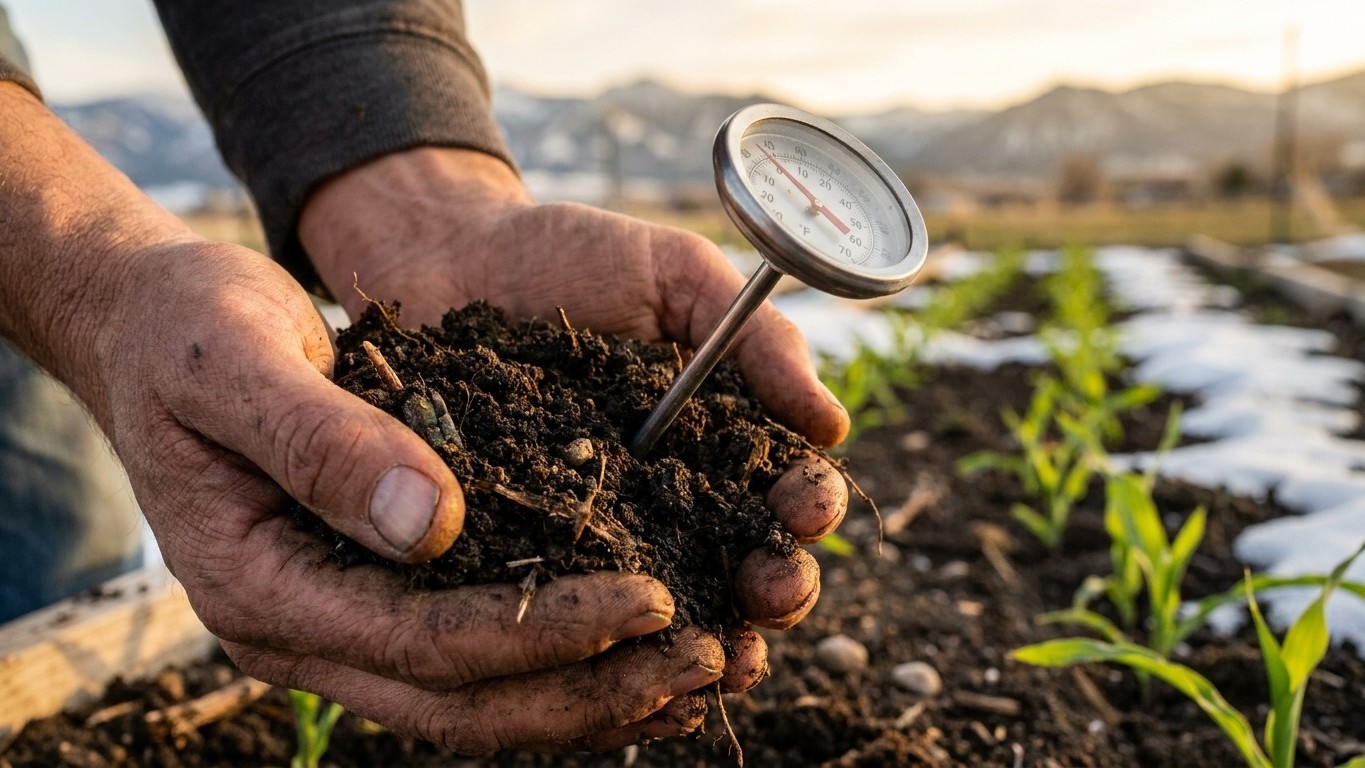

Yes, sweet corn can ripen here, but the calendar that decides it isn’t the frost date most gardeners circle on their planner. It’s the soil thermometer, and later, the summer heat gauge. Around Jacksonville, the last spring frost falls somewhere between February 16 and March 7, and the first fall frost doesn’t show up until November 26 to December 13. That’s a long frost-free stretch. For a deeper look at Will Sweet Corn Ripen in Florida?, the answer depends on two things that have nothing to do with frost at all.
The short answer
Sweet corn seed needs soil above 60F to germinate with any reliability, and that threshold arrives well after the last frost clears, not on the same day. Air can warm past freezing in mid-February while the top few inches of soil are still cold and slow to wake up. Nobody publishes an exact date for when this station’s soil crosses 60F, so the honest move is to check the ground itself with a soil thermometer rather than count days since the last frost and assume the seed will be safe. For a closer look at timing this properly, see When to Sow Sweet Corn in Florida.
Once the soil is genuinely warm, the growing window opens wide. The first fall frost here lands between November 26 and December 13, which is unusually late compared to most of the country. Counting forward from a spring soil-warmup sometime after early March, the frost-free stretch runs close to nine months. Against that backdrop, a sweet corn crop that needs 60 to 90 days from planting to harvest fits with plenty of room, and there’s enough calendar left over to plant a second round in late summer for a fall harvest.
The part that actually threatens the crop is the middle of that long season, not either end. This location averages 73.2 days a year with temperatures hitting 90F or higher, and that heat load is what drives water stress and pollination failure in corn, not the average summer temperature. Corn tassels and silks are sensitive to extended heat, and if that stage of the plant’s life lands during the worst run of 90-plus days, kernels can fail to fill even though the plant looks healthy. So the short answer is: the frost calendar gives sweet corn plenty of room here, but growers still have to decide which weeks of that long window to use, aiming the plant’s pollination stage away from the hottest stretch rather than just counting days from planting to harvest.
One more distinction matters for anyone reading this from elsewhere in the state. This frost pattern belongs to north Florida. Farther south, in the central and southern parts of the state, real frost becomes rare to nonexistent, and the whole growing calendar flips: the main corn season runs through the cooler months, and summer becomes the season to avoid rather than plan around. None of the dates above apply to Orlando or Miami.
Does a late variety fit here?
A 60-day variety
A short-cycle variety fits comfortably at either end of this long frost-free season. Planted once the soil is reliably above 60F in spring, it tassels and finishes well before the year’s heaviest stretch of 90-plus days typically builds, giving it a real shot at clean pollination. The same short cycle also makes it a strong candidate for a second, late-summer planting, timed to mature well ahead of the November 26 to December 13 frost window. Because it spends less time in the ground overall, a 60-day type simply has fewer chances to get caught by a bad heat run in either direction.
A 90-day variety
The extra month changes the equation, though not by ruling the variety out entirely. On the frost calendar alone, the gap between spring soil warmup and the late-fall frost window is wide enough to hold a 90-day crop without any risk of running into either frost date. Say it plainly: a long-season variety does fit the frost calendar in this territory, there’s no shortage of frost-free days to work with.
What it doesn’t automatically fit is the heat calendar. Thirty extra days in the ground means thirty extra days of exposure to whatever stretch of the year’s 73.2 days above 90F happens to fall during that stage of growth, and if tasseling lands in the thick of that heat, pollination can suffer even on a plant that otherwise looks vigorous. A 90-day variety planted early enough in spring can finish its silking before the heaviest heat sets in. One planted late, or timed carelessly through midsummer, risks tasseling right when the season’s hottest run of days shows up. The variety isn’t the problem here. The planting date is.
What Goes Wrong here
- Soil sown too cold: seed goes in the ground once the frost date has passed but before the soil itself is actually above 60F, and it sits and rots instead of germinating. Remedy: check soil temperature directly with a thermometer rather than counting days since the last frost, and hold off until the ground itself, not just the air, stays above that mark.
- A variety chosen for a season it doesn’t fit: a long-cycle type planted late enough in spring that its 90-day run pushes tasseling into the thick of the year’s 73.2 annual days above 90F, leaving pollination compromised and ears with bare, undeveloped patches. Remedy: plant long-season varieties early enough that silking wraps up before the heaviest heat arrives, or switch to a shorter-cycle type for anything planted later in the season.
- Sweetness lost to a neighbor, not the weather: su, se and sh2 types cross-pollinate if they tassel at the same time, and the sugar content of the kernels drops as a result, a failure that has nothing to do with soil temperature or frost dates at all. Remedy: don’t let different sweetness types tassel together. Stagger planting dates so one type finishes silking before the next begins, and grow each type in its own block of three or more rows rather than a single thin row.
Checking this against your own county
Everything above comes from one reference station near Jacksonville, and even within north Florida, a coastal county and an inland county can see frost arrive and clear on different weeks. Before locking in a planting date, it’s worth confirming local conditions with the University of Florida IFAS Extension, which runs a county-by-county office network built for exactly this kind of question. A local agent can speak to how soil warms up on your particular ground, whether a nearby microclimate runs a little cooler or warmer than the regional average, and how local growers have timed plantings to dodge the worst of the summer heat load. A quick soil test through the same office can also settle nutrient questions before the crop ever goes in.
Common questions
How do I know when the soil is actually warm enough to plant?
Use a soil thermometer pushed a couple of inches into the bed rather than relying on the calendar. Sweet corn needs the soil itself above 60F, and that point comes after the last frost clears, sometimes well after, so a thermometer reading is more reliable than a date on a chart.
Can sweet corn go in twice in one year here?
The frost-free stretch between the last spring frost and the first fall frost runs close to nine months at this location, which leaves room for a spring crop and a second planting timed to mature in late summer or early fall, well before the November 26 to December 13 frost window.
How can I tell when an ear is actually ripe?
Look for three signs together, not just one: the silks have turned dry and brown, the husk is still moist and green, and a punctured kernel releases milky juice rather than clear liquid or a dry, doughy interior. Any single sign alone can be misleading.
How far apart do different corn types need to be to avoid cross-pollination?
No distance is published for this. What matters is timing: su, se and sh2 types lose sweetness if they tassel at the same time, so the fix is staggering planting dates or keeping types separate enough in timing that they don’t silk together, rather than relying on any particular row spacing.