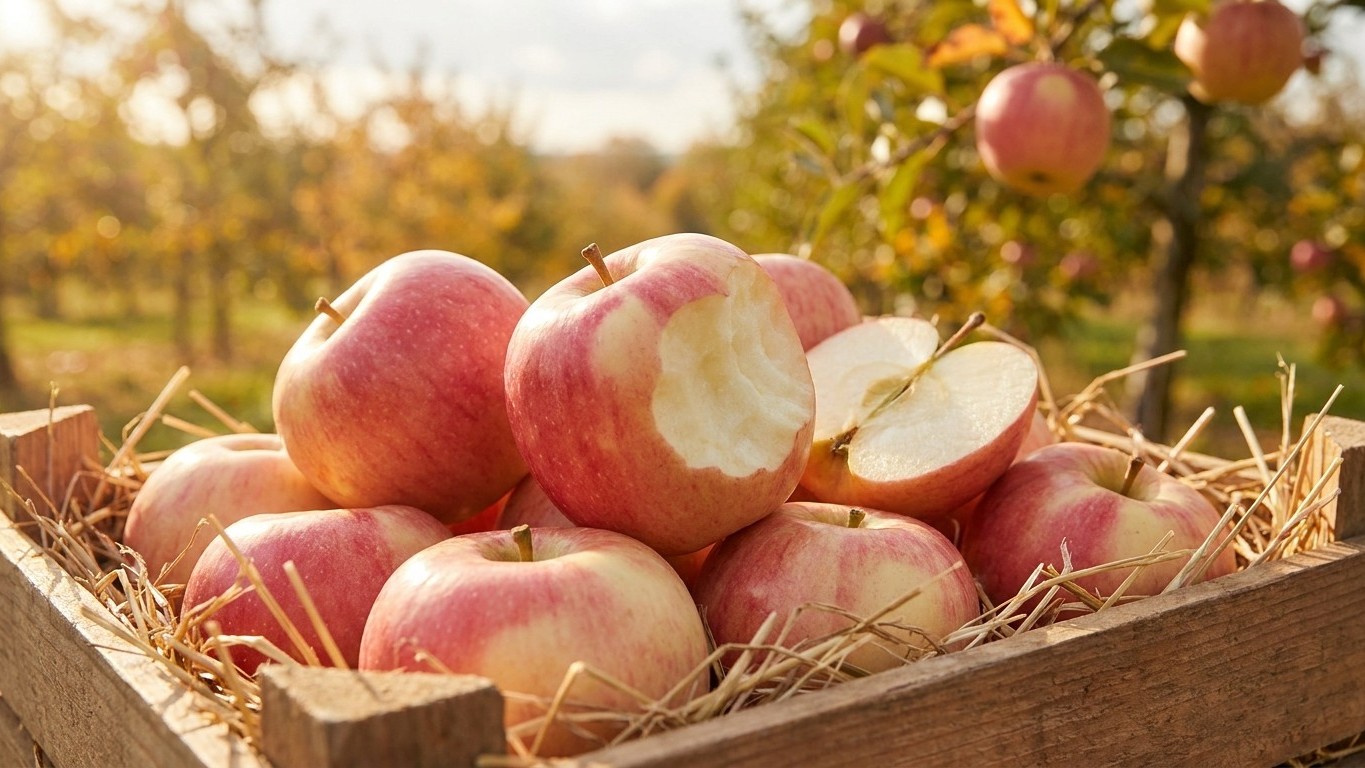

Ambrosia apples ripen in a narrow window, late September to early October, and missing it by even a week or two means fruit that’s mealy or overripe. The variety carries a 40 to 80 percent pink-red blush over medium-size fruit, with sweet, crisp, juicy, aromatic flesh built for eating fresh. It keeps only moderately once picked, so timing the harvest matters more with this apple than with varieties bred for cold storage.
What Honeycrisp actually is

Before getting into hardiness zones or pollination charts, a grower needs four pieces of information about any apple variety, and Ambrosia is no exception:
- When it ripens: Late September to early October
- What it tastes like: Sweet, with crisp, juicy and aromatic flesh
- What it suits: A dessert apple, best eaten fresh out of hand
- How long it keeps: Moderately, in ordinary storage conditions
The dessert classification tells you what this apple is for. It isn’t a cider apple, and it isn’t the type growers plant for a sauce crop or a pie filling that needs to hold its shape under heat. It’s a fresh-eating apple, meant to be picked, bitten into, and enjoyed within a reasonable stretch of weeks rather than cellared through a long winter.
The blush covering 40 to 80 percent of the skin is a wide range, and that’s the point: fruit from the same tree, even the same limb, can show noticeably different amounts of pink-red color depending on how much direct sun that particular apple caught during the season. A grower shouldn’t judge ripeness by blush percentage alone. That range is a cosmetic marker, not a ripeness clock.
Fruit size runs medium, which puts it in the middle of the pack for dessert apples, not a small snacking apple and not one of the oversized varieties bred mostly for visual impact at a market stand. The flesh itself is where this variety earns its reputation: the combination of crisp texture, high juice content, and an aromatic quality that shows up on the nose before the first bite. That aromatic note is the trait most fresh-eating apple fans specifically mention when comparing dessert varieties.
The moderate storage life sets real limits on how a household should treat a harvest. This isn’t an apple to pick by the bushel and forget in the garage for months. Plan to eat it, share it, or process what you can within the storage window the fruit actually gives you, covered in more detail further down.
Will it grow where you are
Hardiness range
The hardiness range for this variety is not published in the source data available for this page. Rather than assign a single USDA zone or guess at a range, it’s more accurate to say that a grower needs to check with a local nursery or extension office before assuming this apple will survive a given region’s winter lows. Hardiness zone alone also isn’t the whole story anyway, which brings up the second, less obvious filter.
Winter chill
Chill hours, the number of hours a tree needs at temperatures generally between 32 and 45 degrees Fahrenheit each winter to break dormancy properly and flower on schedule, aren’t published for this variety either. That’s a real gap for anyone gardening in the Deep South, coastal California, or other regions with short, mild winters, since a tree that doesn’t accumulate its needed chill hours flowers erratically or not at all the following spring.
Without a published chill figure, the practical move is to ask a regional nursery whether this variety performs reliably in that specific climate before planting. Apple varieties in general split fairly cleanly between high-chill types suited to cold-winter states and low-chill types bred for the Southeast and Southwest. Since neither the hardiness range nor the chill requirement is documented here, a grower in a borderline climate is better served getting a local, specific answer than trusting a national average that doesn’t exist for this apple in the first place.
What to plant beside it
Nearly all apple varieties crop better with a compatible pollinator nearby, and this is usually the most consequential decision a new apple grower makes, more consequential than soil prep or even rootstock choice in many cases. A tree standing alone in a yard, with no other apple or crabapple blooming at the same time within bee-flying distance, typically sets a light crop at best.
For this particular variety, no specific list of compatible pollinator varieties is published in the source data used for this page, and no pollen sterility or parent-seedling exclusion is documented either. That absence of data doesn’t mean pollination doesn’t matter here. It means a grower needs to work from general pollination principles rather than a variety-specific chart.
The practical approach: plant another apple variety, or rely on a nearby crabapple, that blooms during the same window as the late-September-to-early-October harvest cycle typically implies for bloom timing in spring, generally mid-season bloomers rather than very early or very late-flowering types. A full compatibility check, including bloom timing overlap and any known exclusions between related varieties, belongs on a dedicated apple pollination guide rather than guessed at here. Skipping that step is the single most common reason a backyard apple tree disappoints its owner in year three or four, once it’s mature enough to bloom heavily but still sets little fruit.
Growing it well

Fire blight
This variety is rated susceptible to fire blight, a bacterial disease that spreads fast in warm, wet spring weather and can kill blossoms, shoots, and eventually entire limbs if it takes hold. Susceptible doesn’t mean doomed. It means this isn’t the variety to plant in a yard or orchard row where fire blight has already shown up on other fruit trees, and it means a grower in a fire-blight-prone region should watch new growth closely each spring for the telltale blackened, curled “shepherd’s crook” shoot tips and prune them out promptly, cutting well below the visible damage.
Disease resistance in general
No other disease resistances are claimed for this variety in the available data. That’s worth knowing plainly rather than assuming this apple carries some unstated resistance to scab, mildew, or rust simply because it isn’t mentioned. Treat it as a variety with no documented resistance advantages beyond the fire blight rating already noted, and plan a standard disease-watching routine rather than expecting this apple to shrug off common orchard problems on its own.
Habit and bearing pattern
Growth habit and whether this variety tends toward biennial bearing (heavy crops one year, light the next) aren’t documented in the source data for this page. A grower who notices a pattern developing over several seasons should apply standard thinning practice, removing some young fruit early in the season, which is the usual tool for evening out an apple tree’s output year to year regardless of variety.
Picking it and keeping it
The harvest window for this variety runs late September to early October, but that calendar range is a planning guide, not a pick date. Weather, crop load, and even the specific microclimate of a backyard shift the actual ripe moment earlier or later within that window. The apple itself gives clearer signals than the calendar does. Check for these in order:
- Lift and twist a fruit gently in the palm of your hand. A ripe apple separates from the spur easily, stem intact. One that resists and needs pulling or twisting hard isn’t ready yet.
- Cut one test apple open and check the seeds. Fully ripe apples generally show dark brown seeds; pale or greenish seeds mean the fruit needs more time on the tree.
- Look at the ground color, the background skin tone underneath the pink-red blush. As the apple matures, that background shifts from a greenish cast toward a yellow or cream tone.
Storage
This variety keeps moderately in ordinary storage, not among the long-keeping types that hold for months in a root cellar. Ordinary storage means a cool space, ideally close to refrigerator temperature, away from direct light, with decent air circulation and the fruit not stacked too deep or bruised in handling. Plan to work through a harvest within a few weeks of picking rather than counting on it lasting through winter, and set aside the best-looking, unbruised fruit specifically for whatever storage window it does have, since any nicked or soft apples in the batch will shorten how long the rest holds up around them.
Common questions
When exactly should I pick my apples?
Watch for late September through early October as the general window, then rely on the lift-and-twist test, seed color, and ground color rather than a fixed date, since weather and local conditions shift the true ripe moment year to year.
Is this a good apple for pie or sauce?
It’s classified as a dessert apple meant for fresh eating, not a variety chosen for cooking performance. Its texture and flavor are built around eating out of hand rather than holding up in baked or cooked applications.
Why isn’t my tree producing fruit even though it flowers?
The most common cause is a missing pollination partner. Nearly all apple varieties need a compatible partner blooming at the same time nearby, and without one, a tree can flower heavily every spring while setting very little actual fruit.
Can I grow this apple if fire blight has hit trees in my area before?
This variety is rated susceptible to fire blight, so it’s a real risk in a neighborhood or orchard where the disease is already present. Watch new growth closely each spring and prune out any blackened shoot tips immediately if you plant it in that kind of setting.
How long will my harvest actually last in the kitchen?
Expect moderate keeping in ordinary cool storage, meaning weeks rather than months. Sort out any bruised or damaged fruit right away, since it shortens how long the rest of the batch stays good.
Related guides
- Idared Apple: Worth Growing, If Fire Blight Is Not Your Problem
- Jonagold Apple: A Fine Apple That Cannot Pollinate Anything
- Jonamac Apple: Ripening Late September, and What to Plant Beside It
- What Pollinates Ginger Gold, and What Cannot
- What Pollinates Acey Mac, and What Cannot
- What Pollinates Priscilla, and What Cannot