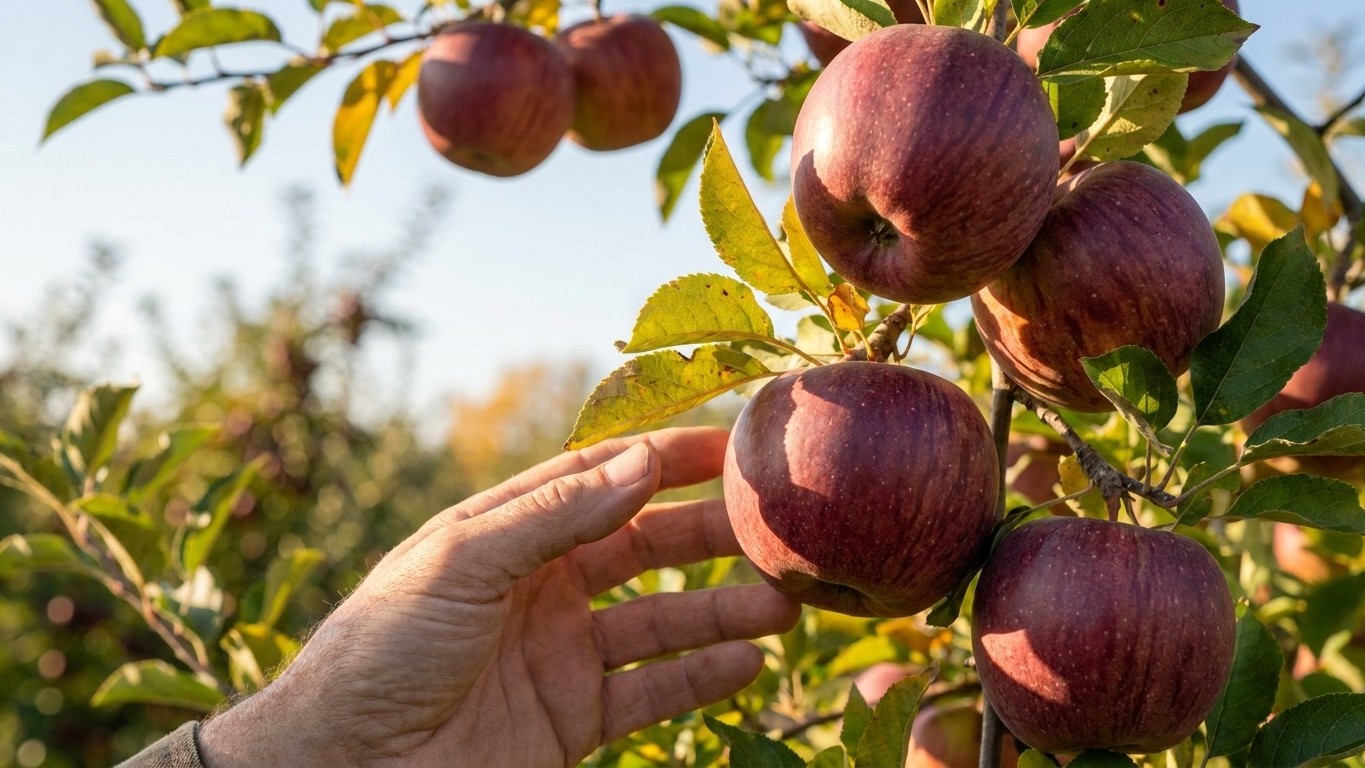

Empire apple ripens late in the season, sitting between late September and early October on most calendars, and it grows well from USDA zone 4 through zone 8. The fruit is sweet enough for snacking straight off the tree, but it also holds up in a pie pan, which not every dessert apple can claim. This page covers what the fruit is like to eat, whether your winters and summers suit it, and which trees need to stand nearby for it to bear a full crop.
What Empire actually is

Empire is a mid-season bloomer, according to Utah State University Extension’s guide to home apple production, and it ripens late, hanging on the tree from late September into early October. That bloom timing matters just as much as the harvest date, because it determines which other apple trees can share pollen with it come spring, a subject covered further down this page.
On flavor, University of Maine Cooperative Extension rates Empire simply as sweet, the kind of apple that doesn’t need a sugar bowl nearby to be enjoyable out of hand. Unlike some varieties that carry two names depending on where they’re sold (Mutsu marketed as Crispin, or Cripps Pink sold under the Pink Lady brand), Empire is sold under one name across the country, so what’s in the grocery bin is what’s on the tag.
In the kitchen
Maine’s Extension fact sheet calls Empire excellent for snacking and salads, and good for pies, sauce, and baking. That spread matters because a snacking apple and a pie apple ask for different things from the flesh. Empire holds its structure instead of collapsing into mush when it hits oven heat, and its sweetness carries just enough acidity to survive baking without turning bland or one-note. That combination is why it crosses over from lunchbox apple to dessert ingredient without forcing a grower to plant a second variety just for the oven.
Will it grow where you are
USDA hardiness zones 4 through 8 cover most of the country’s apple-growing regions, from cold Northern winters down through the warmer edges of the Mid-Atlantic, according to Utah State University Extension. That’s a wide band, wider than a lot of dessert apples get credit for, and it puts Empire within reach of growers from Maine to the Carolina mountains to eastern Washington.
The chill-hour question
Zone alone doesn’t finish the job, though. Every apple variety also needs a minimum number of hours of winter cold, usually measured below about 45°F, to break dormancy properly and bloom on schedule the following spring. Skip too much of that chill and a tree leafs out unevenly, blooms thin or late, and yields drop off. It’s the reason apples struggle in places like central Florida no matter how carefully a grower babies the tree.
For Empire specifically, that chill figure isn’t published in the sources used for this page. What is documented, the zone 4-8 range, points toward a variety suited to climates with real winters: New England, the Upper Midwest, the Mountain West, and cooler pockets of the Mid-Atlantic. Growers in zone 8b and warmer, especially in the Deep South or California’s low-desert valleys, should treat Empire as a gamble rather than a sure bet and check with a local extension office before planting, since chill requirements vary enough between apple varieties that a number borrowed from a similar-looking apple isn’t reliable here.
What to plant beside it
Nearly all apple varieties crop better with a compatible partner tree nearby, since a single tree’s own pollen usually isn’t enough to set a full, reliable crop of fruit. Empire blooms mid-season, per Utah State University Extension, which narrows the field to other varieties flowering at roughly the same point in spring.
Here’s the honest limit worth naming: the sources behind this page don’t publish a specific list of pollination partners for Empire. Rather than guess at names and risk sending a reader home with the wrong tree, the fair answer is that this detail simply isn’t documented in the material used for this fact sheet.
That doesn’t leave a grower stuck. The practical fix is to choose any apple variety, or a flowering crabapple, known to bloom mid-season in your area, and plant it within roughly 50 to 100 feet, close enough that bees can carry pollen between the two trees on the same foraging trip. Nursery tags and local extension offices usually list bloom timing as early, mid, or late for the varieties sold in a given region, and matching that window to Empire’s mid-season bloom is the safest route without a documented partner list to work from.
What to check before you buy
- Confirm the candidate variety’s bloom season is listed as mid, not early or late, so the flowering windows actually overlap in your climate.
- Skip pairing two trees that are both grafted clones of the same variety; genetically identical trees don’t pollinate each other even blooming side by side.
- Ask whether either variety is a direct parent or offspring of the other, since a parent tree generally can’t pollinate its own seedling even when both are in flower at once.
- When nothing else fits, a flowering crabapple with a matching bloom window is a reliable, low-maintenance pollen source.
For a fuller rundown of how apple pollination actually works, including which varieties are partly self-fertile enough to fruit alone in a pinch, see this site’s guide to apple pollination partners.
Growing it well
Fire blight is the disease most likely to worry an Empire grower, and Utah State University Extension rates the variety as moderately resistant. In practice, that means the bacteria can still find a foothold, especially after a wet, warm bloom period, but Empire won’t collapse the way a highly susceptible variety does at the first sign of blossom blight. A grower will still want to prune out any blackened, wilted shoot tip (the classic “shepherd’s crook” symptom) promptly, cutting well below the visible damage, but the tree isn’t likely to demand the aggressive spray program that a fire-blight-prone variety requires.
Beyond that rating, the sources used for this page don’t publish details on Empire’s growth habit, its tendency toward biennial bearing, or specific thinning recommendations. Rather than guess, treat those as open questions for a local extension office or nursery, since growth habit and cropping pattern shift with rootstock, climate, and pruning style in ways a general fact sheet doesn’t always capture.
A few practices apply broadly to most mid-season apples and are worth adopting as defaults rather than Empire-specific claims: hand-thinning young fruit down to roughly one apple per cluster tends to improve fruit size and even out the swings between a heavy crop year and a light one that many apple varieties show to some degree. Whether Empire specifically needs that step isn’t documented here, but it’s a low-risk habit for any home orchardist.
Mature tree size has nothing to do with the Empire name itself. It comes down entirely to rootstock. A dwarfing rootstock keeps the tree small enough to manage without a ladder, while a semi-dwarf or standard rootstock lets it grow considerably larger over time. Ask the nursery which rootstock a tree is grafted onto before buying, since that decision matters more for spacing than the variety printed on the tag.
Picking it and keeping it
Empire’s harvest window runs late September into early October, according to Utah State University Extension, but a calendar date is only a starting point. The tree itself signals when the fruit is actually ready.
How to tell it’s time
The most reliable field test is the lift-and-twist: cup an apple in your palm, tilt it horizontally, and give it a gentle twist. A ripe Empire separates from the spur with almost no resistance, stem intact. If it has to be tugged or pulled off, it needs more time on the tree.
Two backup checks confirm the call. Cut one sample apple in half and look at the seeds: pale or greenish seeds mean wait, while seeds that have turned brown to nearly black signal the fruit is mature. Ground color helps too, the patch of skin where direct sunlight never reached; as the apple ripens, that background shifts away from hard green toward a softer yellow-green or cream, even on a variety like Empire where red overtones cover most of the surface.
Keeping the harvest
The sources used for this page don’t publish a specific storage duration or humidity target for Empire, so treat this as general practice rather than a variety-specific figure. Apples generally keep longest in the coldest part of a home refrigerator, ideally in a perforated bag or the crisper drawer, away from ethylene-sensitive vegetables. Checking stored fruit every few weeks and pulling out anything soft or showing rot keeps one bad apple from taking down the rest of the batch, a saying that happens to be literally true in cold storage.
Common questions
When is Empire apple ready to pick?
Utah State University Extension places the harvest window at late September into early October. The lift-and-twist test on the tree is a more reliable signal than the date alone, since local weather shifts the exact week from year to year.
What zone does Empire apple grow in?
It’s rated for USDA hardiness zones 4 through 8, a range that covers most cold-winter and moderate-winter regions of the country, per Utah State University Extension.
Does Empire apple need a pollinator?
Like nearly all apple varieties, it crops better with a compatible mid-season-blooming partner nearby, since Empire blooms mid-season. A specific list of named partners isn’t published in the sources for this page, so choosing any documented mid-season variety, or a crabapple, in the local area is the practical route.
Is Empire apple good for pies?
University of Maine Cooperative Extension lists it as good for pies, sauce, and baking, alongside its excellent rating for snacking and salads. Its flesh holds shape and its acidity survives oven heat, which keeps a baked filling from turning bland.
Is Empire apple resistant to fire blight?
Utah State University Extension rates it moderately resistant, meaning the disease can still appear during a wet bloom season but the tree tolerates it better than a highly susceptible variety, without usually requiring an aggressive spray program.