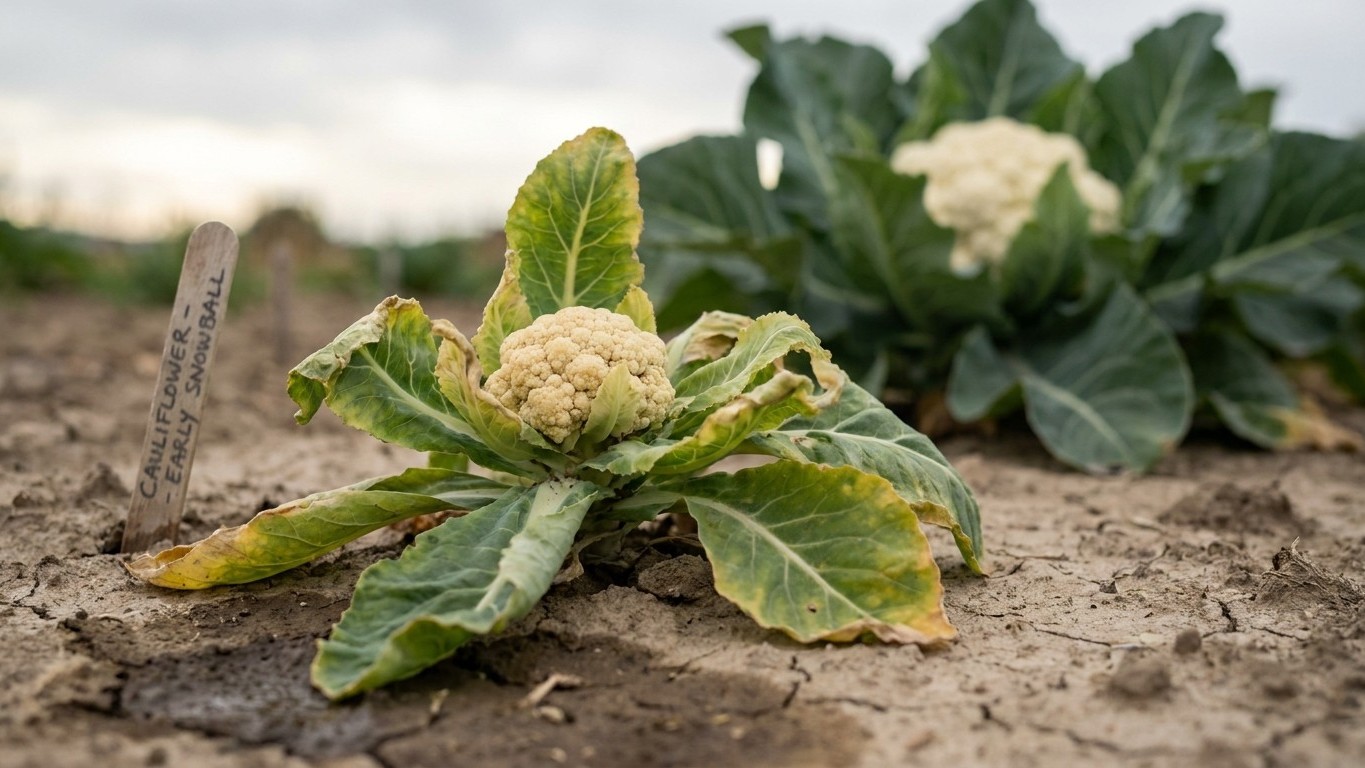

Buttoning in Cauliflower comes down to four separate shocks, according to Utah State University Extension: dry soil, cold Temperatures, low nitrogen, and transplant shock. A fifth factor, an oversized transplant, makes any one of those four hit harder. Once triggered, the plant stops growing a real head and starts one early and small instead, and that decision can’t be reversed.
The short answer
Utah State University Extension, in its guide Cauliflower in the Garden (Drost & Johnson, March 2020), names four distinct triggers for premature heading, known as buttoning: dry soils, low temperatures, low nitrogen, and general shock at planting. These aren’t four versions of the same problem. Each one interrupts the plant’s vegetative growth phase on its own, and the plant responds the same way regardless of which one hit it, by switching too early into reproductive mode and forming a small head, a button, instead of the full curd a home gardener is waiting for.
The source adds a second layer to this: transplant size. Larger, more mature Transplants are more prone to button than smaller ones, even when handled the same way. That means two trays of seedlings planted the same day, in the same soil, watered the same amount, can produce different results if one tray was allowed to grow bigger before it went into the ground. Size at transplant isn’t a fifth trigger exactly, it’s an amplifier that sits on top of the other four.
Utah State University Extension frames this as a timing problem more than a soil problem. Plants that button, the guide states, have been exposed to cold weather, or were stressed for water or nutrients shortly after planting. Notice the phrasing: shortly after planting, not at any point in the growing season. Cauliflower has a narrow window right after transplant when it’s deciding how it’s going to grow for the rest of the season. A cold night, a dry week, or a nitrogen gap during that window does damage that a warm, wet, well-fed week later on can’t undo.
That narrow window is also why timing advice for cauliflower transplants is tighter than for its brassica relatives. Cauliflower goes into the ground one to two weeks Before the Last Frost date, a shorter head start than cabbage or broccoli get. The plant simply has less tolerance for a rough start, and less time to recover from one before the buttoning decision gets made.
What actually decides it

Buttoning isn’t one mechanism wearing four disguises. It’s four separate stresses that each land on the same vulnerable stage of the plant’s life, right after transplant, before the root system has re-established.
Dry soil
A transplant’s root ball is small and shallow compared to the root system it will eventually build. If the soil around it dries out in the days right after planting, the plant can’t take up enough water to keep building leaves, and it shifts toward forming a head instead. This is a water-availability problem specifically at the root zone, not a general drought tolerance issue further along in the season.
Low temperatures
Utah State University Extension names 32°F as cauliflower’s low threshold and 75°F as its ceiling, a narrower comfort range than cabbage (25°F to 80°F) or broccoli (28°F to 75°F). A cold snap that cabbage would shrug off can be enough to push a young cauliflower transplant into buttoning. This is a cold-shock trigger, distinct from frost damage that kills tissue outright. The plant survives the cold snap; it just reads the cold as a signal to stop growing vegetatively.
Low nitrogen
Nitrogen fuels leaf growth. A transplant short on nitrogen right after planting, whether because the soil is naturally poor or because it hasn’t been fed yet, can’t sustain the vegetative growth phase long enough to build a proper frame before heading. The result looks similar to drought stress from the outside, but the cause is nutritional, not hydraulic, and the fix is different.
Transplant shock
This one is produced by hand more than it’s grown by the plant. Rough handling, root disturbance, or a harsh transition from a protected nursery environment to open garden soil all count as transplant shock, and the timing of that shock, right at the start of the plant’s life outdoors, is what makes it dangerous. A gardener who hardens off transplants gradually and handles roots gently is directly reducing this specific trigger, separate from anything happening in the soil itself.
Because these four mechanisms are distinct, a diagnosis that assumes only one cause misses the other three. A gardener who blames cold weather for buttoning and ignores a nitrogen-poor bed will keep seeing the same problem next season.
How to do it
- Count backward from your own last frost date, not a calendar month. Cauliflower transplants go into the ground one to two weeks before that date, a shorter head start than cabbage or broccoli, which go out two to three weeks before.
- Choose a cultivar with a known days-to-maturity figure so the transplant’s size at planting matches the timing you’ve picked, rather than growing a seedling larger than it needs to be while you wait for the ground to be ready.
- Harden off transplants gradually before they go into the garden, easing the shift from indoor or greenhouse conditions to outdoor sun, wind, and Temperature swings, to reduce transplant shock specifically.
- Prepare the bed with adequate nitrogen before planting, not after buttoning symptoms would already be visible. The critical window is shortly after planting, so nitrogen needs to be available at that point, not added later as a correction.
- Water deeply at transplant and keep the root zone consistently moist through the first weeks outdoors, since it’s dry soil right after planting, not general summer drought, that drives this particular trigger.
- Watch the forecast for cold nights in the days immediately following transplant and use row cover if a night near or below cauliflower’s 32°F low threshold is expected.
| Cultivar | Days to maturity | Note |
|---|---|---|
| Snow Crown | 50 | |
| Self Blanche | 60 | |
| Amazing | 65 | |
| White Contessa | 65 | Heat tolerant |
| Denali | 80 | Summer planting for fall harvest |
What goes wrong

- Transplants grown too large before planting out. Utah State University Extension notes that larger, more mature transplants are more prone to button. The remedy is prevention, not correction: size the transplant to the planting window using a cultivar’s days-to-maturity figure, rather than letting seedlings sit and grow past the point the garden bed is ready for them.
- A cold night right after transplant. Once a young cauliflower plant has been exposed to cold weather in that early window, the buttoning decision has already been made inside the plant. Row cover after the fact won’t undo it. The only real remedy is watching the forecast before transplanting and covering ahead of a cold night, not after one.
- A dry stretch mistaken for normal establishment stress. Some gardeners let a newly transplanted bed dry out slightly, assuming the plant needs to “toughen up.” For cauliflower specifically, that dry stretch right after planting is one of the four named triggers. Keep the root zone consistently moist through the first Weeks Instead of testing the plant’s tolerance.
- Nitrogen added late, after the plant is already showing stress. Because the critical window is shortly after planting, feeding a struggling transplant weeks later doesn’t reach back and fix what already happened. Build nitrogen into the bed before transplanting, so it’s available during the window that actually matters.
- Rough handling treated as unavoidable. Transplant shock is produced by hand, through root disturbance and abrupt handling, more than it’s an inherent risk of moving any plant. Gentle handling and a gradual hardening-off period address this trigger directly and separately from soil conditions.
Common questions
Can a buttoned cauliflower head still be eaten?
Utah State University Extension doesn’t address edibility of buttoned heads directly, but describes buttoning as premature heading, meaning the plant forms a small head instead of a full one. The underlying issue is size and timing, not contamination or disease.
Is buttoning the same as bolting?
No. Utah State University Extension describes buttoning specifically as premature heading triggered by dry soil, cold, low nitrogen, or transplant shock shortly after planting. That’s a distinct mechanism from bolting, which involves a plant moving to flower and seed later in its life cycle.
Does buttoning affect the whole plant or just the head?
The source describes buttoning as the plant forming a small head prematurely, tied to stress in the window shortly after planting. It’s the heading process itself that’s affected, driven by conditions the plant experienced early on rather than anything happening later in the season.
Why does cauliflower button more than cabbage or broccoli?
Utah State University Extension gives cauliflower a narrower temperature range, 32°F to 75°F, compared with cabbage’s 25°F to 80°F and broccoli’s 28°F to 75°F. Cauliflower also goes into the garden closer to the last frost date, one to two weeks ahead versus two to three weeks for its relatives, leaving less buffer around that same vulnerable early window.