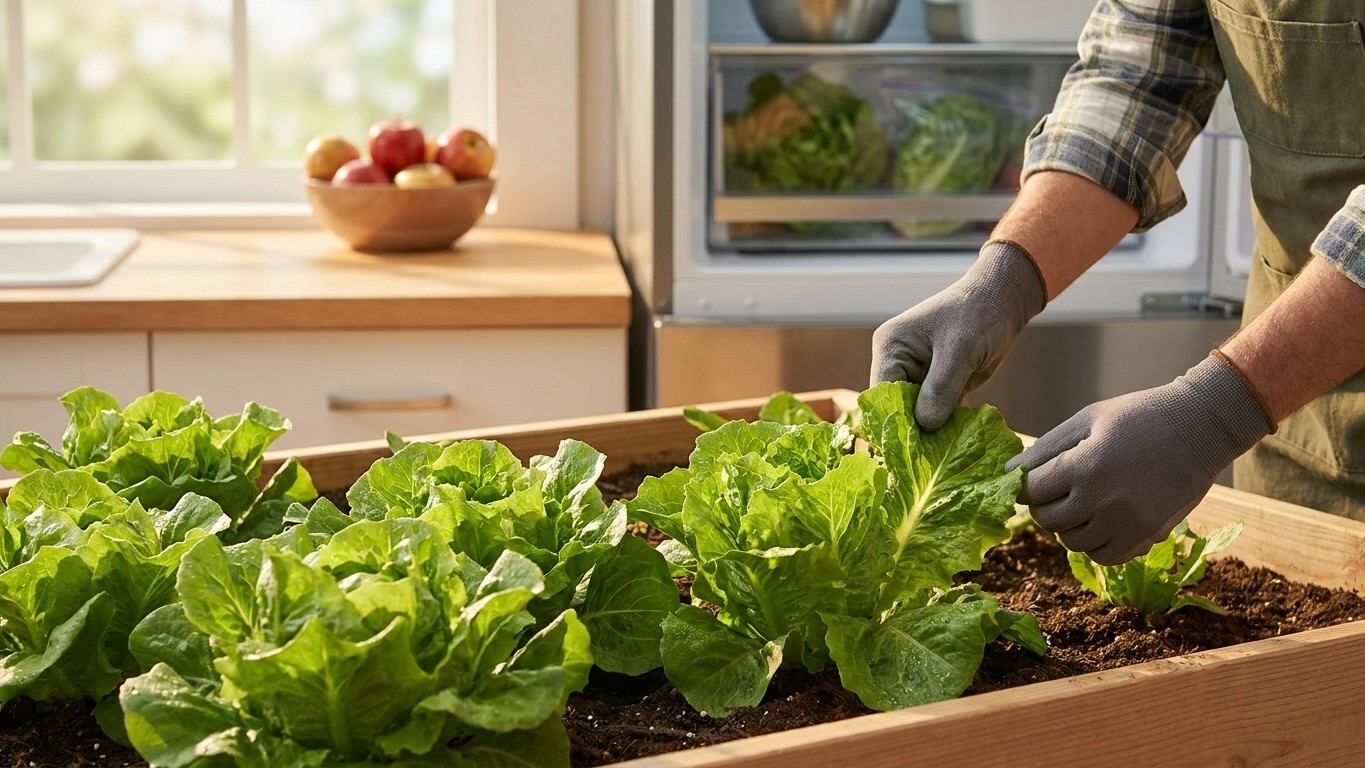

Pick lettuce leaf by leaf, not head by head, and it keeps producing for weeks. Utah State University Extension confirms that older leaves stripped off first let the young leaves inside the plant keep growing, turning one row into several harvests instead of one. The other half of the question, apples, matters just as much: stored lettuce develops leaf spotting when it shares space with apples or pears, so the crisper drawer and the fruit bowl need to stay strangers.
The short answer
Utah State University Extension is direct about this: lettuce can be harvested almost any time during growth. That single sentence covers a lot of ground, because the four lettuce types don’t all signal readiness the same way. Crisphead types are picked once the heads feel firm in the hand. Butterhead and cos (romaine) types come out in the early heading stage, before they’ve fully tightened up. Leaf lettuce is the most forgiving of the four: it can be cut any time after the leaves form, right up until the seed stalk starts to rise from the center of the plant.
That last detail is the real answer buried inside the short answer. Once a seed stalk appears, the plant has shifted its energy from leaf production to reproduction, and the leaves that remain turn bitter fast. So the practical version of “almost any time” is: any time before bolting, and for leaf lettuce specifically, the picking method extends that window further than most gardeners expect.
Here’s the part that changes how a row gets used. The Extension’s guidance says older leaves are often stripped off the plants first, which allows the young leaves to keep growing underneath. That’s a harvest strategy, not a variety trait. A single leaf lettuce plant, picked this way, can supply several rounds of leaves instead of one final cut. Compare that to pulling a whole head at once, crisphead style, and the row’s productive life ends the moment you make that cut.
On the apple question, the source is just as specific. Lettuce stored near ethylene-producing fruit like apples or pears develops leaf spotting. It’s the same storage conflict that shows up with cabbage: put the wrong things in the same drawer and the vegetable pays for it within days. For a home kitchen, that usually means a fruit bowl on the counter sitting a few feet from a fridge crisper doing double duty for both fruit and greens. Two different jobs, one drawer, and the lettuce loses.
What actually decides it

The leaf-by-leaf mechanism
A lettuce plant, especially a leaf type, doesn’t stop producing new leaves the moment you start harvesting. New growth emerges from the center while the oldest, outermost leaves mature and eventually would yellow on their own. Stripping those oldest leaves first does two things at once: it gives the gardener usable leaves right away, and it removes the tissue that was about to decline anyway, so the plant redirects energy into the leaves still forming. This is repairable in the sense that a gardener can always switch strategies mid-season, picking a few outer leaves one week and letting the plant rest the next. What it doesn’t replace is timing against the seed stalk. Once that stalk starts up, no picking method reverses the plant’s decision to stop making tender leaf tissue.
The storage and ethylene mechanism
Ethylene is a gas that ripening fruit gives off, and it acts as a signal to nearby produce to speed up its own aging. Lettuce sitting next to apples or pears absorbs that signal and responds with leaf spotting, a cosmetic and textural decline that shows up within the storage window. Utah State University Extension’s fix has two parts: keep the storage Temperature low, ideally 34-36 F, and eliminate excess moisture on the leaves before they go into the fridge. Neither of those steps undoes ethylene exposure after the fact. Once spotting starts, no amount of cold or dryness reverses it. The only real fix is separation from the start, storing lettuce away from any ethylene-producing fruit rather than trying to correct the damage afterward.
The yield mechanism
Row length decides volume in a fairly linear way. A 10 foot row yields 4-6 pounds, and the Extension’s planting guidance works backward from a person’s typical use: plant 5-10 feet of row per person. That range exists because appetite and harvest frequency vary. A household that snacks on leaf lettuce weekly gets more total pounds out of a shorter row than one harvesting infrequently, simply because the leaf-by-leaf method keeps the plant producing longer.
How to do it
- Pick a lettuce type before planting: Crisphead, Butterhead, Cos (romaine), or leaf. Each signals harvest readiness differently, so knowing the type in advance sets expectations for how the season will unfold.
- For an earlier start, direct-seed lettuce into the garden 2-3 weeks before your last frost date. This is the earlier of the two entry points into the season, and it applies specifically to seed sown straight into the ground, not to seedlings raised indoors.
- If starting indoors instead, begin Transplants 5-6 weeks before your last frost date. Count backward from that date on your own calendar: 5-6 weeks of indoor growing time positions the seedlings to go out right around the last frost, not ahead of it.
- Set the transplants into the garden near your last frost date itself, once they’ve had that 5-6 week head start. Lettuce transplants are not moved Out Before the Last Frost the way some other seedlings are; they go out closer to that date.
- Space and plant according to household use, figuring 5-10 feet of row per person, and expect roughly 4-6 pounds from every 10 feet of row planted.
- Harvest by type: cut crisphead once heads feel firm, take butterhead and cos in the early heading stage, and pick leaf lettuce any time after leaves form but before a seed stalk appears, stripping the oldest outer leaves first so younger leaves keep growing.
- Refrigerate what isn’t eaten immediately, at 34-36 F, after wiping off excess surface moisture, and keep it away from any storage area shared with apples or pears.
What goes wrong

- Waiting too long and letting the seed stalk form. Once that stalk rises, leaf lettuce loses the “harvest any time” flexibility. The remedy is to check plants regularly during the harvest window and cut before that stalk appears, rather than after.
- Storing lettuce next to apples or pears. The ethylene those fruits give off causes leaf spotting that can’t be reversed once it starts. The remedy is simple separation: a different drawer, a different shelf, or at minimum a sealed container between the two.
- Leaving excess moisture on the leaves before refrigerating. Damp leaves brown faster in storage. The remedy is drying leaves thoroughly, or at least shaking off surface water, before they go into the fridge.
- Pulling the whole plant instead of stripping outer leaves. This ends the harvest in one cut instead of stretching it across several pickings. The remedy is removing only the older, outermost leaves and leaving the center intact so new growth continues.
- Setting transplants out too early, ahead of the last frost date. Lettuce transplants belong near the last frost date, not before it, unlike some other garden transplants. The remedy is counting the 5-6 week indoor growing period backward from the actual last frost date on the calendar, not guessing at timing.
Common questions
Can I keep picking leaves from the same lettuce plant all season?
Yes, as long as the oldest outer leaves are stripped first and the plant hasn’t sent up a seed stalk. Utah State University Extension notes this method lets young leaves continue growing, extending the harvest well beyond a single cutting.
How long does harvested lettuce last in the fridge?
Lettuce can be stored for 1-2 weeks if refrigerated, according to Utah State University Extension, provided it’s kept at 34-36 F with excess moisture removed from the leaves beforehand.
Why does lettuce get spotty in storage even when it’s cold enough?
Temperature isn’t the only factor. Leaf spotting also occurs when lettuce is stored alongside ethylene-producing fruits like apples or pears, regardless of how cold the storage space is. Keeping the two apart matters as much as the temperature setting.
Should I direct-seed or start transplants indoors?
Either works, but the timing differs. Direct-seeded lettuce goes into the garden 2-3 weeks Before the Last Frost date, while transplants need 5-6 weeks of indoor growth before being set out near the last frost date itself. Choosing between them often comes down to how much lead time a gardener has before that frost date arrives.