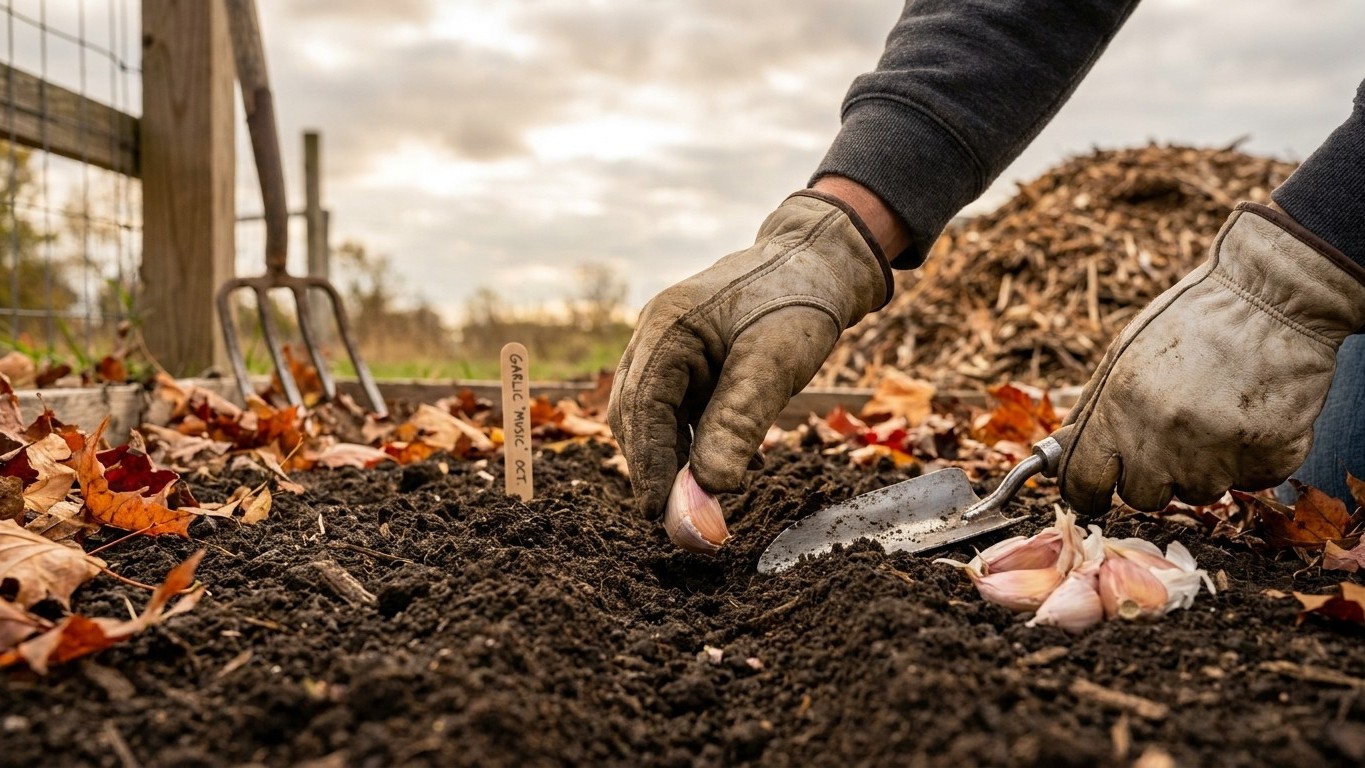

October in Illinois splits into two very different halves. Early in the month, soil is still warm enough to plant garlic, shallots, and spring-flowering bulbs, and to sow cover crops. By late October, the reference weather station’s typical first fall frost, October 24 to November 3, starts shutting down anything tender. Harvest winter squash, apples, and root crops before that window closes, and shift outdoor greens under protection.
What goes in the ground in October

The question that actually matters this month is not “what date is it” but “how warm is the soil, and how many weeks until the ground freezes.” Garlic and shallots want soil that has cooled into the 50s Fahrenheit but is still workable with a shovel, which across most of Illinois means anywhere from the first week of October through the third week, depending on how far north or south the garden sits. Plant cloves 4 to 6 weeks before the ground typically locks up for winter, root end down, about 2 inches deep, then mulch heavily once the top inch of soil has chilled. That mulch matters more than the planting depth: it buffers the freeze-thaw cycles that otherwise heave cloves right out of the ground.
Spring-flowering bulbs (tulips, daffodils, crocus, hyacinth) go in on the same logic. Soil temperature below 60 F at planting depth reduces the risk of premature top growth before winter, so early to mid-October is usually the safer end of the window statewide, with growers in the far south of Illinois able to push a bit later than those near the Wisconsin border.
Safe bets for this month
- Garlic and shallots, planted as soon as soil cools but before it becomes unworkable
- Spring bulbs: tulips, daffodils, crocus, allium
- Cover crop seed: winter rye, oats, crimson clover, tillage radish, sown while there is still enough growing season left for roots to establish
- Hardy transplants under a cold frame or low tunnel: spinach, mache, claytonia
What is a gamble
Direct-sown lettuce or spinach in open ground with no cover is a coin flip once frost risk climbs past the middle of the month, since germination slows sharply below 50 F and a hard freeze can wipe out young seedlings before they build real roots. Anything warm-season (tomatoes, peppers, squash, beans) is simply off the table statewide by October; soil and air temperatures work against them from the first week on, regardless of how mild a stretch of weather feels.
What to start under cover
Starting seed under cover in October is not about getting a jump on next season’s tomatoes. It is about squeezing one more layer of harvest out of hardy greens before the ground freezes solid, and that means counting backward from the frost window rather than forward from a sowing chart. If the first fall frost lands October 24 to November 3 at the reference station, and a crop like spinach or mache needs roughly 4 to 5 weeks of mild growth to build a root system strong enough to overwinter under a cold frame, the sowing deadline sits in the first week or two of the month for most of the state. Wait past that, and the seedlings enter winter too small to survive; sow too early and outdoor heat can still stall germination or bolt fast growers before cold sets in.
The two failure modes here mirror each other. Sow too early into soil that is still summer-warm and lettuce bolts or spinach germinates poorly. Sow too late and the plant never gets past the seedling stage before growth stops for the season, leaving nothing to harvest and nothing worth protecting under glass or plastic. A cold frame or a simple low tunnel with row cover buys roughly one USDA zone of extra hardiness, which is often the difference between a dead bed and a source of fresh greens into the darker months.
Anyone starting seed indoors for spring transplants (onions, leeks, some brassicas) is working on a completely different clock, one tied to the following spring’s last frost rather than to this month’s cold. That math belongs to a different part of the season, and starting those trays now, months ahead of transplant time, produces the same leggy, rootbound problem as starting garden vegetables too early in any other month.
What is ready to pick
October carries the heaviest harvest load of the year in much of Illinois, and getting the timing right on a handful of crops determines whether they store through winter or rot in a month. Winter squash and pumpkins are ready when the rind resists a fingernail and the stem has dried and corked over; cut with a few inches of stem attached, since a squash with a broken stem seals poorly and rots fast in storage. Apples are ready when a gentle upward twist separates the fruit from the branch without tearing.
Root crops (carrots, beets, turnips, parsnips) can stay in the ground through light frosts, which actually sweetens them, but should come out before the soil freezes hard enough to trap them. Potatoes want digging once the vines have died back and the skins have set, tested by rubbing a thumb across the surface; skins that scuff easily need another week or two of curing in a dark, dry spot before storage. Sweet potatoes are the one exception that cannot wait: a single hard frost on the foliage can start rot moving into the tubers underground, so they need to be out before that first frost window arrives.
Brassicas (cabbage, broccoli, Brussels sprouts, kale) generally improve with the first light frosts of the month, and many gardeners leave kale standing well past the point everything else has been cleared, picking leaves as needed. Anything already in storage from earlier harvests, onions, garlic, winter squash, deserves a check now for soft spots or sprouting, since one rotting onion in a bin can take down its neighbors within days.
The jobs that matter this month
October is when the garden’s fate for the next several months gets decided, and most of the work here has a hard deadline tied to that October 24 to November 3 frost window rather than to personal preference.
Tender bulbs like dahlias and gladiolus need to come out of the ground once frost has blackened their foliage but before a hard freeze damages the bulb itself; dig, dry, and store them in a cool, dark spot with slightly damp peat or vermiculite. Spent annuals and diseased plant debris (especially anything that carried powdery mildew, blight, or squash bugs) should come out of the beds now rather than getting left to overwinter pests and pathogens in the soil. A soil test taken this month, while the ground is still workable, gives results in time to amend before next spring, and lime in particular needs months to change soil pH, which makes fall the only realistic window for it.
Cover crops sown early in the month need a light raking-in and, ideally, a first watering if rain has been scarce, since a cover crop that fails to establish leaves bare soil exposed to winter erosion. Garlic beds, once planted, need a heavy mulch layer, straw or shredded leaves work well, applied once the soil has cooled but before the first hard freeze locks it in place. Fruit trees and berry canes are not ready for dormant pruning yet (that work waits for full dormancy later in the season), but this is the month to order bare-root stock and seed for next year, while the best varieties are still in stock rather than sold out. Tools that have spent the growing season in mud and sap deserve a cleaning and a sharpening before they go into winter storage, and any raised bed frames or fencing showing rot or sag are far easier to repair now than after the ground freezes around their posts.
What not to do in October
The most common mistake this month is trusting a warm afternoon over the soil thermometer. A run of 70-degree days in the middle of October does not mean it is safe to leave tender plants uncovered or to skip mulching garlic; the frost window at the reference station still lands October 24 to November 3, and a single overnight freeze after a mild stretch can undo weeks of growth on unprotected greens. Uncovering a cold frame or low tunnel on a warm day, then forgetting to close it back up before evening, is one of the more avoidable ways to lose a fall planting.
Feeding nitrogen fertilizer late in the season pushes soft, leafy growth that has no time to harden off before frost, which leaves that new growth more vulnerable to cold damage than if the plant had been left alone. This applies to lawns as much as vegetable beds: a nitrogen-heavy feed too late in fall encourages the kind of tender blade growth that browns off at the first hard freeze rather than storing energy in the roots.
Leaving sweet potatoes, dahlias, or other frost-tender crops in the ground “just a little longer” because the weather still feels mild is a gamble that fails as often as it pays off; a single overnight dip can cause more damage below ground than the temperature reading above ground would suggest. And pruning fruit trees or roses this month, hoping to get ahead on the job, can trigger a flush of new growth right before the cold arrives, growth that has zero chance of hardening off in time. That job waits for true dormancy.
Checking this against your own county
A statewide planting month is a starting point, not an instruction. Illinois spans USDA Plant Hardiness Zones 5a through 7b, and a garden near the northern border can see frost weeks earlier than one in the far south. Elevation, urban heat, and proximity to Lake Michigan all shift these windows further, and the frost dates cited here come from a single reference weather station, not a statewide guarantee; a suburban or rural garden nearby often sees its last spring frost later and its first fall frost earlier than that station records, sometimes by one to two weeks or more.
For county-level guidance, soil test recommendations, and localized planting calendars, the University of Illinois Extension is the reliable next stop, with staff and publications tuned to conditions well beyond what any single statewide date can capture.
Common questions
Is it too late to plant garlic in October in Illinois?
Generally no. Garlic planted 4 to 6 weeks before the ground freezes solid has time to root before winter, and October is the standard planting window across most of the state. Gardeners in the far north should lean toward the earlier half of the month.
Can I still start a vegetable garden in October in Illinois?
Only with hardy, cold-tolerant crops and protection. Cold frames or low tunnels can support spinach, mache, or claytonia sown early in the month, but open-ground vegetable planting is not a realistic option once frost risk climbs past mid-October.
What vegetables can survive a light frost in an Illinois garden?
Kale, Brussels sprouts, carrots, beets, turnips, and parsnips all tolerate light frost well, and several (kale and root crops especially) actually improve in flavor after the first cold nights. Tender crops like tomatoes, peppers, and squash have no frost tolerance at all.
When should I bring in tender bulbs like dahlias before frost?
Dig dahlias and gladiolus once frost has blackened the foliage but before a hard freeze reaches the bulb itself, then dry and store them in a cool, dark spot with slightly damp peat or vermiculite until spring.
Gardeners who plant by the Moon can check the October 2026 moon planting calendar, a tradition rather than a proven method.
Related guides
- What to Plant in Illinois in May
- What to Plant in Illinois in January
- What to Plant in Illinois in March
Elsewhere? See what to plant in October in every state and province.