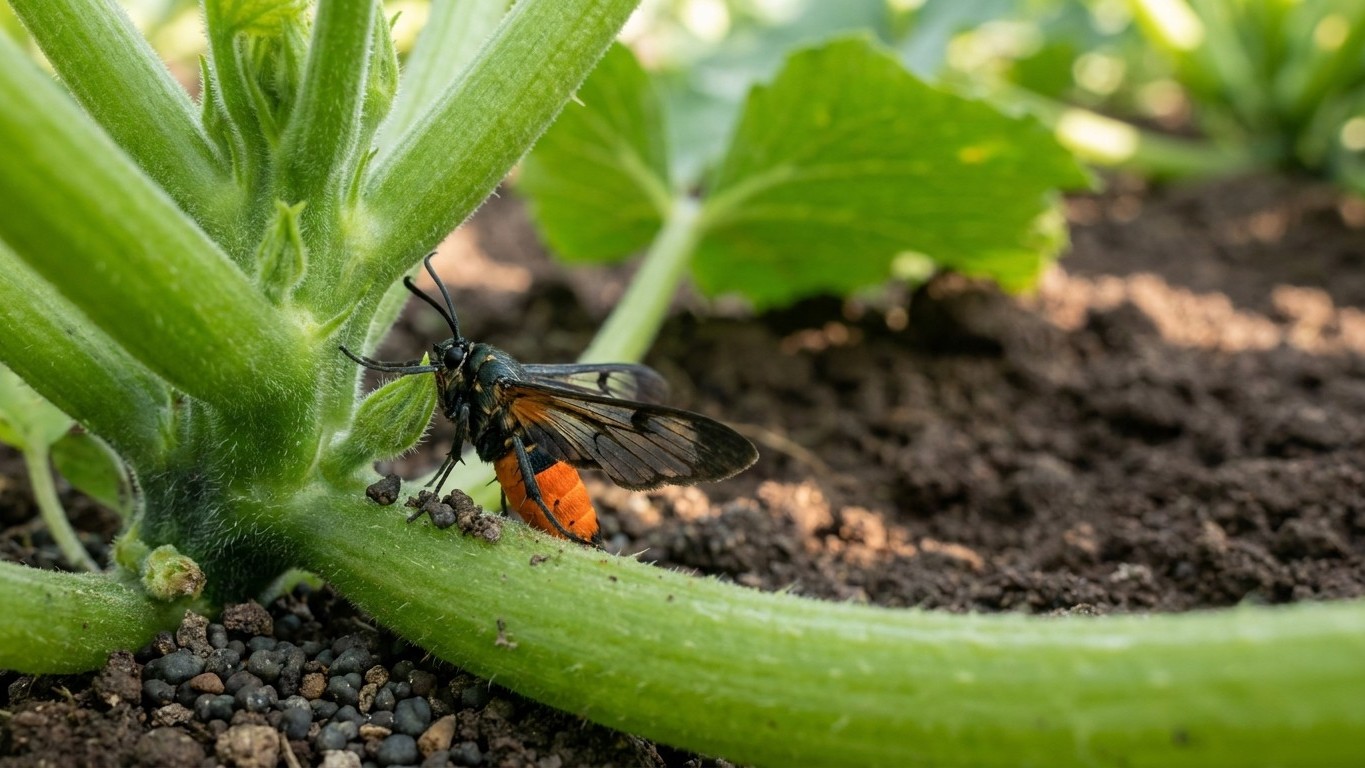

Squash vine borer moths start showing up in Manitoba gardens in late June to mid-July, roughly two to three weeks later than gardeners see them in states like Minnesota or Iowa. The short, cool prairie season means Manitoba typically gets one generation per year instead of two, and that single window is exactly when floating row covers, early scouting, and stem checks matter most. Miss it, and a healthy zucchini plant can collapse within days even with plenty of water.
Squash Vine Borer Timing in Manitoba’s Growing Season

The moth (Melittia cucurbitae) needs soil temperatures around 60°F before it emerges from the cocoons it spent the winter in, buried a few inches deep near last year’s squash bed. In Winnipeg and the Red River Valley, that threshold usually arrives by the third week of June. Farther north, toward Dauphin or The Pas, emergence can slide into early July.
Unlike most moths, this one flies during the day and looks more like a wasp than a typical garden pest, orange and black body, dark wings, roughly an inch long. Adult moths lay eggs individually at the base of squash stems, usually within a few inches of the soil line, over a stretch of four to six weeks. That’s the practical window Manitoba gardeners have to intervene before larvae tunnel inside.
Because the province only sees one generation, timing prevention correctly in late June carries more weight here than in warmer regions where a second wave hits in August. Get through that first flight successfully and the rest of the season is largely clear.
How to Spot the Damage Before It’s Too Late
The giveaway is sudden wilting of a single vine or leaf while the rest of the plant looks fine, often mistaken for drought stress or bacterial wilt. Check the stem near the soil line for a small entry hole surrounded by wet, greenish-yellow frass that resembles sawdust mixed with sap. That residue is the larva’s droppings pushed out as it feeds inside the hollow stem.
Zucchini, pumpkin, and other Cucurbita pepo varieties get hit hardest. Butternut squash (Cucurbita moschata) has a solid, less hollow stem that borers find harder to tunnel through, making it a smarter pick for anyone who’s lost plants before. Cucumbers and melons are rarely targeted.
Split a suspicious stem lengthwise with a sharp knife and you’ll usually find a cream-colored larva, up to an inch long, feeding inside. Finding it early, before the vine collapses, is the difference between saving the plant and pulling it out.
What Actually Stops Squash Vine Borer in Manitoba Gardens
Prevention beats rescue every time with this pest, and the tools that work are straightforward.
- Cover young plants with floating row covers or fine mesh at transplanting, sealing the edges with soil, and keep them on through most of the egg-laying window in late June and July.
- Remove covers briefly during flowering to hand-pollinate, or lift them for a few hours every couple of days so bees can reach the blossoms, then reseal.
- Plant a sacrificial trap crop like blue hubbard squash a few feet away; moths strongly prefer it over other varieties, drawing egg-laying activity away from the plants you actually want to harvest.
- Stagger plantings by two to three weeks so not every plant is vulnerable during peak moth activity at the same time.
- Wrap the lower 6 to 8 inches of stem in aluminum foil or nylon stocking at transplant time, creating a physical barrier moths can’t lay eggs through.
None of these methods require chemical spraying, and that matters in Manitoba where many gardeners are working small urban lots or acreages close to wells and dugouts.
Physical Barriers and Timing Tricks
Mounding soil over stem nodes as the vine grows encourages secondary rooting along the length of the plant. If the main base gets hit by a borer later, the vine can still pull water and nutrients through those extra root points and survive. This trick works particularly well with sprawling varieties like pumpkin and winter squash, which naturally root at nodes anyway.
Some gardeners inject a small dose of Bacillus thuringiensis (Bt) directly into the stem with a syringe once a week during the egg-laying period, aiming for the lower foot of stem where eggs concentrate. Bt targets caterpillar-stage pests specifically and breaks down naturally in soil, which makes it a reasonable option for anyone avoiding broader-spectrum insecticides near vegetable beds.
If They’re Already In: Rescue Techniques
Spotting frass early still leaves a path forward. Slit the stem carefully along its length above the damaged section, pull the larva out with tweezers, then bury that section of stem in moist soil to encourage new roots to form at the wound site. Plants often bounce back within a week if the surgery happens before the vine has wilted too far.
Waiting until the whole plant has collapsed rarely pays off. At that point the larva has usually moved further up the stem, and cutting it out does more damage than good. Pulling the plant and starting a later-planted backup, if you staggered your sowing, becomes the better move.
Garden Sanitation That Matters in Manitoba’s Cold Winters
Manitoba’s deep winter freeze is actually a gardener’s ally here, but only if the soil surface gets disturbed. Squash vine borer pupae overwinter in cocoons a couple of inches below the soil surface, close to where the previous year’s plants grew. Tilling the bed in fall exposes those cocoons to freezing temperatures and to birds looking for an easy meal, cutting down the population that emerges the following June.
Pulling and destroying vines right after harvest, rather than letting them sit and decompose in place, removes another overwintering site. Composting infested vines in a home pile that doesn’t reach high internal temperatures can actually let larvae survive the winter and re-infest the same garden the next season.
Rotating squash to a different part of the yard or plot each year, even a modest 10 to 15 feet away, reduces the odds that emerging moths find host plants right where they pupated. On small urban lots where rotation space is limited, container growing for at least one season can break the cycle just as effectively.
Manitoba Agriculture’s crop protection guides note that squash vine borer pressure tends to be lighter in the province than in Ontario or the northern US states, largely because of that single-generation life cycle tied to the shorter frost-free window. That’s a modest advantage, but it means a gardener who covers plants through the last week of June and first three weeks of July has likely dodged the worst of it for the year.
Related guides
- Squash vine borer in Ontario: When It Shows Up and What Stops It
- Squash vine borer in Maryland: When It Shows Up and What Stops It
- Squash vine borer in Massachusetts: When It Shows Up and What Stops It
- Squash vine borer in Newfoundland and Labrador: When It Shows Up and What Stops It
- Squash vine borer in South Carolina: When It Shows Up and What Stops It