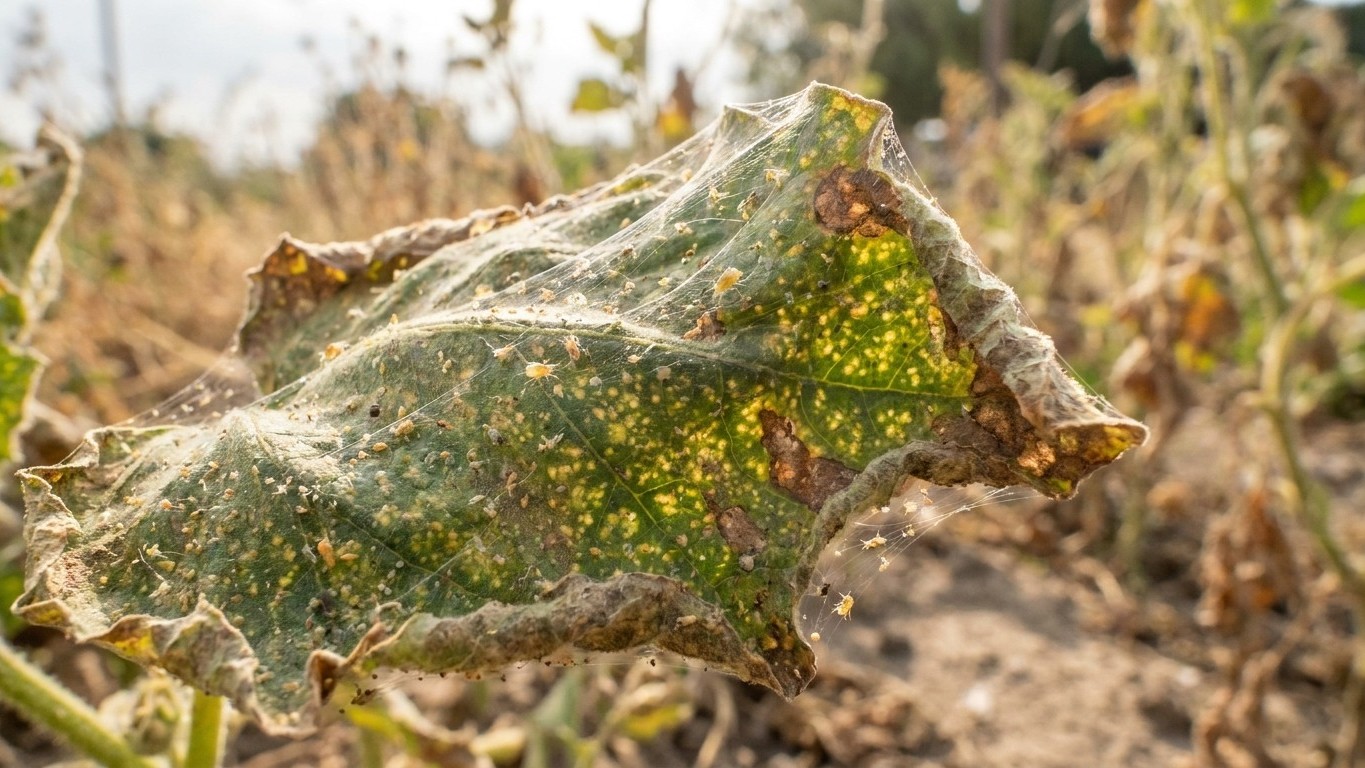

Spider mites turn up across Missouri from late June through September, with the sharpest outbreaks hitting during stretches of hot, dry weather in July and August. The fix isn’t one product but a sequence: knock down dust and drought stress first, then hit the mites directly with targeted sprays, and finally protect the predator insects that keep populations in check the rest of the year.
Missouri’s climate sets the stage for this pest more than most people realize. The state sits in a humid continental zone, but summer often brings three- to five-week dry spells where daytime highs sit in the 90s. That combination, heat plus low humidity, is exactly what the two-spotted spider mite (the species responsible for the vast majority of Missouri infestations) needs to reproduce fast. A single female can go from egg to egg-laying adult in five to seven days when temperatures run above 85 degrees. Compare that to spring, when the same life cycle takes closer to three weeks, and you start to see why a mild May garden can look shredded by mid-July.
When Missouri’s Weather Turns the Mites Loose

Drought is the real trigger, not just warmth. Plants under water stress produce less of the chemical signaling that normally keeps mite feeding in check, and their leaf tissue actually becomes more nutritious to the mites, richer in soluble nitrogen. Missouri State University’s climate data shows the state has logged several summers since 2020 with 20+ consecutive days of below-normal rainfall in July or August, and pest reports from extension offices in Boone, Greene, and St. Louis counties tend to spike within two to three weeks of those dry runs.
Roadside and driveway plantings get hit first and hardest. Dust settling on foliage disrupts the natural predators, mostly predatory mites and lacewings, that would otherwise keep two-spotted mite numbers low. Junipers and arborvitae along gravel drives in rural Missouri counties are a textbook example: the bronzing and needle drop that homeowners blame on drought is often mite damage compounded by dust, not heat alone.
The Plants Missouri Homeowners Watch Closest
Spider mites aren’t picky, but certain landscape staples in Missouri take the worst of it every season. Tomatoes and beans in vegetable gardens show stippling (tiny yellow-white dots on the upper leaf surface) usually by mid-July. Roses develop a dull, dusty look before anyone notices actual webbing. Evergreens, especially dwarf Alberta spruce and arborvitae hedges so common in Kansas City and St. Louis suburbs, can go from green to rust-brown in under three weeks once an infestation takes hold, and by then the damage on conifers is often permanent since they don’t push new growth to hide it.
Marigolds, impatiens, and burning bush also show up repeatedly in Missouri extension reports as high-risk plants near foundations and along south-facing walls, the hottest, driest microclimates most home landscapes have. If a homeowner has had mite trouble before, those are the spots to check first each June.
Spotting an Infestation Before It Spreads
The stippling comes before the webbing, and that gap is the window worth using. Hold a sheet of white paper under a suspect branch and tap it firmly. If what falls looks like moving pepper flakes, that’s spider mites, not just dust. Adult two-spotted mites measure about 1/50 of an inch, invisible to the naked eye as individual bugs, but visible in aggregate as a faint reddish or yellowish haze on leaf undersides.
Fine webbing between leaves and stems is a late-stage sign, meaning the population has already built for a few weeks. At that point, a single arborvitae or rose bush can host tens of thousands of mites. Missouri’s extension entomologists generally recommend checking susceptible plants every 7 to 10 days from late May through September, since a plant that looks fine on a Sunday inspection can show visible bronzing by the following weekend during a hot, dry stretch.
Why Late-Summer Infestations Look Worse Than They Are
By late August, Missouri gardens often show their worst mite damage of the year, but a lot of that foliage was already compromised weeks earlier. The visible bronzing and leaf drop show up after the population has started declining naturally as nights cool and humidity climbs in September. That doesn’t mean treatment is pointless late in the season. It means expectations should shift from “reverse the damage” to “stop it from getting worse and protect next year’s growth.”
What Actually Stops Spider Mites in Missouri Conditions
Water is the first and cheapest tool. A strong jet spray directed at leaf undersides, repeated every three to four days during dry spells, physically knocks mites off the plant and raises humidity enough to slow their reproduction. This single step, done consistently, handles light to moderate infestations on garden vegetables and smaller shrubs without any product at all.
For heavier infestations, horticultural oil and insecticidal soap remain the most reliable options, and both work by contact, meaning thorough coverage of leaf undersides matters more than the product choice itself. These should go on in early morning or evening, never during full afternoon sun, since oils and soaps can scorch leaves already stressed by Missouri’s summer heat. Neem oil offers similar contact control with some added repellent effect on future generations.
The mistake worth flagging clearly: broad-spectrum insecticides labeled for general garden pests (many pyrethroid products included) often make spider mite problems worse, not better. These chemicals kill predatory mites and other natural enemies far more effectively than they kill the pest mites themselves, since spider mites reproduce so fast they can rebound within days while their predators take weeks to recover. Extension entomologists across the Midwest have documented this “secondary pest outbreak” pattern repeatedly, and Missouri’s own high summer temperatures accelerate the mite side of that rebound even further.
Miticides and When They’re Worth Using
For established infestations on high-value plants (mature roses, specimen evergreens), a product labeled specifically as a miticide is the more targeted route. These are formulated to disrupt mite reproduction and development rather than just adult contact, which matters because mite eggs are resistant to most contact sprays. Rotating between two different miticide classes across a season, rather than relying on one repeatedly, slows the resistance that two-spotted spider mites are known to develop quickly given their rapid generation time.
Timing sprays for early morning, before temperatures climb past 85 degrees, also improves results and reduces plant stress, since spraying during Missouri’s peak afternoon heat can do as much damage to the foliage as the mites already have.
Keeping Mites From Coming Back Each Summer
Consistent watering during dry spells does more long-term prevention work than any spray. Plants that never enter drought stress simply aren’t as attractive to mites in the first place, and Missouri’s clay-heavy soils in many suburban developments actually compound drought stress since they shed water quickly once cracked and dry. A deep soak once or twice a week during rainless stretches, rather than frequent shallow watering, keeps root zones consistent and reduces the plant stress signal mites respond to.
Hosing down dusty foliage along driveways and gravel paths a few times each summer protects the predatory mites and insects that would otherwise handle small mite populations before they ever become visible. Reducing dust is one of the few control measures that costs nothing and requires no product at all.
One detail that surprises a lot of Missouri gardeners: spider mite eggs can overwinter in bark crevices and survive temperatures well below freezing, meaning a bad August outbreak on a juniper hedge often sets up a head start for the following June rather than resolving on its own once cold weather arrives.