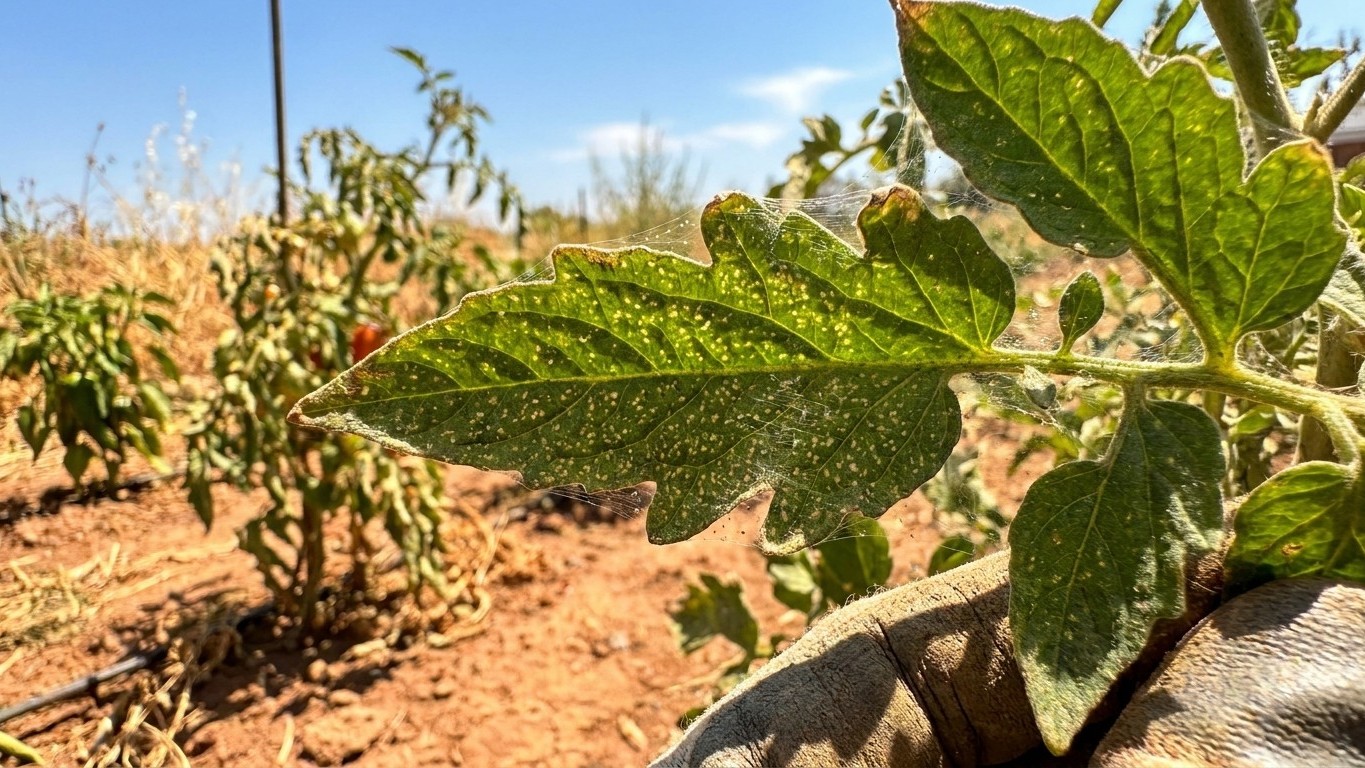

Spider mites turn up in Alabama earliest along the Gulf Coast counties, sometimes as early as March during a warm spring, and they stay active statewide through late fall whenever heat and dryness combine. The mites that actually cause the most damage here (the two-spotted spider mite and, on evergreens, the southern red mite) both slow down when humidity climbs and speed up again the moment a lawn or garden goes a week or two without rain. Stopping them comes down to three things: knocking back the dust and drought stress that mites love, hitting populations early with the right product before they explode, and protecting the predatory insects that keep numbers in check on their own.
Alabama’s Climate Sets the Mite Calendar

Alabama’s humid subtropical climate creates two distinct windows of risk. The first hits in late spring, roughly April through June, when temperatures climb into the 80s but rainfall hasn’t caught up yet. The second, often worse, arrives during the classic July-August dry spell that hits most of the state almost every summer. Spider mites reproduce fastest in hot, dry air, and a female can go from egg to egg-laying adult in five to twenty days depending on temperature. That means a small, unnoticed population on a stressed juniper or a container tomato can turn into a full-blown infestation in under three weeks.
Counties in north Alabama, around Huntsville and the Tennessee Valley, tend to see mite pressure peak a bit later, closer to mid-summer, since spring stays cooler there longer. Along the coastal plain near Mobile and Baldwin County, higher year-round humidity actually suppresses mites somewhat, but any stretch of dry heat still triggers a spike. Drought years matter more than average summers. In a year with below-normal rainfall, Extension offices across the state field noticeably more calls about bronzed, stippled foliage on everything from roses to red cedars.
Why Rain Doesn’t Always Solve the Problem
A hard rain can physically knock mites off leaves and wash away the fine webbing they spin, which helps. But a single storm doesn’t reverse an established infestation, and Alabama’s rain often comes in short, heavy bursts followed by more dry heat. Homeowners sometimes assume a summer thunderstorm “took care of it,” only to find the same plant looking worse two weeks later once conditions dry out again.
Spotting an Infestation Before It Spreads
The earliest sign is almost never webbing. It’s stippling: tiny, pale yellow or white specks scattered across the upper surface of a leaf, as if someone pricked it repeatedly with a pin. Hold the leaf up to the light and the damage looks almost lacy. This comes from the mites feeding on the underside, puncturing plant cells and sucking out the contents, which leaves those dead or dying spots behind.
As the population builds, leaves start to take on a bronze or gray cast, especially on evergreens like junipers, arborvitae, and Leyland cypress, which are common in Alabama landscaping. On broadleaf plants, azaleas and roses show yellowing that can look a lot like nutrient deficiency or a fungal issue at first glance. The giveaway is the webbing. Fine, silky strands appear between leaves, along stems, and at branch tips once numbers get high, and shaking a suspect branch over a sheet of white paper is one of the simplest confirmation tests: dislodged mites show up as moving specks, barely visible without a magnifying lens, but visible enough if you know to look.
Left unchecked, a heavy infestation can defoliate a shrub or kill a container plant within a few weeks during peak summer heat. The damage isn’t reversible on the affected leaves, so the goal is catching it at the stippling stage rather than waiting for bronzing to spread.
Which Plants Face the Highest Risk in Alabama Yards
Certain plants common in Alabama landscapes are practically magnets for spider mites, particularly when they’re planted in full sun with irregular watering. Roses top the list for home gardeners, along with tomatoes, beans, and marigolds in vegetable and flower beds. On the ornamental side, junipers, arborvitae, dwarf Alberta spruce, and Leyland cypress, all staples of privacy screens and foundation plantings across the state, are frequent hosts for the southern red mite, which actually prefers cooler weather and can be active from fall through spring on these evergreens.
Houseplants and porch containers deserve a mention too. Alabama’s mild winters mean plants like ivy, spider plants (ironically), and dwarf citrus often stay outside or on covered porches much of the year, and the dry indoor air of a heated home in January can spark mite activity that homeowners don’t expect during cold months. It’s one reason infestations sometimes seem to appear “out of nowhere” in late winter, well before outdoor mite season would suggest.
What Actually Stops Spider Mites
Cultural practices do more heavy lifting than most people expect. Consistent, deep watering matters more than frequency. Plants under drought stress produce weaker cell walls and less of the natural chemical defenses that make foliage less palatable to mites, so a rose bush watered deeply once or twice a week holds up far better than one getting shallow daily sprinkles. Avoiding excess nitrogen fertilizer also helps, since lush, tender new growth is exactly what mites prefer to feed on.
A strong jet of water from a garden hose, aimed at the undersides of leaves every few days during a dry spell, physically dislodges mites and their eggs and disrupts the webbing they need to move and reproduce efficiently. This works especially well on roses and vegetable plants and costs nothing beyond a few minutes of attention.
Biological Control Often Gets Overlooked
Predatory mites, ladybugs, lacewings, and certain thrips all feed on spider mite eggs and adults, and Alabama yards that avoid broad-spectrum insecticide sprays generally support healthier populations of these natural predators. This is one of the more counterintuitive facts homeowners run into: spraying a general-purpose insecticide on a plant to control aphids or beetles can actually make a mite problem worse, because those products often kill off the predatory insects that were keeping mites in check while barely touching the mites themselves, which have some natural tolerance to many common pesticides.
When intervention becomes necessary, horticultural oil and insecticidal soap are the go-to options for most home situations, since both work by smothering mites on contact rather than through systemic toxicity, and both break down quickly without leaving residue that harms beneficial insects. Coverage matters enormously here. Since mites live and feed on leaf undersides, a spray that only hits the top surface accomplishes almost nothing. For heavier infestations, miticides labeled specifically for spider mites offer stronger control, but rotating between different active ingredients across a season helps prevent the mites from building resistance, which happens faster with this pest than with most garden insects because of how quickly they reproduce.
Timing sprays for early morning or evening, when temperatures sit below 85 degrees, prevents leaf burn from oil-based products and also avoids the hottest part of the day when mite activity (and plant stress) peaks anyway. Two or three applications spaced five to seven days apart usually catch newly hatched mites that survived the first round, since a single treatment rarely kills eggs.
Alabama’s Seasonal Pattern in Practice
Homeowners who track their own yard through a full year tend to notice the pattern repeats predictably. A dry April stretch brings stippling on roses. A brutal July without rain pushes junipers toward bronze. A cold, dry January inside a heated living room sets houseplants back. None of this is random, and none of it requires waiting until damage is severe to act. Checking the undersides of vulnerable plants every week or two during hot, dry stretches, and keeping a hose or a bottle of insecticidal soap within reach, catches most infestations while they’re still a minor annoyance rather than a plant-ending event.
Alabama’s mix of long hot summers and mild winters means there’s rarely a true off-season for spider mites statewide, even if any single mite species has its preferred window. That’s worth keeping in mind for anyone assuming pest pressure ends once the calendar hits October.
Related guides
- Spider mites in Georgia: When It Shows Up and What Stops It
- Spider mites in Arizona: When It Shows Up and What Stops It
- Spider mites in British Columbia: When It Shows Up and What Stops It
- Imported cabbageworm in Alabama
- Mexican bean beetle in Alabama
- Corn earworm in Alabama
- Spider mites in California: When It Shows Up and What Stops It