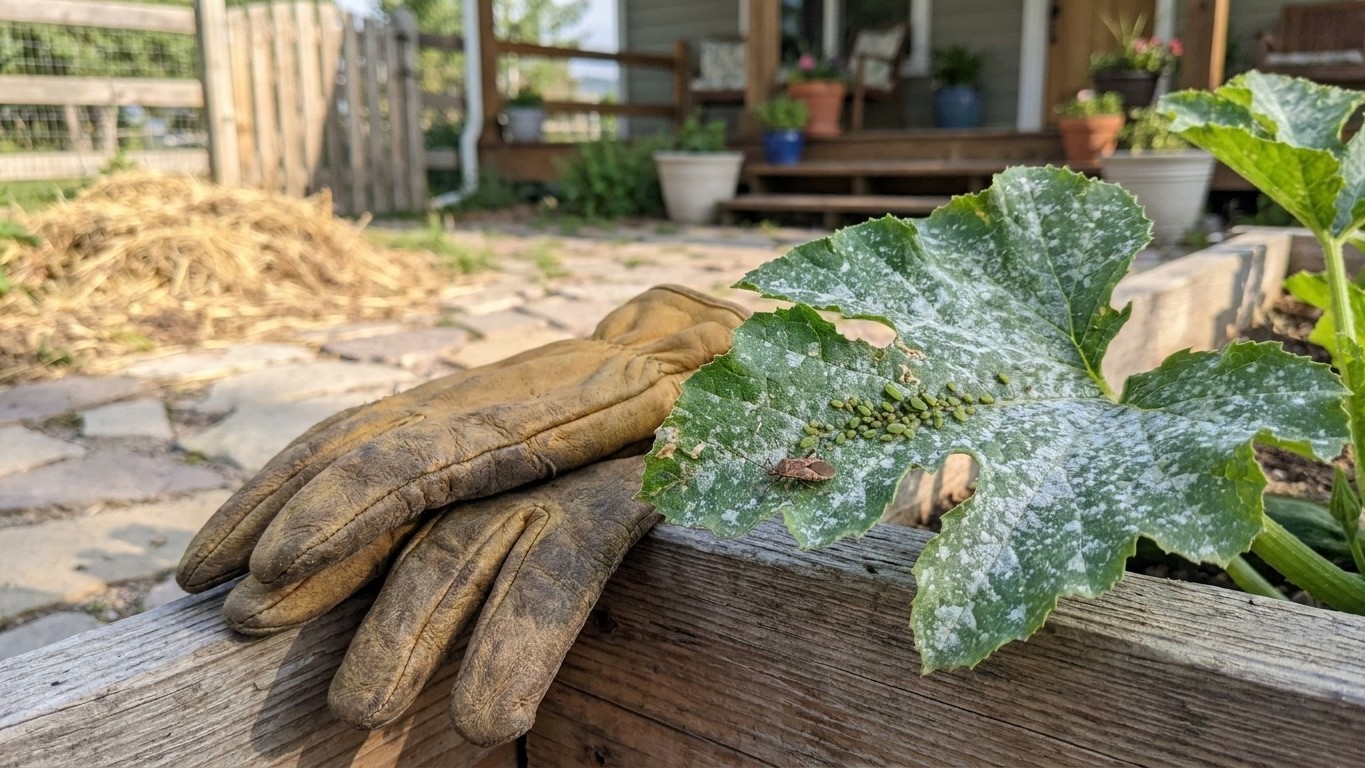

Only five garden pests really matter here, and Grasshoppers in Montana are the ones that’ll wreck a garden if you let them get ahead of you. They hatch from eggs sitting in your soil all winter, so by the time you see full-grown hoppers jumping around, they’ve already been chewing for weeks. The other four — miller moths, Thrips in Montana, Social wasps in Montana, and stink bugs like the Brown marmorated stink bug in Montana — show up too, but on their own schedule and in their own way. Right now, as soil warms, get down at the base of your plants and look for tiny wingless nymphs before they turn into a problem you can’t spray your way out of.
What Montana gardens actually deal with

Montana’s climate does some of the pest control for you. Long, cold winters kill off species that thrive in milder, wetter states, and the dry air across most of the state keeps humidity-loving pests and the diseases that ride along with them in check. What’s left is a short list, and Montana State University Extension’s Urban IPM program names only five garden pests worth tracking statewide. That is a fraction of what most state extension services publish, and it tells you something about growing conditions here before you even open a single fact sheet. Gardeners in equally dry, high-plains country face similar grasshopper pressure, and the Garden Pests in Nevada guide covers a comparable pattern from a different angle.
Miller moths

Miller moths are the adult stage of the army cutworm, and the adult itself does no feeding damage in the garden. It is drawn to porch lights and window screens in large, sometimes startling numbers as it moves through on its way to higher elevation feeding grounds, a seasonal event covered in more detail in this Miller moths guide. The damage, when it happens, comes earlier, from the cutworm larvae feeding on seedlings and turf grass. If you see clipped seedling stems at ground level before the moths show up, that is the larval stage at work, not the moth itself. Cutting back on outdoor lighting during the moth flight reduces how many end up clustered on your house, but it does nothing for larvae already in the soil.
Grasshoppers

Grasshoppers overwinter as eggs in the soil, hatch into nymphs in mid-to-late spring, and stay active as adults into late summer and early fall, per MSU Extension. Nymphs are small, wingless, and look like scaled-down adults. Full-grown adults run yellowish-brown to olive, an inch or two long, with the oversized hind legs that make them jump rather than fly when disturbed. Damage shows up as ragged chewing along leaf edges, working inward until a heavily infested plant is reduced to stems. Row covers over seedlings, netting on vulnerable crops, and bait insecticides applied while grasshoppers are still small nymphs all work better than spraying adults, which are harder to kill and quick to move on to the next yard.
Thrips on vegetables and flowers

Thrips are tiny, slender, and easy to miss at a glance, pale yellow to dark brown and about the width of a pencil line. Both nymphs and adults rasp at leaf and petal surfaces to feed, leaving behind a silvery, stippled scarring and sometimes streaked or distorted new growth. Shake a suspect leaf over a white sheet of paper and look for tiny moving specks to confirm. Sticky traps in blue or yellow catch adults and give you an early warning, and insecticidal soap applied directly to infested foliage handles active populations without wiping out the predatory insects that keep thrips in check on their own.
Social wasps

Social wasps build gray, papery nests with a honeycomb cell structure, tucked under eaves, inside shrubs, or in cavities at ground level. The insect itself is banded yellow and black, a half inch to three-quarters of an inch long. They do little direct damage to plants beyond stripping small amounts of wood fiber for nest material, but they will defend a nest aggressively and forage aggressively around ripening fruit and sugary drinks left outside. The most effective move is finding and removing a nest early in the season while it is still small, rather than waiting until it houses a full colony by late summer.
Brown marmorated stink bug

The brown marmorated stink bug has a shield-shaped body, mottled brown, about 5/8 inch long, with alternating light and dark bands along the abdomen’s edge and white banding on the antennae. Both nymphs and adults feed with piercing mouthparts, leaving behind sunken, discolored blotches on fruit and vegetables, sometimes called cat-facing. It is a newer arrival in much of the state, so monitoring matters more than any single control measure. Pheromone traps and hand picking work for backyard-scale populations, and sealing gaps around windows and siding in fall matters too, since adults overwinter indoors and turn into a house pest as much as a garden one.
Telling damage apart

Reading the damage correctly before you act saves a season. Chewed leaf edges and ragged holes point to a chewing insect, grasshoppers being the obvious Montana culprit, and the damage tends to start at the margins and work inward. Fine, silvery stippling or a scarred, sandpapery texture on leaves and petals points to a rasping feeder like thrips, which scrape rather than bite. Sticky residue on leaves, sometimes with a black sooty film growing on top of it, means a sap-feeding insect is at work somewhere on the plant, often higher up than the mess itself suggests.
Insect, disease, or watering fault
Wilting is the trickiest symptom because three completely different problems produce it. A plant wilting despite moist soil usually points to root or vascular disease, not a pest at all. A plant wilting because the soil is bone dry is a watering fault, and the fix is simply more water on a consistent schedule. A plant wilting with visible chewing damage, missing roots, or insects present at the base is pest-driven, and no amount of watering will fix it. Check the soil moisture with a finger before assuming a pest is responsible, since watering faults are far more common than actual infestations and cost nothing to rule out first.
Disease symptoms tend to show as spots, blotches, or a powdery or fuzzy coating on leaf surfaces, spreading gradually across a plant rather than appearing as clean chew marks or discrete holes. If you see a pattern that does not match any of the five pests above, an unusual leaf spot, a sudden dieback, a fuzzy mold, it is worth treating it as a possible disease issue and getting a positive identification rather than reaching for an insecticide that will not touch it.
When each one shows up
Timing in Montana tracks temperature and plant growth stage more than the calendar. Grasshopper eggs sit in the soil over winter and hatch in mid-to-late spring, with adults staying active into late summer and early fall, according to MSU Extension. That means the window to catch nymphs while they are small and easy to control runs through spring into early summer, well before the garden looks obviously damaged.
Miller moths pass through as a migration event, showing up around porch lights in numbers that can seem alarming for a stretch before thinning out as they move on toward higher ground. Thrips build up gradually through the warm months, favoring new growth and open flowers, so the best time to start checking is as soon as plants put out their first flush of tender leaves. Social wasp colonies start small in spring as a single queen builds the first nest cells, then grow through summer, reaching their largest and most defensive size by late summer and early fall.
What to watch for as the season turns
The brown marmorated stink bug follows a similar arc, becoming active as temperatures warm and feeding through the growing season, then seeking shelter indoors as fall approaches. In practice, that means the highest-risk period for fruit and vegetable damage from stink bugs runs alongside the main harvest window, which is exactly when gardeners are least likely to be checking for a new pest. Scouting in spring costs almost nothing and catches every one of these five pests at its most vulnerable, smallest stage, whether that is a grasshopper nymph, a first wasp nest, or the earliest thrips on new growth.
What actually works
Prevention beats intervention for every pest on this list, and it costs less in the long run. Floating row covers over young seedlings keep grasshoppers and thrips off plants during the most vulnerable early growth stage, and they come off once plants are established enough to tolerate some feeding. Removing garden debris and weedy edges reduces overwintering and hiding spots for several of these pests at once. Encouraging predatory insects, ground beetles, lacewings, and parasitic wasps among them, by planting a mix of flowering species and cutting back on broad-spectrum insecticide use, keeps thrips and soft-bodied pests in check without any spraying at all.
Where intervention earns its place
Targeted intervention makes sense once prevention has clearly failed or a pest population has crossed a visible damage threshold. Bait insecticides timed to young grasshopper nymphs work far better than sprays aimed at fast-moving adults. Insecticidal soap handles active thrips populations on contact without the residual effect that also kills the predators working on your behalf. Wasp nests found early, while still small and undefended, can often be removed by hand at dusk when activity is lowest, though a nest that has grown large by late summer is safer left to a pest control professional.
Some popular remedies do essentially nothing. Ultrasonic or sonic pest repellers marketed for grasshoppers and wasps have no real evidence behind them, and neither do most garlic or pepper sprays used at home-garden concentrations against an established grasshopper population. Dryer sheets tucked into garden beds as a general bug deterrent are another one to skip. Time spent on those is time not spent on row covers, hand picking, or the early-season scouting that actually changes the outcome. If your part of the state farther west sees a wetter climate and a longer pest list, the Garden Pests in Oregon guide shows how those extra control measures scale up.
What control costs
Cost comparisons here are relative, not exact, since prices vary by supplier and by how large an infestation has already grown. In general, hand picking and scouting cost time rather than money, and they are the cheapest option for a home garden by a wide margin, though they require checking plants regularly rather than once a season. Barriers like row cover and netting cost more upfront but are reusable across seasons, which brings the per-season cost down fast if you store them properly. Biological controls, meaning the predatory insects you attract rather than buy and release, cost nothing directly but take longer to establish and will not save a plant that is already stripped. Sprays and baits sit in the middle: cheap per application, but the cost adds up over a season if repeat treatments are needed every couple of weeks during an active outbreak.
| Method | Relative cost | Time required | Repeat frequency |
|---|---|---|---|
| Hand picking / scouting | Lowest | Frequent, short checks | Ongoing through the season |
| Row cover / netting | Moderate upfront, low ongoing | One-time setup, occasional adjustment | Reused season to season |
| Encouraging predators | Low | Slow to establish | Builds over multiple seasons |
| Sprays and baits | Low per use, adds up over a season | Application plus wait time | Every few weeks during an outbreak |
For most home gardens, a combination of hand picking, physical barriers, and encouraging predators covers the bulk of what these five pests cause, with sprays reserved for the point where damage is already outrunning everything else.
Local help
For anything outside these five pests, or for a positive identification you are not confident making from a photo alone, Montana State University Extension is the body that tracks outbreaks and identifies specimens for gardeners statewide. Reach the wider extension network through the Montana State University Extension site, which can direct you to the county office nearest you. For other seasonal tasks across the state, our Montana guides cover the rest of the growing calendar.
Common questions
Do I need to worry about brown marmorated stink bugs if I haven’t seen them yet?
Not urgently, but it is worth learning the shield-shaped, mottled brown look now rather than after they show up. MSU Extension tracks this pest partly because it is a newer arrival in parts of the state, so an early, correct identification matters more than with an established pest like grasshoppers.
Are the miller moths swarming my porch light going to eat my garden?
No. The adult moth clustered around lights at night does not feed on garden plants. Any feeding damage from this insect happened earlier, at the army cutworm larval stage, usually before you ever noticed the moths themselves.
Why didn’t row covers stop my grasshopper damage?
Row cover only works if it goes on before nymphs are already established underneath it, and it has to be sealed at the edges. A cover placed over soil that already has hatched nymphs in it traps the problem inside rather than keeping it out.
Is it worth spraying for thrips if I only see a little stippling?
Light stippling on a few leaves usually does not justify a spray. Insecticidal soap or a stronger treatment makes more sense once damage is spreading to new growth or flower buds, since early, light feeding rarely affects the plant’s overall health.