
Across Nevada, September splits into two very different gardens: in the low desert around Las Vegas, soil is still warm and frost is months away, so there’s real room to sneak in one more quick crop before shifting to fall greens. At elevation, in Reno, Carson City and the mountain valleys, the frost clock is already running, and the safe list shrinks fast to hardy greens, alliums and peas.
What goes in the ground in September

The calendar says September everywhere in Nevada, but the ground doesn’t agree with itself from one end of the state to the other. Nevada spans USDA Plant Hardiness Zones 4a to 10a (USDA Plant Hardiness Zone Map, 1991-2020 normals), one of the widest spreads of any state in the country, and that range is the whole story here. What decides whether a seed makes it to harvest isn’t the date on the wall, it’s soil temperature and how many weeks of frost-free growing are left in your specific valley.
In the low desert around Las Vegas, freeze data from NOAA NCEI’s 1991-2020 climate normals puts the first fall freeze between December 8 and December 23, an unusually late window driven by the urban heat island around the airport station. That figure is a Las Vegas number, not a Nevada number, and it should never be used to plan a garden in Pahrump, Reno or the Carson Valley, where elevation and open desert push frost weeks or months earlier. Treat it as one data point from one reference city, and check your own county before trusting it.
With that caveat firmly in place, here’s what actually goes in the ground this month, sorted by how much runway is left:
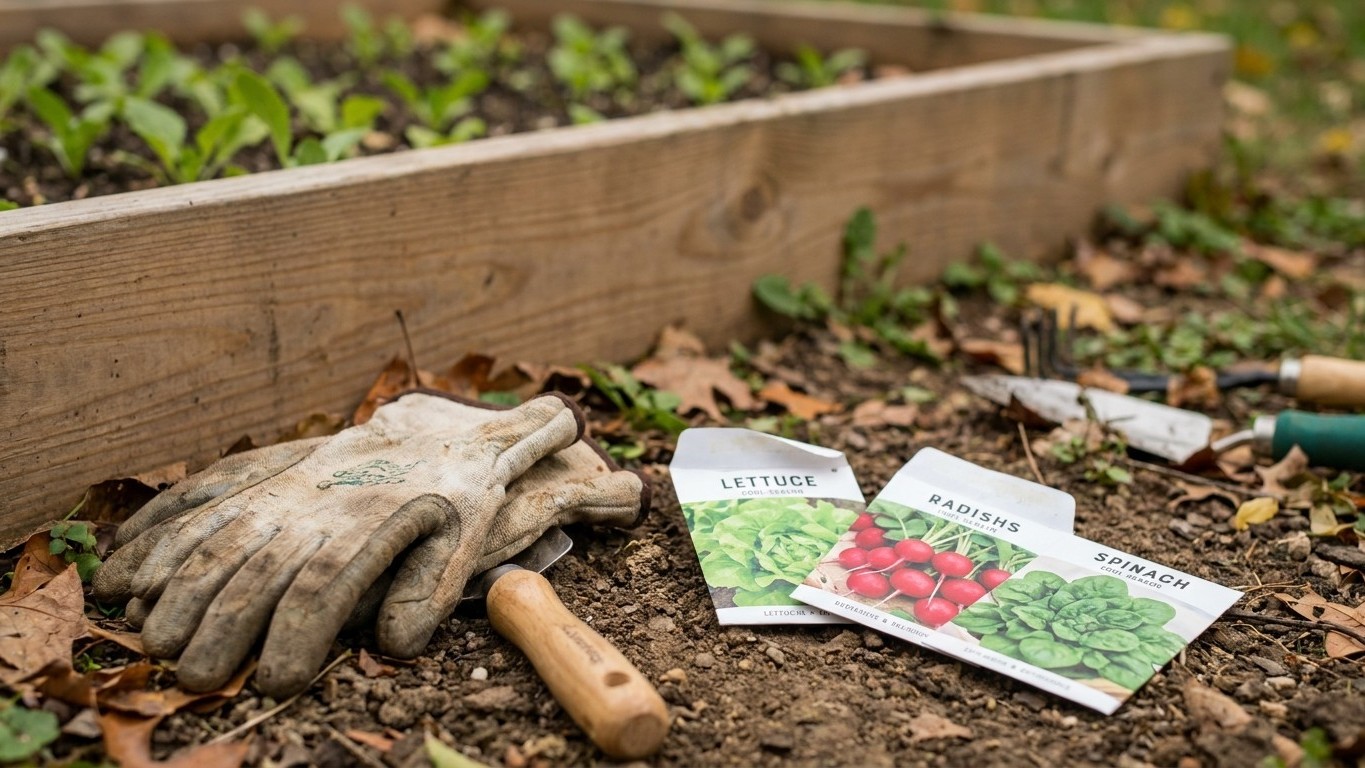
- Low desert valleys (Las Vegas area and similar elevations): a last fast round of beans or summer squash if you want to gamble on the tail end of warm weather, but a safer bet is direct-sowing spinach, lettuce, arugula, radish and turnip for a fall harvest
- Mid-elevation basins (Reno, Carson City and similar valleys): garlic and shallot cloves where the bed is workable, plus peas, kale, mustard greens and cold-hardy lettuce varieties
- High mountain valleys and anywhere frost is already close: only the fastest-maturing hardy greens, or hold direct-sowing altogether and shift energy to cold frames and low tunnels instead
Garlic deserves a specific mention: many Nevada gardeners plant cloves in October, but where soil stays workable and frost is still weeks off, an early-September start gives roots extra time to establish before winter dormancy.
What to start under cover
The trick with cover-grown crops this month is to count backward from your own frost window instead of forward from today’s date. Say your county’s first fall frost typically lands in early October. A crop that needs 60 days to reach harvest should already be in the ground by early August to finish outdoors, which means anything you’re starting now in September has to move under a cold frame, row cover or south-facing cloche to pick up the extra weeks it’s missing. A 30 to 40 day crop, spinach or a loose-leaf lettuce, still has room to go directly into open soil in most of the state’s mid and low elevations.
There are two ways this goes wrong. Start too early indoors under lights and the seedlings get leggy and rootbound waiting for a transplant slot, arriving at the garden stressed and slow to establish. Start too late, especially at elevation, and the crop is still young when the first hard cold arrives, leaving nothing to show for the work. The safest approach is to sow in successive small batches under cover rather than one large batch on a single day, so at least one round hits its window right.
Cold frames and unheated hoop houses earn their keep this month. A frame built now, before the first frost actually arrives, buys weeks of extra growing time for greens and root crops that would otherwise stall in the open. In the mountain valleys, that structure can be the difference between harvesting through October and losing the bed entirely to an early freeze.
What is ready to pick
September is a genuine harvest month in most of Nevada, not a lull between seasons. In the low desert, tomatoes, peppers and melons are still coming in, and winter squash planted earlier in the summer is starting to harden its rind, the signal that it’s ready to cut and cure. Corn and beans planted in late spring are finishing up in home gardens statewide. In the northern valleys and foothill orchards, apples and grapes are hitting their stride, and this is the stretch where a lot of the year’s fruit actually gets picked.
Garlic and onions planted earlier in the year should already be out of the ground and curing in a dry, shaded spot; check that curing garlic for soft necks or mold before it goes into long-term storage. At elevation, where the first frost is much closer than it is in the low desert, tomato and pepper plants can go from productive to done almost overnight. Watch the overnight forecast and pick green tomatoes before a hard frost rather than losing the whole crop to it, since green tomatoes will still ripen indoors on a windowsill.
If a squash, melon or tomato plant looks tired but the fruit still feels firm and the color is full, it’s worth picking now rather than gambling on another week, particularly in gardens above 5,000 feet where the weather can turn faster than the calendar suggests.
The jobs that matter this month
A few tasks done now pay off directly, and skipping them costs real harvest later. Mulching ahead of the first cold nights matters most at elevation, where soil temperature can drop fast once frost starts arriving; a few inches of straw or shredded leaves over root crops and greens buys extra weeks of harvest even after the air turns cold. Watering rhythm needs to shift too, as shorter days and cooler nights mean plants use less water than they did in July, so cutting back frequency while watering more deeply at each session keeps roots healthy without waterlogging beds that are already cooling.
Succession sowing is still worth doing in the low and mid elevations: a new round of quick greens every 10 to 14 days, planted while soil is still workable, keeps the kitchen supplied well into fall. Pest scouting shouldn’t slip either. Squash bugs, aphids and grasshoppers are all active in Nevada’s high desert through September, and catching an infestation now, before plants go into their final push, is far easier than dealing with it once the crop is nearly finished.
This is also the month to get ahead of what’s coming. Order garlic sets before the good varieties sell out, since suppliers often run through their stock well before the October planting window most Nevada gardeners use. Start building or repairing cold frames and row cover hoops before the first frost forces the issue. Clean up spent summer plants promptly, since old squash vines and tomato debris left in the bed give pests and disease a place to overwinter close to next season’s soil.
Fruit trees and perennials
Hold off on major pruning of fruit trees and canes until they’re fully dormant, but this is a good window to remove any obviously diseased or damaged wood and to stop feeding nitrogen to trees and perennial beds, since new growth pushed this late won’t have time to harden off before cold arrives.
What not to do in September
The most common mistake in Nevada gardens this month is trusting a warm afternoon over the calendar. A string of 80-degree days in the mountain valleys doesn’t mean frost isn’t close; it just means the cold arrives at night, often with little warning, and tender transplants set out during a warm spell can be lost to a single cold snap days later. The safer move is to plant by your region’s known frost pattern, not by how the air feels at 2pm.
A related error is uncovering row covers or cold frames too early once the weather turns mild, then getting caught out when temperatures drop again overnight. Leave protection in place a little longer than feels necessary, especially at elevation, where a warm week can be followed by a hard freeze with almost no transition.
Feeding nitrogen at the wrong point in the season is another trap, particularly with fruit trees, roses and other perennials. Nitrogen pushes soft new growth, and that growth doesn’t have time to harden off before the season’s first freeze, leaving the plant more vulnerable than if it had been left alone. Hold off on nitrogen-heavy feeding once fall approaches and let woody plants settle into dormancy on their own schedule.
Finally, don’t apply Las Vegas’s December frost window to the rest of the state. It’s a genuinely late date driven by an urban heat island, and using it to plan a garden in Reno, Carson City or any mountain valley will get transplants killed weeks before the gardener expects it.
Checking this against your own county
A statewide month is a starting point, nothing more. Nevada’s elevation swings from below 500 feet near the Colorado River to well over 6,000 feet in the Sierra foothills and mountain basins, and that difference alone can move a frost window by six to eight weeks in either direction. Local microclimates, lake effect near Tahoe, and even which side of a valley a garden sits on can shift things further.
Before committing seed or transplants to the ground, check the actual conditions in your county rather than relying on a single reference city. The University of Nevada Cooperative Extension publishes county-level planting guidance and frost data that will always be closer to the truth for your specific garden than any statewide average.
Common questions
When is the last spring frost in Nevada?
For the Las Vegas area specifically, NOAA NCEI’s 1991-2020 climate normals put the 30 to 70 percent freeze probability window between January 7 and February 1. That figure reflects an urban desert extreme and runs weeks to months earlier than areas at elevation like Reno or Carson City, so check your county extension office rather than applying it statewide.
Can I still plant tomatoes in Nevada in September?
In the low desert, where frost is still months away by NOAA’s data, there’s a narrow case for a very fast-maturing variety, but most gardeners are better off shifting to fall greens. At elevation, where frost can already be close, new tomato transplants set out now are unlikely to produce before the season ends.
What USDA hardiness zone is Nevada?
Nevada spans USDA Plant Hardiness Zones 4a to 10a, based on the USDA Plant Hardiness Zone Map’s 1991-2020 normals. That’s one of the broadest ranges of any state, and it means a planting date that works in one Nevada county can be completely wrong two hours away.
Is September the right time to plant garlic in Nevada?
Many Nevada gardeners wait until October to plant garlic cloves, but where the bed is still workable and frost remains weeks off, an early-September planting can give roots extra time to establish before the cloves go dormant for winter.
Gardeners who plant by the Moon can check the September 2027 moon planting calendar, a tradition rather than a proven method.