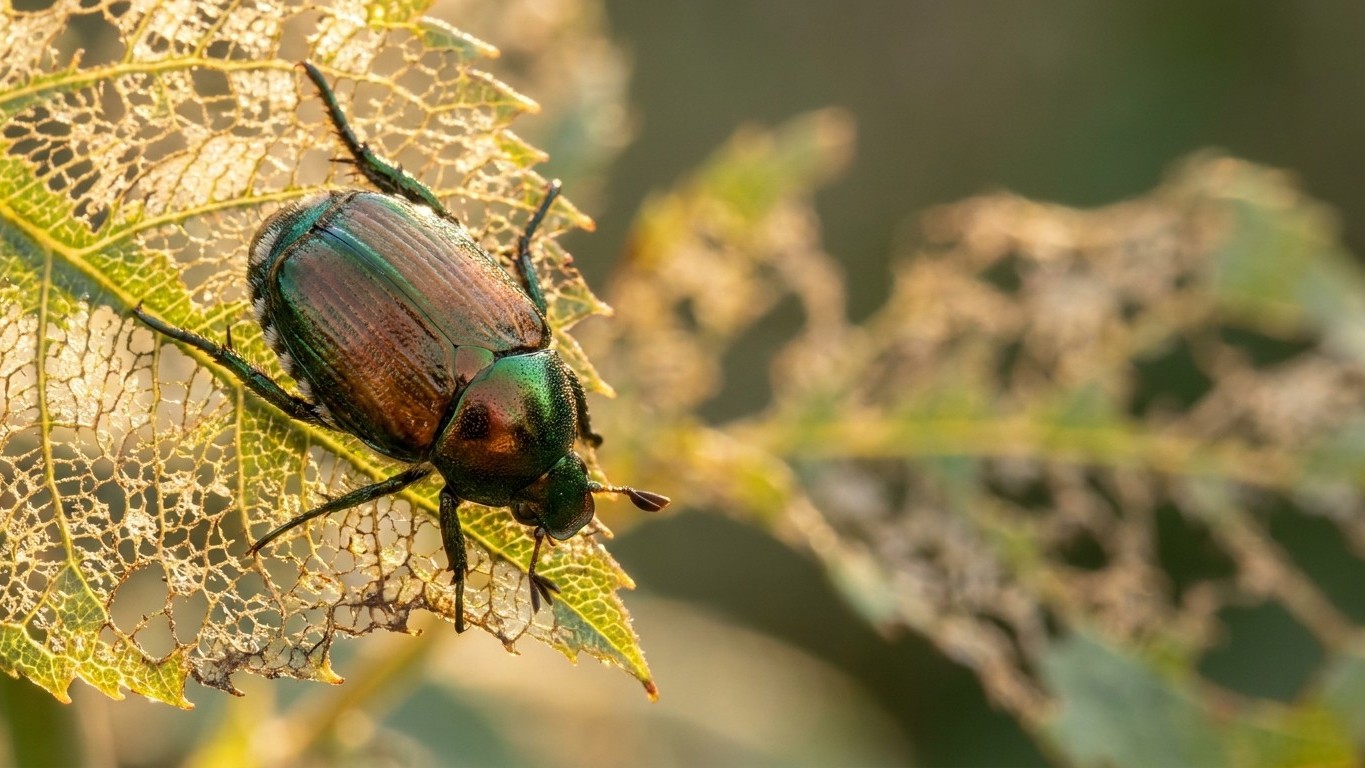

Japanese beetles turn up in New Hampshire from late June through early September, with the heaviest feeding damage hitting gardens and landscapes during the last two weeks of July. Adult beetles skeletonize leaves on roses, birch trees, grapevines, and linden trees, while their grubs chew through lawn roots from below starting in August. The most reliable control combines physical removal of adults during peak weeks, targeted grub treatments in late summer, and skipping pheromone traps entirely, since they tend to pull more beetles into your yard than they catch.
When Japanese Beetles Actually Show Up in New Hampshire

New Hampshire’s cooler spring soil temperatures push the Japanese beetle calendar back compared to states like Connecticut or New Jersey. Adults typically emerge from the ground starting around June 20-25 in southern counties like Hillsborough and Rockingham, and slightly later, into early July, in the White Mountains region and the North Country.
Peak feeding activity runs from mid-July through mid-August. This is when you’ll see clusters of beetles mating and feeding on the same plants simultaneously, a behavior driven by aggregation pheromones that make infested plants smell attractive to more beetles flying in from neighboring yards. By early September, adult activity drops off sharply as the beetles die naturally after their six-to-eight-week above-ground lifespan.
Underground, the story continues. Adult females lay eggs in turf throughout July and August, and the grubs that hatch start feeding on grass roots by late August through October. This is the stage that damages lawns, not the adults you see on your roses.
How to Confirm It’s a Japanese Beetle
Japanese beetles measure about 3/8 inch long, with a metallic green head and thorax and coppery-bronze wing covers. The giveaway feature most people miss: a row of five small white tufts of hair along each side of the abdomen, visible if you flip one over or catch it from the side in good light.
They’re easy to confuse with a few other beetles common in New England yards. June bugs are larger, duller brown, and fly clumsily at night rather than feeding in daylight clusters. Rose chafers, which also show up in New Hampshire gardens, are tan and long-legged rather than green and compact. If you’re seeing beetles skeletonizing leaves in bright midday sun in groups of a dozen or more on a single rose bush or birch branch, Japanese beetle is the most likely culprit in this region.
Plants That Take the Worst Hits
Japanese beetles have documented feeding preferences on more than 300 plant species, but in New Hampshire landscapes, a shorter list absorbs most of the damage:
- Roses (buds and flowers, not just leaves)
- Birch trees, particularly gray and paper birch
- Linden and littleleaf linden trees
- Grapevines and raspberry canes
- Crabapple and flowering cherry trees
Skeletonized leaves, meaning the beetles eat the tissue between veins and leave a lace-like skeleton behind, are the clearest visual signature. A birch tree that looks scorched by late July, with brown, papery leaves still attached, has likely been hit hard.
What Actually Stops Them
Control works best as a layered approach across the season rather than a single fix, because the beetle’s life cycle splits into an above-ground adult phase and a below-ground grub phase that respond to different tactics.
Hand Removal During Peak Weeks
For homeowners with a handful of prized roses or a young ornamental tree, knocking beetles into a bucket of soapy water in the early morning, when they’re sluggish from cooler overnight temperatures, remains one of the most effective low-cost methods. Beetles that fall into soapy water drown quickly. Doing this daily during the mid-July through early-August peak can noticeably reduce feeding pressure on a small number of high-value plants.
Skip the pheromone traps sold at garden centers. Research from university extension programs has repeatedly shown that these traps attract far more beetles than they actually capture, often drawing in insects from well beyond your property line and increasing local feeding damage rather than reducing it. If you want to use one, place it at least 30 feet from anything you’re trying to protect, never near the plants you care about.
Grub Control Timing Matters More Than the Product
Because grubs feed on lawn roots from late summer into fall, the treatment window for products containing insecticides labeled for grub control is narrow and easy to miss. Applying too early, in June or early July, means the product breaks down before eggs even hatch. Applying in September or October targets grubs when they’re already larger and more resistant, and closer to their fall move deeper into soil to overwinter.
The most effective window in New Hampshire falls between late July and mid-August, timed to catch newly hatched grubs while they’re small and feeding near the surface. Homeowners who’ve had chronic grub damage in past years, visible as irregular brown patches in turf that pull up easily like loose carpet, benefit most from preventive applications during this window rather than waiting for visible lawn damage in fall.
Milky Spore and Biological Options
Milky spore disease, a naturally occurring bacterium that specifically targets Japanese beetle grubs, offers a longer-term biological control option. It takes two to three years to build up sufficient soil concentration to provide reliable suppression, so it’s not a fix for an active infestation this season. It works best as a multi-year investment for properties with persistent grub problems, and once established, it can remain effective in soil for many years without reapplication.
Beneficial nematodes, applied to moist soil in late summer, offer another biological route, though their effectiveness in New Hampshire’s cooler soil temperatures can be less consistent than in warmer climates further south.
Why New Hampshire’s Beetle Pressure Varies by Region
Not every New Hampshire property deals with the same intensity of Japanese beetle activity. Sandy, well-drained soils in the Seacoast region and Merrimack Valley tend to support higher grub survival rates than the heavier, rockier soils found further north and west. Lawns with consistent irrigation also see more egg-laying activity, since female beetles seek out moist soil for laying eggs during dry summer stretches, which makes well-watered suburban lawns in towns like Nashua, Manchester, and Concord more attractive breeding sites than unirrigated rural properties.
This means two neighbors with similar plantings can have very different experiences in the same summer. A property with a lush, frequently watered lawn next to one with drought-stressed turf may see the beetle population concentrate almost entirely in the irrigated yard, both for grub development and for adult feeding on nearby ornamentals.
What to Do If Damage Already Happened
Skeletonized leaves and stripped rose blooms look alarming, but established trees and shrubs rarely die from a single season of Japanese beetle feeding. Birch and linden trees can lose 20-30% of their leaf surface to feeding and still recover the following spring, provided they’re otherwise healthy and not already stressed by drought or disease.
The bigger long-term risk comes from repeated years of grub damage weakening turf root systems, which opens the door for weed encroachment and makes lawns more vulnerable to drought stress the following summer. If a lawn showed spongy, easily-lifted turf in September or October of a previous year, that’s the signal to plan a grub treatment for late July of the following season, before adults even finish laying eggs.
Homeowners dealing with heavy, recurring damage on high-value ornamentals sometimes turn to systemic insecticide treatments applied to trees in spring, which the plant absorbs and which then affects beetles feeding on leaves through the following summer. These treatments require more lead time and are worth discussing with a licensed arborist or pest control professional familiar with New Hampshire’s application timing, particularly since state pesticide regulations govern which products can be applied near water sources or in specific municipalities.