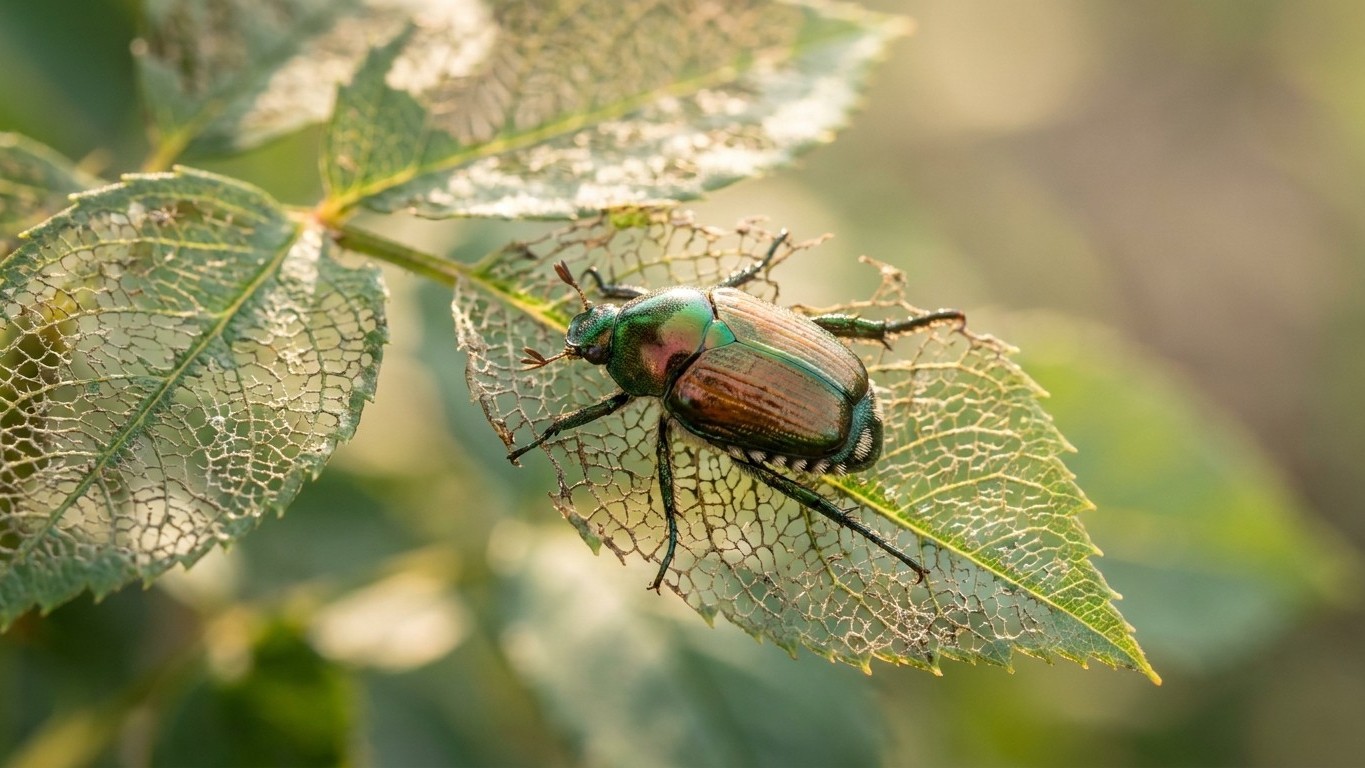

Japanese beetles show up in Iowa in a predictable window: late June through August, with the heaviest feeding in mid-July. Adults emerge from the soil once ground temperatures hit the mid-60s, and they stick around for six to eight weeks, chewing through roses, linden trees, grapevines, and green beans before laying eggs and dying off by early fall. Stopping them means fighting two different bugs, really, the flying adult that skeletonizes your leaves and the grub underground that’s already planning next year’s invasion.
How Japanese Beetles Got to Iowa

This isn’t a native pest. Japanese beetle (Popillia japonica) arrived in the United States around 1916, likely hitching a ride on imported iris bulbs into New Jersey. It took decades to work its way inland, and Iowa entomologists didn’t confirm an established population until the mid-1990s, first in the eastern part of the state near the Mississippi River corridor. From there it spread west along interstates and rail lines, moving roughly a county or two per year through the 2000s.
By now, every region of Iowa deals with some level of Japanese beetle pressure, though the intensity varies. Eastern and central counties, Linn, Johnson, Polk, tend to see denser populations because they’ve had beetles longer and because irrigated turf and heavier clay soils favor grub survival. Northwest Iowa still reports lighter numbers most seasons, but that gap has been closing.
The Life Cycle That Drives Iowa’s Beetle Season
One generation per year. That’s the whole cycle, and it’s why timing your response matters more than the product you choose. Adults lay eggs in turf soil during July and August, favoring lawns that stay moist from irrigation or rainfall. Eggs hatch into grubs within two weeks, and those grubs spend the rest of summer and fall feeding on grass roots close to the surface.
As soil cools in October, grubs dig down eight to ten inches to overwinter below the frost line. They come back up in April and May, feed again briefly, then pupate. Adults start emerging in late June, right around the Fourth of July in most years, and Iowa State University entomologists have tracked this emergence consistently against accumulated soil-degree days rather than the calendar, which is why an early warm spring can push the season up by a week or two.
Why This Matters for Timing Treatments
Grub insecticides only work while grubs are small and near the surface, meaning late June through July for preventive products. Adult beetle sprays only work while beetles are actively feeding, which is the same window but stretches into August. Miss either window and you’re spraying dead grass or fighting a beetle that’s already moved to the next yard.
What Japanese Beetles Actually Damage in Iowa Yards
Adults feed on more than 300 plant species, but in Iowa landscapes a shorter list takes the brunt of it. Roses get skeletonized down to a lace of veins within days. Linden and birch trees lose canopy density visibly by August. Raspberries, grapes, and crabapple trees round out the usual suspects, and vegetable gardeners lose green bean foliage and sweet corn silks to feeding damage that can reduce pollination.
The grubs cause a separate kind of damage entirely. They chew grass roots below the surface, and a lawn with a heavy grub population will feel spongy underfoot and pull up like carpet in patches. Iowa turf specialists generally set the damage threshold around 8 to 10 grubs per square foot, below that number most healthy lawns tolerate the feeding without visible dieback.
Damage tends to cluster near south-facing walls, driveways, and other heat-reflecting surfaces, because adult beetles are drawn to warmth and sun exposure when choosing feeding sites. A rose bush against a brick foundation will usually get hit harder than one out in open shade.
What Actually Stops Japanese Beetles
Control splits cleanly into two jobs: managing the adults you can see now, and managing the grubs that will become next year’s problem. Skipping the second job is the most common mistake Iowa homeowners make, because it feels like the fight ends once beetles disappear in August.
Handling Adult Beetles on Plants
Hand-picking still works better than most people expect, especially early in the season before populations peak. Beetles are sluggish in cool morning temperatures, and knocking them into a bucket of soapy water before 9 a.m. removes a meaningful chunk of the population without chemicals. This works best on smaller ornamental plants and roses where the beetle count stays manageable.
For heavier infestations, insecticidal sprays containing pyrethrin or carbaryl offer short-term knockdown, though they need reapplication every few days during peak feeding because they break down quickly and don’t stop new beetles from flying in. Systemic products applied to tree root zones, often containing imidacloprid, protect high-value trees like lindens for the full season but take several weeks to move through the plant, so they need to go down before beetles arrive, not after.
One product to skip: pheromone traps. Research from multiple land-grant universities, including work referenced by Iowa State entomologists, shows these traps often attract more beetles to a yard than they actually capture, drawing in populations from surrounding properties. If neighbors aren’t also trapping, a homeowner using them can end up with a worse problem than before.
Controlling Grubs Before They Become Next Year’s Beetles
Grub control happens on a completely different calendar than adult control, and it’s the step that determines whether next July is better or worse. Preventive insecticides containing chlorantraniliprole or imidacloprid, applied to lawns in June or early July before eggs hatch, give season-long protection and are the most reliable option for Iowa turf.
Curative treatments containing trichlorfon work if grubs are already established but need to go down in late summer while grubs are still small, typically August through early September in Iowa. Waiting until October, once grubs have moved deeper into the soil profile, sharply reduces how well any product performs.
Beneficial nematodes offer a biological option, though results in Iowa’s clay-heavy soils and cold winters tend to be inconsistent compared to warmer regions. Milky spore disease, a bacterial treatment often marketed for grub control, targets a different beetle species almost exclusively and generally underperforms against Japanese beetle grubs specifically, something several university extension programs have flagged directly.
Lawn and Garden Habits That Reduce Iowa Beetle Pressure
Watering less during late July and August, right when beetles are laying eggs, makes a lawn less attractive for egg-laying since females favor moist soil for digging. That’s a tough call during an Iowa dry spell, but letting turf go slightly drought-stressed for a few weeks can meaningfully cut next year’s grub numbers.
Mowing height matters too. Taller grass, around 3 to 3.5 inches, shades the soil surface and keeps it cooler and firmer, which female beetles find less appealing than a hot, exposed, recently mowed lawn.
Choosing plants strategically also pays off over a season or two. Beetles largely avoid boxwood, holly, dogwood, magnolia, and most conifers, so replacing a heavily damaged rose hedge or linden tree with one of these options removes the food source instead of fighting the beetle every summer.
When to Call In Professional Help
Homeowners managing a single rose bed or a handful of ornamental shrubs can usually get by with hand-picking and timed sprays. But properties with mature linden or birch trees, commercial landscaping, or grub counts above the 8-to-10-per-square-foot threshold across a large lawn area typically need a licensed applicator, both for access to stronger systemic products and for the equipment needed to treat large turf areas evenly.
Iowa State University’s Plant and Insect Diagnostic Clinic offers grub counts and identification services for homeowners unsure whether beetle damage or another turf issue, grub species included, drought stress, or disease, is the actual culprit. Confirming the cause before spending money on treatment saves a wasted season more often than people expect.
Related guides
- Japanese beetle in Minnesota: When It Shows Up and What Stops It
- Japanese beetle in Illinois: When It Shows Up and What Stops It
- Japanese beetle in Kentucky: When It Shows Up and What Stops It
- Japanese beetle in Manitoba: When It Shows Up and What Stops It
- Common stalk borer in Iowa
- Lily leaf beetle in Iowa
- Japanese beetle in Nebraska: When It Shows Up and What Stops It
- Japanese beetle in North Carolina: When It Shows Up and What Stops It