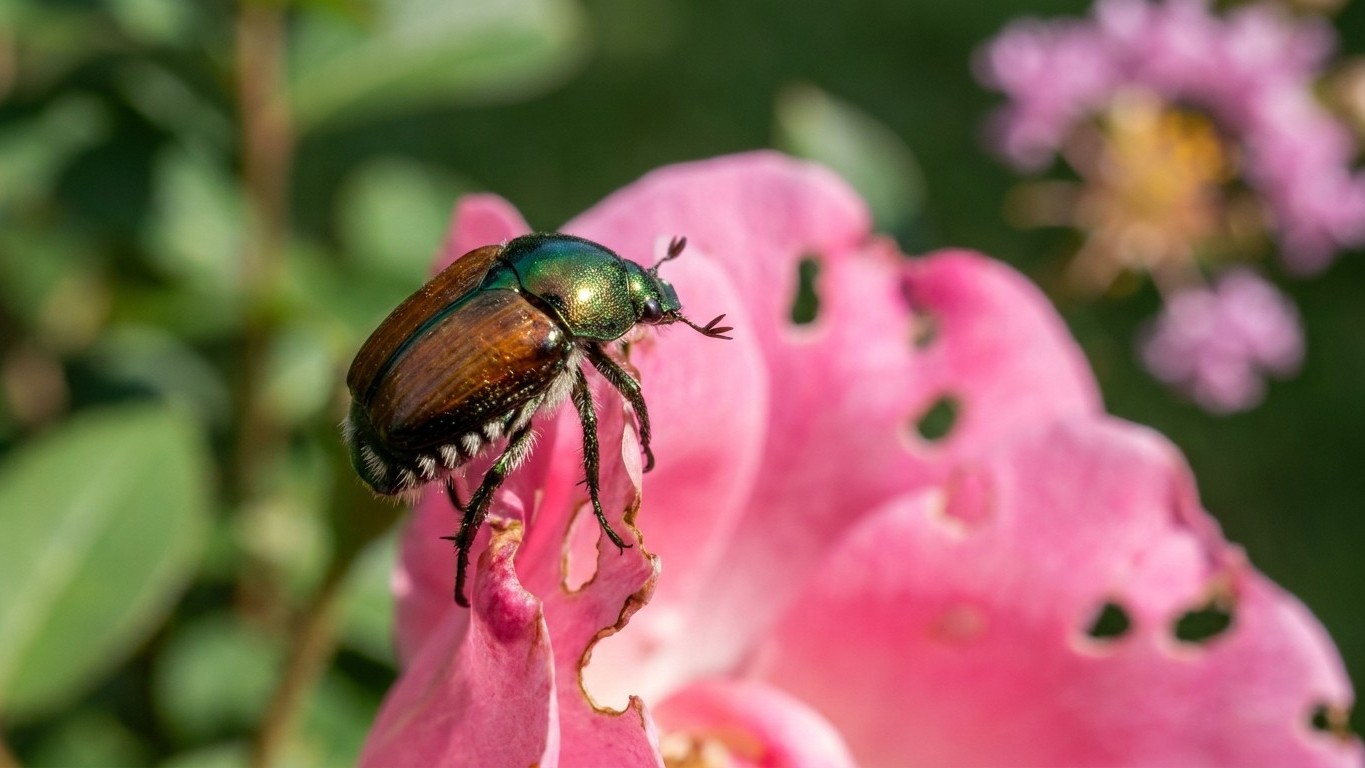

Japanese beetles show up in North Carolina from mid-June through July, with the heaviest feeding damage hitting the Piedmont region first and the mountains a few weeks later. Adults chew through roses, crapemyrtles, and linden trees for about six weeks, while their grubs work underground on lawns from late summer into fall. Stopping them means targeting both stages, not just swatting at the shiny beetles on your rosebush.
When Japanese Beetles Arrive in North Carolina

Soil temperature drives the timing, not the calendar. Once soil hits around 60 degrees Fahrenheit at a few inches deep, overwintering grubs finish pupating and adults start pushing up through the ground. In the Piedmont, that usually lands in the first half of June. The Coastal Plain often sees beetles a week or so earlier because sandy soils warm faster. Mountain counties like Buncombe and Watauga can lag two to three weeks behind, sometimes not seeing real activity until late June or early July.
Peak feeding runs through July across most of the state. By mid-to-late August, adult numbers taper off sharply as the beetles finish their reproductive cycle and die. That’s a shorter window than a lot of homeowners assume. Six weeks of intense feeding, then it’s over for the year, at least for the adults you can see.
The beetle itself is easy to spot once you know the look: about 3/8 inch long, with a metallic green head and thorax and copper-brown wing covers. Small tufts of white hair line the sides of the abdomen, five on each side, which is the detail that separates it from a handful of similar-looking beetles. They’re clumsy fliers and tend to feed in groups, so finding one on a leaf usually means finding a dozen more nearby.
How Japanese Beetles Got Established Statewide
This isn’t a native pest. Popillia japonica arrived in New Jersey around 1916, likely in soil around imported iris bulbs, and spread south over the following decades. By the mid-20th century it had worked its way into North Carolina, and it’s now established in every region of the state, from the Outer Banks to the Blue Ridge. There’s no eradicating it at this point. Management is the realistic goal, not elimination.
What They Actually Damage
Adult beetles feed on foliage between the veins, leaving a lace-like skeleton where a leaf used to be. This “skeletonization” is the calling card. They’re not picky eaters either, feeding on more than 300 plant species, but in North Carolina yards the worst hits tend to land on roses, crapemyrtle, linden, birch, cherry, and grapevines. A rose bush can go from full bloom to shredded leaves in a matter of days once a beetle swarm settles in, and they’re drawn to plants that are already under stress or getting plenty of sun.
The larval stage causes a different kind of damage, and it’s often the one homeowners notice last because it happens underground. Grubs feed on turfgrass roots from late summer through fall, then again briefly in spring before pupating. Damaged lawns develop irregular brown patches that feel spongy underfoot, and in bad cases you can peel back the turf like a loose carpet because the root system is gone. Skunks and moles digging up the yard in fall are often chasing grubs, which is a decent early warning sign that a lawn has a problem.
Golf courses and sports fields in the Piedmont deal with this every year, and it’s one reason turf managers in counties like Wake and Mecklenburg schedule preventive grub treatments almost like clockwork. Home lawns face the same risk, just at a smaller scale.
What Stops Japanese Beetles
Control works best when it’s split into two separate strategies: protecting plants from adult feeding, and managing grubs in the soil before they become next year’s beetles.
Dealing with the Adults
Hand-picking is unglamorous but effective on a small number of plants. Beetles are sluggish in early morning and easy to knock into a jar of soapy water. Doing this daily during peak season keeps numbers down without any chemical exposure, and it works particularly well on prized plants like roses where a few beetles a day is manageable.
Pheromone traps are worth a word of caution here, because the popular advice is often backwards. These traps release a strong scent that pulls beetles in from a wide radius, sometimes hundreds of yards. Placed near valuable plants, they tend to attract more beetles to the yard than they actually catch, making the problem worse right where you don’t want it. If used at all, they belong far from anything you’re trying to protect, at the edge of the property, not next to the porch garden.
Insecticidal sprays containing pyrethrins or neem oil offer short-term knockdown on heavily infested plants, though they need reapplication every few days during peak feeding because they break down quickly in sunlight and don’t kill new arrivals. For homeowners who want a longer-lasting option on ornamental trees and shrubs, products containing carbaryl or permethrin provide extended protection but come with more caution around pollinators, since bees visit many of the same flowering plants beetles attack. Spraying in the evening after bees have finished foraging cuts that risk down.
Floating row covers work well on vegetable gardens during the beetle’s active weeks, physically blocking access to beans, grapes, and other favorites without any spray at all.
Stopping the Grubs Before They Start
Grub control is where long-term progress actually happens, because fewer grubs this year means fewer beetles chewing on the roses next July. Preventive insecticides containing imidacloprid or chlorantraniliprole, applied to lawns in June or early July, target young grubs before they do much root damage. Timing matters more than the product itself. Apply too early or too late and the treatment misses the window when grubs are small and most vulnerable.
Beneficial nematodes, specifically Heterorhabditis bacteriophora, offer a biological option that seeks out grubs in the soil and infects them. They need consistently moist soil to survive and move, which can be a challenge during a dry Carolina summer, so irrigation before and after application makes a real difference in how well they work.
Milky spore disease, caused by a soil bacterium that specifically targets Japanese beetle grubs, gets mentioned often but deserves realistic expectations. It can take two to three years to build up enough spore concentration in the soil to noticeably reduce grub populations, and results in North Carolina soils have been inconsistent compared to the sandier soils of the Northeast where it was first developed. It’s a slow, low-toxicity option, not a quick fix.
Natural Predators Already at Work
North Carolina yards aren’t defenseless without human intervention. Birds, especially starlings and grackles, will tear up turf hunting grubs, which looks messy but is free pest control. Two introduced parasitic species help too: the spring tiphia wasp lays eggs on grubs underground, and the winsome fly (Istocheta aldrichi) parasitizes adult beetles directly, laying eggs on their thorax that eventually kill the host. Neither wipes out a population on its own, but they’re part of why beetle numbers vary year to year even without any treatment applied.
Regional Differences Worth Knowing
Pressure isn’t even across the state. The Piedmont, with its clay soils and dense suburban plantings of roses, crapemyrtle, and linden, generally sees the heaviest adult activity and the most consistent grub damage in lawns. The Coastal Plain’s sandier soils and earlier warm-up mean beetles show up sooner but populations can be more scattered, tied closely to irrigation. Sandy soil dries out fast, and grubs need moisture to survive their early stages, so a well-watered lawn near the coast can actually end up with more grub pressure than a neglected one nearby.
The mountains get something of a break. Cooler soil temperatures shorten the beetle’s active season and slow grub development, which is part of why counties in the western part of the state report lighter damage overall. That’s not immunity though. Populations there have grown over the past couple of decades as warmer summers extend the window when conditions favor them.
A Few Signs It’s Time to Act
- Skeletonized leaves on roses, grapes, or crapemyrtle starting in June
- Beetles clustered in groups of ten or more on the same plant
- Brown, spongy patches of lawn that pull up easily by hand
- Increased digging from birds, skunks, or moles in the yard in fall
Catching adult feeding early and hitting the grub stage the following season with proper timing does more to control this pest long-term than any single spray applied mid-July. Most North Carolina yards that struggle year after year are only treating the beetle they can see, not the one working underground for the other ten months of the year.