
Japanese beetle activity in Ontario, California typically peaks between late June and early August, when adults emerge from turf and ornamental beds to feed on foliage during the warmest part of the day. Unlike much of the eastern United States, where this pest is a permanent fixture in the garden calendar, Ontario sits in a region where the beetle is not established. That distinction changes everything about how homeowners should respond if they spot one.
Why Ontario Is a Different Battlefield Than the East Coast

Japanese beetle (Popillia japonica) arrived in the U.S. around 1916, likely in a shipment of iris bulbs landing in New Jersey. It spread steadily westward for over a century, and today it’s a routine summer pest from Maine down through the Midwest and into parts of the South. Lawns turn brown from grub feeding, rose bushes get skeletonized, and pest control companies build entire seasonal business models around it.
California, including the Inland Empire cities like Ontario, tells a different story. The state’s dry summers, different soil biology, and aggressive detection programs have kept the beetle from gaining a permanent foothold across most of the region. The California Department of Food and Agriculture treats every confirmed adult sighting as a potential outbreak, not a nuisance to tolerate. That’s why a single beetle found in a backyard trap can trigger a coordinated response involving state entomologists, not just a trip to the garden center.
This matters for anyone gardening in Ontario. The advice that works in Ohio or Pennsylvania (accept the annual damage, treat the grubs, move on) doesn’t apply here. In this part of California, the correct move is reporting, not just spraying.
What the Beetle Looks Like and When to Expect It
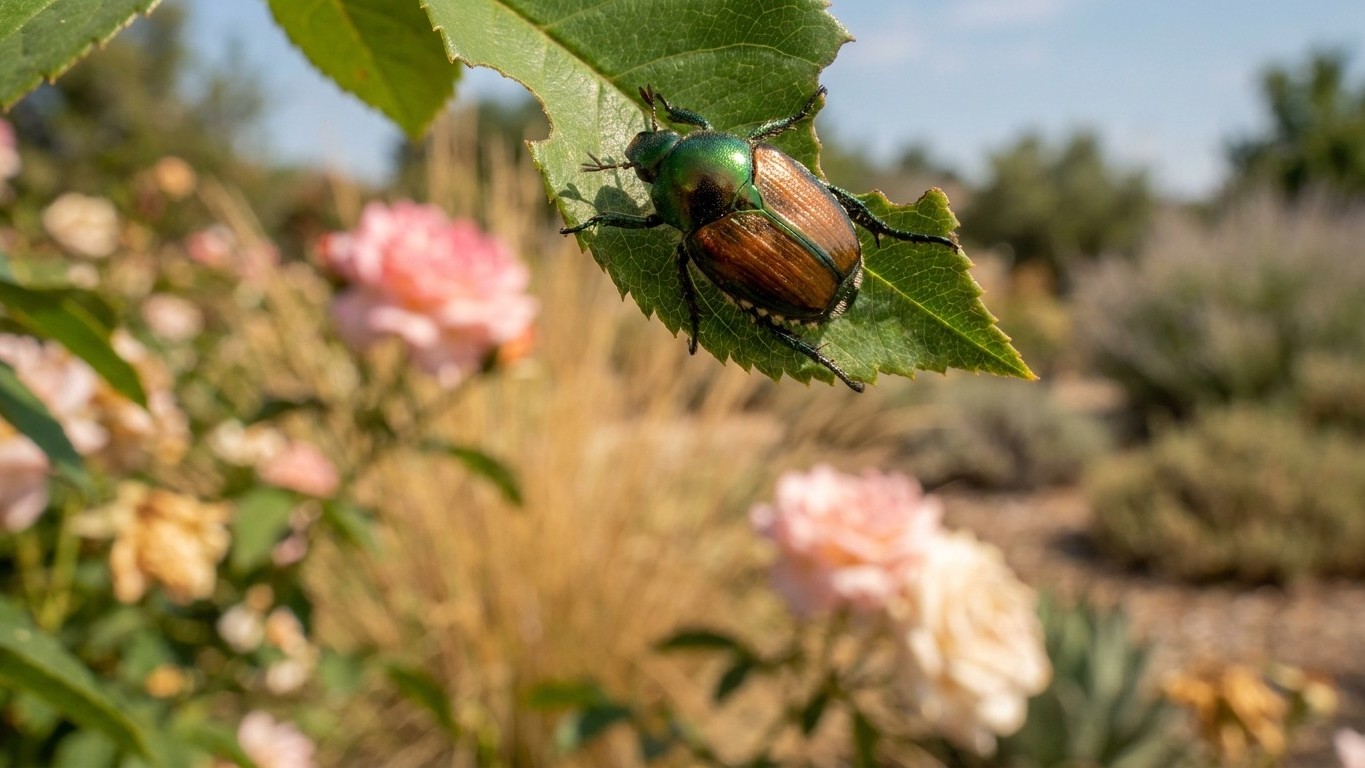
Adult Japanese beetles are about 3/8 inch long, with a metallic green thorax and copper-brown wing covers. A row of small white tufts of hair lines each side of the abdomen, a detail that separates it from look-alike scarab beetles like the figeater beetle, which is larger and duller in color and common in Southern California gardens.
The adult flight period is short but intense. In warmer inland valleys, beetles can emerge as early as mid-June, with activity tapering off by mid-August. During that window, they feed heavily during daylight hours, favoring the sunniest, warmest parts of a plant canopy. Grubs, which are the larval stage living in soil, feed on turfgrass roots from late summer through fall, pause over winter, then resume feeding briefly in spring before pupating into the next generation of adults.
That single generation per year is worth remembering. There’s no second wave in September. If beetles are managed or naturally absent during the June-to-August window, the pressure is largely over until the following summer.
Plants Most Likely to Show Damage
Japanese beetle adults are not picky, but they show clear preferences. Roses top the list, along with grapevines, linden trees, birch, crabapple, and Virginia creeper. Skeletonized leaves, where the tissue between veins is eaten away leaving a lace-like pattern, are the classic sign. Grubs, meanwhile, target turfgrass roots, and a lawn with irregular brown patches that lift easily like loose carpet is a common tell, though several other grub species cause similar symptoms.
What Actually Stops It in a California Setting
Because the beetle isn’t broadly established in Ontario and the surrounding San Bernardino County area, the first line of defense is detection, not chemical control. The state’s trapping network uses pheromone-baited traps placed in nurseries, parks, and residential areas as part of an exterior pest exclusion program. Homeowners who spot a suspect beetle are encouraged to capture it (a beetle in a sealed jar survives fine for a day or two) and contact the county agricultural commissioner’s office rather than immediately reaching for a pesticide.
For confirmed local presence, a few tactics carry real weight:
- Handpicking in early morning when beetles are sluggish, dropping them into soapy water, works well for small gardens with light pressure.
- Row covers or fine netting over high-value plants like roses and grapevines during the June-to-August flight window blocks feeding without chemicals.
- Grub-targeted soil treatments applied to turf in late summer, timed to when eggs hatch, interrupt the life cycle before it reaches the damaging adult stage.
- Avoiding stand-alone pheromone traps as a control method, since research from Cornell University’s Department of Entomology and other land-grant programs has shown these traps often attract more beetles into a yard than they capture, making the problem worse rather than better.
Systemic insecticides applied to ornamentals can reduce adult feeding, but timing matters more than product choice. Applying too early or too late in the flight window wastes the treatment. Local extension offices, including those tied to the University of California Cooperative Extension network, publish updated timing windows each season based on degree-day models specific to Southern California’s climate.
The Regulatory Side: Why a Beetle Sighting Isn’t Just a Garden Problem
California’s agricultural economy depends heavily on crops that Japanese beetle grubs and adults can seriously damage, including grapes, stone fruit, and nursery stock. That’s the practical reason behind the state’s aggressive trapping and reporting infrastructure. The California Department of Food and Agriculture’s pest profile outlines the detection protocols and the eradication response used whenever a breeding population is suspected.
Nurseries shipping plants into or within California face specific inspection requirements tied to Japanese beetle risk, since soil and root balls are the most common way larvae travel undetected. If you’ve bought potted roses, grapevines, or nursery trees from an out-of-state source recently, it’s a reasonable precaution to inspect the root ball and surrounding soil for grub activity before planting.
This regulatory backdrop explains why local reporting channels exist at all. A homeowner in a state where the beetle is already everywhere has no incentive to call anyone. A homeowner in Ontario spotting one of these beetles is, in a small way, part of the state’s early warning system.
Telling It Apart From Common Look-Alikes
Southern California gardens host several beetles that get mistaken for Japanese beetle, and misidentification wastes time and sometimes triggers unnecessary pesticide use. The figeater beetle (Cotinis mutabilis), common in the Inland Empire during summer, is larger, has a dull green back, and flies with a loud buzzing sound, often bumping clumsily into people or windows. Green June beetles share a similar color palette but lack the white tufts along the abdomen that mark true Japanese beetles.
Rose chafers and other scarab species round out the list of common mix-ups. If there’s any doubt, a clear photo sent to the county agricultural commissioner’s office gets a faster and more reliable answer than a guess based on general online images.
What Homeowners Can Realistically Do This Season
Checking roses, grapevines, and linden or birch trees during the June-through-August window costs nothing and catches problems early. Skeletonized leaves on just a few branches, addressed with handpicking or targeted netting, rarely escalate into serious damage in a single season given the short flight period and the region’s low established population.
Lawn areas showing irregular brown patches in late summer deserve a closer look before assuming grub damage automatically means Japanese beetle. Digging a small square foot of turf and counting grubs (more than 5 to 10 per square foot generally signals a problem worth treating) gives a clearer picture than surface symptoms alone, and several other grub species common in California soils cause identical lawn symptoms without ever becoming adult Japanese beetles.
The single most useful habit for anyone gardening in Ontario is simple timing awareness. Outside the June-to-August window, Japanese beetle isn’t the likely culprit behind chewed leaves or thinning turf, and looking elsewhere for the actual cause saves both money and unnecessary pesticide applications.
Related guides
- Japanese beetle in Manitoba: When It Shows Up and What Stops It
- Japanese beetle in Quebec: When It Shows Up and What Stops It
- Japanese beetle in Pennsylvania: When It Shows Up and What Stops It
- Japanese beetle in Virginia: When It Shows Up and What Stops It
- Japanese beetle in New Hampshire: When It Shows Up and What Stops It
- Japanese beetle in Kentucky: When It Shows Up and What Stops It