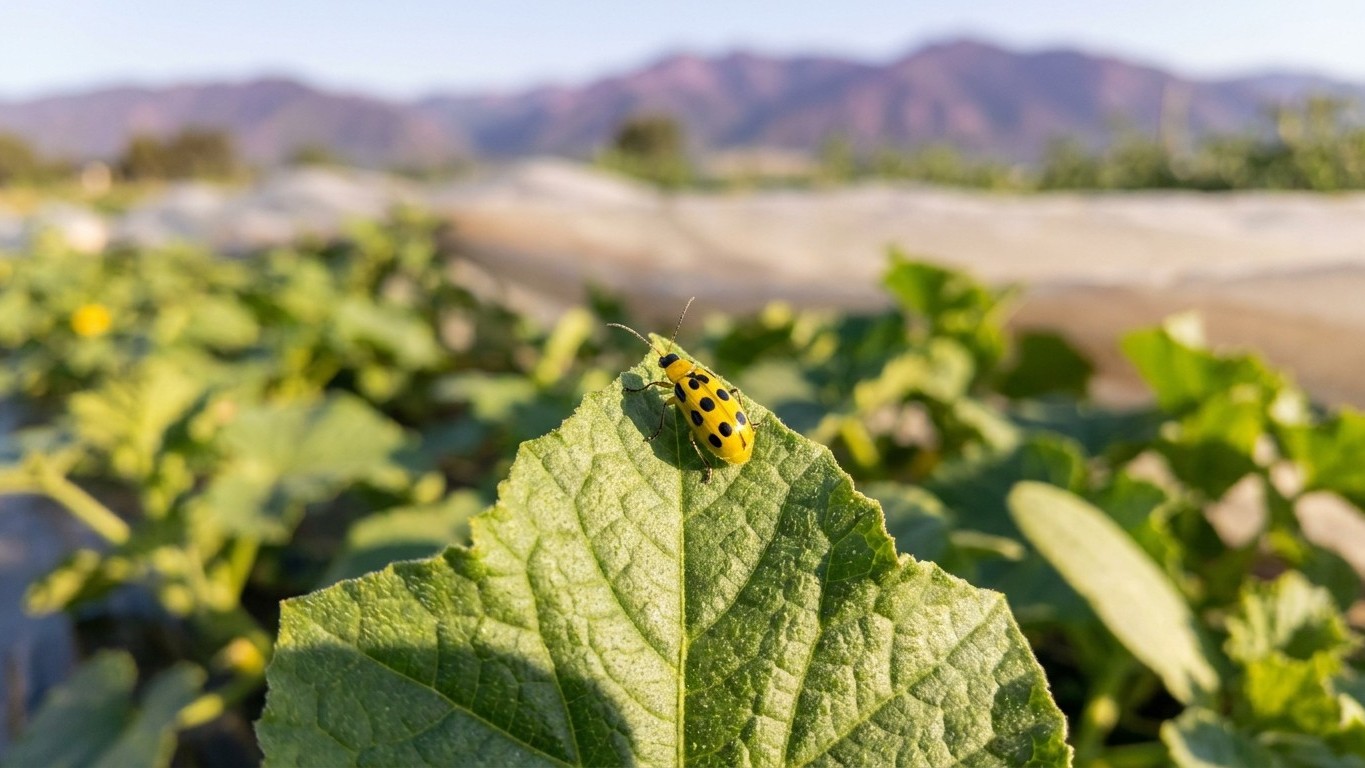

Spotted cucumber beetles start showing up in New Mexico gardens as early as mid-April in the lower Rio Grande Valley and southern desert zones, and as late as early June at higher elevations around Santa Fe and Taos. The exact timing depends on soil temperature, not the calendar: adults become active once daytime highs hold steady above 65°F for a week or more. Row covers, delayed planting, and targeted insecticidal soap applications are what actually knock back populations here, since New Mexico’s dry climate limits some of the beetle’s usual advantages but not its appetite for squash, melons, and beans.
Life Cycle and Timing Across New Mexico’s Elevations

New Mexico’s growing conditions swing wildly within a few hundred miles. Las Cruces and Carlsbad sit around 3,200 to 4,000 feet, with frost-free growing seasons stretching from March into November. Albuquerque, at roughly 5,300 feet, runs a month or two behind. Santa Fe and Taos, both above 7,000 feet, sometimes don’t see reliable warm soil until late May. That elevation spread means the spotted cucumber beetle (Diabrotica undecimpunctata) doesn’t follow one statewide schedule. It follows the thermometer.
Adults overwinter in plant debris, weedy field edges, and irrigation ditch banks, then emerge once temperatures warm enough to trigger feeding and mating. In the southern desert counties, that’s often by mid-April. Farther north, growers rarely spot the first adults before late May or early June. A second generation typically appears in late July or August, timed almost exactly with New Mexico’s monsoon season, when higher humidity improves egg survival in the soil.
Larvae, sometimes called southern corn rootworm in their immature stage, feed underground on roots and germinating seeds for two to six weeks before pupating. That underground phase is why gardeners often see damage before they ever spot the beetle itself, wilted seedlings or gnawed roots showing up while the adults are still hiding under leaves nearby.
Why Monsoon Timing Matters More Than Frost Dates
Unlike pests that track strictly with frost-free windows, spotted cucumber beetles in New Mexico respond to moisture pulses. The state’s monsoon rains, usually arriving between early July and mid-September, create a short burst of soil moisture that larvae need to survive. Gardens irrigated heavily during that stretch, even without natural rain, can see a second wave of beetle activity that dry-farmed or drip-irrigated plots avoid. That’s a distinction worth tracking on your own property: overhead sprinklers during monsoon season may be doing more than watering your squash.
What Attracts Them and Where They Hide in New Mexico Gardens
Cucurbits are the primary draw. Squash, cucumbers, melons, and pumpkins pull adult beetles in fast, especially once flowers open. Beans and corn rank second on the preference list, and beetles will feed on flower petals of ornamentals like zinnias and dahlias when cucurbits aren’t available yet in early spring. Chile peppers, New Mexico’s signature crop, are rarely a target. Growers running mixed plots of chile and squash often notice beetles concentrated almost entirely on the squash rows while chile plants stay untouched.
Adults hide during the hottest part of the day, tucking under leaves or inside flower blossoms where a quick glance won’t catch them. Morning and early evening are the best times to check plants, since that’s when feeding activity peaks and beetles are more exposed on leaf surfaces. In New Mexico’s high-desert sun, midday temperatures above 95°F push beetles into shade almost entirely, which can create a false impression that a population has cleared out when it’s simply gone quiet for a few hours.
Weedy borders and irrigation ditches serve as year-round shelter. Acequia systems common throughout northern New Mexico, with their grassy banks and standing vegetation, provide exactly the kind of overwintering habitat spotted cucumber beetles need. Gardens adjacent to unmanaged ditch banks tend to see earlier and heavier infestations than plots surrounded by bare soil or gravel mulch.
Effective Control Methods for New Mexico Conditions
Bacterial wilt, the disease spotted cucumber beetles are best known for spreading in wetter regions, shows up far less often in New Mexico. The pathogen (Erwinia tracheiphila) survives poorly in low-humidity soil, so the disease pressure that devastates cucurbit crops in the Midwest and Southeast is a smaller concern here. That’s genuinely good news for New Mexico growers, though it doesn’t mean the beetles themselves are harmless. Direct feeding damage to leaves, flowers, and roots still stunts plants and reduces yields, and squash mosaic virus, another disease this beetle can carry, remains a real risk regardless of climate.
Cultural and Physical Controls
Timing your planting to dodge the first adult emergence wave is one of the most reliable strategies available. In the southern half of the state, that means starting cucurbit transplants indoors and setting them out slightly later than neighbors might expect, letting seedlings get past the vulnerable early stage before beetle numbers peak. Row covers work well through the seedling stage but need to come off once flowers appear, since cucurbits require pollinator access to set fruit.
Yellow sticky traps placed at plant height help monitor beetle arrival and give a reasonable estimate of pressure without relying on guesswork. Removing spent squash and melon vines promptly at season’s end, rather than leaving them to decompose in place, cuts down on overwintering sites right in the garden bed. Keeping ditch banks and field edges mowed during late summer, when second-generation adults are most active, also reduces the shelter available nearby.
- Delay cucurbit planting by one to two weeks past the earliest safe date for your elevation zone
- Use floating row covers until bloom, then remove for pollination
- Clear plant debris and weedy borders within 20 feet of cucurbit beds each fall
- Rotate cucurbit crops to a different bed location each year to disrupt larval survival in soil
When Chemical Treatment Makes Sense
Insecticidal soap and neem-based products handle light to moderate adult populations without harming most pollinators, provided they’re applied in early morning or evening after flowers have closed for the day. Kaolin clay, sprayed as a protective film on leaves, disrupts beetle feeding by making plant surfaces unpalatable and works particularly well in New Mexico’s intense sunlight, since the clay coating also reflects heat and reduces plant stress.
Broader-spectrum insecticides labeled for cucumber beetle control exist and can be effective against heavier infestations, but timing and pollinator protection matter more in New Mexico than in shadier, wetter climates where bee activity is spread across more hours of the day. Applying any treatment strictly in the evening, after bees have finished foraging for the day, cuts pollinator exposure substantially. Always check current product labels for crop-specific approval, since registration status changes and not every product cleared for ornamentals is approved for edible cucurbits or beans.
Beneficial insects offer a longer-term option. Tachinid flies and certain parasitic wasps attack cucumber beetle larvae and eggs, and gardens that avoid broad-spectrum insecticide use tend to build up these natural predator populations over two to three growing seasons. It’s a slower fix, but one that pairs well with New Mexico’s already reduced disease risk, since fewer chemical applications also mean fewer disruptions to the native predator insects already working in the soil.
Regional Notes Worth Tracking
Farmington and the San Juan Basin, sitting at moderate elevation with a shorter frost-free window than the southern valleys, tend to see just one clear generation per year rather than two, since the growing season often ends before a second wave can establish. Growers there report the heaviest pressure in June, right after the single spring emergence.
The Mesilla Valley near Las Cruces, with its long season and heavy irrigation infrastructure, sees the most consistent two-generation pattern in the state. Chile and cotton dominate the region’s commercial fields, but the smaller-scale squash and melon plantings common in home gardens and roadside stands there face the steepest beetle pressure of any New Mexico region, largely because the extended warm season gives both generations time to complete their full cycle before frost.
Elevation isn’t just a timing factor either. Higher-elevation gardens around Santa Fe and Taos, with shorter, cooler seasons, sometimes escape a second generation entirely most years, which explains why growers in those areas often report noticeably lighter beetle pressure than friends gardening in Albuquerque or points south, even when using identical crop varieties.
Related guides
- Spotted cucumber beetle in Colorado: When It Shows Up and What Stops It
- Spotted cucumber beetle in Ohio: When It Shows Up and What Stops It
- Spotted cucumber beetle in Ontario: When It Shows Up and What Stops It
- Spotted cucumber beetle in Alabama: When It Shows Up and What Stops It
- Spotted cucumber beetle in Indiana: When It Shows Up and What Stops It